
Martinsgans: Germany's St. Martin's Goose Guide
Martinsgans is the roast goose Germans eat around St. Martin's Day on November 11. Here's where the tradition comes from and what arrives on the plate.
On this page
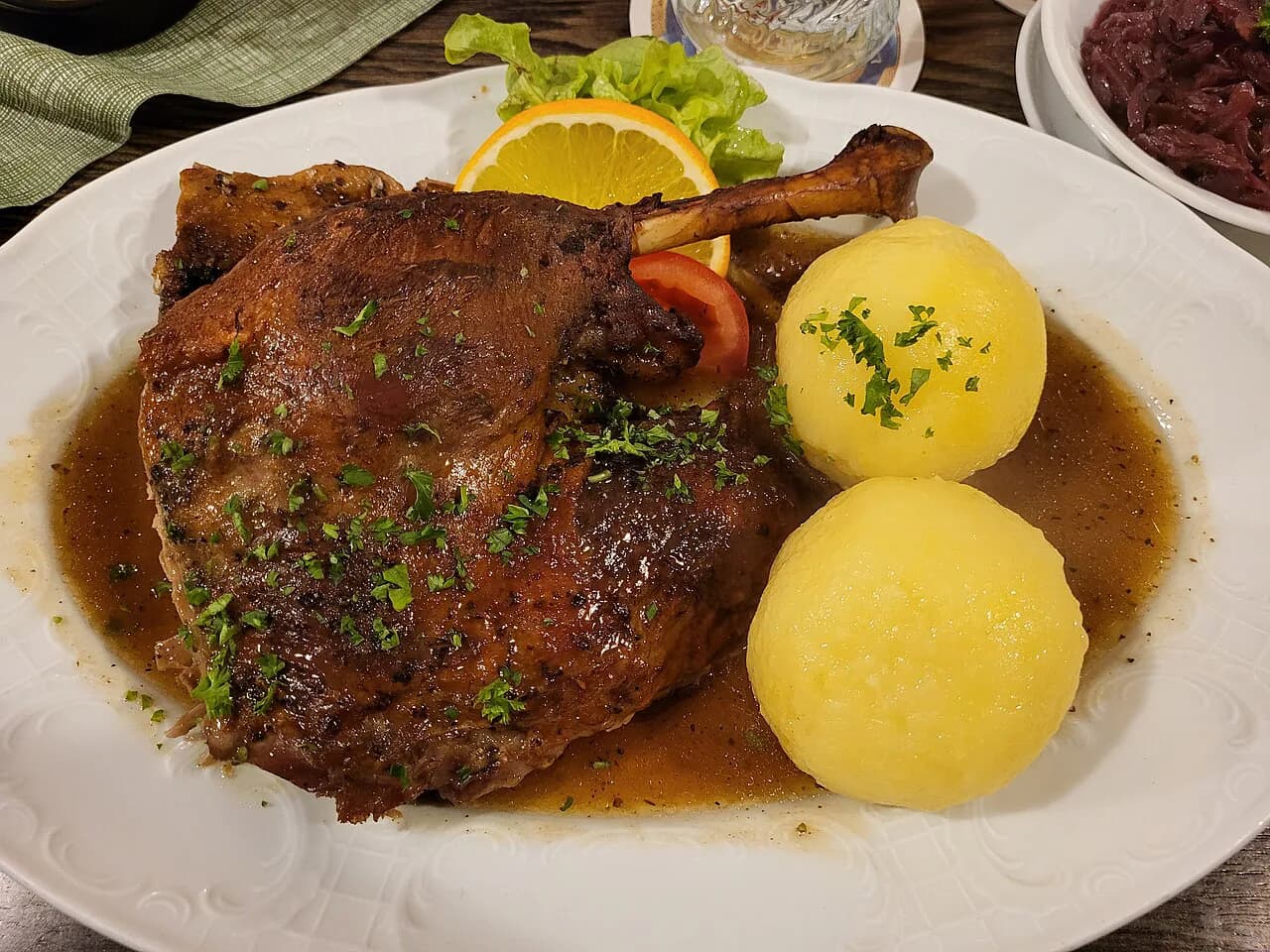
Martinsgans is the roast goose Germans eat around St. Martin's Day, November 11, and it arrives as a full plate: stuffed bird, red cabbage, and potato or bread dumplings. It is a late-autumn dish, tied to the end of the harvest and the weeks before Advent. This guide covers what the dish is, where the custom comes from, what the stuffing and sauce contain, and how to order it without overfacing yourself.
Treat the famous story as a legend, not a history lesson. The dish sits at the intersection of church calendar and farm calendar, and both explain why goose lands on the table in November across Germany.
What Martinsgans Is
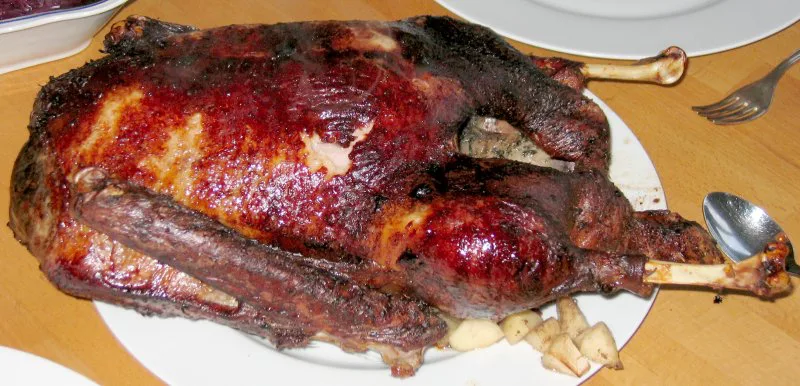
Martinsgans is a whole roast goose, stuffed and served with red cabbage and either Kartoffelknödel (potato dumplings) or Semmelknödel (bread dumplings). The bird is traditionally eaten on and around November 11, the feast of St. Martin. The plate is heavy, savory, and built for cool weather.
In the German food year, the goose belongs to the same late-autumn slot as game and the first hearty braises. It is the November marker in the same way that the Pfifferling (chanterelle) marks late summer and early autumn, and it tends to appear on Gasthaus menus as a short-run special rather than a year-round dish.
If you are mapping Seasonal Food in Germany, goose sits inside a wider pattern of short, produce-driven windows that shape menus across the country, from spring asparagus to autumn game.
The Legend Behind the Goose
The best-known explanation comes from the life of St. Martin, the Roman soldier who, in the legend, cut his cloak in half for a beggar. Later he was to be made Bishop of Tours, around the year 371 or 372, but the modest Martin hid in a goose pen to avoid the honor. The geese honked loudly enough to give him away, and he was found and consecrated.
What is Martinstag in Germany? Martinstag is St. Martin's Day, celebrated on November 11.
Do Germans eat goose at home or in restaurants? Both. Many families roast a goose at home after the lantern parade, while Gasthäuser and traditional restaurants serve Martinsgans as a seasonal special during the weeks around November 11.
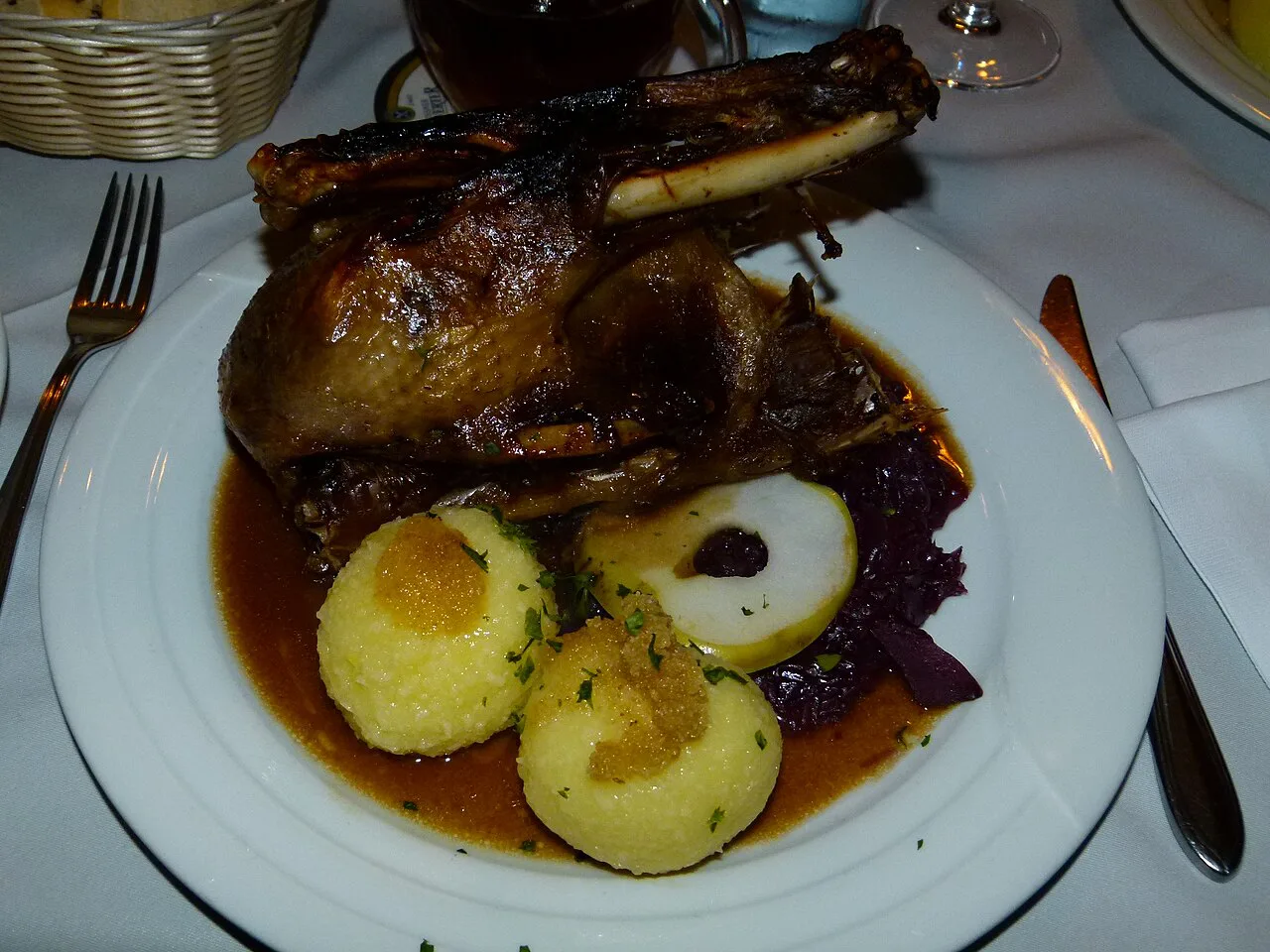
What side dishes come with Martinsgans? The standard plate is roast goose with braised red cabbage and either potato dumplings or bread dumplings, plus apple sauce and a sauce made from the roasting juices.
A second legend places the goose inside the church: a noisy bird wandered into the service and disturbed Martin's sermon, was caught, and was later shared at a communal meal. A third version treats the goose as a feature of the annual reckoning rather than the saint's own story.
The Farming-Year Explanation
Historians tend to favor a more practical origin: November 11 was a fixed date in the farming year, when wages, rents, and taxes were settled. Those payments were often made in kind, and geese were among the goods handed over. Birds that would otherwise need feeding through winter were slaughtered and eaten instead.
The same date closed out the agricultural year, which is why the goose feast reads as an end-of-season meal rather than a random November indulgence. Read the legend and the ledger together and the dish makes sense: a bird that had to be eaten, on a date when accounts were settled.
Why the Feast Sits Before Advent
St. Martin's Day falls ahead of the strict pre-Christmas fast, which in earlier centuries began after November 11. That timing gave households one last rich meal before weeks of restraint, and it explains why goose rather than a lighter dish anchors the day.
Today the fasting element is historical background rather than daily practice, but the rhythm survives in the calendar: goose in mid-November, then the run toward Christmas. That makes it one of the clearest hinges in the German food year.
What's on the Plate
Expect a generous portion of dark, rich roast goose, a mound of braised red cabbage, and dumplings. The classic side pairing is either potato dumplings or bread dumplings. The sauce from the roasting pan is served over or next to the goose, finished with a little apple sauce.
Because goose is rich, the sides are doing real work: the cabbage cuts the richness with acidity, and the dumplings soak up the sauce. Red cabbage here is braised, sweet-sour, and soft, not a raw salad.
The Stuffing and the Sauce
The stuffing is fruit-led: dried prunes soaked beforehand, chopped apples, sugar, dried grated wholemeal bread, cinnamon, and a splash of brandy or cognac, seasoned and packed into the bird. That mixture bakes into a soft, tart-sweet filling that balances the meat.
The sauce is built in the roasting tray. Water goes into the fat-collecting pan under the goose, the roasting juices are deglazed, and cream and flour are stirred in to thicken. The result is finished with apple sauce, salt, and pepper, then simmered briefly before serving.
A traditional roast runs at about 200°C for roughly three hours, with the oven turned up at the end to crisp the skin. That long cooking time is why Martinsgans is a sit-down meal rather than a quick order.
How Germans Eat It
In many families, the goose follows the lantern parade on St. Martin's evening, with children carrying paper lanterns before everyone sits down to eat. The meal is a household event as much as a restaurant one, and the bird is often the centerpiece of a shared table.
During the season, Gasthäuser and traditional restaurants put Martinsgans on as a limited dish. Menus may offer the goose as a whole bird for a table or as a plated portion, so ask what format the kitchen is running before you order.
Portions and Ordering
Goose is rich, and a full plate of meat, dumplings, cabbage, and sauce is a lot of food. If you are eating alone or as a couple, a polite question about how much one order feeds is rarely a problem.
If you want the classic experience without the whole bird, look for a plated goose portion with the same sides: red cabbage, dumplings, and a spoonful of apple sauce.
What to Drink With It
A plain lager or a darker beer both work with the richness of roast goose. Elsewhere, a clean Pilsner cuts through the fat. Keep it to one or two glasses so the meal, not the beer, stays the point.
Is Martinsgans Worth Ordering?
Yes, if you want one of Germany's most distinctive seasonal meals and are ready for a slow, heavy plate. It is the dish that best captures the November mood, sitting between the harvest and the Christmas season.
Go for the middle of November, when the special is at its peak, and go with an appetite rather than a plan for a second course.
Explore more Germany guides
Frequently Asked Questions
What is Martinstag in Germany?
Martinstag is St. Martin's Day, celebrated on November 11. It is marked with lantern parades, the story of Martin sharing his cloak, and the traditional goose meal known as Martinsgans.
Do Germans eat goose at home or in restaurants?
Both. Many families roast a goose at home after the lantern parade, while Gasthäuser and traditional restaurants serve Martinsgans as a seasonal special during the weeks around November 11.
What side dishes come with Martinsgans?
The standard plate is roast goose with braised red cabbage and either potato dumplings or bread dumplings, plus apple sauce and a sauce made from the roasting juices.
Sources
Notes for your next German food trip
Optional updates to our guides.
You might also like



Continue reading
More guides you'll find useful





