
Matjes Herring: What It Is, How It's Made, and How to Eat
Matjes is a mildly brined, naturally ripened herring served with onions, gherkins, and creamy sauce. Here's what it tastes like and how to order it in Germany.
On this page
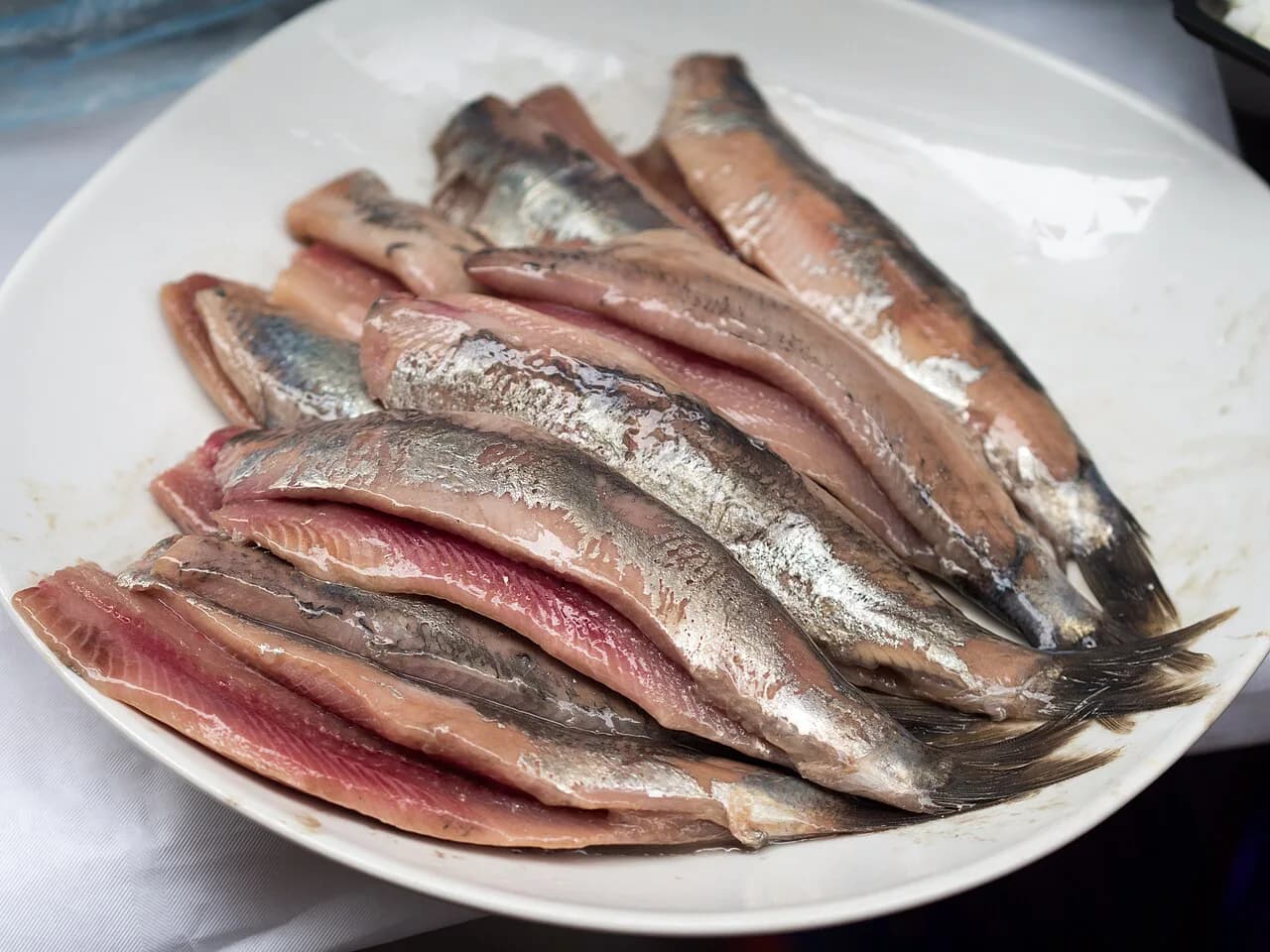
Matjes is a herring that has been gutted, lightly salted, and left to ripen until the flesh turns mild, tender, and almost creamy rather than harsh and salty. It is the soft, mellow end of the herring family, which is why it turns up on German menus in late spring and early summer as a plate of fish, onions, and gherkins. This guide covers how matjes is made, where the name comes from, how it is served, and how it differs from rollmops and plain salted herring.
The short version for a menu: if you like the idea of herring but fear a sharp, salty hit, matjes is the one to order. If you want vinegar and crunch, you want rollmops instead. The sections below take each style in turn and end with how to order matjes at a counter or a table.
What Matjes Is: A Herring That Ripens Instead of Curing Hard
Matjes is herring that has its gills and most of its innards removed, with the pancreas deliberately left in place. The enzymes in that organ break down the flesh from within, so the fish ripens naturally instead of simply absorbing salt. After roughly a week in a mild brine, the fillets come out seasoned rather than pickled, with a soft texture and a clean sea-salt flavor.
That ripening step is the whole difference. Ordinary salted herring is preserved by salt and tastes like it; matjes is preserved lightly and eaten while the texture is still delicate. Because the salt level alone is not enough to keep the fish stable, the fillets are frozen after filleting, which is why matjes does not need to be a strictly seasonal purchase at the fish counter.
Why It Tastes Mild and Creamy Instead of Harsh and Salty
The pancreas enzymes do the work that a long, heavy cure would otherwise do, and they do it gently. The result is flesh with a soft, almost buttery give and a flavor described as fresh and mild with a salty note, closer to the sea than to a pickle jar. The aroma stays light, which is exactly why people who dislike strong fish often make an exception for matjes.
What is matjes fish in English? Matjes is lightly brined, naturally ripened herring, often called maiden herring in English. It is served as fillets with onions, gherkins, and a creamy sauce, or on bread.
Does matjes taste very salty or fishy? It tastes mild and slightly salty with a soft, almost creamy texture. The natural ripening in a mild brine keeps it far gentler than plain salted herring or rollmops.
Is matjes eaten raw? The fillets are cured and ripened rather than cooked, so they are eaten cold as they come from the brine. That is standard for matjes and not a mistake on the plate.
Texture is the tell. A good matjes fillet feels tender enough to cut with a fork and slightly creamy on the tongue, while a harsh, firm, salt-heavy herring is a different preparation altogether. If you are unsure which one is on the plate, ask the person serving whether it is matjes or Salzhering, the plain salted herring. The Nordic versions can be stronger and spicier depending on how they were matured and seasoned.

The Name: From the Dutch Word for a Young 'Maiden' Herring
The name comes from the Dutch maatjes, which meant something like maiden herring, a reference to young fish that had not yet spawned. The tradition itself is old: one account traces matjes-style herring preservation in Holland back to the fourteenth century, when heavy salting was the only way to keep fish edible. Treat that date as history rather than a claim about any particular fish you will be served.
The name survives because the method did. Dutch herring culture and northern German cuisine share the same fish, and matjes keeps its Dutch-sounding name on German menus and fish-counter labels. It is worth knowing that not every herring can become matjes: the fish has to be fresh and handled for ripening rather than for a hard cure.
How Matjes Is Traditionally Served: Onions, Gherkins, and a Creamy Sauce
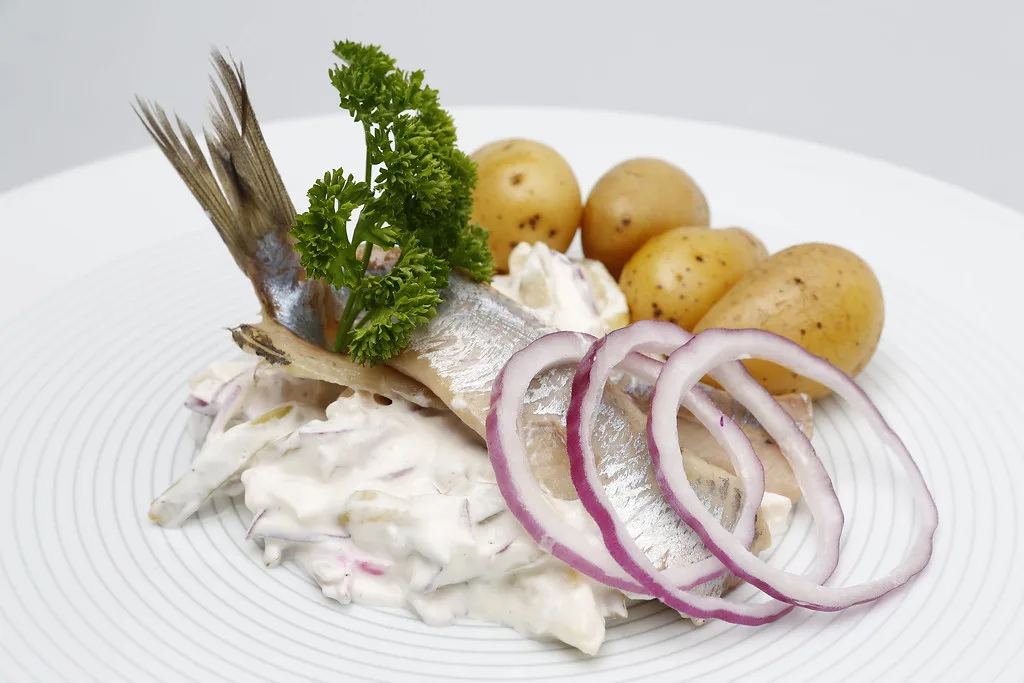
The classic plate is matjes fillets with chopped onions, sliced gherkins, and a creamy sauce, often with boiled potatoes alongside. The onions and pickles cut the richness of the fish, and the sauce softens the whole thing further, so each bite stays mild rather than sharp. It is one of the least intimidating ways to eat raw-cured fish in Germany. For a sit-down German meal of the same mild register, see our guide to Grüne Sosse.
Matjes also works as a topping on dark bread, which makes it a plausible order at a fish counter or a market stall when you want something small rather than a full plate. Matjes salad, with the fish mixed into a creamy dressing, is another common form and a forgiving entry point if you are wary of a whole fillet. Potatoes, either boiled or in a salad, are the usual starchy partner.
Matjes, Rollmops, and Plain Salted Herring: How the Styles Differ
Rollmops is a herring fillet rolled around a pickled gherkin or onion and preserved in vinegar, so it hits sour and firm rather than soft and creamy. Plain salted herring, Salzhering, is the salt-cured ancestor: firmer flesh and a much more assertive salty taste. Matjes sits at the gentle end of that line, which is why it is the one to pick if you want to taste the fish rather than the cure.
A practical rule for a German menu: matjes comes with cream and onions, rollmops comes with vinegar and a gherkin inside, and Brathering is fried and often served warm with onions. If the plate arrives with a creamy sauce and boiled potatoes, you have matjes. If it arrives cold and sharp with a rolled fillet pinned shut, you have rollmops.
When Matjes Is Available and What the Season Means for Menus
Matjes herring is traditionally caught from May to July, when the fish gather to spawn, and that window is why matjes dishes cluster on German menus in late spring and early summer. Treat the dates as the traditional catch time rather than a promise about any particular week's menu. Because the fillets are frozen after processing, matjes is not strictly limited to those months, so a plate in another season is not automatically a bad sign.
For planning purposes, spring and early summer are the natural time to look for matjes specials, and the fish-counter version with potatoes is a solid lunch during that stretch. It fits alongside the other warm-weather items on the Seasonal Food in Germany calendar, where asparagus and the first berries set the tone, and it is the fish counterpart to the mushroom hunting that starts once the Pfifferling appears in markets later in the year. Matjes is the fish course of that same mild, fresh-tasting season.
How to Order and Eat It in Germany Without Fuss
At a fish counter or a sit-down lunch place, say Matjes mit Zwiebeln und Gurken if you want the classic plate, and expect the question of potatoes or bread to follow. Matjes is usually eaten cold, so do not wait for it to arrive hot. If the counter sells it by weight, ask for a whole fillet or two and a roll to go with it.
Eat it with a fork and knife, or on bread in your hand if you bought it to take away. The onions and gherkins are part of the dish, not a garnish to push aside, and the creamy sauce is meant to be spread across the fish. A cold beer or a glass of light white wine is the usual accompaniment; one glass is plenty with a plate of cured fish.
Which Herring Should You Order?
Order matjes if you want mild, tender fish with onions, gherkins, and cream; order rollmops if you want vinegar and crunch; order Salzhering only if you genuinely like a hard salt cure. The classic matjes plate with boiled potatoes is a good first order in Germany because it shows the fish at its mildest.
Explore more Germany guides
Frequently Asked Questions
What is matjes fish in English?
Matjes is lightly brined, naturally ripened herring, often called maiden herring in English. It is served as fillets with onions, gherkins, and a creamy sauce, or on bread.
Does matjes taste very salty or fishy?
It tastes mild and slightly salty with a soft, almost creamy texture. The natural ripening in a mild brine keeps it far gentler than plain salted herring or rollmops.
Is matjes eaten raw?
The fillets are cured and ripened rather than cooked, so they are eaten cold as they come from the brine. That is standard for matjes and not a mistake on the plate.
What is the difference between matjes and rollmops?
Matjes is ripened in a mild brine and served with cream, onions, and gherkins. Rollmops is a herring fillet rolled around a pickled gherkin and preserved in vinegar, so it tastes sharp and firm.
Sources
Notes for your next German food trip
Optional updates to our guides.
You might also like



Continue reading
More guides you'll find useful



