
Streuselkuchen: Germany's Crumb Cake, Explained
Streuselkuchen is Germany's crumb-topped cake, sold by the slice in bakeries and served at afternoon coffee. Here is what it is and how to order it.
On this page
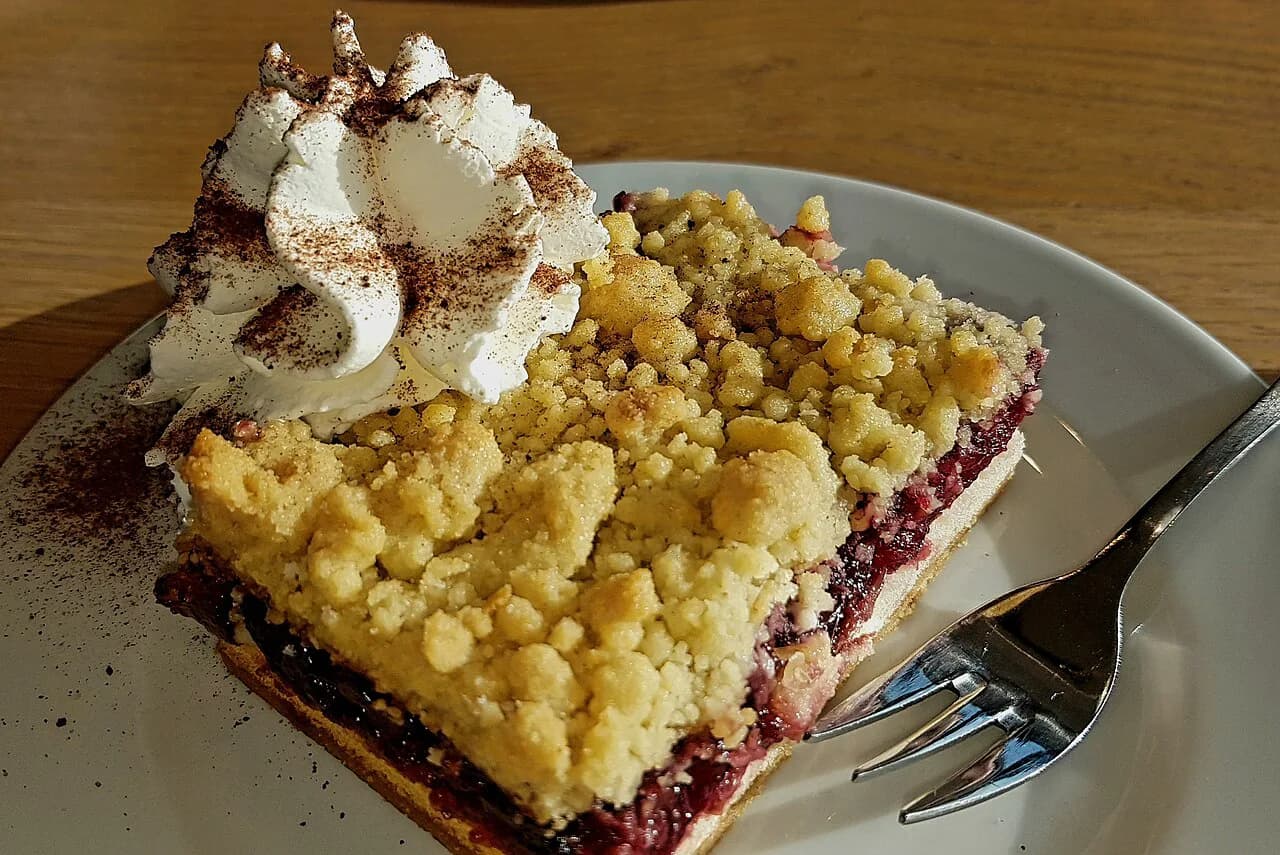
Streuselkuchen is Germany's crumb cake: a flat sheet cake covered in a generous layer of butter, sugar and flour crumbs and baked until the top turns crisp and golden. It is the cake you will see most often at the afternoon Kaffeetafel, the German ritual of coffee and cake, and it is sold by the slice in bakeries and Konditoreien across the country. This guide covers what the cake is, what the crumb topping means, how the regional styles differ, and how to order a piece at the counter without hesitation.
What Streuselkuchen is: a yeast-based cake under a crumbly topping
Streuselkuchen is a sweet yeast-dough cake spread across a baking sheet and buried under a thick layer of streusel, the crumbly butter-sugar-flour mixture that gives the cake its name. The dough is soft and slightly sweet, closer to a thick bread than to a sponge, so it holds up under the weight of the topping as it bakes. That flat sheet format is why the cake is cut into squares and sold by weight or by the piece rather than sliced from a round.
The cake belongs to the same family of German bakes as Bienenstich, the bee sting cake with its honey-almond caramel topping, and both show up on the same bakery counters. Where many German cakes lean on cream and glaze, Streuselkuchen keeps it simple: dough below, crumbs above. German baking tradition treats that simplicity as a virtue, and the best versions are judged on the crunch of the topping and the freshness of the dough.
What Streusel means and how the crumbs get their texture
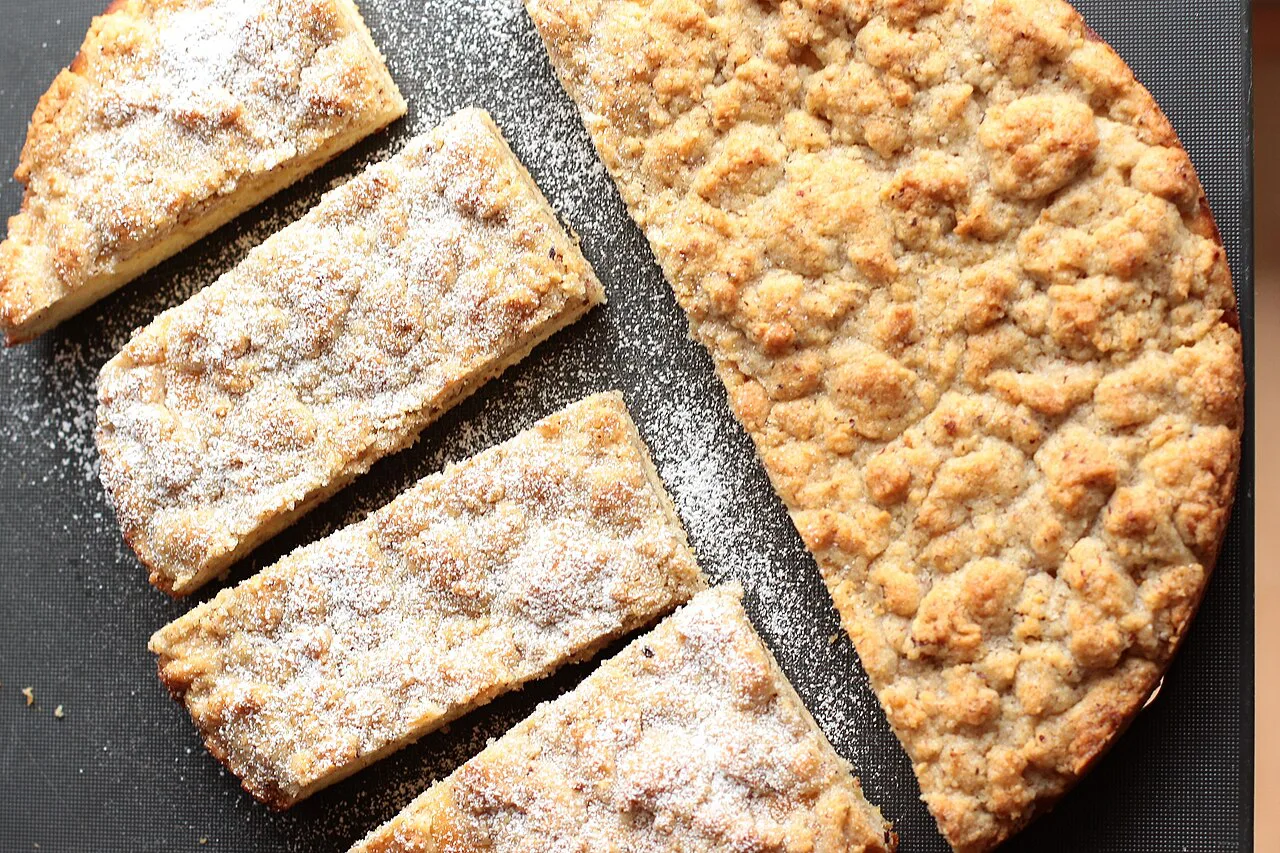
The word Streusel comes from the German verb streuen, meaning to scatter or sprinkle, which describes exactly what happens to the crumbs before baking. A basic streusel is flour, sugar and butter rubbed together until the mixture forms irregular clumps rather than a smooth paste. The size of those clumps decides the texture: coarse crumbs stay crunchy, fine crumbs melt into a sandy layer, and a mix of both gives the cake its contrast.
Is Streuselkuchen the same as coffee cake? Not exactly. Coffee cake in the American sense is usually a baking-powder cake with a crumb topping, while classic Streuselkuchen sits on a sweet yeast dough that has to rise.
Do I need to eat Streuselkuchen warm? Warm is nice but not necessary. A slice that has cooled keeps a firmer set and cuts more cleanly, while a warm slice brings out the aroma of the butter in the crumbs.
Why do eastern and western German versions taste different? The difference comes from what bakers had to work with. Western recipes tend to use more butter and sugar for a richer, crunchier crumb, while eastern versions were shaped by ingredient shortages and often came out denser, with apples or cinnamon added for moisture and flavor.
Butter content drives flavor more than sugar does. Richer doughs and crumbs use real butter, which browns into a nutty taste at the edges, while leaner versions taste plainer and drier. The crumb layer is usually pressed gently onto the dough so it stays put through baking.
How it fits the German Kaffeetafel
Streuselkuchen is at home on the Kaffeetafel, the German afternoon spread of coffee and cake, where it sits alongside other cakes and is eaten in company rather than as a quick snack. Historically it was made at home and passed down through families, and later migrated into bakeries and Konditoreien as urban life changed how people baked.
On a Kaffeetafel, you will see Streuselkuchen cut into squares and stacked on a platter, with coffee poured alongside. It is also the cake that appears when guests visit and as one of the pastries set out in bakery displays. A plain Streuselkuchen makes a sensible centerpiece because it feels like an occasion but stays lighter than cream-heavy cakes.
The base under the crumbs: yeast dough versus shortcrust
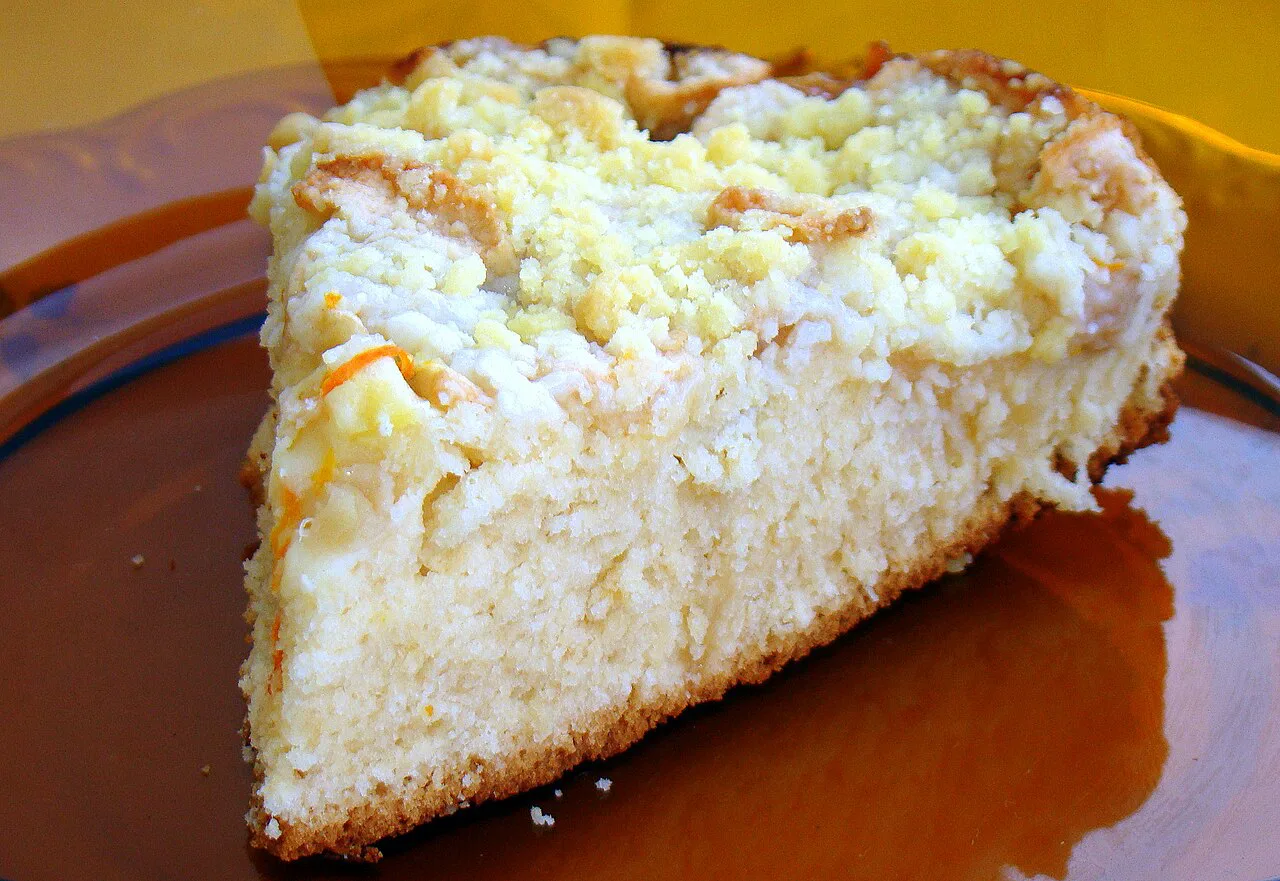
The classic base for Streuselkuchen is sweet yeast dough, rolled out to an even thickness and left to rise before the crumbs go on. That rise gives the cake a soft, faintly chewy interior that contrasts with the crunchy top, and it is the main thing that separates Streuselkuchen from an American coffee cake made with baking powder. A yeast base also means a longer preparation time, which is one reason the cake is a staple of bakeries rather than a last-minute home bake.
Shortcrust versions exist too, typically as a flatter cake with a denser, more biscuit-like bite. The trade-off is texture: shortcrust keeps a firmer edge and travels better, while yeast dough tastes fresher and softer the day it is baked.
Variations you'll see named at the counter: plain, fruit-filled, and apple or cinnamon
Plain Streuselkuchen is the benchmark version: yeast base, butter crumbs, nothing else. Fruit variations layer the goods before the crumbs go on, most often with apple, and sometimes with cinnamon folded in for warmth and moisture. Eastern German versions lean toward these denser, fruit-added styles, while western versions keep the crumb topping heavy and buttery.
If you want a fruitier cake along the same lines, other German classics take fruit further: Käsekuchen, German cheesecake, sits on a shortcrust base with a creamy filling, and Apfelstrudel wraps spiced apples in thin pastry. Compared with those, Streuselkuchen keeps the fruit optional and the crumbs central.
East versus West: two ways of building the crumb layer
The deepest regional split is in the crumb itself. Western recipes tend to use richer butter and generous sugar, producing a topping that is moist, buttery and heavy, and some families add vanilla or almond extract for aroma. Eastern versions were shaped by ingredient shortages, so the cakes came out denser and slightly drier, with the crumb less buttery and more likely to include apples or cinnamon for flavor and moisture.
For a traveler, that split shows up in the first bite. A western-style slice tastes indulgent and leaves a buttery film, while an eastern-style slice feels more like bread with a sweet topping and holds up better with coffee. Neither is more authentic; the difference reflects what a region could bake with at the time.
What it tastes like: crunchy on top, soft underneath
A good slice is sweet but not syrupy, with a crisp, nutty crust from the browned crumbs and a soft, yeasty bottom beneath it. The crunch comes from the butter in the streusel browning at the edges, so a slice that looks pale on top usually tastes flatter. If the crumbs feel soft and sandy, the cake has likely been sitting long enough for the topping to absorb moisture from the dough.
It pairs naturally with black coffee because the bitterness cuts through the butter and sugar. Some cafes serve it slightly warm, which brings out the crumb aroma, but a fully cooled cake sets firmer and cuts more cleanly. A thick slice is richer than it looks, so one piece with coffee is usually enough.
Where to buy it: bakeries, Konditoreien and the case
Streuselkuchen is sold at everyday bakeries and at Konditoreien, the German pastry shops that specialize in cakes and confections, usually by the slice from a flat tray or by weight. Look for a cut square with an even crumb layer across the top, and check whether the tray is the plain version or a fruit variation before you point. A wrapped slice is practical for a train ride or a picnic lunch.
At the counter, the simplest order is a slice of Streuselkuchen, or ein Stück Streuselkuchen, and a coffee if the bakery has seating. Plain and fruit-topped versions often sit side by side on the same tray, so check which one you are pointing at before you order.
How to eat it like a local
The local pattern is unfussy: a slice in the afternoon with coffee, as a break between errands rather than dessert after dinner. Cake and coffee is a social occasion, so the pace is slow, and a second cup is normal. Cutting the cake into small squares rather than large wedges lets a group sample more than one kind.
Fruit-topped versions and when to pick them
A fruity twist on Streuselkuchen is worth choosing when the plain version looks dry or when you want something closer to a dessert. Apples supply moisture, and cinnamon adds a warm spice note. Fruit also adds acid, which keeps the cake from tasting cloying next to a strong coffee.
The trade-off is that fruit versions sacrifice some crunch, because the juicy layer softens the underside of the crumbs. If the topping is the main reason you want this cake, order the plain version; if you want something closer to a fruit dessert, take the apple or cinnamon variation.
Which Streuselkuchen to order first
Start with a plain slice from a bakery that bakes it daily, since the plain version tells you whether the dough and the crumbs are good before fruit masks either. Then try a western-style butter-heavy cake and an eastern-style fruit version to see how the regional split plays out. For a contrast, Schwarzwälder Kirschtorte, Black Forest cake, layers cherries and cream instead of crumbs.
Explore more Germany guides
Frequently Asked Questions
Is Streuselkuchen the same as coffee cake?
Not exactly. Coffee cake in the American sense is usually a baking-powder cake with a crumb topping, while classic Streuselkuchen sits on a sweet yeast dough that has to rise. The topping serves the same purpose in both, but the soft, slightly chewy yeast base gives the German version its distinctive bite.
Do I need to eat Streuselkuchen warm?
Warm is nice but not necessary. A slice that has cooled keeps a firmer set and cuts more cleanly, while a warm slice brings out the aroma of the butter in the crumbs. If the topping feels soft and sandy, the cake has likely sat long enough for the crumbs to absorb moisture.
Why do eastern and western German versions taste different?
The difference comes from what bakers had to work with. Western recipes tend to use more butter and sugar for a richer, crunchier crumb, while eastern versions were shaped by ingredient shortages and often came out denser, with apples or cinnamon added for moisture and flavor.
Sources
Notes for your next German food trip
Optional updates to our guides.
You might also like



Continue reading
More guides you'll find useful





