
Frankfurter Kranz: Germany's Crown Cake Guide
Frankfurter Kranz is a ring-shaped German cake layered with buttercream and red jam and coated in caramelized nut brittle.
On this page
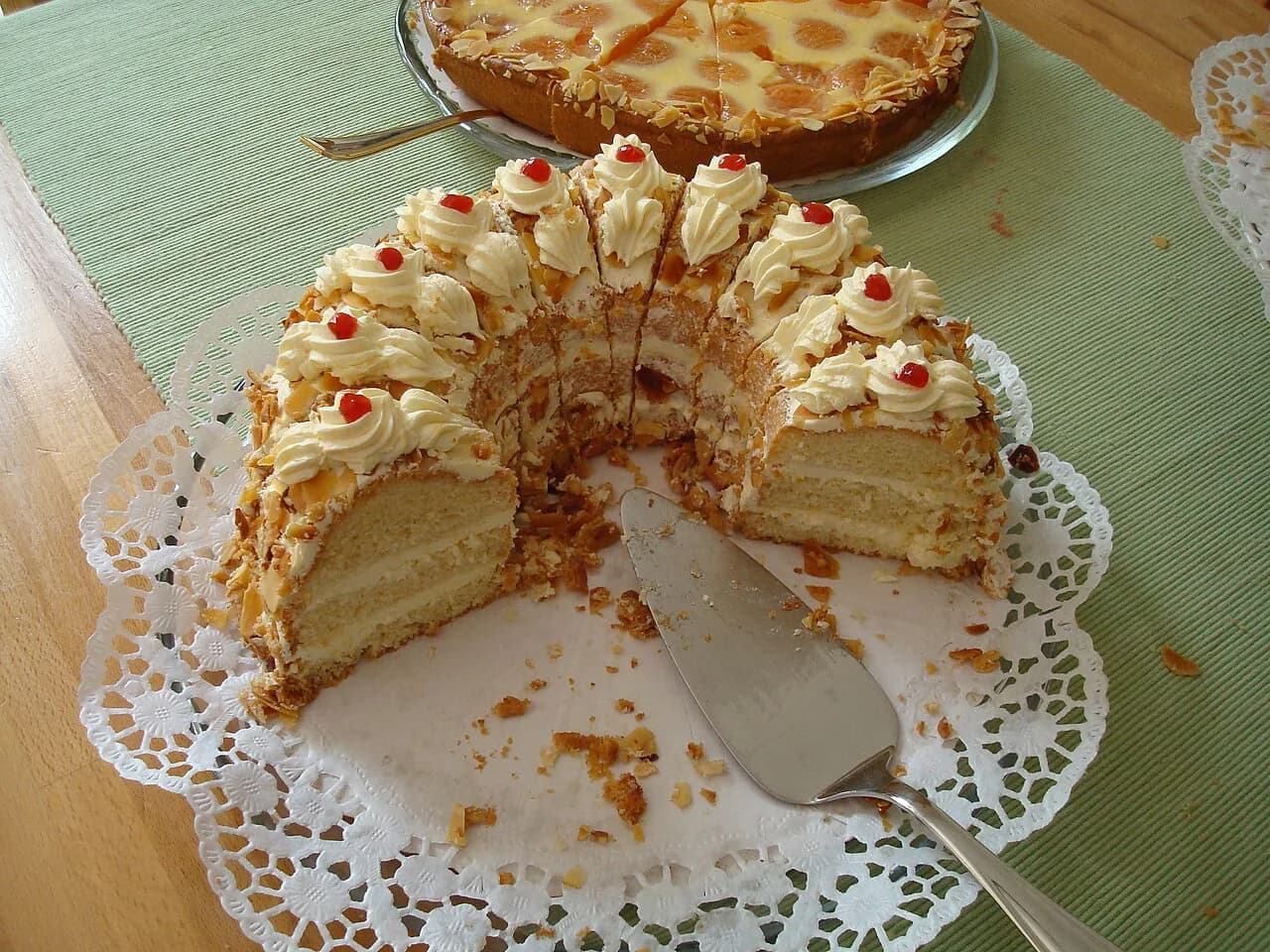
Frankfurter Kranz is a ring-shaped German cake built from three layers of firm sponge, filled with red jam and German buttercream, then coated in more buttercream and caramelized nut brittle called Krokant. Cream peaks topped with red cherries or raspberries sit around the top, so the whole thing reads as a gold-crusted crown. This guide breaks the cake into its three building blocks, explains the naming, and places it where Germans actually eat it: at the afternoon coffee table.
What Frankfurter Kranz actually is
Strip away the decoration and you have a wreath-shaped cake split into three horizontal layers. Between the layers go red jam and buttercream; over the outside goes more buttercream pressed with Krokant, a chopped caramelized nut brittle. It is a coffee-table cake rather than a restaurant dessert, and it is usually sliced thin because it is rich.
The name confuses people because English translations call it Frankfurt Crown Cake, while Kranz actually means wreath. The ring shape and the brittle coating are read as a reference to Frankfurt's role as the coronation city of the Holy Roman Emperors, a symbolic link rather than a documented recipe history. For a wider sweep of similar bakes, the site's collection of German cakes covers the ground.
Why it is called a wreath, not a crown
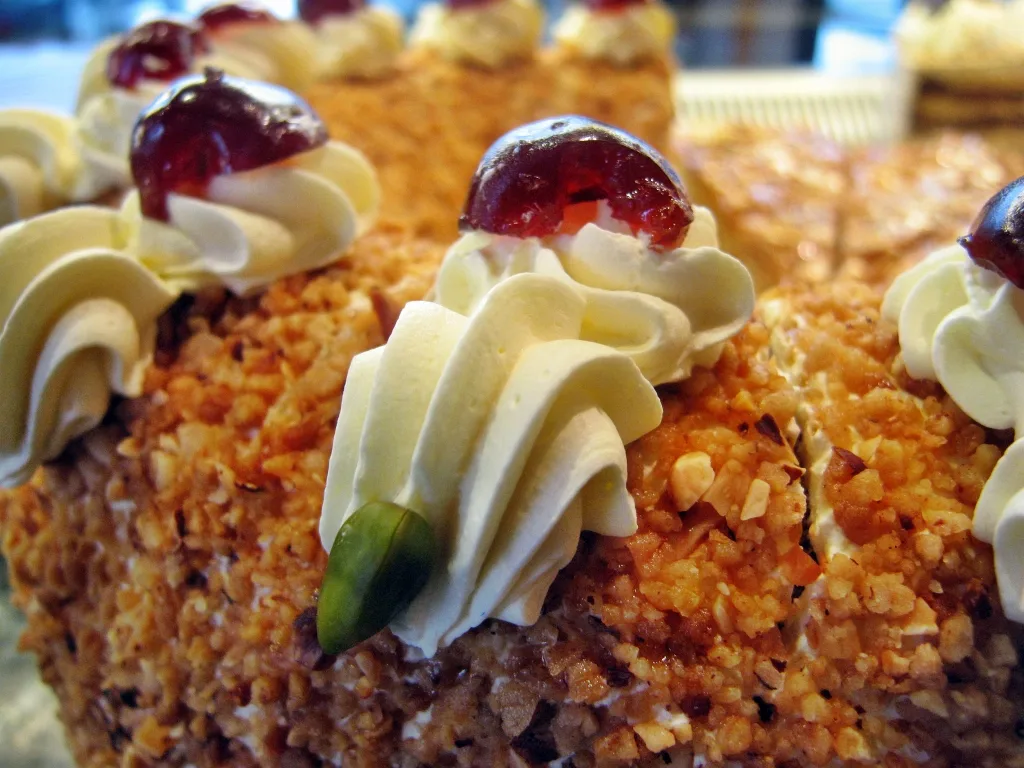
Kranz is the German word for wreath, and the cake is baked in a ring mold so it comes out with a hole in the middle. The English "crown cake" is a long-standing mistranslation that stuck, helped along by the decoration. The gold-colored brittle sheath and the jewel-like red fruit on top do the rest of the work.
Is Frankfurter Kranz the same as a crown cake? Yes, in English it is usually sold as Frankfurt Crown Cake, but the German word Kranz means wreath. The name comes from the ring shape rather than an actual crown.
Does Frankfurter Kranz contain alcohol? The standard cake does not: the components are sponge, vanilla pudding buttercream, red jam, caramelized nuts and fruit. Some versions add a little rum or kirsch to the cream, so ask if you are avoiding alcohol.
What is Krokant made of? Krokant is caramelized nut brittle, typically almonds, hazelnuts or a mix cooked with sugar until golden, then cooled and crushed. It forms the crunchy golden coating on the outside of the cake.
The origin story is traditionally dated to around 1735 and credited to an unnamed pastry chef, with the first written recipe appearing in the 20th century; it is also unclear whether the cake was actually invented in Frankfurt, so treat the imperial connection as legend attached to the shape. Frankfurt's coronation history is real, but the last coronation there took place in 1711, decades before the cake's supposed creation.
The cake base: firm sponge with lemon
The batter is a rich sponge rather than a light American-style layer cake. Softened butter is creamed with sugar, salt and vanilla, then eggs go in one at a time, followed by lemon zest and juice for fragrance. Sifted flour, cornstarch and baking powder fold in last, and the cornstarch keeps the crumb tender so the layers survive being sliced.
It bakes in a Bundt-style ring pan, cools completely, then gets cut horizontally into three even layers. Baking the base a few hours ahead or the day before makes that splitting easier, because a settled sponge holds together instead of crumbling. The result is denser and less sweet than the sponges most American cakes use, which matters once the buttercream arrives.
German buttercream: pudding whipped into butter
This is the part that separates Frankfurter Kranz from anything built on powdered-sugar frosting. A vanilla pudding is cooked from milk, sugar, cornstarch and egg yolk, then cooled to room temperature and beaten into lightened butter a spoonful at a time. The pudding and the butter must be the same temperature; if one is cold, the emulsion breaks and the cream looks grainy.
The payoff is a cream that tastes of vanilla and butter, rich but not cloying, with enough body to hold a piped peak. A little powdered sugar stabilizes it for piping, and some bakers add a touch of turmeric for a warmer yellow. Keep this in mind when comparing it with Black Forest cake, which relies on whipped cream instead.
The jam inside
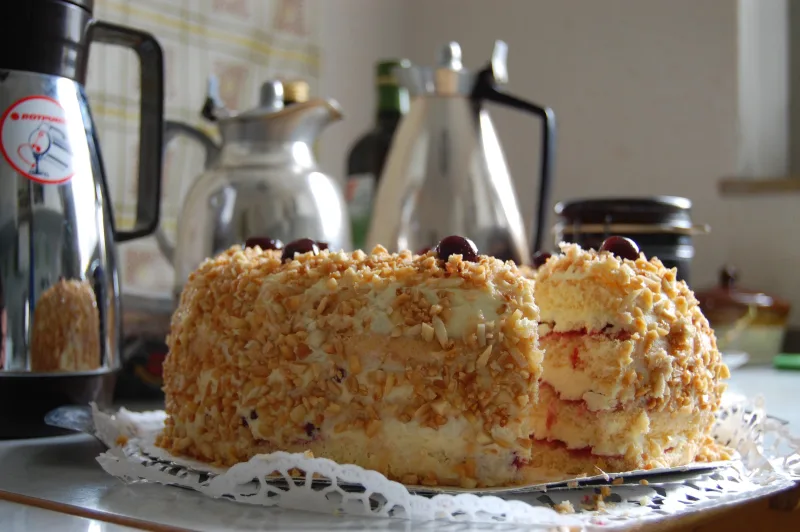
A sweet-sour red jam goes between the layers, and the choice is flexible. Raspberry jam is common, and sour cherries or maraschino cherries often top the cream peaks, so the cake carries fruit acidity against all that butter. The jam layer is thin: its job is contrast, not bulk.
Krokant: the brittle that defines the finish
Krokant is a caramelized nut brittle, usually almonds, hazelnuts or a mix. Sugar and a splash of water go into a pan, the chopped nuts stir in until the liquid evaporates and the nuts turn golden, then the mass cools on parchment and gets crushed. Finely chopped, it presses onto the buttercream in a dense golden coat and gives the cake its crackle.
That nut coating is the structural signature of the cake; without it you have a plain buttercream torte. If you like the idea of a nut-and-caramel top layer, Bienenstich works on similar principles with its honey-almond caramel topping over a yeast base.
How the cake is assembled
Stack the bottom layer, spread jam, then buttercream, and repeat until the third layer caps it. The assembled cake gets a full coat of buttercream over the outside, then the Krokant is pressed on by hand or with a palette knife, working around the sides and over the top. Piped buttercream rosettes go around the crown, each finished with a cherry or a raspberry.
Chill the finished cake so the buttercream firms up before slicing, and use a warm knife for clean cuts through the brittle. Slices are narrow wedges, not the tall slabs you might expect from an American layer cake.
What it tastes like
Expect a firmer, less airy crumb than a US-style cake, a pronounced vanilla-butter flavor from the cream, a tart fruit note from the jam, and a toasted nut crunch on every bite. The overall sweetness sits lower than the decoration suggests. It is also noticeably heavier per slice, so one piece with coffee goes a long way.
The closest familiar comparison is a European butter-cream torte rather than a frosted birthday cake. If you want a lighter German cake on the same table, German cheesecake is the opposite in texture and weight, and a good contrast pour alongside it.
Where it fits: Kaffee und Kuchen
Frankfurter Kranz belongs to Kaffee und Kuchen, the German afternoon ritual of coffee and a slice of cake, usually mid-afternoon and often at home or in a café rather than after a restaurant dinner. It is a celebration cake too, which is why the decoration leans festive. Order it with a plain filter coffee or a Milchkaffee to cut the butter.
If you are mapping a cake tour of Germany, this one is the Frankfurt classic, while a chocolate-and-cherry counterpart comes from the southwest: Schwarzwälder Kirschtorte. Other regional cakes, from Baumkuchen to Donauwelle, follow their own local logic.
Should you order the Frankfurter Kranz?
Yes, if you want the full German coffee-table experience: a firm sponge, real cooked-pudding buttercream and a nut brittle crust that makes it unlike anything on an American dessert menu. Split one slice between two if you have already eaten, and take it with black coffee. If buttercream is not your thing, look for a fruit-led cake instead.
Explore more Germany guides
Frequently Asked Questions
Is Frankfurter Kranz the same as a crown cake?
Yes, in English it is usually sold as Frankfurt Crown Cake, but the German word Kranz means wreath. The name comes from the ring shape rather than an actual crown.
Does Frankfurter Kranz contain alcohol?
The standard cake does not: the components are sponge, vanilla pudding buttercream, red jam, caramelized nuts and fruit. Some versions add a little rum or kirsch to the cream, so ask if you are avoiding alcohol.
What is Krokant made of?
Krokant is caramelized nut brittle, typically almonds, hazelnuts or a mix cooked with sugar until golden, then cooled and crushed. It forms the crunchy golden coating on the outside of the cake.
Why does the buttercream sometimes look curdled?
The cooked pudding and the butter must be at the same room temperature before they are combined. If one is cold, the emulsion can break and the cream turns grainy.
Can I buy Frankfurter Kranz outside Frankfurt?
It is a traditional Frankfurt coffee-time cake rather than a shop-counter staple everywhere, so availability varies by bakery and region. Look for a ring-shaped cake with a nut-brittle coating rather than a wedge with pale frosting.
Sources
Notes for your next German food trip
Optional updates to our guides.
You might also like



Continue reading
More guides you'll find useful




