
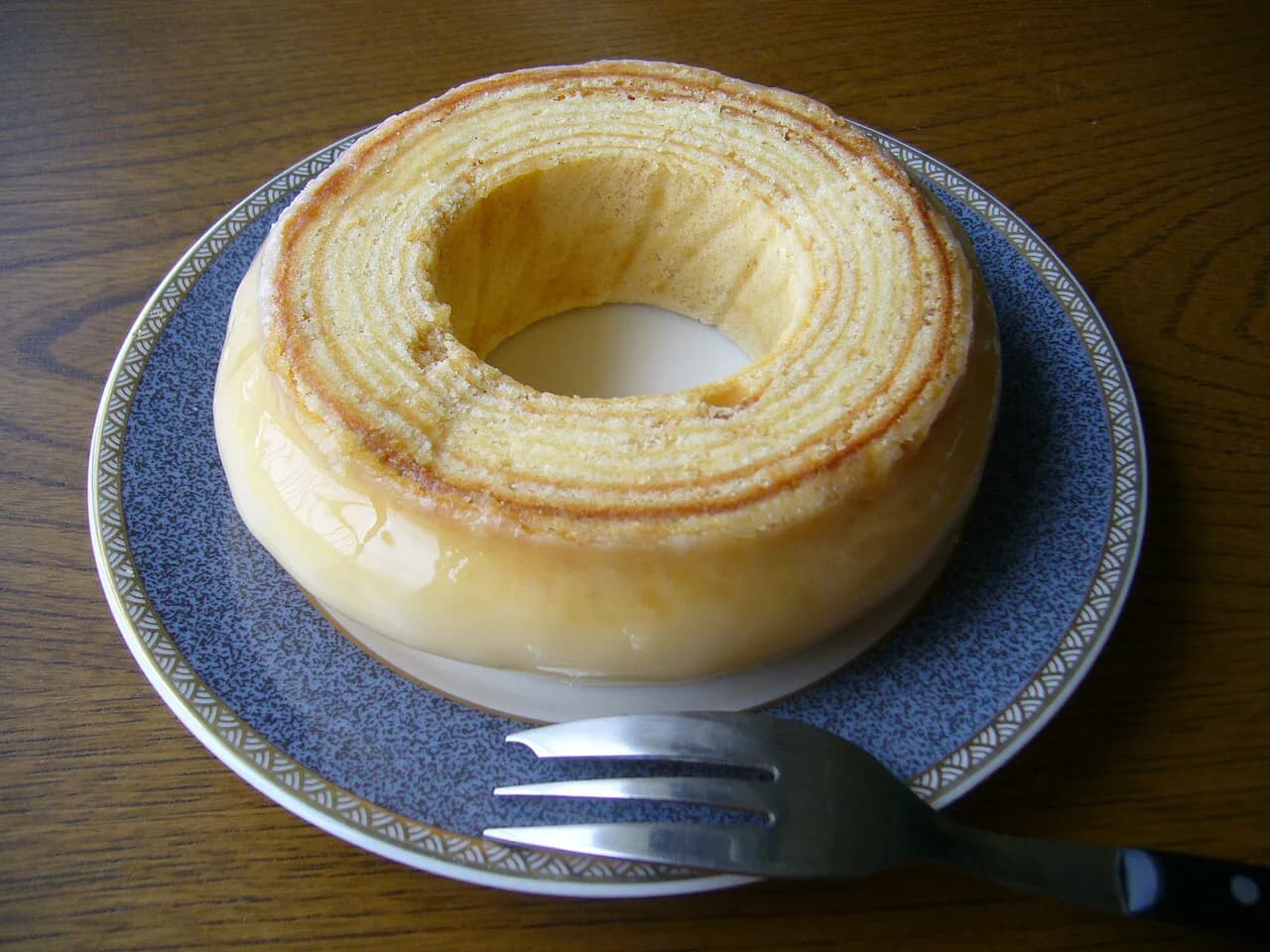
Baumkuchen: Germany's Tree Cake, Explained
Baumkuchen is a German spit cake named for its tree-ring layers. Learn how it's baked, how to cut it, what a whole cake costs, and what to buy.
On this page
Baumkuchen is a German cake baked layer by layer on a rotating roller, and its name means "tree cake" because those layers form rings that look like the growth rings of a tree. You will find it as whole rings in patisseries, as chocolate-glazed squares, and as small cut pieces sold for snacking. This guide covers how it is baked, why a whole one carries a serious price, the cutting method most first-timers get wrong, and what to look for when you buy.
What Baumkuchen actually is
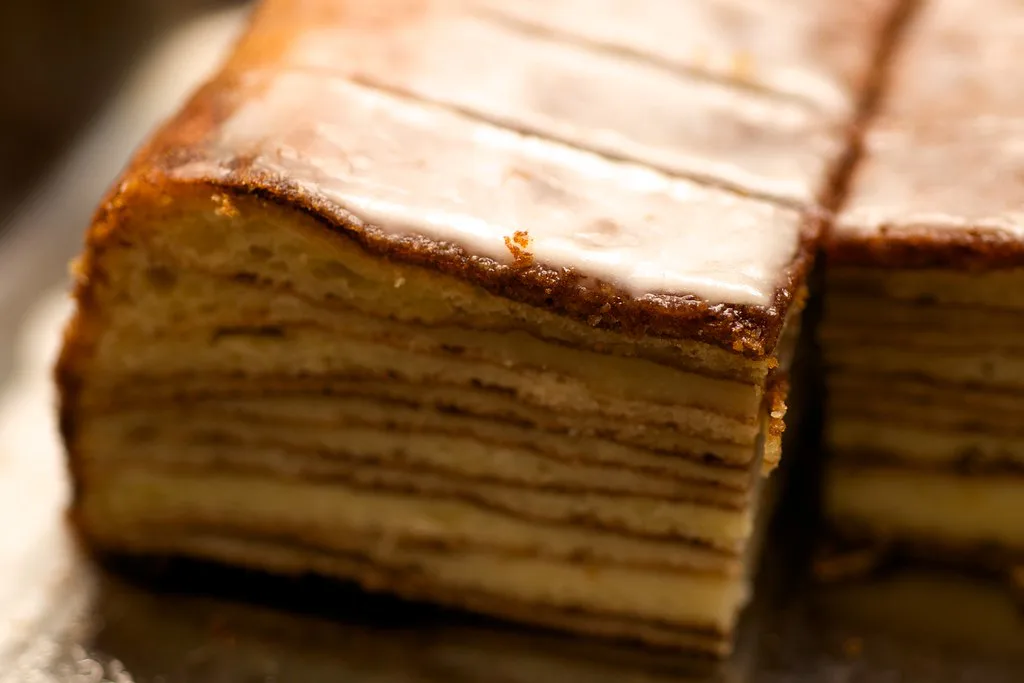
The batter goes onto a rotating roller in several thin coats, and each new layer caramelizes as it is applied, which is what creates the ring-shaped layers visible in a cut slice. A finished cake can hold a dozen or more of these rings, and the outside browns while the inside stays soft. It is a layered butter-and-egg batter cake, not a fruit torte or a cream-filled slice, so judge it on the layering and the freshness of the crumb.
Because the drama is in the structure, a good Baumkuchen is a textural cake: look for even, distinct rings and a moist interior rather than a dry crumb hidden under glaze. That makes it a natural companion to coffee in the afternoon, the German ritual of Kaffee und Kuchen, when a slice does more work than a heavier dessert. If you want to see where it fits beside the rest of the sweet table, our guide to German Cakes covers the whole family.
How Baumkuchen is made, layer by layer
A baker brushes a thin layer of batter onto a heated spit or roller, lets it bake to a light golden brown, then brushes on the next and repeats until the cake reaches its full depth. That single-layer-at-a-time rhythm is why the cake is slow to produce and why the layers read as rings rather than as a sponge. Home bakers get a workable approximation by spreading a few tablespoons of batter into a lined pan and running it under the oven's top heat for a few minutes between layers, building up around a dozen rings.
How Baumkuchen is made, layer by layer. A baker brushes a thin layer of batter onto a heated spit or roller, lets it bake to a light golden brown, then brushes on the next and repeats until the cake reaches its full depth.
Why a whole Baumkuchen costs what it does. A whole Baumkuchen from a patisserie is expensive because the price tracks the craft: an entire cake runs around 50 euros at a patisserie, while supermarket versions sell for far less and taste like it.
How to cut and serve it. Do not cut Baumkuchen into vertical wedges from top to bottom.
Timing is unforgiving: a thin layer can turn from golden to dark within seconds, so the baker watches the oven closely and adds the next coat as soon as the previous one sets. Watching this happen at a stall, with the roller turning and the layers building up, is the clearest explanation of the cake you will get before you eat it.
Why a whole Baumkuchen costs what it does
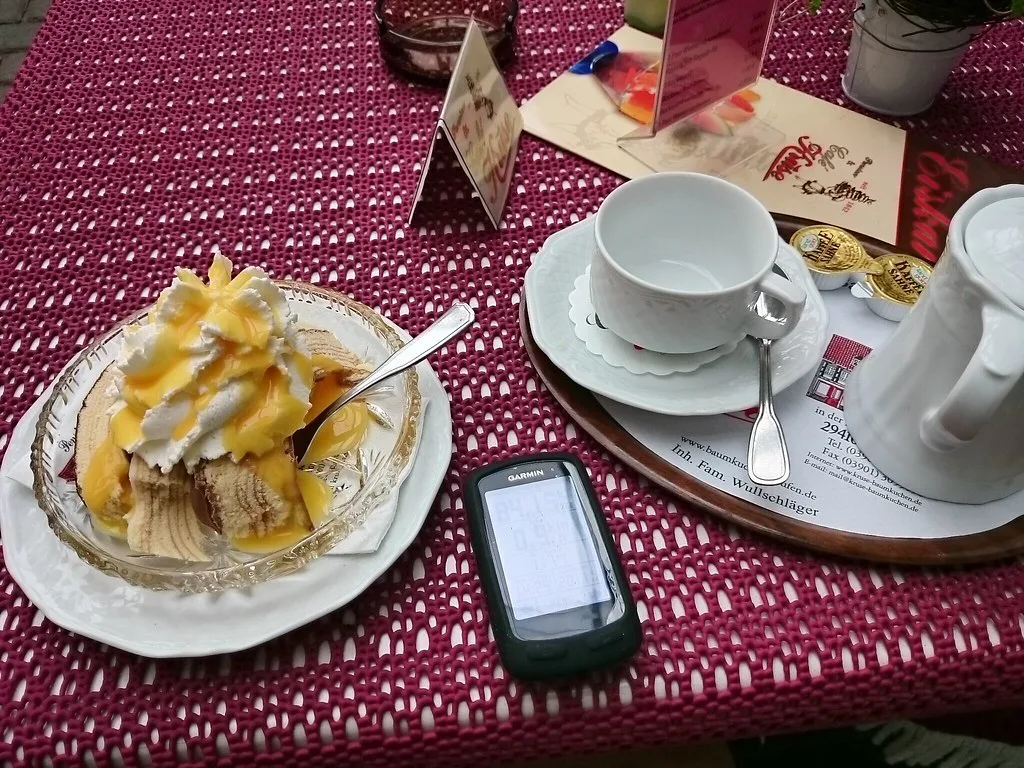
A whole Baumkuchen from a patisserie is expensive because the price tracks the craft: an entire cake runs around 50 euros at a patisserie, while supermarket versions sell for far less and taste like it. The gap is not a markup on prestige, it is the hours of layering, the skill at the spit, and the risk of ruining a batch at the last layer.
Treat the whole ring as a gift cake for a table of people rather than a solo purchase, and let the supermarket or bakery slices do the everyday job. A cake sold in rings by weight is also a way to try it without committing to a full one, and you can compare the crumb before buying more.
How to cut and serve it
Do not cut Baumkuchen into vertical wedges from top to bottom. The correct approach is to work horizontally, removing individual layers with the knife so each portion keeps the rings intact and the soft interior does not collapse. Sawing down through the cake crushes the layers and leaves a ragged edge, which is the giveaway that someone cut it the wrong way.
For a crowd, slice thin horizontal sheets and serve them as they are, or with a spoon of whipped cream or a coffee alongside. Keep it simple: a good Baumkuchen is sweet and rich already, and a heavy sauce buries the caramelized edges that the spit work produced.
Why Baumkuchen is a Japanese classic
Karl Joseph Wilhelm Juchheim, a confectioner from Kaub on the Rhine, was living with his wife in Qingdao in the early twentieth century and running a patisserie there. During the First World War he was taken to Japan as a prisoner of war and interned in a camp near Hiroshima, where he was allowed to bake, and he made a Baumkuchen for an exhibition of German craftsmanship at a hall that is now the Peace Memorial. After the war the Juchheims opened their first patisserie in Yokohama, and the cake became a Japanese classic sold through a large chain of shops.
That history explains why the cake travels so well and why Japanese visitors often know Baumkuchen better than some German shoppers do. It also means you may see it sold year-round and in polished gift packaging, not only in the German winter-season displays.
Chocolate Baumkuchen and Baumkuchenspitzen
Baumkuchenspitzen are the cut pieces and trimmings, often glazed with chocolate, sold as a snack or packed in boxes. They give you the layered crumb and the caramelized edges in small format, and they are the practical choice if you are traveling and do not want to carry a fragile whole ring.
A full chocolate-glazed Baumkuchen is a different proposition: the coating seals the cake and adds sweetness, which can mask the caramelized layers if the chocolate is heavy. If you want to judge the baking itself, buy a plain ring or plain cut pieces first and save the chocolate version for later.
What to look for when buying one in Germany
Look for a cake with clearly separated rings all the way through, a golden-brown exterior rather than a pale one, and a springy, moist interior when you press lightly. Avoid one that looks dry at the cut edge or smells strongly of old fat, and check the date on packaged slices in a bakery or shop.
If you want a cake you can carry home, ask for a whole ring or a box of cut pieces, and expect a patisserie to make up the cake for the size you need. The German sweet counter is a useful place to compare Baumkuchen with the other classics before you commit, from Black Forest Cake to the lighter yeast-based slices, and our guide to German Cakes and desserts lays out the rest of the case.
Cakes with a cream filling or fresh fruit are best eaten the same day, while a plain Baumkuchen keeps longer and survives a train ride. If you are buying for a gift, say so and ask how the shop packs it; a whole ring is fragile and needs a box rather than a bag.
Where Baumkuchen sits among German cakes
Baumkuchen belongs to the richer end of the German cake table, next to buttercream tortes and yeast-dough bakes rather than the light afternoon pastries. If you are working through the classics, it is worth knowing how Schwarzwälder Kirschtorte, made with chocolate sponge, cherries and cream, differs in both weight and price.
For a first-time order in a German café, a slice with coffee is the safest introduction, and you can decide afterward whether a whole cake or a box of pieces is worth the luggage space. German cakes are a broad family, and Baumkuchen is the one where the making, not the topping, is the point.
Baumkuchen: which version should you buy?
If you want the cake itself, buy a plain whole ring from a patisserie and cut it horizontally into thin layers for a table of people. If you want a souvenir or a snack, a box of cut Baumkuchenspitzen or a small ring is easier to carry and lets you compare the crumb without a large outlay.
If you only have room for one German cake stop on your trip, a slice with afternoon coffee gives you the layered texture without the price or fragility of a whole cake, and a whole ring is best saved for a celebration with several people at the table.
Explore more Germany guides
Sources
Notes for your next German food trip
Optional updates to our guides.
You might also like



Continue reading
More guides you'll find useful



