
Bienenstich: Germany's Bee Sting Cake Guide
Bienenstich is a German cake with a soft base, creamy filling and caramelized honey-almond topping. Here is what you get and how to order a slice.
On this page
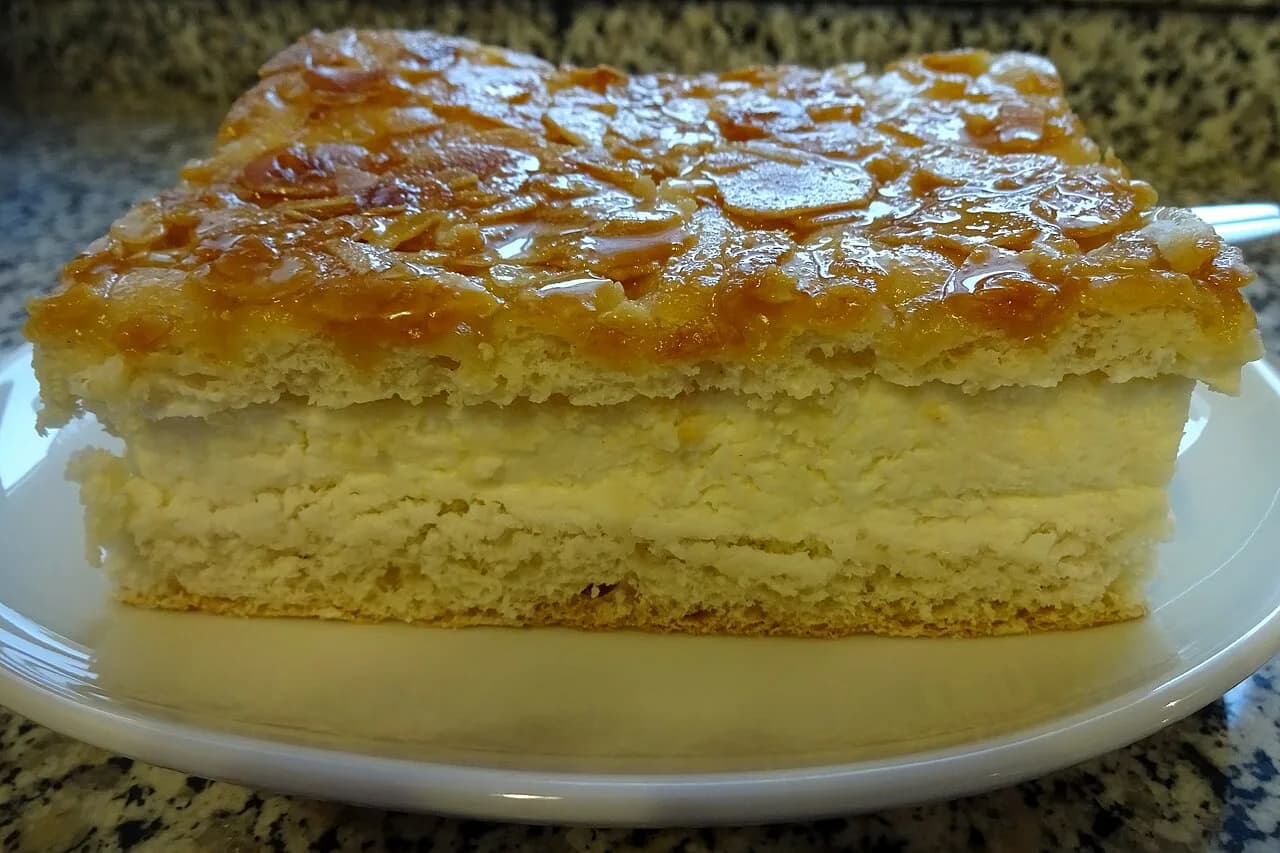
Bienenstich is a German cake with a soft base, a creamy filling and a caramelized honey-almond topping that forms its signature lid. It belongs to the same afternoon-coffee tradition as other German cakes, which is why you will usually see it sliced and served alongside a cup of coffee rather than as a plated dessert. This guide breaks down the three parts of the cake, explains the main variations bakers use, and shows how to order a slice at a bakery or Konditorei (a German pastry shop and café).
What Bienenstich Is
Bienenstich translates as bee sting cake, and the name points straight at the topping: sliced almonds cooked with butter, honey and sugar until they caramelize into a golden, slightly chewy crust. Everything it sits on is comparatively plain, which is the point, since the honey-almond layer and the cream underneath are what people remember. The cake is a bakery staple rather than a rare specialty, so it turns up across Germany in different forms and qualities.
What a Slice Looks Like
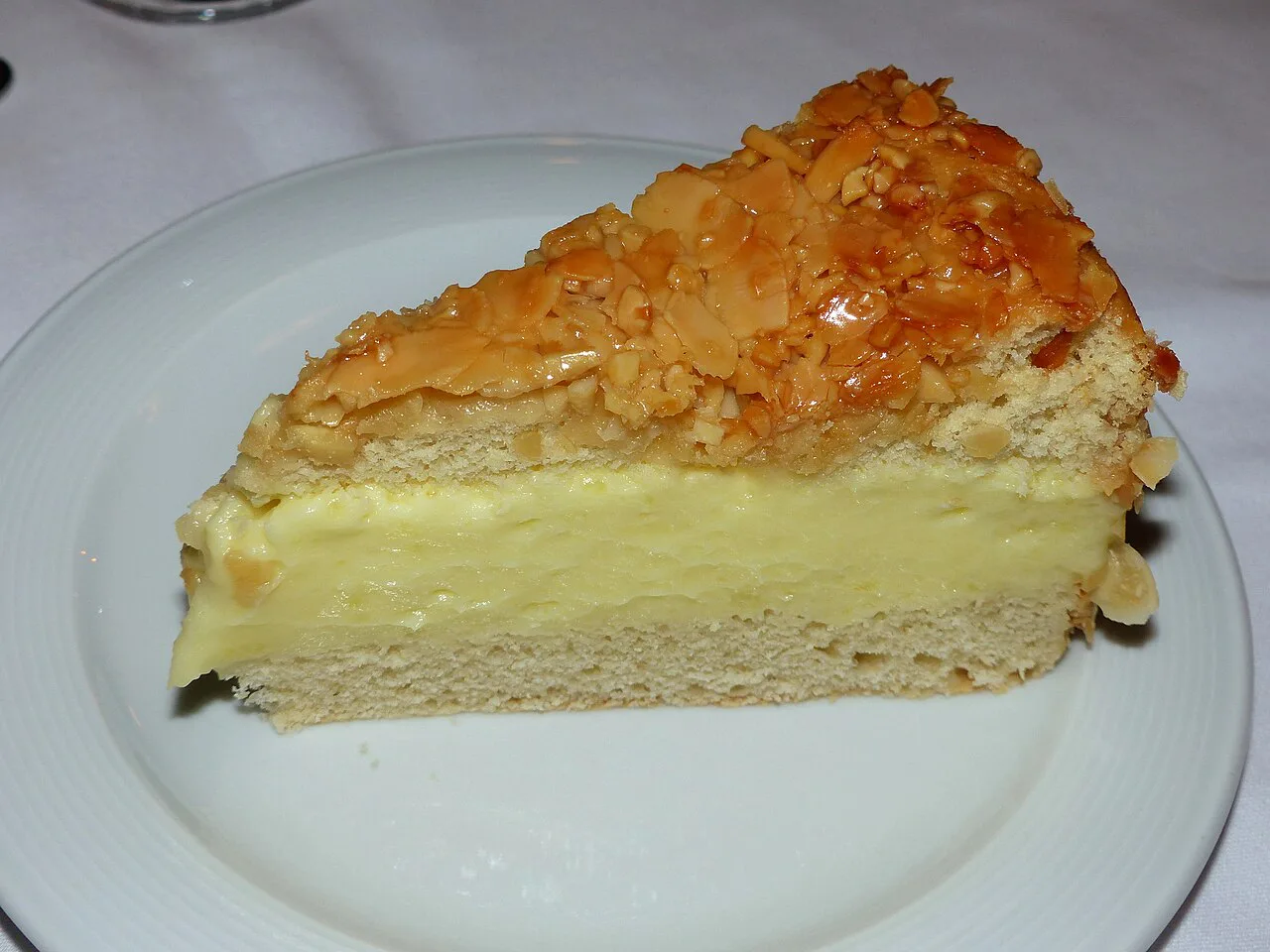
A Bienenstich slice reads as three horizontal bands. The bottom is a soft, mildly sweet base; the middle is a pale cream filling; the top is the almond lid and its caramel glaze. Cut the slice and the cream may be thick and spoonable or lighter and aerated, depending on how the filling was made. The overall taste is sweet and buttery with a toasted-nut crunch on top, so it suits coffee better than anything sharp or fruity.
What does bee sting cake taste like? It tastes sweet and buttery, with soft cake or yeast dough underneath, a cool vanilla cream in the middle and a toasted honey-almond topping. The contrast between the soft base and the crunchy caramelized lid is the point of the cake, and the honey flavor in the topping is often the strongest single note.
Is Bienenstich the same as a custard cake? Usually, yes. The classic filling is vanilla pastry cream, and many bakeries fold in whipped cream to make the lighter Crème Diplomat.
Why is it called bee sting cake? The name comes from the topping, where sliced almonds are cooked with honey, butter and sugar until they caramelize into a golden crust. The honey and the honeycomb-like almond surface are how the cake is usually explained, and no sting is part of the recipe.
The Base: Yeast Dough (Hefeteig) or Rührteig
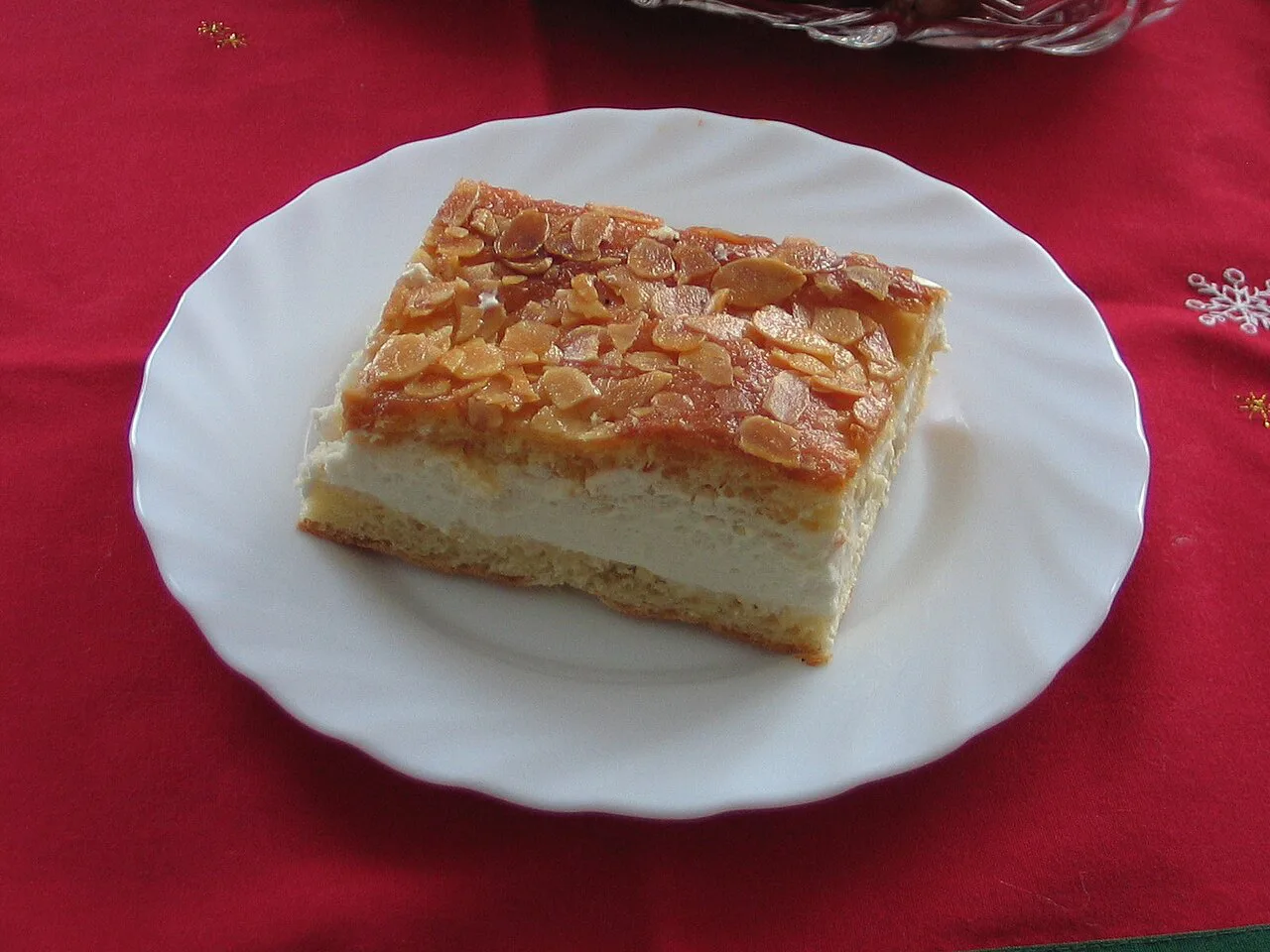
The best-known version uses Hefeteig, a yeasted dough that gives the cake a slightly chewy, bread-like crumb sturdy enough to carry cream and a heavy almond layer. Flour, milk, butter, eggs, sugar and yeast make up the usual dough, and some bakers work in sourdough for deeper flavor. A faster route is Rührteig, a German cake batter closer to sponge in texture, which many home bakers prefer because it skips the rising time. In a bakery case, a denser, more bread-like slice usually signals yeast dough while a softer crumb suggests batter.
The Filling: Pastry Cream, Crème Diplomat and Schmand
The classic filling is vanilla pastry cream, a custard of milk, egg yolks, sugar, cornstarch and butter that is smooth enough to contrast with the crunchy top. Many bakeries lighten it with whipped cream to make Crème Diplomat, which gives a mousse-like center instead of a dense custard. In southern Germany and Austria, some bakers add Schmand (a thick cultured sour cream) or quark (a fresh, soft acid-set cheese) for a tangy edge. A simpler pudding-and-whipped-cream filling shows up as a home-baking shortcut, so do not assume every slice is a true custard.
The Topping: Where the Bee Sting Comes From
The lid is made by gently heating sliced almonds with butter, honey and sugar, sometimes with a little cream, until the mixture thickens into a sticky caramel that is spread over the dough before baking. In the oven it sets into a golden crust that is crackly and slightly chewy at the same time, and it is the part that gives the cake its name. Bakers often favor a dark, floral honey such as German forest honey, though any good honey adds depth to the glaze. If you want to see how the cake is put together at home, The Delicious Crescent walks through a no-yeast version that sets vanilla pudding between two cake layers and finishes it with a caramelized almond topping.
Where the Cake Comes From
Bienenstich is usually traced to Bavaria, and one baking account places its earliest mentions in German cookbooks of the 15th and 16th centuries, though that history is not documented to an original source. As told, it began as a celebratory cake for festivals and special occasions, with a soft yeast dough, rich pastry cream and crunchy honey-almond topping suited to a table where the cake is the centerpiece. From Bavaria it spread through southern Germany and into neighboring Austria, which is why those regions offer so many local versions today.
How Germans Eat It
Bienenstich belongs to Kaffee und Kuchen, the German afternoon ritual of coffee with a slice of cake, which is exactly when a bakery expects to sell most of it. Serving the slice almond-side up makes the prettiest plate, but the caramel topping is firm and slippery, and cutting through it at the table is easier with a fork. Tipping the slice onto its side is the practical move, because the cream and the almond lid stay together instead of sliding apart under the knife.
What to Look For and How to Order
At a Konditorei or bakery counter, look for a rectangular or round cake tray with a distinct, evenly browned almond layer; patchy or pale tops suggest the caramel was underbaked. Point at the slice you want and ask for ein Stück Bienenstich (one slice of Bienenstich), which keeps the order simple even if your German is basic. Many German bakeries price per piece rather than by weight, so expect the slice to be cut and handed over rather than weighed out. If you want something to compare it against, a slice of Black Forest Cake puts fruit and cream at the front while Bienenstich leads with nuts and honey; the German bakeries guide covers how the counter works.
Bienenstich and the Other Cakes in the Case
Choosing a slice means deciding what kind of dessert you want. Streuselkuchen with its crumb topping is the lighter option for a morning coffee, while a slice of Donauwelle brings sour cherries, chocolate and cream in one piece. Bienenstich sits between those: more luxurious than a plain crumb cake because of the cream, but less showy than a layered torte. If the case is unfamiliar, this guide to German cakes maps the main styles so your slice does not come as a surprise.
Which Slice to Order
Order Bienenstich if you want one of the most distinctive German cakes: a soft base under a pale cream filling and a caramelized honey-almond lid that no other standard cake in the case quite matches. If you prefer fruit or want something lighter for lunch, choose a fruit-based cake instead, and save Bienenstich for the afternoon coffee that it was built for. Ask at the counter whether the cream is pastry cream, Crème Diplomat or a quark-based version if the filling matters to you, since all three look much alike from above.
Explore more Germany guides
Frequently Asked Questions
What does bee sting cake taste like?
It tastes sweet and buttery, with soft cake or yeast dough underneath, a cool vanilla cream in the middle and a toasted honey-almond topping. The contrast between the soft base and the crunchy caramelized lid is the point of the cake, and the honey flavor in the topping is often the strongest single note.
Is Bienenstich the same as a custard cake?
Usually, yes. The classic filling is vanilla pastry cream, and many bakeries fold in whipped cream to make the lighter Crème Diplomat. In southern Germany and Austria, some versions add Schmand or quark for a tangy flavor, so Bienenstich is a broader category than a plain custard slice.
Why is it called bee sting cake?
The name comes from the topping, where sliced almonds are cooked with honey, butter and sugar until they caramelize into a golden crust. The honey and the honeycomb-like almond surface are how the cake is usually explained, and no sting is part of the recipe.
Sources
Notes for your next German food trip
Optional updates to our guides.
You might also like



Continue reading
More guides you'll find useful





