Donauwelle: The German Danube Wave Cake Explained
Donauwelle is a German sheet cake of light and dark batter, sour cherries, buttercream and a chocolate top. Here is what's in it and how to order a slice.
On this page
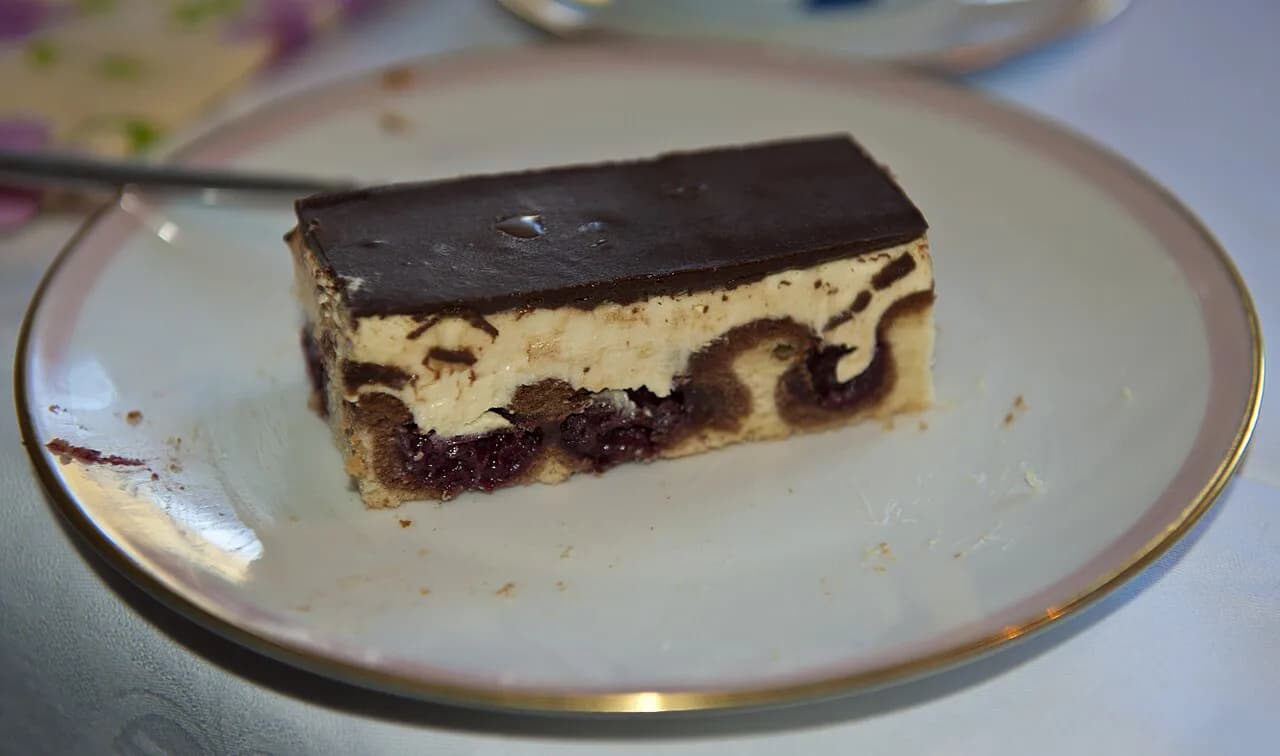
Donauwelle is a traditional German sheet cake popular in Germany and Austria, made from light and dark cake batter, sour cherries, buttercream and a chocolate top. Travelers meet it as a tray-baked counter cake in Konditoreien rather than as a tall celebration torte, which is exactly why it suits a mid-afternoon coffee stop. This guide breaks down the layers, explains the two names, and shows you what to look for in the display case.
A good slice is easy to read once you know the construction: a pale and a dark batter that meet in a wavy line, cherries sunk through the middle, a creamy layer, and a glossy dark lid. Knowing that pattern helps you pick out Donauwelle among the other trays of German cakes before you even read a label.
What Donauwelle Is
Donauwelle is a sheet cake, meaning it is baked in a rectangular pan and cut into squares or rectangles for sale. The version most commonly described combines plain and chocolate pound cake batters, pitted sour cherries, a buttercream filling and a chocolate finish. That stack of contrasting textures is the whole point: firm crumb, juicy fruit, soft cream, snap of chocolate.
Because it is baked as a slab, a Donauwelle slice is usually a modest square rather than a wedge, and it holds its shape well enough to eat with a fork at a café table. For a visitor, that makes it a low-commitment order: one piece alongside a coffee is a normal portion, and you can try it without planning a whole dessert course around it.
Why It's Called Danube Wave (and Snow White Cake)
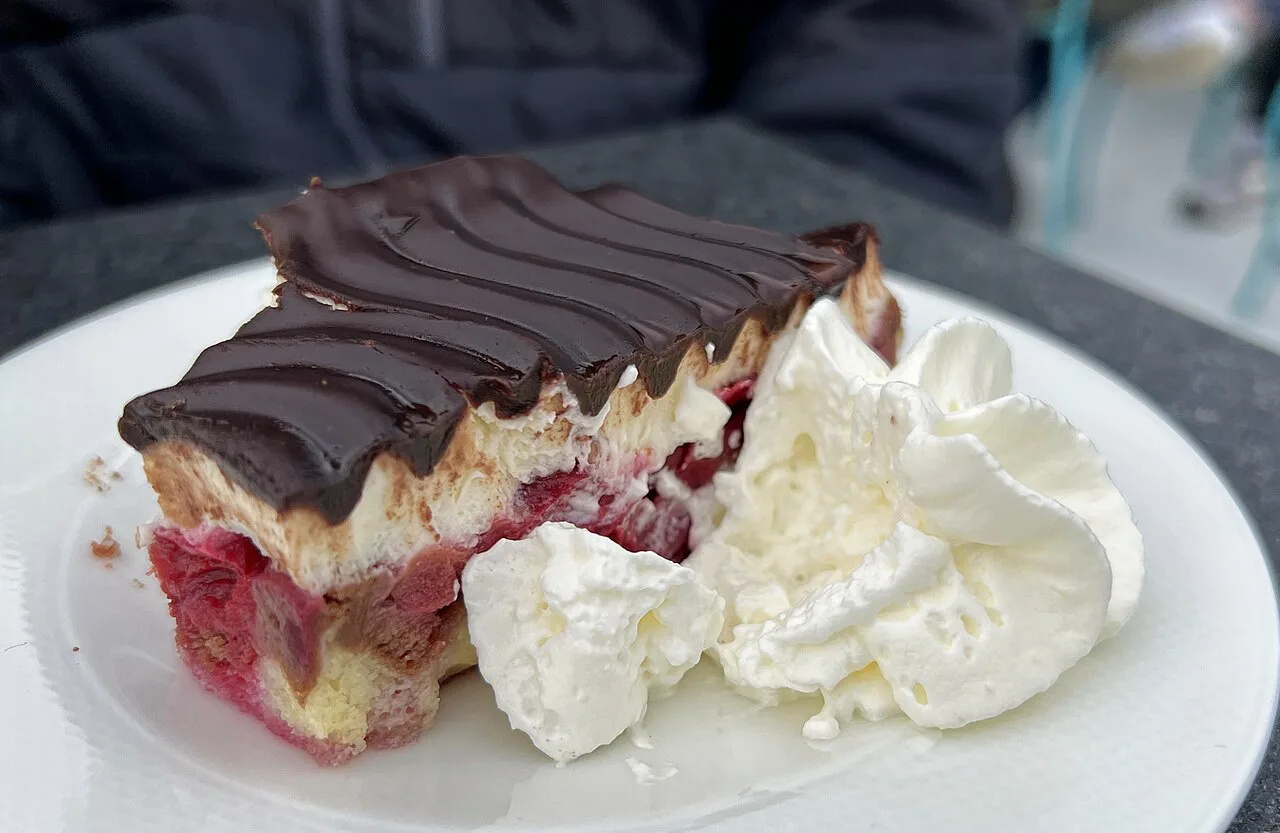
Donauwelle means "Danube wave" in German, with Donauwellen as the plural, and the name comes from the wave pattern visible in the cake itself and in the chocolate layer on top. The same cake also travels under the nickname Schneewittchenkuchen, or Snow White cake, a reference to its black, white and red coloring echoing the fairy-tale character.
Does Donauwelle contain alcohol? The standard construction described for Donauwelle is cake batter, sour cherries, buttercream and chocolate, with no spirit called for. Recipes vary, so if you avoid alcohol, ask at the counter what went into the cream or the cherry layer before ordering.
Is Donauwelle the same as Snow White cake? Yes, Schneewittchenkuchen is a common alternative name for the same cake, taken from its black, white and red coloring. Seeing either name on a bakery card means the layered cherry and buttercream sheet cake.
Is Donauwelle German or Austrian? It is described as a traditional sheet cake popular in both Germany and Austria, so you will meet it on bakery counters in either country. The name itself is German, from the Danube wave pattern in the batter and topping.
So if you see Schneewittchenkuchen on a handwritten card in a bakery case, you are looking at the same thing under a second name. Germans use both; neither is more correct, and the nickname is especially common where the cake is made at home.
The Five Layers in a Slice
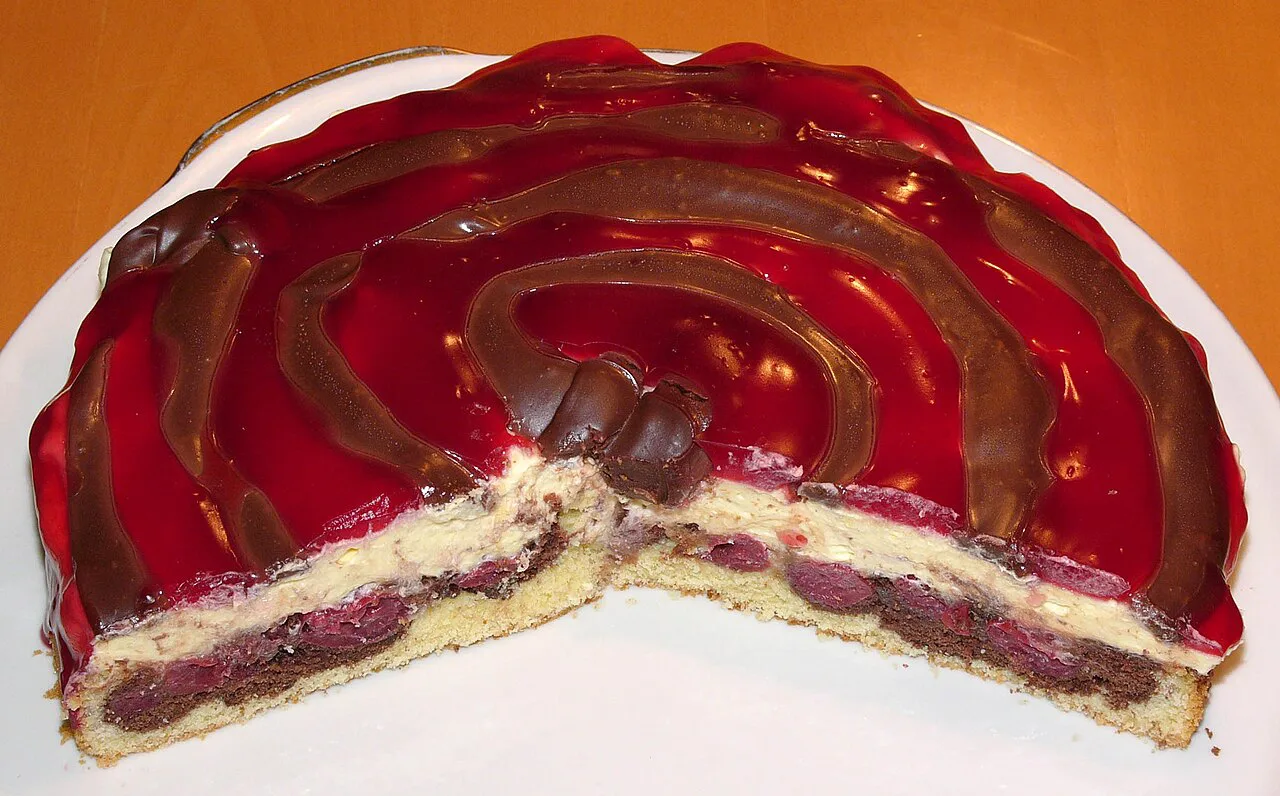
Count from the bottom up and a classic slice has five distinct components: vanilla cake batter, chocolate cake batter, pitted sour cherries, German buttercream and a chocolate glaze. Recognizing the order explains why the cake looks striped from the side and why the cherries sit in a band rather than scattered randomly.
The two batters are often poured as one base and then marbled, which is how the light and dark sections end up touching along an irregular border. The cherries are layered in before baking or pressed into the surface, depending on the recipe, so the fruit ends up suspended in the crumb rather than sitting on top of it.
Vanilla and Chocolate Batter: The Wavy Border
The signature look of Donauwelle is the wavy line where pale vanilla batter meets dark chocolate batter inside the cake. That border is what gives the cake its name, and it is distinct from the wave you see in the chocolate glaze on top. When you look at a slice in the case, check both: the internal wave tells you the batter was marbled, and the surface wave tells you the topping was drawn through while still soft.
The chocolate batter is essentially a cocoa version of the same pound-cake mixture, which keeps the two halves unified in texture even though they look different. That is why a proper slice holds together when cut instead of splitting along the color line.
Sour Cherries, Not Cherry Pie Filling
The fruit in Donauwelle is sour cherries, and the difference matters to how the cake tastes. Tart cherries cut through the butter and chocolate, so the slice reads as bright rather than cloying; cherry pie filling or fruit packed in heavy syrup would push it toward dessert-sweet and swamp the layers. Dark Morello-style cherries are the closest match to what German bakers use, and pitted jarred sour cherries are the usual home-baking route.
Drain them well before they go near the batter, and check that no pits were missed if you are working from a jar. In a bakery slice, expect juicy pockets of fruit rather than a jammy layer, and expect the fruit to be darker and more purple than a bright red cocktail cherry.
If you bake at home, resist substituting cherry pie filling, which is thicker, sweeter and stabilized in a way that changes the texture of the crumb.
German Buttercream: What It Is and Why the Cake Feels Light
German buttercream is butter whipped together with vanilla pastry cream, which is basically a thick cooked vanilla pudding. The result is a mildly sweet, airy cream that tastes far lighter than the amount of butter in it would suggest, and it firms up noticeably when chilled. That firmness is why a cold Donauwelle slice cuts with clean, crisp edges instead of smearing.
The technique has one hard rule: the pastry cream and the butter both need to be at room temperature before they are combined. Cold pudding going into soft butter will look curdled and never fully smooth out, which is a common home-baking failure. If you order a slice out, the payoff is a cream layer that is stable enough to hold the chocolate lid in place.
The Chocolate Top
The finish is a thin chocolate glaze or ganache spread over the chilled buttercream, drawn into a wave while it is still workable. It sets to a glossy, semi-firm surface that cracks cleanly under a fork but does not shatter, and it is the layer that carries the black in the Snow White color scheme.
This is the same kind of poured chocolate finish you find on other layered German classics, and it is a useful visual cue when scanning a bakery case: a dull, matte top usually means the slice has been sitting out, while a clean sheen suggests a fresher tray.
What a Slice Tastes Like and How It's Served
Expect a slightly dense, firm-crumbed cake that stays moist, juicy tart cherries, a light vanilla-scented cream and a silky chocolate lid. It is rich but not heavy in the way a cream-filled torte can be, because the fruit and the airy buttercream balance the butter content.
In a Konditorei or café it comes as a cut square or rectangle, served on a small plate with a fork, and it is normally eaten with coffee in the afternoon rather than as a finish to a restaurant dinner. Ask for ein Stück Donauwelle, bitte, and point if there is any doubt. If you are ordering at a counter to take away, say zum Mitnehmen.
Donauwelle vs. Other German Sheet Cakes
Donauwelle belongs to the tray-baked family of German cakes, alongside streuselkuchen, a yeast-dough sheet cake with a crumb topping that is often sold by the piece in the same bakery cases. Where streuselkuchen is about buttery crumb and simple dough, Donauwelle layers cream, fruit and chocolate into the same format.
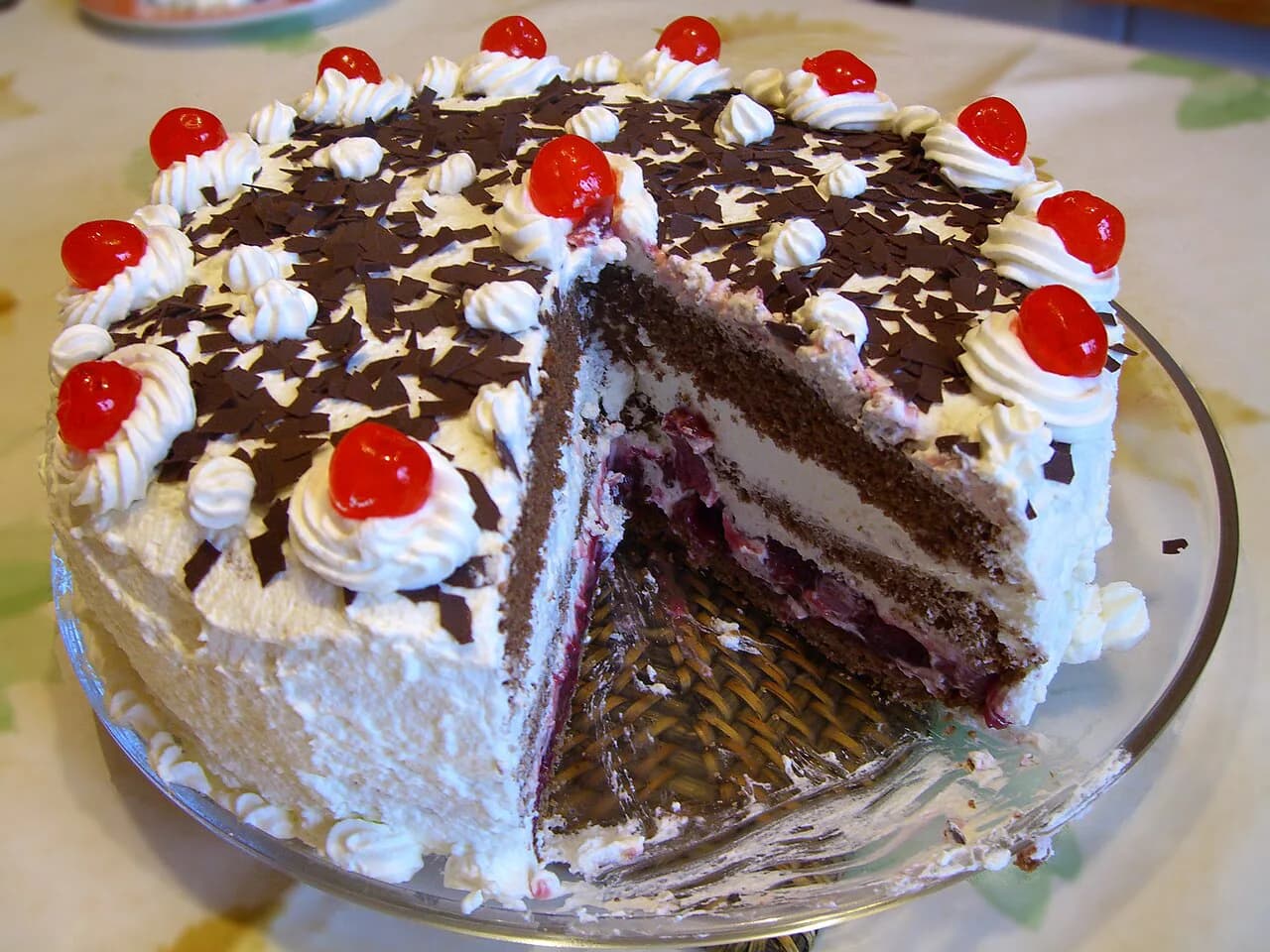
It also differs from the cream-and-cherry tortes that get more attention abroad, such as Black Forest cake, which is built as a tall round cake with whipped cream and cherries. Donauwelle is flatter, sold by the square, and far more of an everyday coffee-table cake.
Other counter classics use some of the same building blocks: Bienenstich, a yeasted cake with a honey-almond caramel topping and a cream filling, and Käsekuchen, a baked German cheesecake made with quark. Both sit beside Donauwelle in a typical Konditorei case, so a single coffee stop can cover several styles.
Where to Find It in Germany and How to Order
Look for Donauwelle in the refrigerated cake case of a Konditorei or café, where cream-filled and fruit-topped tray cakes are kept cool, and sometimes at bakery counters that sell sheet cakes by the piece. It is a standard part of the repertoire rather than a seasonal specialty, so it turns up across the year.
Ordering is straightforward: name the cake, ask for a piece, and expect to pay at the counter or at the table depending on the shop's setup. Because the cream layer needs refrigeration, a slice that has been sitting out at room temperature for hours is a reasonable thing to skip in favor of one pulled fresh from the case.
If you want to taste the archetype at home first, home bakers can follow a published recipe and chill the assembled cake before slicing, which is what gives the clean edges.
Is Donauwelle Worth Ordering?
Yes, if you want a representative German bakery slice rather than a showpiece dessert. Donauwelle gives you fruit, cream and chocolate in one square, it is portioned for a single coffee, and it is common enough to find without hunting down a specialty shop.
Pair it with a plain coffee so the tart cherries and light buttercream stay legible, and compare it against a Schwarzwälder Kirschtorte later in the trip to see how differently Germany handles cherries and cream.
Explore more Germany guides
Frequently Asked Questions
Does Donauwelle contain alcohol?
The standard construction described for Donauwelle is cake batter, sour cherries, buttercream and chocolate, with no spirit called for. Recipes vary, so if you avoid alcohol, ask at the counter what went into the cream or the cherry layer before ordering.
Is Donauwelle the same as Snow White cake?
Yes, Schneewittchenkuchen is a common alternative name for the same cake, taken from its black, white and red coloring. Seeing either name on a bakery card means the layered cherry and buttercream sheet cake.
Is Donauwelle German or Austrian?
It is described as a traditional sheet cake popular in both Germany and Austria, so you will meet it on bakery counters in either country. The name itself is German, from the Danube wave pattern in the batter and topping.
Sources
Notes for your next German food trip
Optional updates to our guides.
You might also like
Continue reading
More guides you'll find useful