

Ruhetag in Germany: What Sunday Rest Means for Eating Out
Ruhetag means rest day in German, and Sunday is the big one. Learn what closes, what stays open, and how to plan meals and grocery stops around it.
On this page
Ruhetag means rest day in German, and the one that trips up visitors is Sunday, when supermarkets and most shops stay closed. Restaurants, cafés and bakeries are a different story, especially in bigger cities, so a Sunday meal out usually still works. This guide separates the nationwide Sunday rule from the weekday Ruhetag a single restaurant or bakery takes, then shows how to plan a day of eating around both.
Ruhetag in one line: a rest day, and in Germany Sunday is the national one
In everyday German, Ruhetag simply means rest day, and the phrase that matters for travelers is Sonntag ist Ruhetag, Sunday is rest day. It is a real, legally rooted habit rather than polite advice, which is why you see so little commercial life on a Sunday. Think of it as the country pressing pause once a week, with a few food-shaped exceptions.
The rule reaches into ordinary life: shops and supermarkets shut, and noise rules apply at home. For a visitor staying in a rental apartment, that means holding off on laundry and loud music until Monday. The upside is a genuinely quieter day that is good for a long lunch.
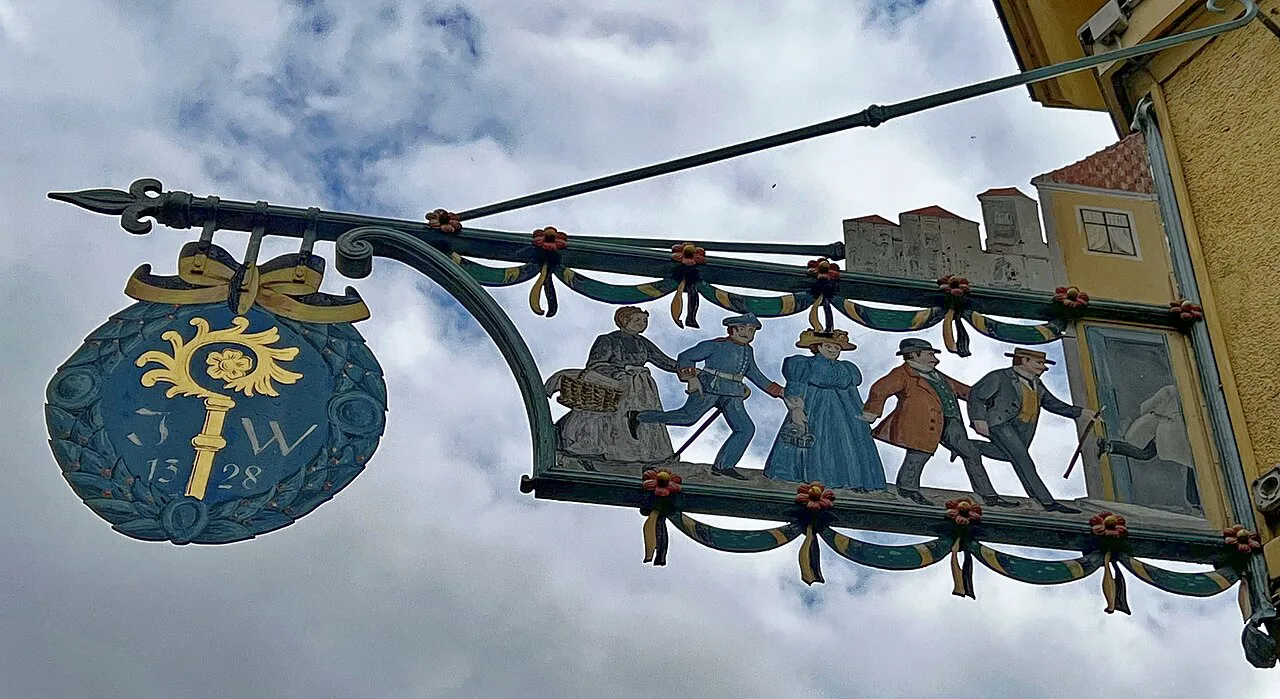
What actually closes on Sunday: supermarkets and shops, not all restaurants and cafés
Grocery stores and most shops are the reliable closures. If you need a supermarket before a Monday departure, do the shopping on Saturday, ideally early, because Saturday gets crowded with everyone doing the same thing. This is the single most useful habit to copy from locals.
What does Ruhetag mean in German? Ruhetag translates as rest day. Used nationally, it refers to Sunday, when shops and supermarkets close and quiet rules apply.
Can I do laundry on Sunday in Germany? It is best avoided. Sunday falls under quiet rules, and running a washing machine or dryer can annoy neighbors in apartment buildings.
What is Nachtruhe? Nachtruhe is the nightly quiet period, when noise in and around homes should stay low. Exact times are set locally, so if you are staying in an apartment, follow your host's house rules rather than a fixed national clock.
Plenty of food people still work on Sunday: baristas, bakers and restaurant staff among them, and in larger cities you will find cafés and restaurants open. The safe assumption is therefore that your sit-down lunch is fine and your grocery run is not. Plan the day in that order and nothing unravels.
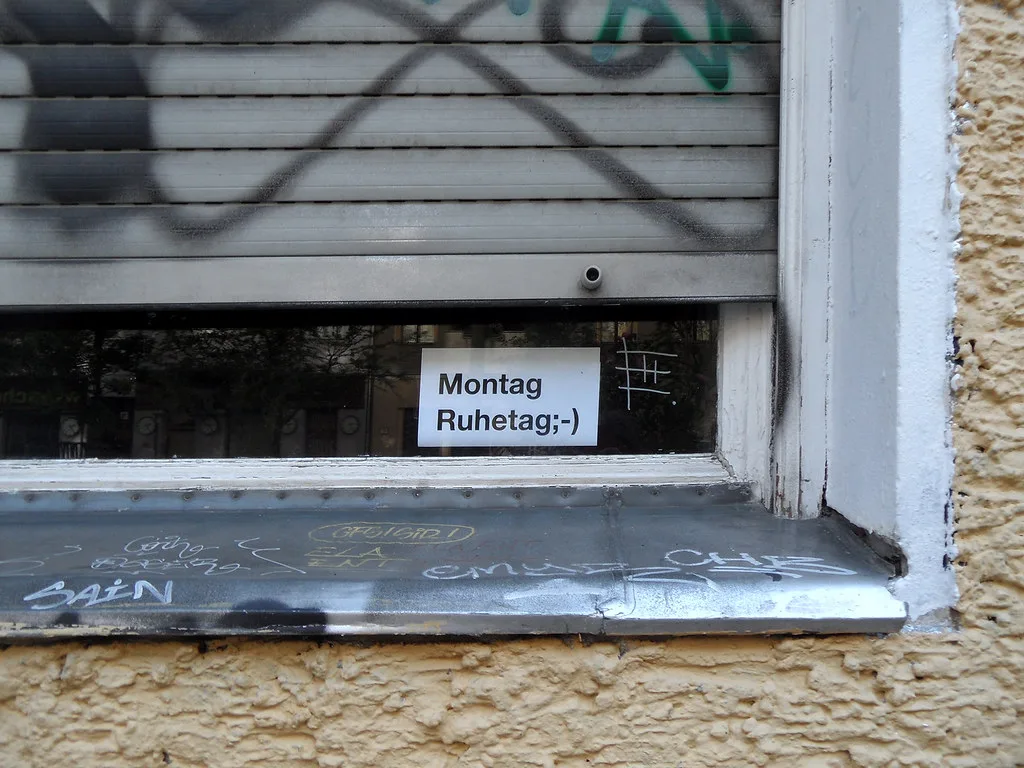
Small businesses set their own Ruhetag on other days, so the café that is open on Sunday might be shut on Monday or Tuesday. Break the habit of expecting every eatery to be running seven days a week, and keep one backup option in mind. If a door is locked, that is a normal rest day, not a sign you misread the address.
Where you can still eat and buy food on a Sunday
The realistic food stops on a Sunday are restaurants, cafés, bakeries and the shops at major train stations, which often keep Sunday hours in bigger cities. Gas-station shops are another fallback for a drink or a snack. None of these replaces a full grocery shop, but together they cover breakfast and lunch.
Berlin is the notable exception to the shop closures, with a limited number of permitted Sunday shopping days each year. If your trip overlaps one, treat it as a bonus rather than something to build a plan on, since the dates vary by city. Elsewhere, assume the shutters are down.
For a proper Sunday meal, a restaurant lunch is the most dependable plan, and German restaurant etiquette is worth knowing before you sit down: you usually seat yourself in casual places, order drinks first, and pay at the table when you are ready to leave. Knowing that rhythm makes a slow Sunday lunch feel easy rather than awkward.
Why Germany does this: Sunday rest is written into the Grundgesetz
Sunday rest is not just custom. It is anchored in Germany's constitution, the Grundgesetz, alongside older religious roots, which is why it survives in a modern economy. The point is to protect one shared day off for everyone, not to inconvenience tourists.
The practical effect is that workers get a common day of rest, and restrictions were gradually relaxed over the decades while unions kept arguing for the Ruhetag concept. Some residents find it inconvenient, especially anyone who works Monday to Friday and must squeeze errands into Saturday. As a visitor, you benefit from the calmer day, as long as you shop ahead.
Ruhetag on other days: the weekday closing day a single restaurant or bakery takes
The second meaning of Ruhetag is the day off a specific business takes each week. A family-run Gasthaus, a neighborhood bakery or a small café will often close on a Monday or Tuesday, and the sign on the door is the only announcement you get. Because the day differs from place to place, check the door or the business's own website before you build a meal around it.
This is where the two meanings collide in a useful way: Sunday is the day the country rests, while a weekday Ruhetag is a single kitchen's rest. If your favorite plan falls on the latter, a nearby bakery or café usually saves the morning, and lunch can shift to another address. Keep one alternative per meal and you will rarely be stuck.
Planning your eating day around Sunday: Saturday groceries, bakery breakfast, restaurant lunch
Build Saturday around provisioning. Buy bread, cheese, fruit and drinks for Sunday breakfast and snacks, and pick up anything you want for a picnic or a train ride the next day. A good loaf keeps well overnight, so a Saturday bakery stop covers Sunday morning nicely.
On Sunday itself, start with the bakery or your Saturday supplies, take a long walk, and book your main meal as a restaurant lunch. If you want a coffee stop in the afternoon, German coffee culture leans on the Kaffee und Kuchen tradition, cake with coffee, which fits a Sunday pace perfectly. Knowing the German menu basics also helps you order without guesswork.
When the bill comes, handle it the German way: tell the server the total you are paying, round up if the service was good, and say Stimmt so to mean keep the change. Tipping in Germany is modest and done in cash at the table far more often than by card. Knowing this in advance keeps a relaxed Sunday lunch relaxed.
Quiet hours and noise rules that come with Ruhetag
Sunday rest extends to noise, so drilling, hammering, mowing and loud music are the kind of things that draw a neighbor's knock. The rules are set locally and enforcement depends heavily on the building and the neighbors, so there is no single national schedule to memorize. If you are staying in a rental, keep it quiet and you will have no trouble.
The quiet principle also runs through the week in the form of Nachtruhe, nighttime quiet, which is why a late, loud dinner party in an apartment is a bad idea even on a Saturday. For travelers, this mostly means treating your accommodation as a home rather than a hotel corridor. Eating out late is fine; carrying the noise back upstairs is not.
Should you plan a Sunday meal out or cook in?
Plan the meal out. Sunday is the one day when a restaurant lunch is both easy and culturally on-message, while the grocery option is largely off the table outside train stations and a handful of Berlin shopping days. Shop on Saturday, keep a bakery breakfast in reserve, and let Sunday be the slow day.
Explore more Germany guides
Frequently Asked Questions
What does Ruhetag mean in German?
Ruhetag translates as rest day. Used nationally, it refers to Sunday, when shops and supermarkets close and quiet rules apply. Used for a single business, it means that restaurant, café or bakery's own weekly closing day, which is often a Monday or Tuesday.
Can I do laundry on Sunday in Germany?
It is best avoided. Sunday falls under quiet rules, and running a washing machine or dryer can annoy neighbors in apartment buildings. In a hotel it is normally not an issue; in a rental flat, wait until Monday.
What is Nachtruhe?
Nachtruhe is the nightly quiet period, when noise in and around homes should stay low. Exact times are set locally, so if you are staying in an apartment, follow your host's house rules rather than a fixed national clock.
Are restaurants open on Sundays in Germany?
In bigger cities, cafés and restaurants generally are, and bakeries often are too. Individual places still take their own weekday Ruhetag, so check the door or the business's website before making a specific plan.
Sources
Notes for your next German food trip
Optional updates to our guides.
You might also like



Continue reading
More guides you'll find useful




