Tipping in Germany: How Much to Tip and What to Say
Tipping in Germany is simple: add about 10 percent at restaurants and cafés, tell the server the total you want to pay, and hand over cash with "Stimmt so."
On this page
Tipping in Germany comes down to one habit: you add roughly 10 percent to a restaurant bill and tell the server the total you want to pay, often handing over cash rather than leaving coins on the table. A 2023 YouGov poll cited in a guide to German tipping found 72 percent of German respondents said they typically tipped restaurant staff. This guide covers how much to leave in restaurants, cafés and bars, the exact phrases to use, how tipping works on a card, and what to do about taxis and hotel housekeeping.
Two things surprise most American visitors. First, the tip is usually folded into the amount you announce, so the server hands back less change and nothing sits on the table. Second, nobody is legally obliged to tip at all, which changes how a generous tip reads: it is a sign of satisfaction, not a substitute for a paycheck.
How much to tip at restaurants and cafés
Plan on about 10 percent in a restaurant, whether you had a full meal or just a Currywurst at a counter. Rounding up to the next convenient euro is the low-effort version and works fine when the bill lands at an awkward figure.
In a café or bar, where you might only have a coffee or an evening beer, the customary amount is smaller: anything from 50 cents to 3 euros, depending on how long you stayed. A quick espresso does not call for 10 percent of a large dinner bill, and nobody expects it.
If you are trying to keep your food budget in view, remember that the tip is a percentage of what you already spent, so cheap meals stay cheap. For a broader sense of what dishes and drinks cost before you tip, see food prices in Germany.
What Trinkgeld means and why German servers do not live on it
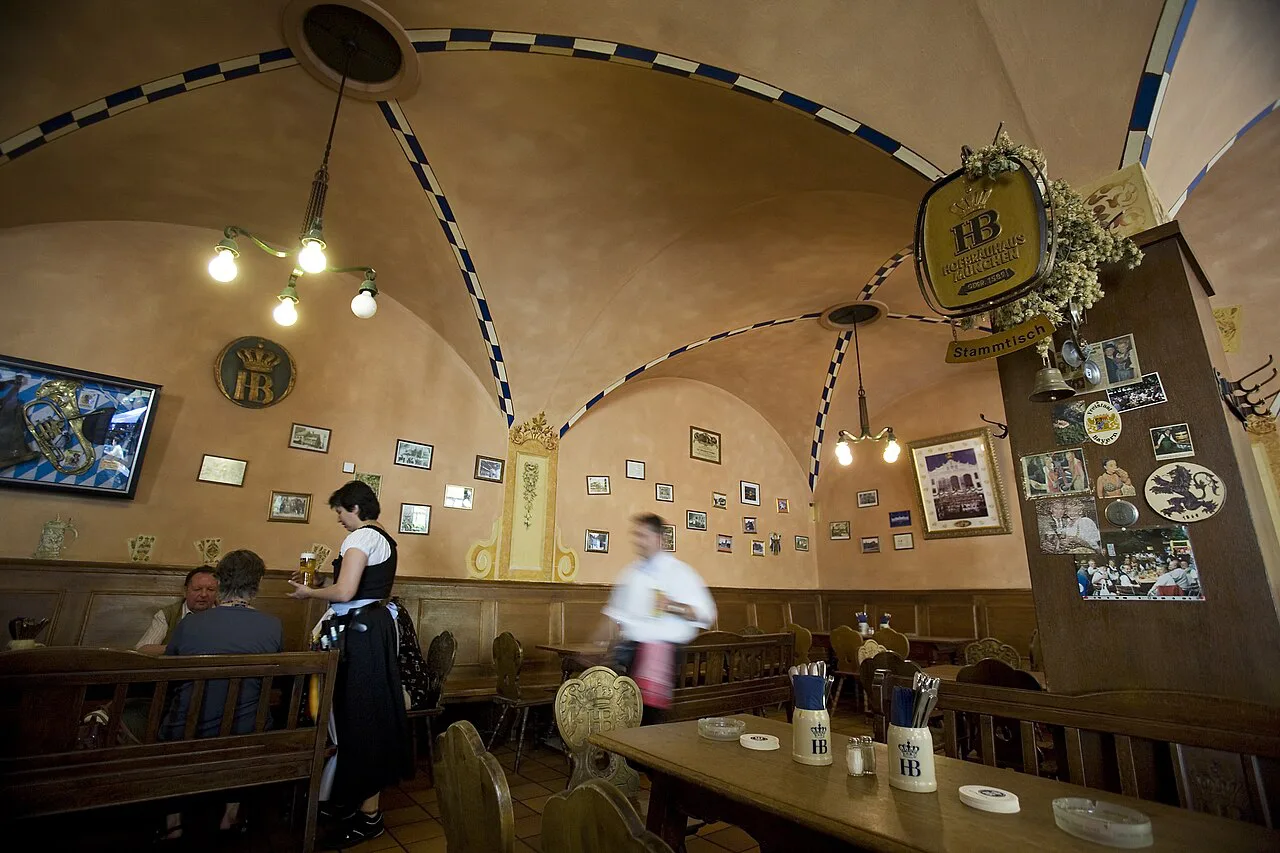
The German word for tip is Trinkgeld, literally "drinking money" — a little extra so staff can enjoy themselves after their shift. It is not the core of a server's income the way tips are in the US; German minimum wage law is meant to ensure the wage itself, and Trinkgeld sits on top as a thank-you.
What Trinkgeld means and why German servers do not live on it. The German word for tip is Trinkgeld, literally "drinking money" — a little extra so staff can enjoy themselves after their shift.
How to say the tip out loud. In Germany you do not leave money and walk away; you tell the server the total you want to pay when they bring the bill or the card machine.
Tipping with a card. Cash remains the default for tips in Germany, and many people still settle restaurant bills in notes and coins.
German rules also make it illegal for employers to pay staff less because of tips or to withhold tips altogether, and tips are often pooled and split among staff by hours worked. So the money you hand over is genuinely a thank-you, not a top-up the boss is quietly relying on.
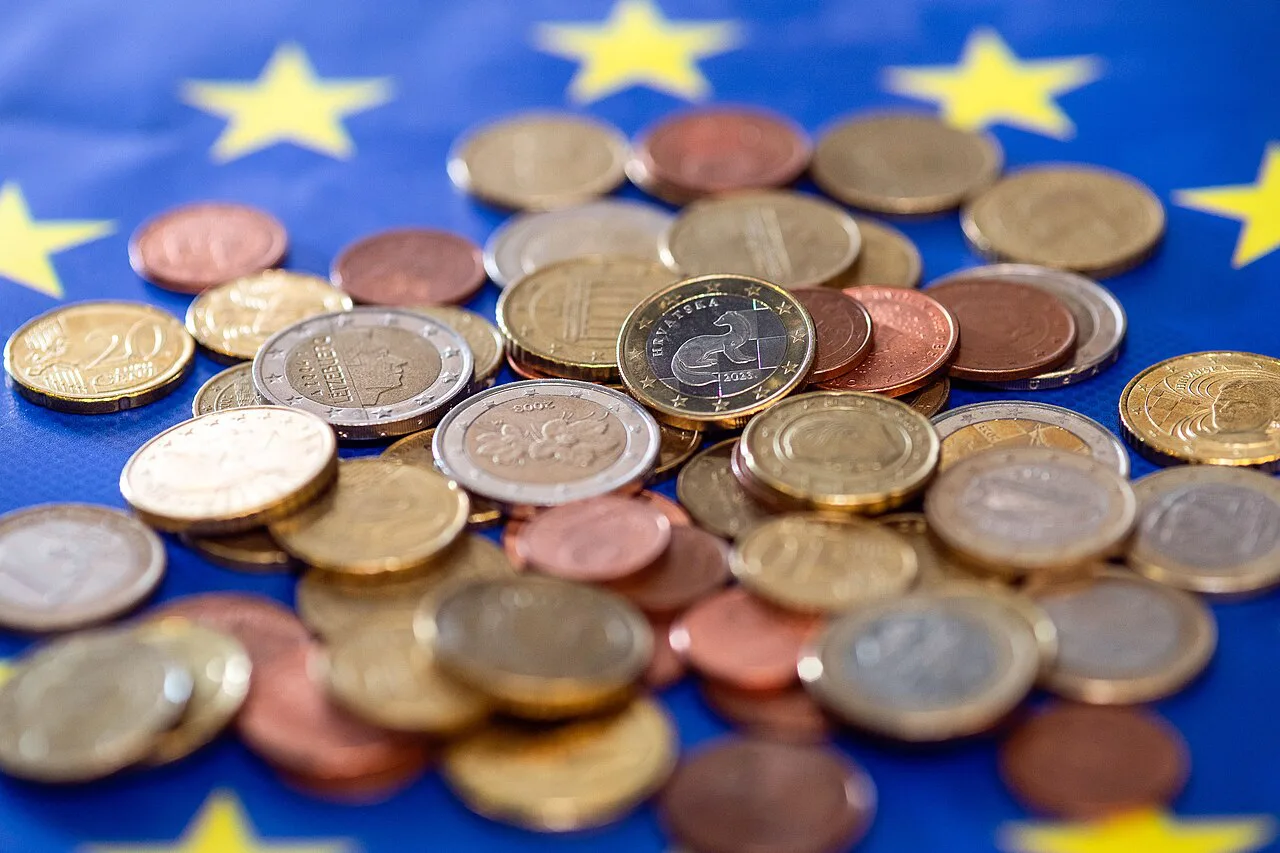
How to say the tip out loud
In Germany you do not leave money and walk away; you tell the server the total you want to pay when they bring the bill or the card machine. If the bill is 27.25 euros, handing over 30 and saying "Stimmt so" — keep the change — settles it in one move. If you only have a large note, name the amount instead: "Mach dreißig, bitte" tells the server to charge 30 euros and give the rest back as change. It feels blunt the first time and completely ordinary the second; it is simply how the transaction is done.
The vocabulary around paying is worth learning alongside the tip phrases, since asking for the bill and splitting it come up at the same moment. Our guide to German restaurant etiquette covers "Zahlen bitte" and "getrennt zahlen" — paying separately — so the end of the meal goes smoothly.
Tipping with a card
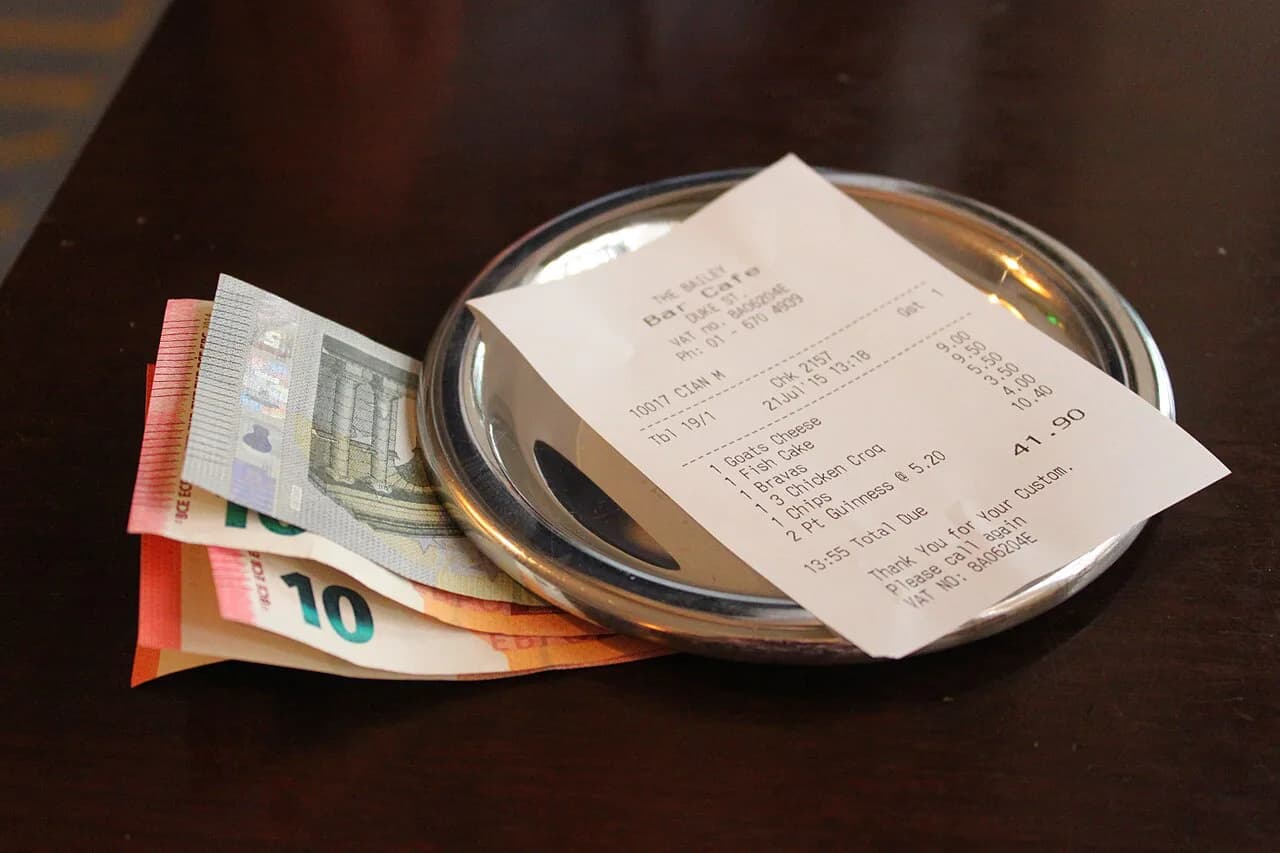
Cash remains the default for tips in Germany, and many people still settle restaurant bills in notes and coins. If the venue takes cards, tell the server the total you want before you tap or insert, so the tip goes through as part of the payment rather than as a separate cash add-on.
Some card terminals offer a screen prompt to add 5, 10 or 15 percent, or to pay with no tip at all; pick the option that matches what you would have given in cash. Carrying a few small notes also helps, because a tip handed over in cash is never lost to a terminal setting.
The Bedienung line is not your tip
Some bills carry a charge marked Bedienung, which means "service." Treat it as a service charge built into the bill, not as the tip: it is taxed income and does not go directly to the person who served you.
That means you still add your roughly 10 percent on top, even when the Bedienung line is already there. If you spot the charge and assume the tipping is handled, you will underpay by German standards without realizing it.
Taxis, hotel housekeeping, hairdressers and tours
Taxi drivers are not automatically tipped; rounding up to the next euro is common, and roughly 10 percent is welcome when the driver helps with bags. Hairdressers sit a little higher, at about 10 to 15 percent, which is more than most people leave in a restaurant.
For hotel housekeeping, a few euros left before you check out acknowledges the cleaning; guidance puts it at around 3 to 5 euros at the end of a stay. On paid tours, about 10 percent is the usual gesture, and on free walking tours a tip is the whole point.
Do you have to tip in Germany?
No. A tip is legally a voluntary sum paid on top of the bill, so you are free to leave nothing if the service was poor. In practice, leaving no tip after good service reads as a verdict on the meal, not as frugality.
The safe middle ground is the rounded-up total, which is quick, unremarkable and never looks cheap. Save the larger percentages for genuinely good service and you will fit in without overthinking it.
What an American tipping habit looks like to a German server
A 20 percent tip is not rude, but it can confuse: in Germany it may read as a signal that something extraordinary happened, or simply as a visitor unsure of the local number. The 10 percent range keeps your appreciation legible.
The other American habit to drop is leaving bills under a glass or on the table as you leave. German servers expect to be told the total, so hand the money over and say the amount, even if it is only a euro or two.
Once the bill is settled, knowing what you are ordering makes the rest of the meal easier; a German menu guide helps with dishes and the Kaffee und Kuchen pause in the afternoon.
Pick your number before the bill arrives
Decide on your approach before you sit down: about 10 percent in restaurants, 50 cents to 3 euros in a café or bar, and a rounded-up fare in a taxi. When the bill comes, name the total, say "Stimmt so" if it works out to a round figure, and hand over cash where you can.
The rest of your eating plan runs on the same logic: know the phrase, know the range, and let the local custom do the rest. A little preparation on how Germans order and pay makes the whole day of eating out feel less foreign.
Explore more Germany guides
Sources
Notes for your next German food trip
Optional updates to our guides.
You might also like
Continue reading
More guides you'll find useful