
Non-Alcoholic Beer in Germany: Brands and How to Order
Non-alcoholic beer in Germany covers alcohol-free lagers, wheat beers, and IPAs from big and small breweries. Here is how to order one and what to expect.
On this page
Germany takes non-alcoholic beer seriously enough that nearly every brewery, big or small, keeps an alkoholfrei version of something in its lineup. You can order one at a Gasthaus, a beer hall, or a Biergarten without a puzzled look. This guide explains what alkoholfrei actually means, which German brands you will run into, and how to ask for one at the table.
What alkoholfrei means on a German menu
The word you are looking for is alkoholfrei, which literally means alcohol-free and appears on menus, bottle labels, and chalkboards next to the regular beers. German brewers produce it in two broad ways: by stopping fermentation early, or by removing alcohol from a finished beer, and the results taste different from each other. A dealcoholized beer usually keeps more of the malt body, while a stopped-fermentation beer can taste thinner and more wort-like.
Ask whether a beer is 0.0% if that matters to you, because German rules allow a small residual amount in some alkoholfrei products. The distinction is printed on the label in the shop. The German online retailer Bierothek lists its alcohol-free range with product names and bottle sizes, which is a quick way to see how broad the category is.
The German brands you will see most
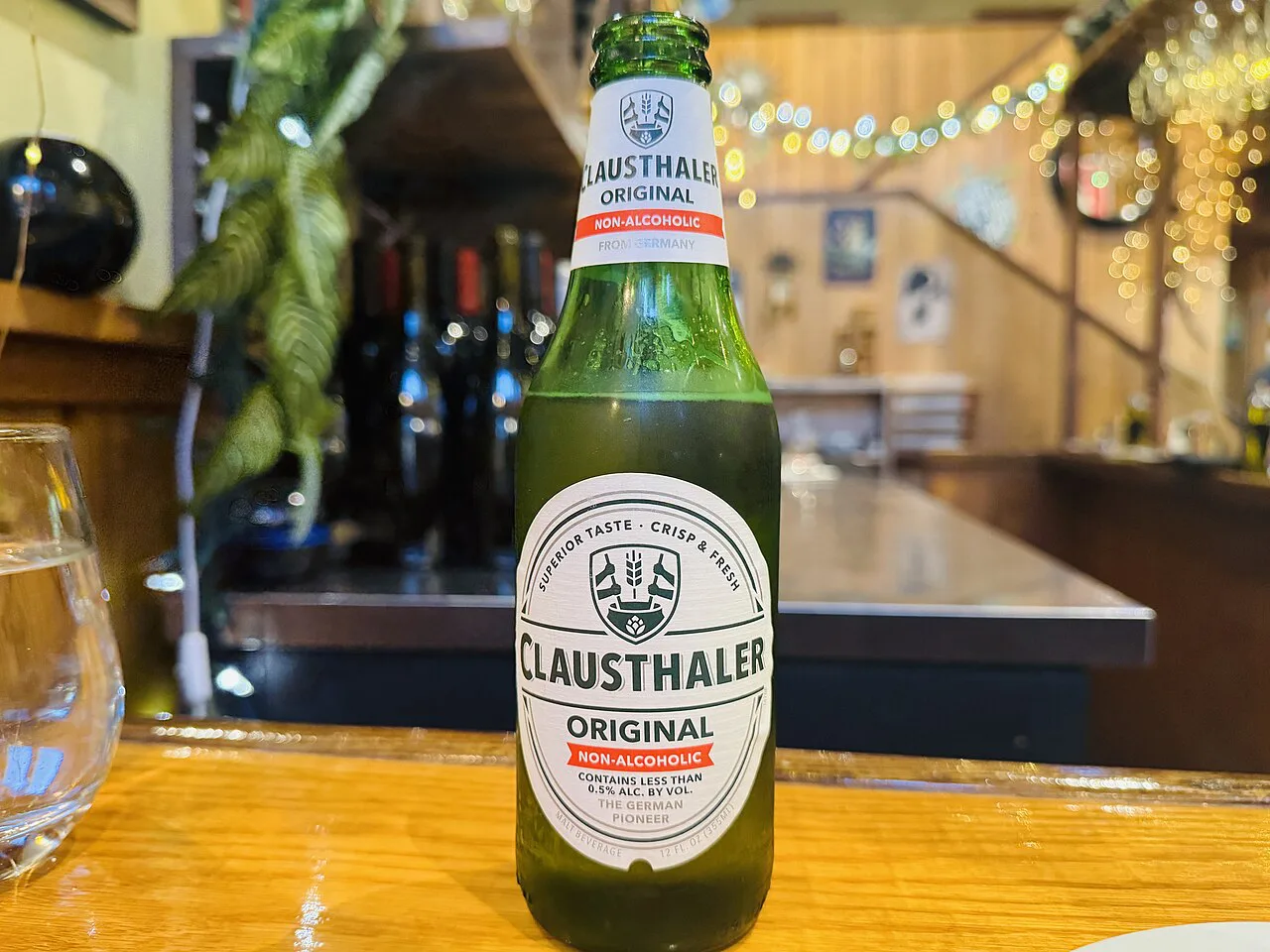
Clausthaler is the name most associated with the category: the Radeberger Gruppe describes it as the non-alcoholic pioneer from Germany, invented in the 1970s when almost nobody brewed alcohol-free beer. Its lineup has grown beyond the original lager into an IPA and a grapefruit version, and it is widely exported, so you may recognize it before you land.
The German brands you will see most. Clausthaler is the name most associated with the category: the Radeberger Gruppe describes it as the non-alcoholic pioneer from Germany, invented in the 1970s when almost nobody brewed alcohol-free beer.
How to order a non-alcoholic beer at the table. Say "ein alkoholfreies Bier, bitte" and you have ordered one; in Bavaria you can also ask for a non-alcoholic wheat beer by name if the brewery makes one.
Alcohol-free wheat beer and other styles worth trying. Weizen, the cloudy Bavarian wheat beer, is the style where alcohol-free versions hold up best, because the yeast-driven banana and clove aromas survive the process more convincingly than delicate hop notes do.
Among the Munich lagers, Augustiner-Bräu and Löwenbräu both appear in alcohol-free versions in German beer shops, and Brauerei Schlenkerla in Bamberg sells its smoked beer as a non-alcoholic bottle too. Störtebeker adds a non-alcoholic Atlantic ale and an organic frei-bier, which shows how far the format has moved past plain lager. If you want the smoky Franconian experience without the alcohol, Schlenkerla's alcohol-free bottle is the one to look for.
How to order a non-alcoholic beer at the table
Say "ein alkoholfreies Bier, bitte" and you have ordered one; in Bavaria you can also ask for a non-alcoholic wheat beer by name if the brewery makes one. In a Munich-style beer hall the server will often bring it in the same glass shape as the regular beer, so it looks the part. Sizes follow house convention rather than a national rule, so if you want a small pour, order the smaller of the two sizes on offer.
In a beer garden, alcohol-free beer works the same way as any other drink: you order at the counter or from a server, keep your receipt if there is a deposit system, and pay at the end or when you leave depending on the house. It is a sensible choice if you are cycling or driving later, and no one in a German beer garden will comment on it. If you want something with more flavor than a plain soft drink, this is the standard move.
Alcohol-free wheat beer and other styles worth trying
Weizen, the cloudy Bavarian wheat beer, is the style where alcohol-free versions hold up best, because the yeast-driven banana and clove aromas survive the process more convincingly than delicate hop notes do. Look for alkoholfreies Weizen or alkoholfreies Hefeweizen on a menu, and expect it served in the tall curved wheat-beer glass. It is a good entry point if you usually find alcohol-free lager dull.
Beyond wheat beer, German brewers now bottle alcohol-free Pilsner, Helles, dark lagers, and IPAs, and the IPA segment is where the craft end of the market puts its energy. A radler, the beer-and-lemon-soda mix, is a separate drink and not the same thing as alkoholfrei, though alcohol-free radler versions exist too. If you want the background on that mix, our radler guide covers it.
Small craft and Franconian alcohol-free beers
Franconia, the brewing heartland around Bamberg and Nuremberg, turns out a striking number of alcohol-free bottles from small houses. Bierothek's alcohol-free range includes Maisel & Friends with an alcohol-free urban IPA, Braumanufaktur Hertl with two alcohol-free beers, and orca brau with freischwimmer and born to be free. Bayreuther Bierbrauerei and Brauerei Rittmayer also appear with alcohol-free Helles, which tells you the format has spread well beyond the big Munich names.
The craft scene brings its own experiments: the Kehrwieder creative brewery in Hamburg makes ü.NN, which Bierothek calls the first alcohol-free IPA in Germany. Wacken has an alcohol-free IPA called hugin, and Munich Brew Mafia sells an mpu IPA. These are the bottles to pick up if you want hops rather than malt sweetness.
What alcohol-free beer costs and how it is poured
In shops, alcohol-free bottles are priced close to their alcoholic equivalents, and Bierothek's listings show the pattern clearly, with alcohol-free Helles and Pilsner in half-liter bottles and craft IPAs in smaller 0.33-liter bottles at a higher per-liter rate. Prices in restaurants and beer gardens are set by the house, so the menu board is the number that counts. Treat shop prices as a guide only.
Pouring follows the same ritual as any German beer: a clean glass, a steady pull, and a head of foam that is neither collapsing nor overflowing. Many bottles are Mehrweg, returnable glass, which is why you pay a small deposit (Pfand) and get it back when you return the bottle. That is also why you should not crush or discard bottles in a public bin if you want the deposit back.
Where to buy German non-alcoholic beer to take home
Supermarkets and Getränkemärkte, the dedicated drinks stores, carry alcohol-free beer as a standard category, so you can stock up without hunting for a specialty shop. Bierothek sells online within Germany and ships a curated alcohol-free selection, which is useful if you want to compare several brands in one order. Check the shop's current shipping rules before you count on delivery to an address outside Germany.
Which alcohol-free beer should you start with?
Start with an alcohol-free Weizen if you want the fullest flavor, or a small-brewery Franconian bottle if you want to taste what the craft end of the category is doing. Big-name lagers such as Augustiner and Löwenbräu are the safe order when you just want something cold and familiar at the table. Whatever you pick, order it by name, say alkoholfrei clearly, and it will arrive as a beer.
Explore more Germany guides
Sources
Notes for your next German food trip
Optional updates to our guides.
You might also like



Continue reading
More guides you'll find useful




