
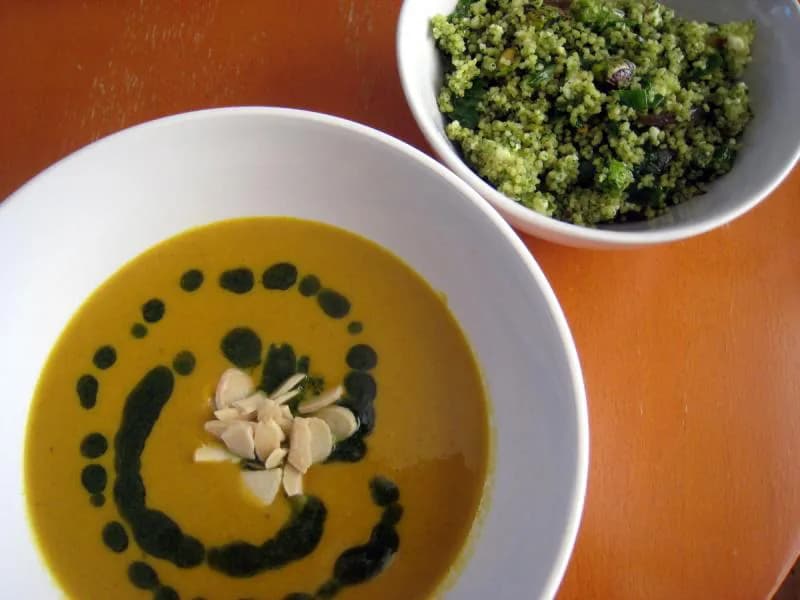
Vegetarian Food in Germany: What to Order & Eat Well
German menus mix meat-heavy classics with solid vegetarian options. Here is what to order, which cities make it easy, and how to read a menu without guesswork.
On this page
Germany is easier to eat vegetarian in than its reputation suggests, provided you order by dish rather than by translation. Hearty tradition covers a lot of ground — Käsespätzle (cheese noodles), potato plates, bread meals — while Berlin in particular has built a food scene where meat-free menus are normal. This guide covers what to order, the menu words that quietly contain meat, and how Berlin cafés differ from a village Gasthaus.
The approach here is practical: pick dishes you recognize, ask for small adjustments, and know what happens when you sit down at a traditional restaurant versus a modern café. Basic German restaurant etiquette covers most of what follows, since the meat-free request is only as good as the conversation around it.
What vegetarian eating in Germany actually looks like
Two food cultures run in parallel. The traditional kitchen leans on pork, sausage and broth, but its side dishes and dumpling plates are often meat-free by default. The modern scene — cafés, Asian restaurants, bowls and brunch places — has grown fast in the big cities and routinely marks dishes as vegetarian or vegan.
Berlin shows how far that second culture has come: cafes and fusion kitchens there serve vegetarian, vegan and gluten-free dishes side by side, and one traveler's account of the city calls it the vegetarian capital of Europe in her experience. Treat that as one visitor's impression rather than a ranking, but the volume of plant-based options in Berlin's cafés and Asian restaurants is real and easy to plan around.
Outside the big cities, the meat-free path runs through the traditional menu rather than around it. Knowing four or five dishes and a handful of menu words carries you through almost any Gasthaus.
German dishes that are already vegetarian
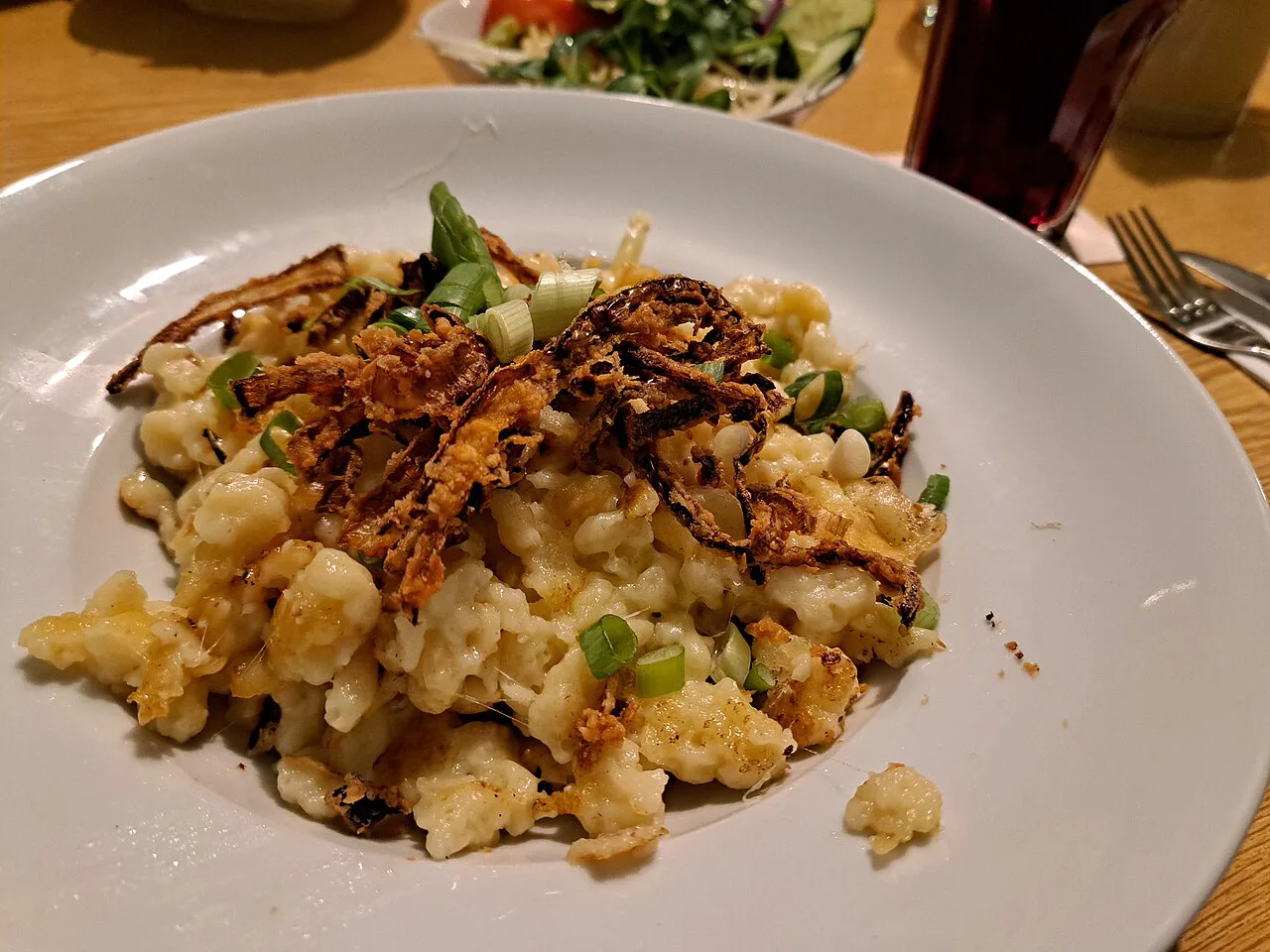
Käsespätzle is the reliable one: soft egg noodles layered with melted cheese and usually topped with fried onions. Ask whether the onions come with Speck (bacon) before assuming, especially in Swabia and Bavaria, where the bacon version is common.
Which German city is the most vegan-friendly? On the strength of the café and Asian food scene described here, Berlin is the one German city treated as the easiest for meat-free eating, with fully vegan restaurants, cafés serving plant-based menus, and a dense Asian restaurant scene alongside them. This is a planning pick, not an official ranking.
Why are vegetarian options so common in Germany now? The traditional kitchen already covers meat-free plates, and the modern café scene in big cities has added vegetarian and vegan menus on top of that. Berlin shows the combination most clearly, with cafés and fusion kitchens serving vegetarian, vegan and gluten-free dishes side by side.
What are the most popular German foods, and which are vegetarian? Sausages, pork dishes and bread-based meals top the list, but Käsespätzle, potato dishes, salads and bread snacks are already meat-free, so the traditional menu leaves room for vegetarians.
Potato dishes are the other backbone. Bratkartoffeln (pan-fried potatoes), Kartoffelsalat (potato salad) and boiled potatoes with herb quark or butter fill the meat-free slots on many menus, though warm potato salad is often dressed with bacon and broth.
Bread food is a full meal. A Brotzeit (bread snack) of rye bread, cheese, butter and radishes, or a plate of mountain cheese with bread and chutney, works in beer gardens and country restaurants alike. Salads in Germany are usually substantial, often served with bread and sometimes with cheese or egg.
Seasonal vegetables deserve a mention: during Spargelzeit (asparagus season), white asparagus with hollandaise, potatoes and ham is everywhere, and the ham is normally served separately so the rest of the plate stays meat-free.
Vegetable-forward recipes are easy to adapt at home too, which helps when you want to cook German-style dishes without meat after the trip.
Reading a German menu: words that signal meat
The menu words that catch vegetarians are usually ingredients rather than dish names. Speck (bacon) and Schinken (ham) appear in salads, potato dishes and cheese noodles; Brühe (broth) is the base of soups and often of dumpling dishes; Schweineschmalz (pork lard) turns up in bread spreads.
A Knödel (dumpling) can be vegetarian or not, depending on the sauce and whether bacon or broth is involved, so it is worth asking rather than skipping. Words like mit Fleisch (with meat) and ohne Fleisch (without meat) make the request simple, and vegetarisch is understood everywhere.
Modern menus in cities often label dishes as vegetarisch, vegan or glutenfrei, and those labels are generally reliable. When no labels appear, ask about the specific ingredient instead of asking whether a dish is vegetarian in general — that gets a clearer answer.
If you need gluten free Germany options, the same labeling applies, and German restaurant staff are used to questions about ingredients, so a short, direct ask works better than a long explanation.
Berlin as the easiest city for vegetarian and vegan eaters
Berlin is the guide's pick for the simplest meat-free eating in Germany. The city's café scene and its dense cluster of Asian restaurants mean plant-based dishes are normal rather than a special request, and several places are fully vegan or vegan-friendly.
A few named spots show the range. Roamers is a small café known for carefully composed, vegetable-led plates, while SOY-Berlin and Chay Viet are vegan Vietnamese restaurants with broad menus that include noodle soups. Cocolo Ramen runs a busy ramen operation with vegetarian and vegan-friendly bowls, though gluten-free ramen is a harder ask because the noodles are wheat-based.
For something plainer, Burrito Baby covers vegetarian Mexican street food, and Happy Baristas is a café with a small menu that caters to different diets. None of these is a pilgrimage; they are simply useful anchors when you want a meat-free meal without studying every menu in the neighborhood.
The trade-off is that Berlin's scene skews international. If your trip is about traditional German cooking, a well-chosen Gasthaus plate of Käsespätzle or potatoes will do more for you than another bowl, so mix the two styles across your days.
Beyond Berlin: ordering vegetarian in smaller towns and Gasthäuser
In smaller German towns, the vegetarian question moves from choosing a scene to choosing a dish. A traditional Gasthaus menu usually offers a handful of meat-free plates — cheese noodles, potato dishes, salads, sometimes a stuffed vegetable or a plate of cheese — even when nothing is labeled.
The restaurant-etiquette side matters here. In a traditional restaurant, the meat-free versions may come with small adjustments, so being specific and friendly works better than expecting a separate vegetarian menu.
Some traditional kitchens are less flexible than city cafés, and a dish built on broth or fat is hard to change on the spot. Have a second option in mind, and check what the plate is built on before you commit.
Breakfast and café culture: bread, cheese, pastries and coffee
German breakfast is one of the easiest meals to eat vegetarian. A spread of bread rolls, butter, cheese, jam, quark and boiled egg is standard, and the bakery counter supplies most of it.
Afternoon is where the café culture pays off. A Konditorei (cake shop) sells cakes and pastries by the slice, and a slice of Käsekuchen with coffee makes a meat-free stop that carries you to dinner.
Coffee in Germany is usually good and inexpensive, and ordering is straightforward at the counter or table.
Bakeries are the most reliable meat-free stop on a travel day: bread, cheese rolls, pastries and coffee are served all morning, and you can assemble a picnic lunch without a restaurant.
Eating out: ordering, paying and asking for meat-free versions
In a sit-down restaurant, you usually order from the server at the table and pay the same way. A short request — ohne Speck, ohne Schinken, bitte — covers most situations, and asking what a dish's sauce or broth is made from gets a clear answer.
Paying is often done at the table with the server rather than at a till. Tipping is normally rounded up to a convenient amount and said out loud when you pay, which is a small difference from US practice.
Some restaurants close on a Ruhetag (rest day), so a place that looked open on Monday may not be, especially outside the cities.
Card payment is common but not universal, so carrying cash avoids an awkward moment at a small café or bakery. A grocery chain like rewe is a useful fallback for bread, cheese and fruit when you want a meat-free lunch on the move.
Expect costs to vary by city and format: a bakery lunch, a café plate and a traditional restaurant meal sit at different levels, and checking food prices before you choose a place keeps the day within budget.
Picking a place day by day instead of chasing a single best list
There is no single best vegetarian restaurant in Germany, and treating the trip that way leads to a lot of travel across town. A better pattern is one meat-free meal you know you can get — a bakery breakfast, a café lunch, a Käsespätzle dinner — and then filling the rest around it.
In a city like Berlin, that means choosing a neighborhood with a dense café and Asian restaurant scene and walking it. In a smaller town, it means finding the Gasthaus with the broadest menu, or pairing a bakery lunch with a cheese and bread dinner.
Regional dishes are worth ordering when they are already meat-free: cheese noodles in Swabia, potato dishes across Bavaria and beyond, asparagus in season. Those are the meals that make the trip feel like Germany, not a compromise.
Which vegetarian meal should you plan first?
If you have one meal to plan, make it a cheese-noodle or potato dinner in a traditional restaurant and a café breakfast the next morning. That pair gives you the heart of German food and a meat-free day you don't have to negotiate.
For everything else, lean on the menu words, keep a bakery in reserve, and let Berlin's café scene carry the city days.
Explore more Germany guides
Frequently Asked Questions
Which German city is the most vegan-friendly?
On the strength of the café and Asian food scene described here, Berlin is the one German city treated as the easiest for meat-free eating, with fully vegan restaurants, cafés serving plant-based menus, and a dense Asian restaurant scene alongside them. This is a planning pick, not an official ranking.
Why are vegetarian options so common in Germany now?
The traditional kitchen already covers meat-free plates, and the modern café scene in big cities has added vegetarian and vegan menus on top of that. Berlin shows the combination most clearly, with cafés and fusion kitchens serving vegetarian, vegan and gluten-free dishes side by side.
What are the most popular German foods, and which are vegetarian?
Sausages, pork dishes and bread-based meals top the list, but Käsespätzle, potato dishes, salads and bread snacks are already meat-free, so the traditional menu leaves room for vegetarians.
Sources
Notes for your next German food trip
Optional updates to our guides.
You might also like



Continue reading
More guides you'll find useful




