
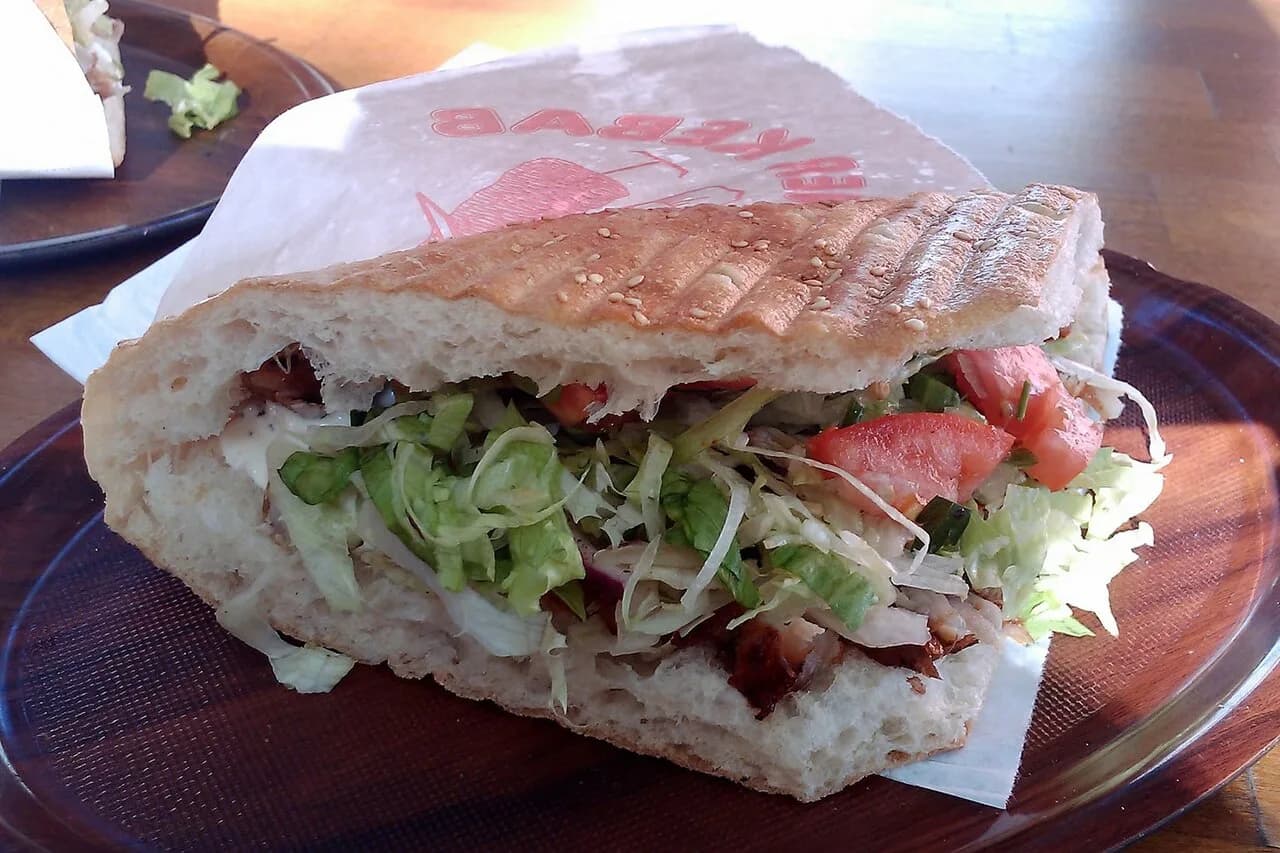
Döner Kebab Germany Guide: What to Order and Expect
Döner kebab is Germany's favorite street food, a vertical-spit meat sandwich sold in thousands of shops. Here's how it's made, what to order, and how the box works.
On this page
Döner kebab is Germany's favorite fast food, a sandwich of seasoned meat shaved from a rotating vertical spit and served in bread with salad and sauce. National Geographic reports that a YouGov poll put it ahead of currywurst as the nation's favorite fast food, and it is the one order every visitor can make without knowing a word of German. This guide explains what the meat is, what happens at the counter, and which format to pick for your first one.
The sandwich is simple enough to eat standing up, but the choices come fast: white or red sauce, everything or no onions, bread or box. A few vocabulary words carry you through it: garlic-yogurt sauce, chili sauce, and the names of the salads you want. Look at the menu board before you join the line so you know the price.
Why döner kebab is the snack Germany runs on
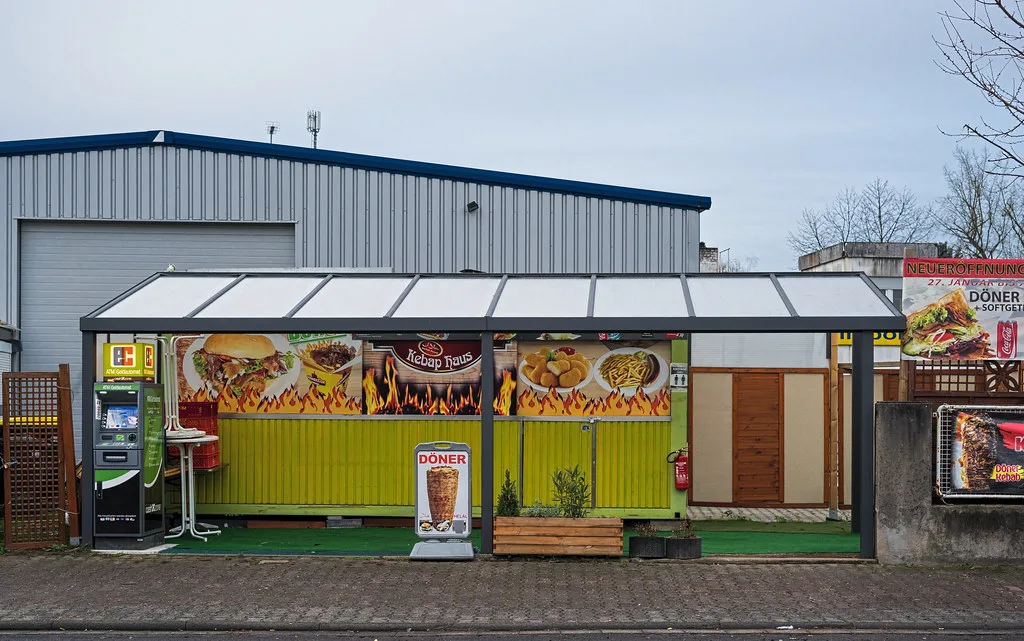
Döner shops sit on almost every busy street in German cities, from the train station exit to the residential block behind it, and they stay open later than most bakeries and cafés. The format suits a quick lunch between museums as well as a cheap dinner, which is why it has become the default snack for students, office workers and travelers alike.
Shop counts depend on who is counting. One travel report describes roughly 18,000 döner shops across the country, while National Geographic cites an estimate of about 40,000 for Germany, alongside roughly 20,000 in the UK. Treat both as estimates with different dates and methods rather than a fixed number, and use them only to understand scale: this is not a niche food.
The döner also fits the way German cities eat: fast, informal, and often standing at a counter or on a wall outside. If you want to branch out into other quick German classics, the same logic applies to sausage stands and bakery counters. A broader look at German street food helps you slot döner into a day of eating rather than treating it as a single stop.
What döner kebab actually is: vertical spit, shaved meat, bread, salad, sauce
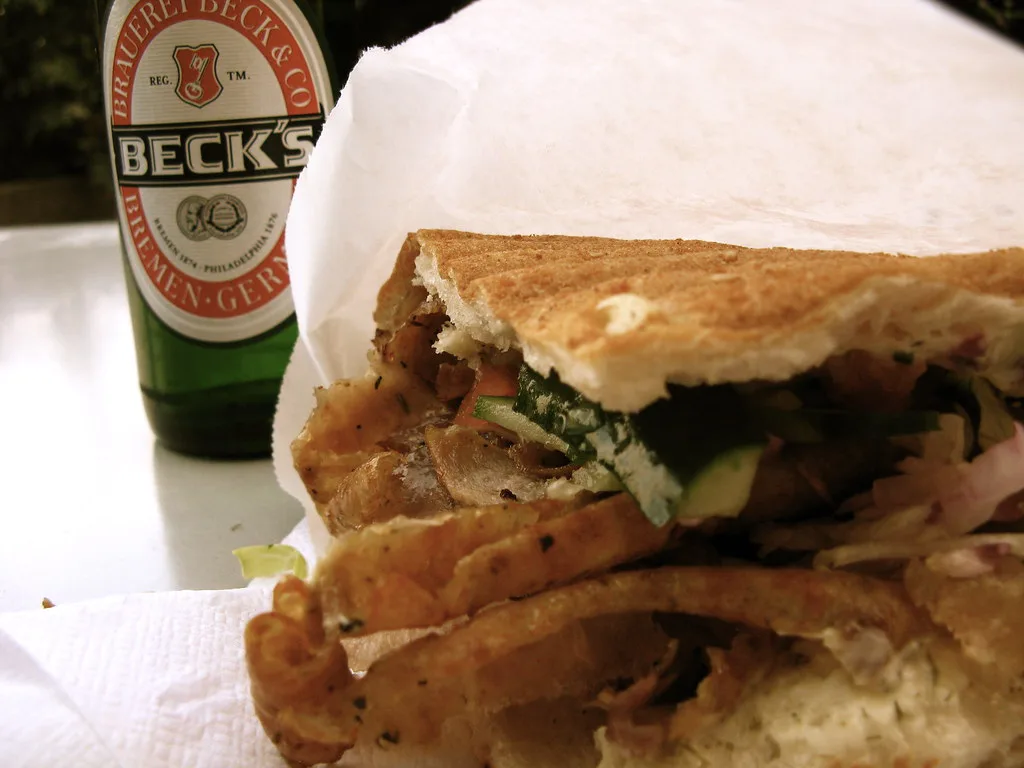
The word comes from the Turkish dönmek, meaning to turn. Stacks of seasoned meat are threaded onto a vertical spit and roasted against an upright grill; once the outer layer crisps, the cook shaves it off in thin strips. That continuous roast-and-shave cycle is why the meat stays juicy and why the line moves quickly.
Is döner kebab the same in the US as in Germany? Döner-style sandwiches appear at Turkish and Middle Eastern restaurants in US cities, but the specific German counter format — a vertical spit shaved to order and packed into bread with garlic-yogurt and chili sauce — is less common. When you find one, check whether the meat is sliced from a vertical spit rather than pre-portioned, and whether the shop uses whole-cut yaprak or minced kiyma meat.
Is döner kebab 100% meat? It depends on the spit. Yaprak döner is built from whole cuts of lamb, beef or chicken, while kiyma döner is made from minced meat pressed onto the spit.
The shaved meat goes into bread with salad and sauce. Typical fillings are lettuce, red and white cabbage, tomato, cucumber and onion, and the sauces are usually a garlic-yogurt and a chili version. The bread can be a pita-style pocket or a thin flatbread, and the whole thing is wrapped in paper so you can eat it on the move.
Meat choice matters more than most first-timers expect. Lamb is the traditional option, but beef and chicken are common and often what the shop sells most of. If you avoid one of them, say so at the counter before the cook starts shaving; pointing at the spit works fine.
How döner became German
Döner arrived with Turkish guest workers who came to West Germany from the 1960s to fill postwar labor shortages. Families followed under a family reunification policy, Turkish neighborhoods formed, and the food moved from home kitchens and restaurants into everyday German street life. That history is why döner reads as German food today rather than as an imported specialty.
The sandwich format is usually credited to Kadir Nurman, who set up a Berlin shop selling flatbread filled with döner meat in 1972. National Geographic notes that his claim is contested by others, though the Association of Turkish Doner Manufacturers in Europe backed it in 2011. Treat 1972 Berlin as the best-known origin story, not a settled fact.
Turkey's 2024 application to register döner as a guaranteed traditional specialty, which would restrict the name to kebabs made by specified methods, drew a German objection. The dispute is unresolved in the reporting, so do not expect menu language to change soon. What it shows is that the sandwich is now claimed by both countries.
Your order options: bread, flatbread, or the box
The classic order is döner in bread, which is the standard Döner sold at most counters. The meat, salad and sauce go into a split loaf or pocket, and it is wrapped to carry. Order this if you want the standard experience and plan to eat within a few minutes.
A second format uses a thin flatbread such as lavash, rolled or folded around the filling. It holds more salad and sauce and feels closer to a wrap than a sandwich, which makes it messier but more filling. Ask for it by pointing at the bread if the name on the board is unfamiliar, or simply say the word for flatbread.
The Döner box is the format many American visitors have never seen: fries, shaved meat and the usual toppings piled into a paper pail and eaten with a fork. It is the practical choice if you cannot eat gluten, since you skip the bread entirely. The trade-off is that you lose the contrast of bread against the meat and salad, so try the sandwich first if you have the choice.
Is it yaprak or kiyma? Whole-cut meat versus minced
Döner meat is not all the same. Yaprak, meaning leaf, is made from whole cuts of meat stacked on the spit, so the shaved slices come off in uneven, natural pieces. Kiyma is made from minced meat pressed onto the spit, which gives a more uniform strip and a softer texture.
The difference is visible before you order. A whole-cut spit shows distinct slabs and a coarser surface, while a minced spit looks smoother and more even. Some restaurants buy their spit ready-made from a wholesaler, while others build their own from whole cuts; ask if it matters to you, since the appearance alone does not always tell you what is inside.
If you care about the meat quality, look at the spit before you commit and ask whether it is yaprak. A shop that makes its own spit tends to be proud of it and will tell you. This single question does more for your meal than any online ranking.
What to drink with it
Ayran is the traditional pairing: a salty Turkish yogurt drink, thin and cold, that cuts through the fat and chili sauce. It comes in small cups or bottles and is usually in the cooler by the counter. If you have never had it, the saltiness can surprise you on the first sip, but it is the drink regulars order.
If ayran is not for you, water or a lemonade from the cooler does the job. Skip the urge to add a sweet soda with the chili sauce; the sugar fights the heat instead of cooling it. Drinking here is a quick refuel, not a sit-down affair.
How to order at the counter
The cook will ask about sauce and salad, often in quick German, so decide before you reach the front. A simple approach is to name the sauce you want and nod or say no thanks to the items you skip; pointing at the trays works too. The line moves fast and nobody expects a long conversation.
Chili sauce ranges from mild to seriously hot depending on the shop, and it is easier to add heat than remove it. Ask for the red sauce on the side if you are unsure, or take the garlic-yogurt sauce only on a first visit. Onions and pickled peperoncino are common add-ons that change the flavor a lot, so mention them if you want them left out.
Read the menu board on the wall before you order; prices vary by city and from shop to shop. Many döner shops are small operations with turnover from lunch and late-night crowds, so the pace is quick and the focus is on the food, not on lingering. Eat outside on a ledge or at a standing counter, since seating is often limited.
Döner versus gyro
The gyro and the döner look similar because both are shaved meat in a wrapped flatbread with salad and sauce, but the seasoning, bread and sauces differ. Greek gyros usually come with tzatziki and often pork, while döner uses garlic-yogurt and chili sauces and is normally lamb, beef or chicken.
If you have eaten gyros in the US, expect döner to taste sharper and more herb-forward because of the chili sauce and cabbage. The texture is also rougher when the shop uses whole-cut yaprak meat. That difference is the reason döner is worth ordering on its own terms rather than as a stand-in.
How Germany's döner scene keeps changing
The EU name-registration fight has pushed shops to talk about what is in their spit, and some now advertise whole-cut meat or house-made spits to set themselves apart. That is a useful signal for travelers, because it gives you something concrete to look for beyond a long line. The dispute itself is reported as of 2024 and has not been resolved in the sources.
Döner also sits in a wider German fast-food landscape that includes currywurst and sausage stands. If you want to eat your way through it, the same skills apply: read the board, decide fast, and eat where the line is local. For a broader set of options, German Street Food covers the classics beyond the kebab, and Flammkuchen is the other quick order worth knowing where you see it.
One dish worth knowing by name is the iskender kebab, slices of döner meat over pide bread with tomato sauce and melted butter, named after İskender Efendi. It is a sit-down plate rather than a street sandwich, and finding it on a menu usually signals a full Turkish restaurant rather than a counter.
Which döner should you order first?
Order the classic döner in bread with garlic-yogurt sauce and a little chili, and add an ayran if you want the full experience. Check the spit first and ask whether it is yaprak if you care about whole-cut meat; if bread is a problem, take the Döner box with fries instead.
Keep the order simple on a first visit and pay attention to the sauce question. Once you know the format, döner becomes the easiest reliable meal in any German city.
Explore more Germany guides
Frequently Asked Questions
Is döner kebab the same in the US as in Germany?
Döner-style sandwiches appear at Turkish and Middle Eastern restaurants in US cities, but the specific German counter format — a vertical spit shaved to order and packed into bread with garlic-yogurt and chili sauce — is less common. When you find one, check whether the meat is sliced from a vertical spit rather than pre-portioned, and whether the shop uses whole-cut yaprak or minced kiyma meat.
Is döner kebab 100% meat?
It depends on the spit. Yaprak döner is built from whole cuts of lamb, beef or chicken, while kiyma döner is made from minced meat pressed onto the spit. Some commercial spits include fillers, so ask the shop which type it uses if this matters to you.
Sources
Notes for your next German food trip
Optional updates to our guides.
You might also like



Continue reading
More guides you'll find useful



