
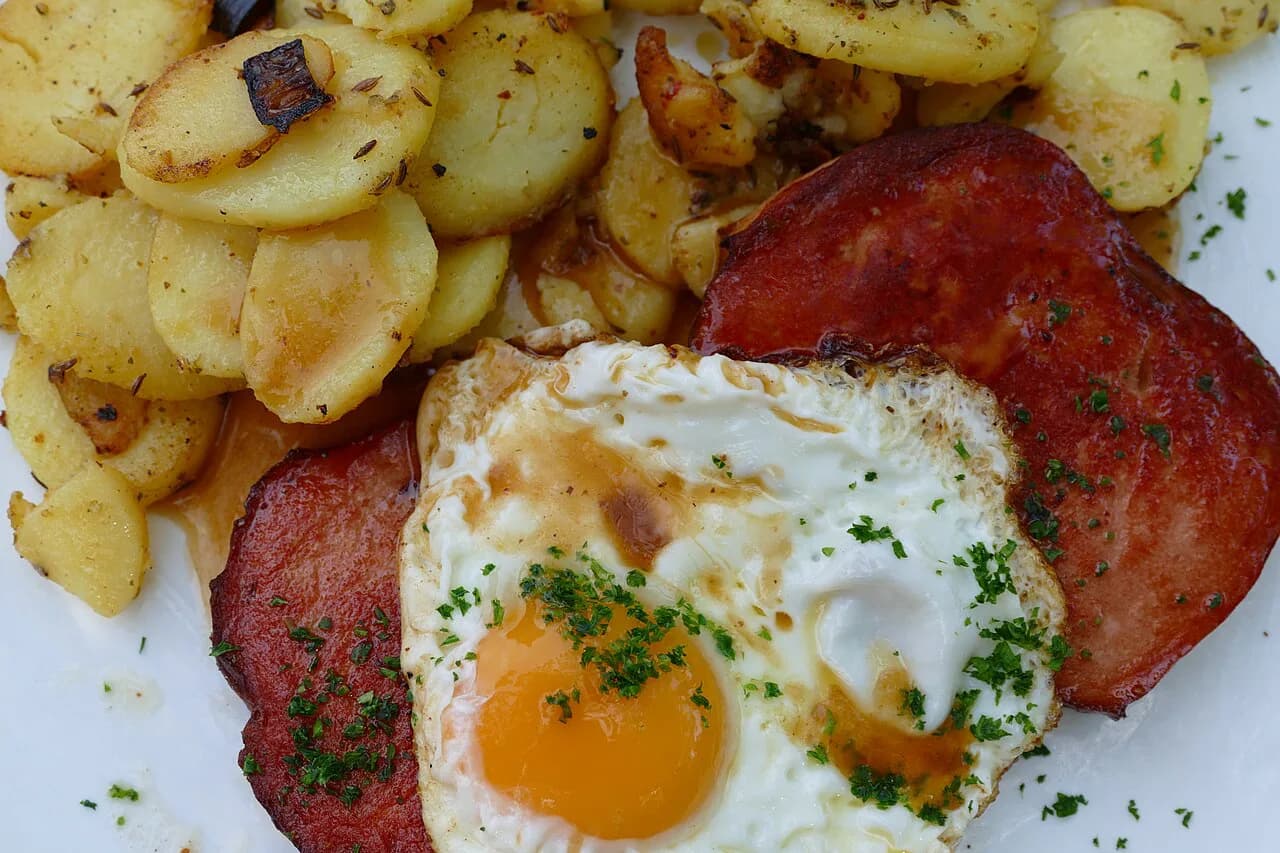
Leberkäse: What It Is and How to Order It in Germany
Leberkäse looks like a loaf and tastes like nothing called liver cheese. Here is what it is, the names you will see at the counter, and how to order it.
On this page
Leberkäse is a baked meatloaf, not a cheese and not usually a liver dish, and the way most visitors meet it is a Leberkässemmel: a warm slab sliced from the loaf and tucked into a bread roll. It belongs with the rest of Germany's handheld eating, from currywurst to the Döner kebab, and this guide covers what the loaf is made of, the counter names that change what lands in your roll, and how to order without guessing.
Expect a firm, pinkish slice with a browned crust rather than a light snack. It is rich and salty, built for a roll with mustard or pickles rather than for eating lean, and knowing that going in is half the decision about whether to make it lunch.
What Leberkäse Actually Is
The loaf is made from finely chopped pork, often with bacon and beef, baked in a pan or tin until it sets and forms a crust. Slices cut from that loaf are what go into the roll, and the texture sits closer to a coarse pâté than to the crumbly meatloaf many American eaters picture.
Austrian Leberkäse is the version most English-language descriptions of the snack draw on, and there the loaf regularly contains neither liver nor cheese. Variants sold alongside it include Käseleberkäse with melted cheese worked in, Pikant with red and green pepper pieces, and a chili version, all of which you may see in the same display case.
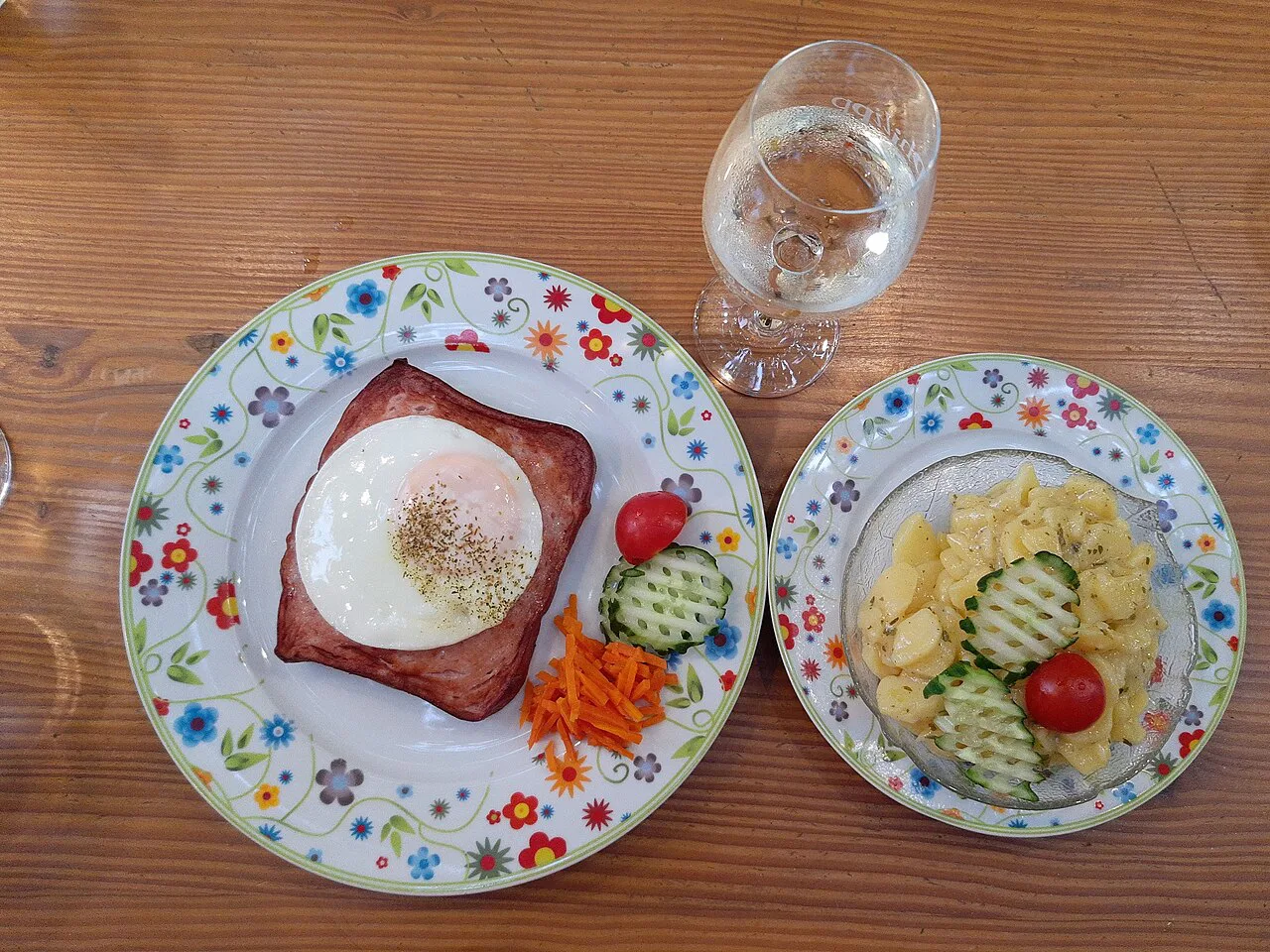
Why It Is Called Leberkäse When the Name Often Does Not Match the Loaf
The German words Leber (liver) and Käse (cheese) both appear in the name, and neither reliably describes Austrian Leberkäse. The likeliest explanation is that the name grew out of older words for a loaf and for the consistency of the baked block — Laib (loaf) is closer to the truth than liver — but nobody knows the etymology for sure, so treat any confident story about it with mild suspicion.
How do you pronounce Leberkäse? Say it roughly as LAY-ber-kay-zeh, with a clear short e in the middle and a soft final syllable. The ä is close to the e in bed, not the a in cake, and the stress falls on the first syllable.
Is Leberkäse served hot or cold? Both. The classic order is a warm slice in a roll, straight from a fresh loaf, but supermarkets also sell thin cold slices to eat like cold cuts on a sandwich.
What is Leberkäse made of? The Austrian loaf is typically finely chopped pork with bacon and often beef, baked in a tin until firm, with variants adding cheese, peppers or chili. Austrian Leberkäse regularly contains neither liver nor cheese.
There is a real liver thread in the German version, though. According to a Vienna food guide, Leberkäse sold in Germany outside Bavaria is expected to include liver, while Bavarian loaves are commonly made without it. Austrian Leberkäse, by contrast, often has none.
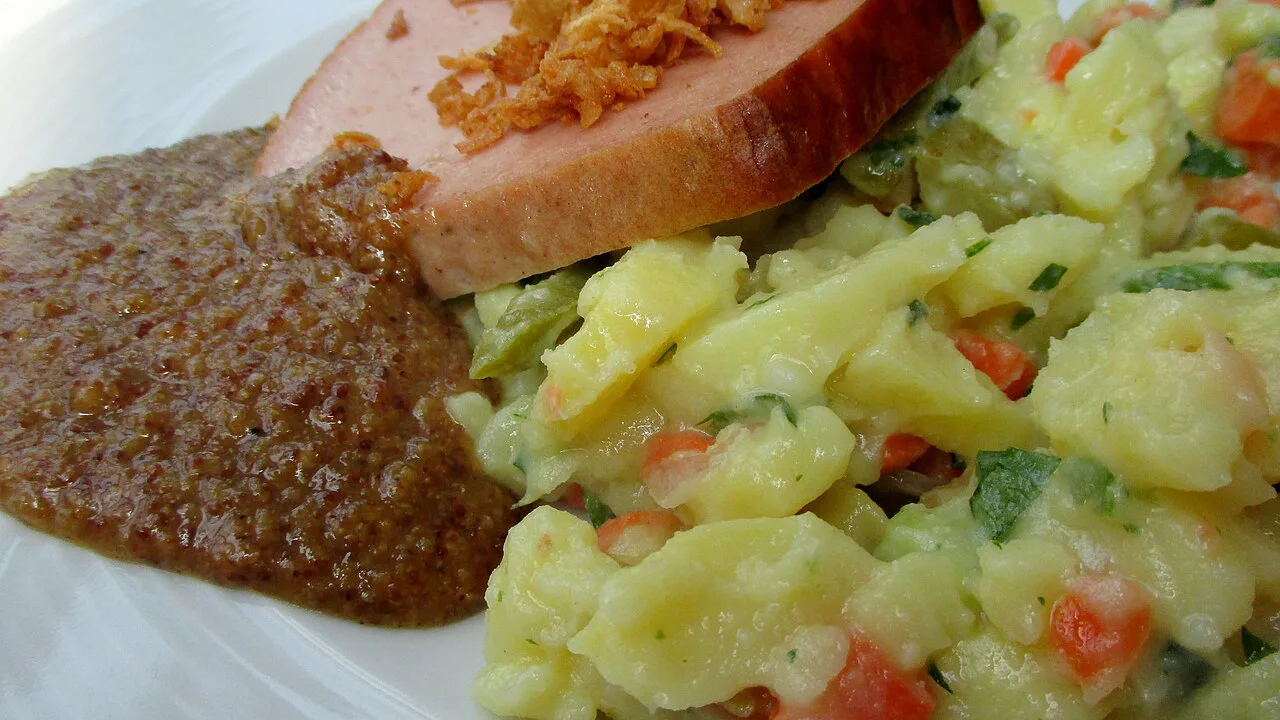
The Names on the Counter
At the counter, the label and ingredient list are your main clues to what is inside, because the name alone will not settle it. In Germany outside Bavaria, liver is expected to be present, so ask or read the ingredients if that matters to you.
Beyond the base loaf, the counter splits into a handful of familiar additions: Käseleberkäse with cheese, Pikant with peppers, and a chili-spiked loaf. In Austria you may also see Pferdeleberkäse made with horsemeat or Wildschweinleberkäse made with wild boar, both of which are labeled as such rather than hidden in a generic slice.
How the Austrian Version Differs from the German One
Vienna is where many travelers first eat Leberkäse, and the local version is a plain, fat-rich meatloaf served in a round white roll called a Semmel. You find it at supermarket deli counters, sausage stands, football-club canteens, market stalls and some bars, which makes it one of the easier snacks to find without much planning.
A Vienna chain called Leberkas-Pepi has built its business on the snack, with branches previously listed at the airport, Hauptbahnhof station, the Donauzentrum shopping complex, and Operngasse in the center. Treat those as the brand's reported locations and confirm a branch is open before you build a stop around it.
What to Order: The Leberkässemmel
The standard order is a Leberkässemmel: a round white roll split and filled with a warm slice, usually with ketchup or mustard. Supermarket deli counters, sausage stands and market stalls sell it, and it is eaten hot rather than carried far.
Mustard is the classic partner because it cuts the fat, and pickles do the same job with a crunch. If you are ordering a Pikant or chili loaf, go lighter on the mustard so the pepper flavor is not buried.
Hot in a Roll, Cold in Slices, or on a Plate
The roll is the everyday format, but supermarkets also sell Leberkäse as thin cold slices to eat like ham, and as uncooked part-loaves for baking at home. Some bars and restaurants serve it as a plated dish, which usually means the same bread-and-slices combination with more ceremony.
If you are cooking for yourself, a supermarket part-loaf for baking at home is the project version; precooked cold slices are the low-effort option for a sandwich. Either way, the flavor is already set by the bake, so you are reheating or slicing rather than seasoning from scratch.
Where You Buy It
Butcher counters, supermarket delis, weekly markets and sausage stands are all places to find it, and a butcher counter gives you the widest choice of loaf types. In Vienna, supermarket deli counters, sausage stands and market stalls are the everyday sources.
Outside Germany and Austria, German-style delis sell their own version of the loaf. One American producer, Karl Ehmer, describes its Leberkase as a Polish-style ham bologna baked with mustard and spices and sold by the pound, with pork liver among its ingredients. That is a seasoned, mustard-spiked product quite different from a fresh Bavarian butcher's loaf, useful mainly if you are trying to recreate the sandwich at home.
For a broader map of what to eat on the go, the German Street Food guide covers the rolls, sausages and fried snacks that fill the same lunch slot. If you are weighing a sit-down Gasthaus meal against a counter snack, Leberkäse is the faster and more portable choice.
Reading the Label If Liver Matters to You
If you are avoiding liver, the ingredient list is the only reliable check, because the name will not settle it. According to a Vienna food guide, German labeling outside Bavaria expects liver in Leberkäse, while Bavarian loaves are often made without it; in Austria the loaf may contain none at all.
Allergen and ingredient labels also matter if you are avoiding dairy, since Käseleberkäse adds cheese, and read the pack rather than relying on the word on the sign. Processed products like Karl Ehmer's carry their own allergy notice that some items may contain milk or soy or be processed in a facility handling them.
Texture, Fat, and the Crust
A good slice holds its shape in the roll and stays moist inside, with a browned, crusty top where the loaf baked. The texture is firm and pâté-like rather than crumbly meatloaf, which is the main thing that surprises eaters expecting an American-style loaf.
This is not a light food, and it is not marketed as one; the fat content is what carries the flavor and keeps the slice juicy. Pair it with something sharp, such as mustard, pickles, or a simple salad, rather than adding more richness on top.
Where It Sits Among German Snacks
Think of Leberkäse as the butcher-counter cousin of the fried snacks sold at stands: a currywurst is a sliced sausage in sauce, a Frikadelle is a pan-fried patty of ground pork and beef, and Leberkäse is a baked loaf sliced to order. Each one is a different answer to the same question of what to eat standing up.
If you want something flatter and richer for a sit-down table, Flammkuchen is the thin Alsatian tart topped with crème fraîche, onions, and bacon, closer to a pizza than to a sandwich. It is a different meal, but it belongs on the same shortlist of Alsatian and southern German everyday food worth trying.
Is Leberkäse Worth Ordering?
Yes, if you want a fast, savory, handheld lunch and you are comfortable with a rich slice of meat. Order a Leberkässemmel with mustard and pickles at a butcher counter or stand, and check the label if liver is a concern.
Skip it if you are after a light meal or you dislike a firm, pâté-like texture, and spend the slot on a plate of something else instead. The loaf is a snack, not a destination dish, and it is at its best warm from a recently baked loaf.
Explore more Germany guides
Frequently Asked Questions
How do you pronounce Leberkäse?
Say it roughly as LAY-ber-kay-zeh, with a clear short e in the middle and a soft final syllable. The ä is close to the e in bed, not the a in cake, and the stress falls on the first syllable.
Is Leberkäse served hot or cold?
Both. The classic order is a warm slice in a roll, straight from a fresh loaf, but supermarkets also sell thin cold slices to eat like cold cuts on a sandwich.
What is Leberkäse made of?
The Austrian loaf is typically finely chopped pork with bacon and often beef, baked in a tin until firm, with variants adding cheese, peppers or chili. Austrian Leberkäse regularly contains neither liver nor cheese.
Does Leberkäse contain liver?
Often, in Germany outside Bavaria, where liver is expected. In Austria the loaf regularly contains none, so check the ingredient list if it matters to you.
What does the label tell me about liver?
In Germany outside Bavaria, liver is expected in Leberkäse, while Bavarian loaves are often made without it. Because the name alone will not settle it, read the ingredient list or ask at the counter.
Sources
Notes for your next German food trip
Optional updates to our guides.
You might also like



Continue reading
More guides you'll find useful





