Bamberg Food Guide: What to Eat, Rauchbier to Hörnla
A practical guide to Bamberg food: Rauchbier at the Schlenkerla brewery, Bamberger Hörnla pastries, Leberkäs-Brödla, pralines and how the city voucher works.
On this page
The fastest answer to Bamberg food is five things: Rauchbier at the Schlenkerla brewery, a Bamberger Hörnla from Bäckerei Seel, a Leberkäs-Brödla from Metzgerei Hornung or Liebold, hand-made pralines from Chocolatier Storath and a scoop of ice cream at Bassanese. Those are the stops Bamberg Tourismus packs into its own specialty voucher, and they sit within walking distance of each other in the Inselstadt. This guide explains what each one is, how to order it, what it costs where a price is published, and how to build a day of eating around them.
Two of these are snacks you eat standing up and two are sweet, so the heavy lifting of a Bamberg eating day is really about Rauchbier, the local smoked beer, and the Franconian plates you sit down to afterward. Bakery and butcher stops work best in the morning; the brewery and a Gasthaus belong in the afternoon or evening.
One practical note on money: small bakeries and butcher counters in Bamberg are the kind of places where a card reader is not a given, so carry some euro cash alongside your card. That single habit removes most of the friction from a day built around quick counter stops.
Bamberg food at a glance
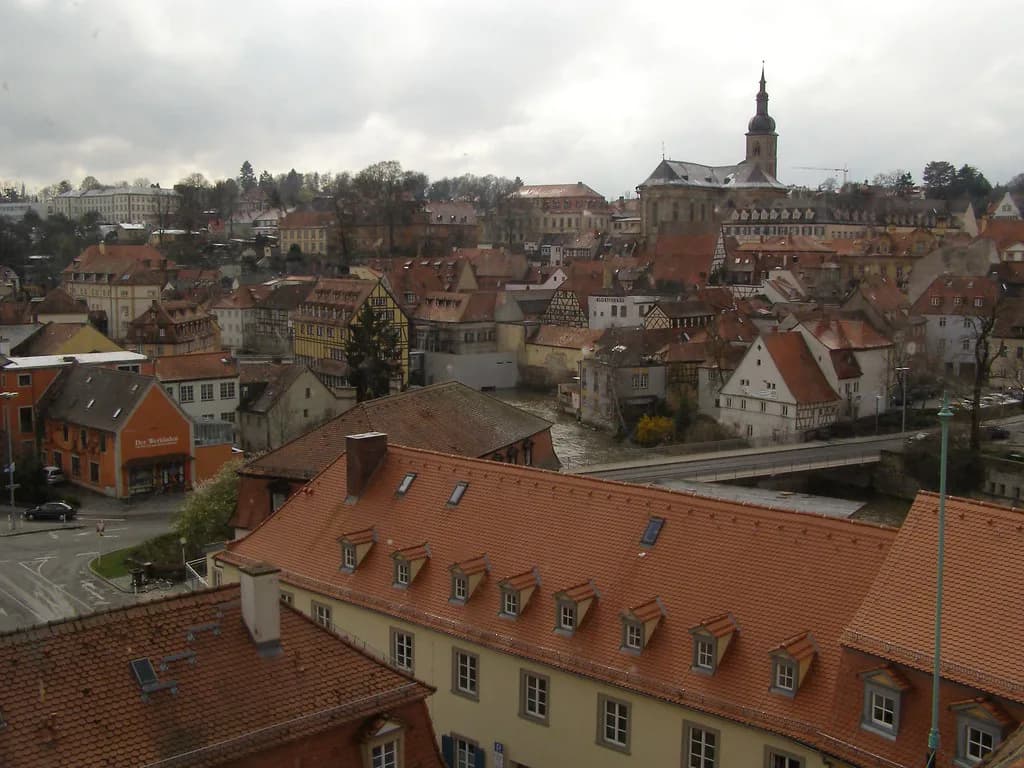
Bamberg food is Franconian cooking eaten in a compact old town, with a bakery culture and a brewery culture that both run deeper than the tourist trail. The Inselstadt, the island quarter between the river arms, holds most of the snack stops; the Bergstadt climbs toward the cathedral and the Michaelsberg and is where you slow down for a proper meal.
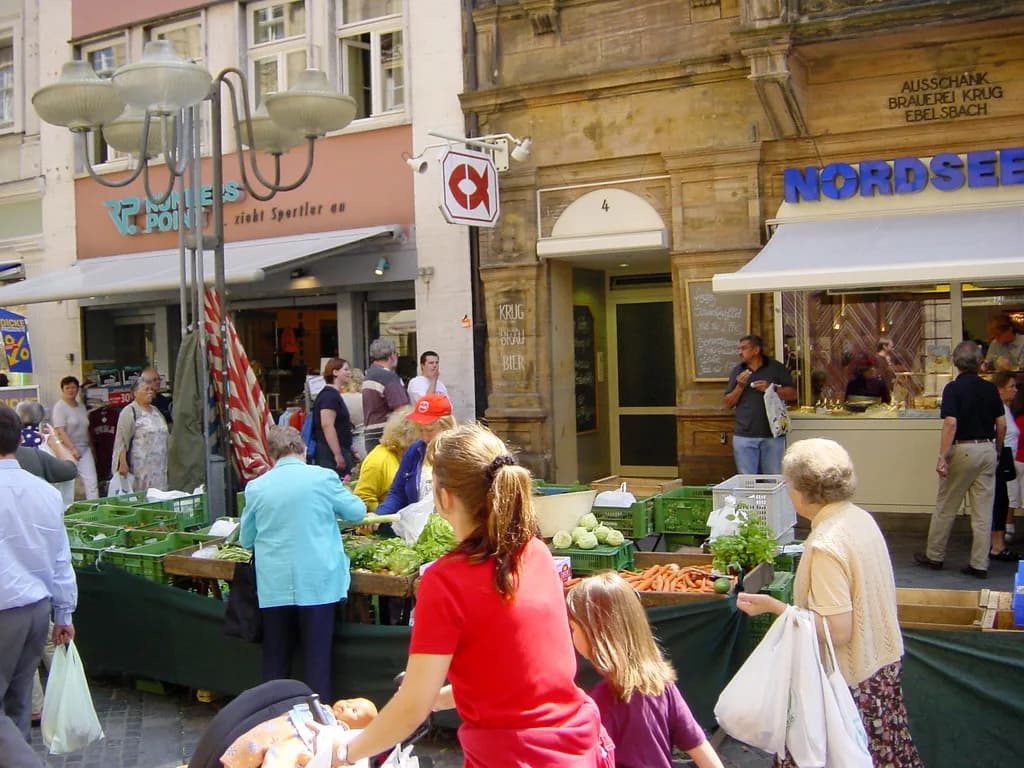
The specialties below are all things tourists can find easily, which is both the appeal and the trade-off. The counter stops are quick and cheap enough to try several in a day, but on a busy Saturday the narrow streets around the Grüner Markt fill up, and a sit-down lunch is when you notice it most.
If you would rather have someone else sequence the stops and translate the menu for you, a guided Bamberg food tour is the lower-effort option; doing it yourself is cheaper and lets you linger.
For the snack end of the day, from a sausage roll eaten on the move to a pastry from a bakery counter, see the Bamberg street food picks that pair with these specialties.
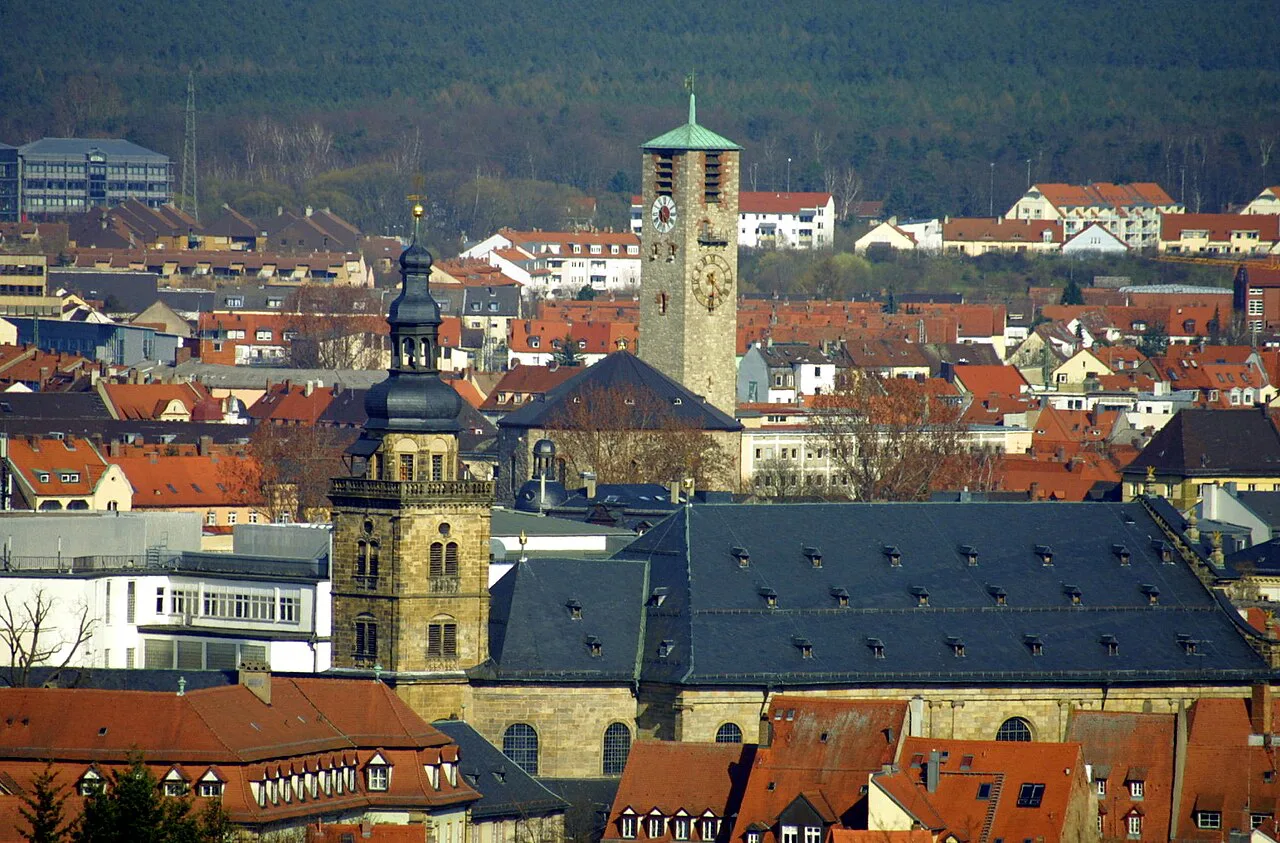
Rauchbier: what smoked beer is and why Schlenkerla is the place to taste it
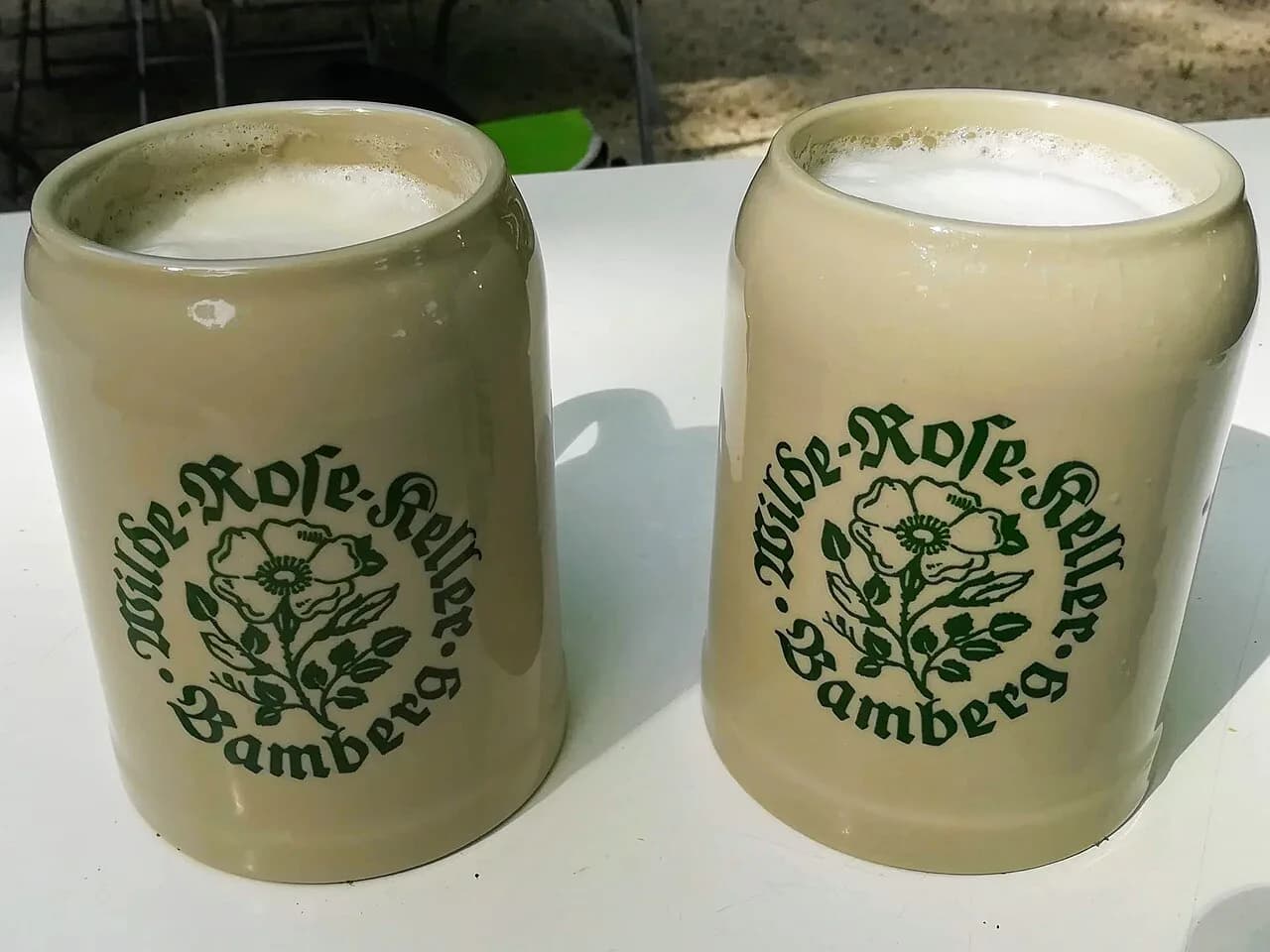
Rauchbier is beer brewed with malt that has been dried over an open beechwood fire, which gives the finished glass a smoky, bacon-adjacent aroma. In Bamberg the reference point is the Schlenkerla brewery, which Bamberg Tourismus lists first among the voucher's stops for a cold Rauchbier.
Treat the first glass as a tasting decision rather than a challenge. The smoke is the point, and it is strong; one glass tells you whether you want a second, and a glass of something lighter alongside it keeps the smoke from flattening your palate before dinner.
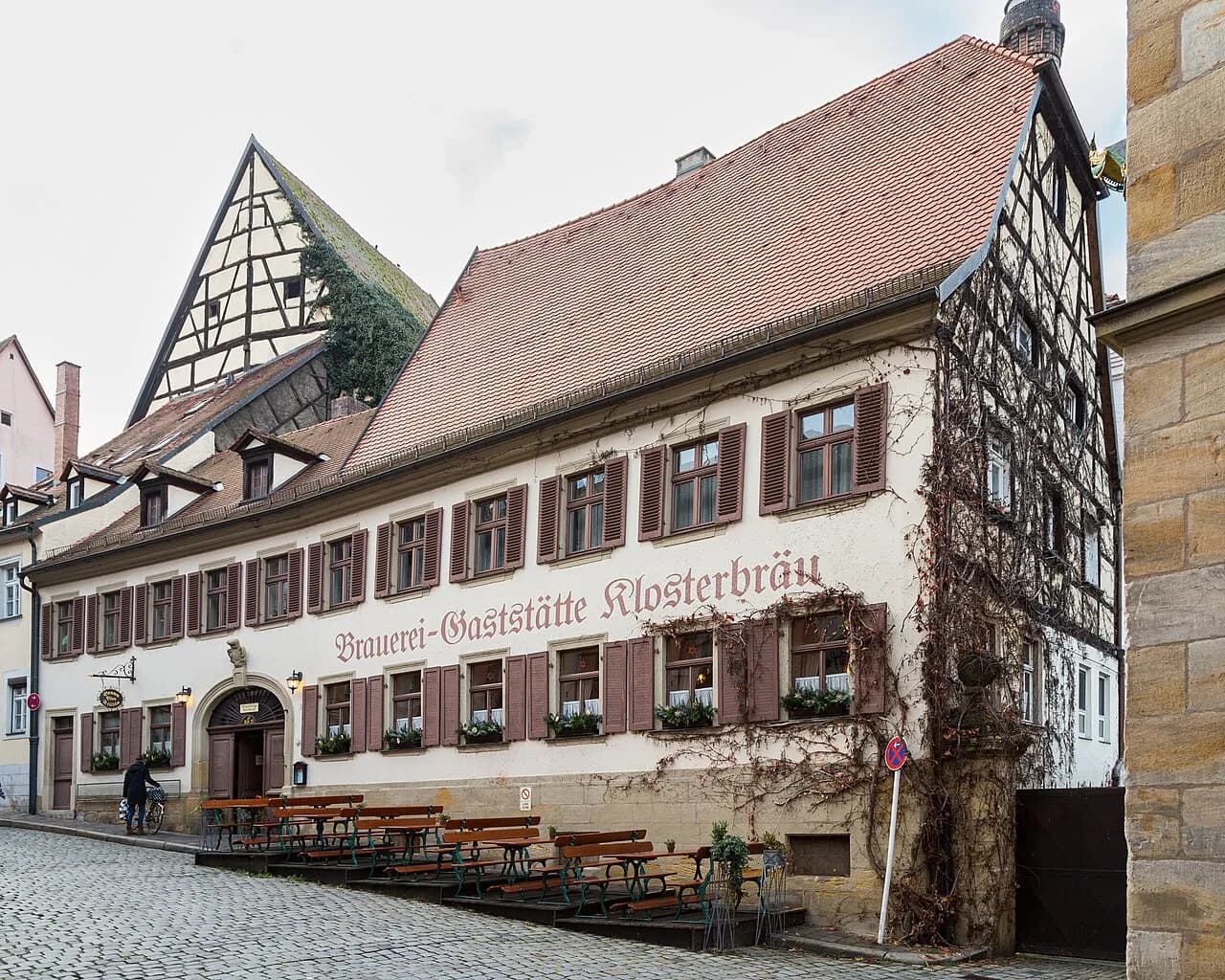
If the smoke does not land, say so to yourself early and move on. Bamberg's beer culture is broader than one style, and the city's own restaurant listings sort venues by type, including Brauereigaststätten, brewery taverns, where the beer list and the kitchen come from the same house.
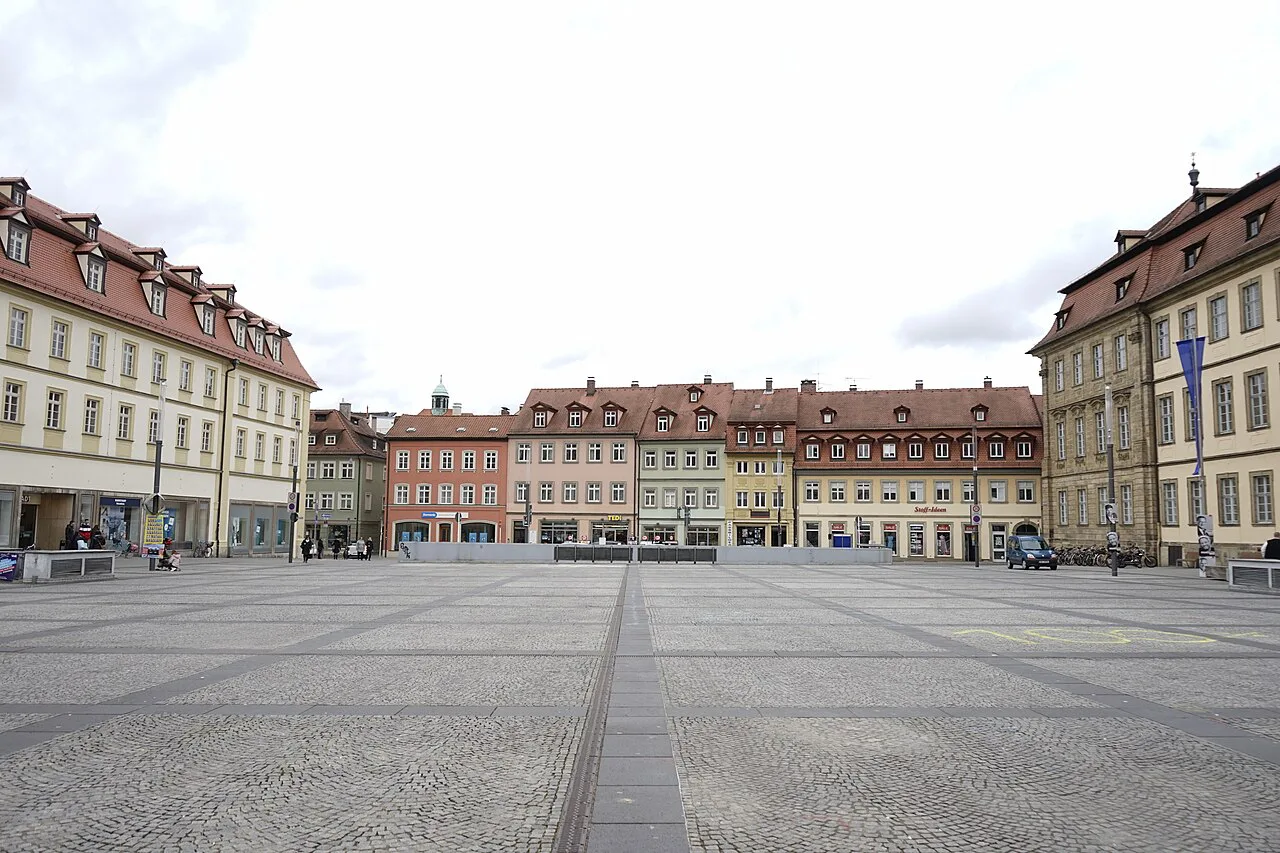
Bamberger Hörnla: the croissant-shaped pastry and where to buy it
A Bamberger Hörnla is a crescent-shaped pastry from Bamberg's bakeries, and Bäckerei Seel is the shop Bamberg Tourismus names for it on the voucher, which includes an oven-fresh Bamberger Hörnla. Buy one in the morning, when bakery counters are at their fullest, and eat it while it is still warm rather than saving it for later.
Local bakers also put miniature versions of their wares, Hörnla included, into the nativity scene in the Obere Pfarre church, which tells you how central the pastry is to the city's idea of itself. The large crèche is displayed from the first Sunday of Advent into late February and is a sightseeing stop rather than a food stop.
Ordering at a bakery counter is simple German: name the item, say how many, and pay at the register rather than at the counter in most shops. If a display case has several crescent-shaped things, point and ask for the Hörnla by name.
Leberkäs-Brödla to go: what it is and which butcher shops sell it
A Leberkäs-Brödla is a thick slice of Leberkäse, a finely ground baked meat loaf, tucked into a bread roll as a hot handheld lunch. In Bamberg the voucher sends you to Metzgerei Hornung or Metzgerei Liebold for it, and it is the most filling of the quick stops on this list.
At a butcher counter the rhythm is fast: you queue, you say you want a Brödla, and you take it away. Ask for mustard if you want it, since it is not always added by default, and eat it standing outside rather than carrying it, because the roll goes soft quickly.
This is the stop where cash matters most. A butcher counter is not the place to discover that your card is not accepted, so keep a few euro coins and small notes in a jacket pocket for exactly this kind of purchase.
Sweet stops: pralines and ice cream in the old town
The sweet end of the voucher is two hand-made pralines from Chocolatier Storath and one scoop of ice cream from Bassanese, which the tourism office places right in the Altstadt. Both are small, quick stops rather than sit-down cafés, which makes them easy to slot between the savory ones.
Ice cream is the one stop that is genuinely seasonal in feel: a scoop in the Altstadt in July is a different proposition from the same scoop in November. Pralines travel better, so if you want a food souvenir that survives the trip home, buy those last rather than first.
Both shops are within the same walkable old-town core as the bakery and butchers, so you can fold them into the same loop instead of making a separate trip.
The Bamberger Spezialitätengutschein: how the voucher works
The Bamberger Spezialitätengutschein bundles those stops into one purchase: a cold Rauchbier at Schlenkerla, a fresh Bamberger Hörnla from Bäckerei Seel, a Leberkäs-Brödla from Metzgerei Hornung or Liebold, two hand-made pralines from Chocolatier Storath and a scoop of ice cream at Bassanese. The city tourism office sells it for 13,95 € and describes the partners as all walkable within the Innenstadt with no fixed start point and no time pressure.
The mechanic to plan around is redemption: you book online, receive a voucher, and must exchange it at the Tourist Information at Geyerswörthstraße 5 before you use it with the partners. The same page notes registration is required and asks you to respect the partners' own opening times, so the voucher is a route, not a ticket that lets you turn up anywhere at any hour.
Is it worth it? If you already plan to try all five items, the bundle saves you the small hassle of paying five separate counters, and the QR codes on the voucher link each partner for navigation. If you only want the beer and the pastry, go direct instead; you lose nothing but the souvenir value.
The voucher is a fixed five-stop bundle, so if the beer and the pastry are all you want, buy those two directly and skip the rest.
Walking the Inselstadt and Bergstadt on foot
Bamberg's food stops cluster tightly enough that you do not need transit: the Altstadt between the Grüner Markt and the river arms holds the bakery, the butchers and the sweet shops, and Schlenkerla sits in the same pedestrian core. Plan the savory stops first and the sweets last so you are not carrying pralines through lunch.
The Bergstadt side, up toward the cathedral and the Michaelsberg, is where I would put a sit-down meal, since the walk up earns it and the streets are quieter than the shopping axis below. Crossing between the two parts of town takes minutes on foot, so a single afternoon covers both without rushing.
On a weekend, start earlier than feels necessary. The old-town lanes are narrow, the popular counters queue, and by midday the difference between a relaxed loop and a shuffle is mostly timing.
Franconian plates beyond the snacks
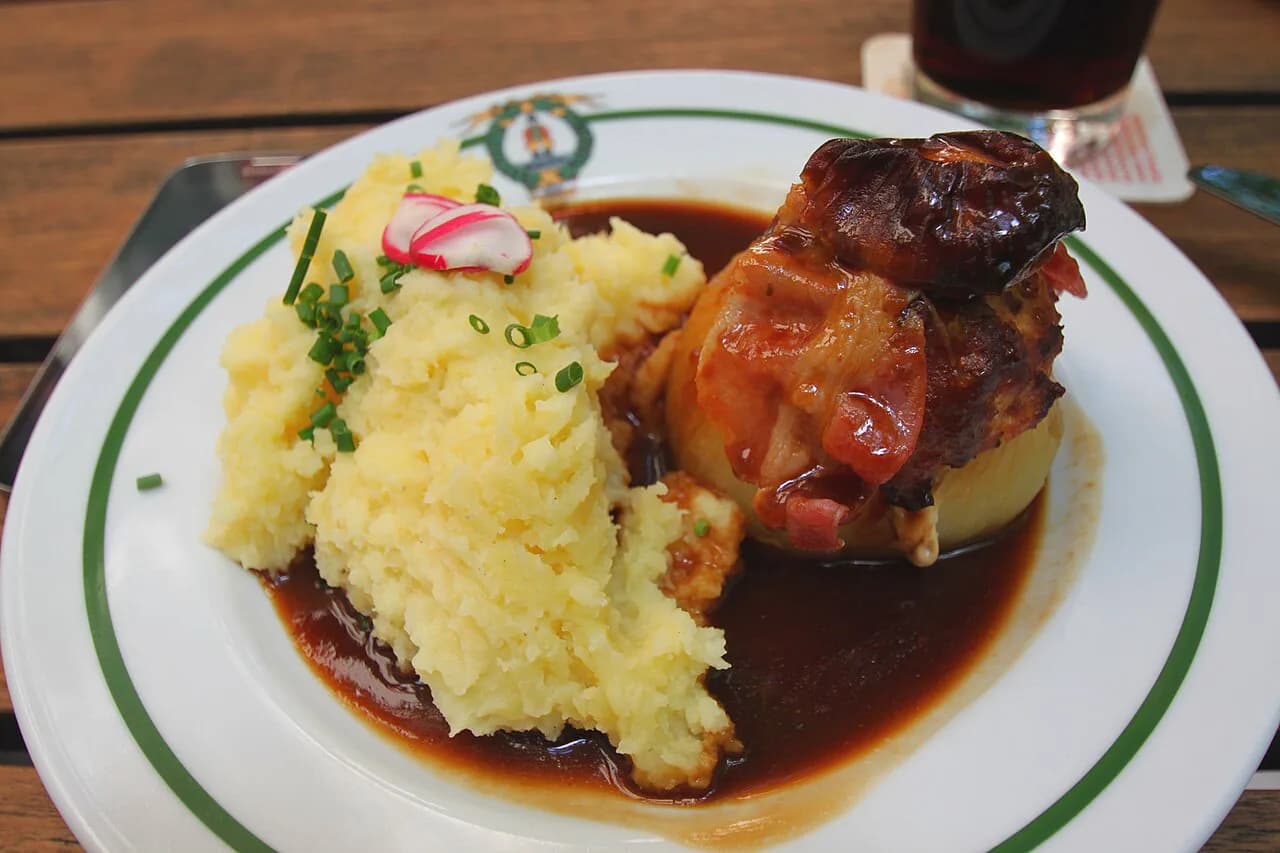
Once you move from counter to table, look for the Franconian standards on a Gasthaus menu: roast pork with a dumpling, a plate of sausages with sauerkraut, and the onion stuffed with meat that is the city's own Bamberger Zwiebel. These are the dishes that make a Bamberg lunch a meal rather than a snack.
Bamberg's tourism office keeps a filterable restaurant directory that sorts by kitchen type, including fränkische Küche, German cooking and international options, plus Betriebsart categories such as Brauereigaststätten, Bierkeller and Cafés. Use it to pick by the kind of room you want, then check the venue's own details before you commit an evening to it.
If you want to compare how Franconian cooking sits next to other German regional kitchens, the Düsseldorf food guide covers Rhineland dishes, a useful contrast in style.
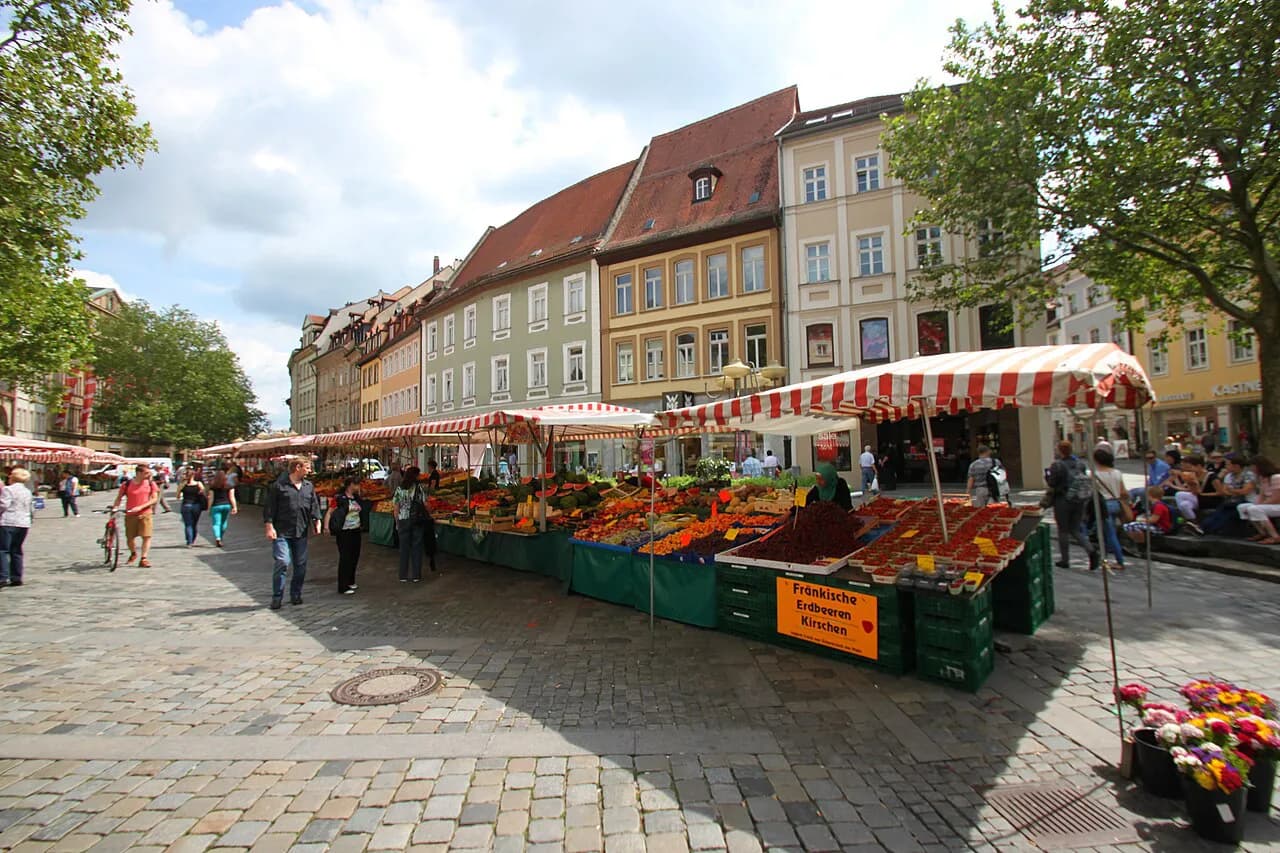
A farmers market morning is the other way to eat Franconian without a menu, and it pairs naturally with a bakery run on the same day.
Sizes, pacing and where beer fits into a meal
Bamberg beer comes in the usual Franconian formats, and the useful habit is to order the smaller glass when you are trying a style for the first time. Rauchbier rewards attention in small amounts more than it rewards volume, and a table shared between two people is the easiest way to compare without overdoing it.
Beer belongs with food here rather than instead of it: a smoked beer alongside a plate of roast pork or sausage is the natural pairing, and the smoke stands up to the fat in a way a light lager would not. Order at the table, pay at the end, and tip by rounding up rather than calculating a percentage.
For a fuller picture of how German beer styles differ, a dedicated beer guide is worth a read before you sit down, since knowing what a Kellerbier or a Märzen is makes the menu much less opaque.
If you like smoked flavors, the Black Forest kitchen is a different pleasure entirely, and the Freiburg food guide is where to read about it.
Cash, Ruhetag and busy weekends in the old town
Three practical points decide how smooth a Bamberg eating day goes: carry cash for counter stops, expect some kitchens to take a Ruhetag, a weekly rest day, and plan around weekend crowding in the Inselstadt. The Ruhetag is the one that catches visitors out, because a Gasthaus that is open all week may close on a day you assumed was a peak day.
Bamberg Tourismus publishes current gastronomy notices on its restaurant pages, which is the right place to confirm what is open before you walk across town for a specific kitchen.
Reservations are worth making for a sit-down Franconian dinner on a Friday or Saturday, when the old-town rooms fill first and the walk-up tables go last. Counter stops never need one.
Which Bamberg stop should you book first?
Build your day in this order: bakery first for a Bamberger Hörnla, butcher counter at midday for a Leberkäs-Brödla, pralines and ice cream as the afternoon sweet stops, and Schlenkerla with dinner rather than as a standalone challenge. If you want all five without planning the sequence, the voucher does it for 13,95 € with redemption at the Tourist Information.
The one stop worth booking ahead is the sit-down meal, where a Franconian Gasthaus on a weekend evening is the only part of this day that can genuinely be full. Everything else is walk-up.
Explore more Bamberg guides
Sources
Notes for your next German food trip
Optional updates to our guides.
You might also like
Continue reading
More guides you'll find useful