
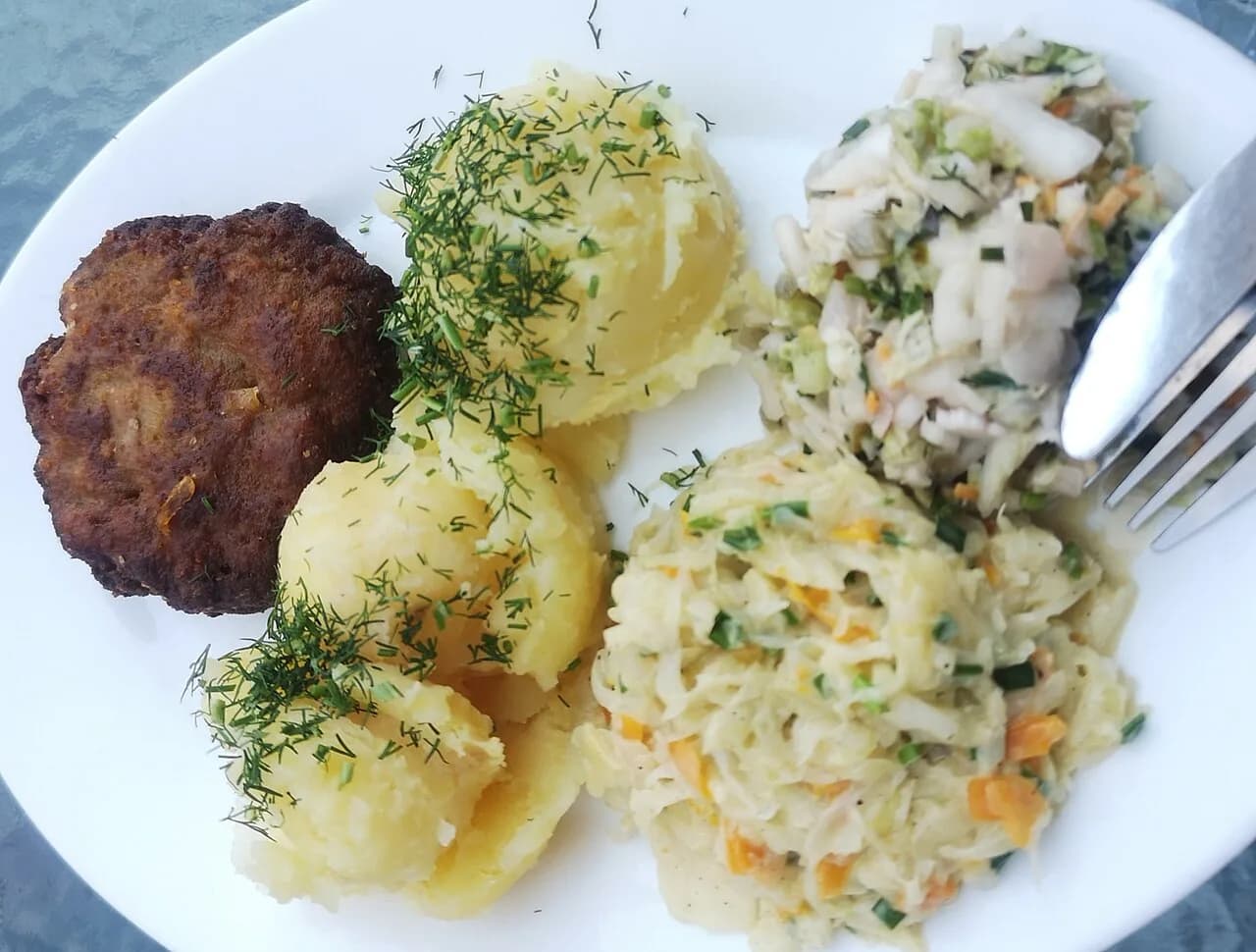
Frikadellen: Germany's Pan-Fried Meat Patties, Explained
Frikadellen are Germany's flat pan-fried meat patties, made with ground meat, a soaked bread roll, onion, and egg. Here is what they are and how to order them.
On this page
Frikadellen are Germany's flat pan-fried meat patties: ground beef and pork mixed with a soaked bread roll, onion, egg, and mustard, shaped into thick rounds, and fried until golden. They are comfort food rather than restaurant showpieces, happily eaten hot with potato salad or cold in a bread roll the next day. This guide explains what goes into them, why the bread roll is not optional, how they are cooked, and where to find them across Germany.
They are at their best when the outside is browned and the middle stays juicy, which comes down to the mixture and moderate heat, not to expensive cuts of meat. If you only have one encounter with them in Germany, make it a warm one from a butcher counter or a Gasthaus plate.
What Frikadellen Are and How They Taste
A Frikadelle is a thick, slightly flattened patty of mixed ground meat, seasoned boldly and fried in a pan. The flavor is meaty and savory with a mustard note and softened onion; the texture is tender inside, browned and lightly crusted outside.
They are a main-dish item, not a sausage or a snack bite, though they are just as often eaten on the move in a roll, and they belong to the same everyday eating culture as street food like Döner kebab. A good Frikadelle tastes of meat first, with bread and egg holding it together rather than diluting it.
Chef Thomas Sixt describes the classic formula as mixed ground meat, a soaked roll, egg, mustard, salt and pepper, with onion and garlic usually added, and notes that herbs are a later addition rather than the core. That is the reference against which any Frikadelle you order can be judged.
The Names That Change with the Map
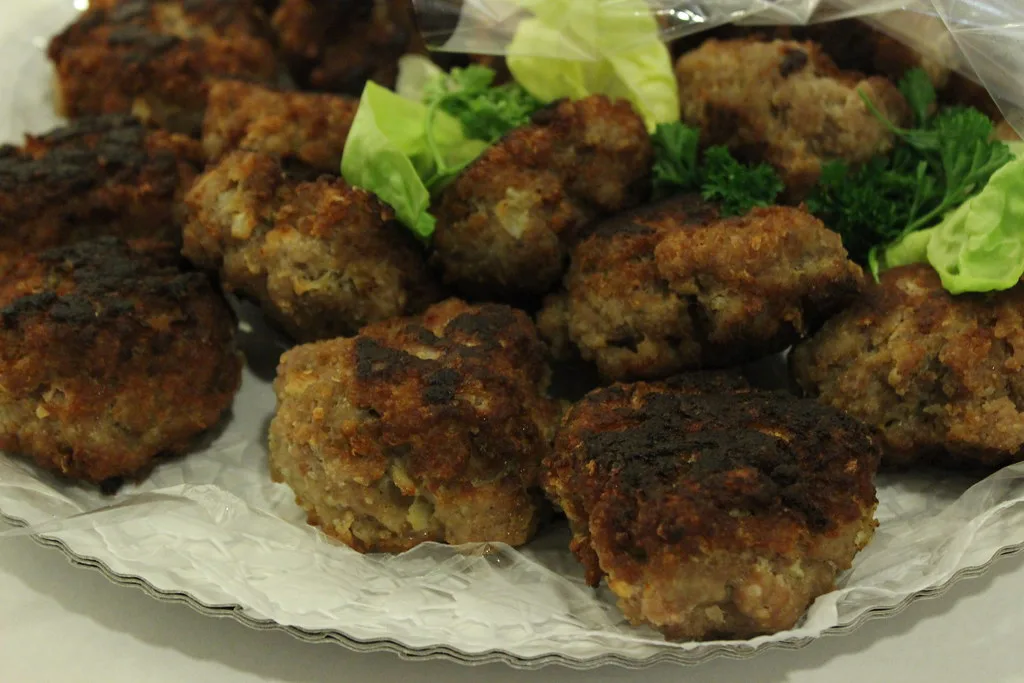
The same patty answers to several names. Frikadelle is the general term and works everywhere, while Buletten and Bratklops belong to northern Germany, Fleischpflanzerl to Bavaria, and Fleischküchle, Fleischkräpfle, or Frikadelle to Franconia.
How do you pronounce Frikadellen? Frikadellen is pronounced roughly frih-kah-DELL-en in German, with a short, crisp first syllable and a stressed middle. The singular is Frikadelle, and in the north you will also hear Buletten, which is easier for English speakers.
What is the difference between Frikadellen and Buletten? Buletten is the northern German name for the same pan-fried meat patty, and a breaded version is specifically a Berlin Bulette. Fleischpflanzerl is the Bavarian name, while Fleischküchle and Fleischkräpfle are Franconian names for the same dish.
The regional names are worth recognizing on a menu because the seasonings and shaping differ from household to household and region to region. A Fleischpflanzerl and a Bulette are the same idea, but the patty you get will follow local and family habits, so the name on the menu tells you where you are more than it predicts a fixed plate.
One small trap: a breaded Frikadelle is technically a Berlin Bulette, and breading is a stylistic choice rather than the default. Ordering a Bulette in Berlin may get you a breaded one, so ask if the crust matters to you.
What Goes into the Mixture
The base is ground beef and ground pork, usually in roughly equal parts, because the pork fat keeps the patty from drying out. A Cologne chef's recipe published in Feinschmecker uses 500 grams of half-and-half ground meat for four people, bound with a stale roll, mustard, egg, parsley, and a browned onion.
Onion and garlic are standard, usually sweated briefly first so they soften and sweeten rather than taste raw. Seasoning runs to mustard, salt, pepper, and often a touch of paprika, nutmeg, or lemon zest depending on the household.
A soaked bread roll, called a Semmel in the south, is the classic binding alongside the egg, and it matters more than any single spice. You will also see recipes that include a little sour cream for richness or a small amount of breadcrumbs to firm up a loose mixture.
Why the Soaked Roll Matters
The roll soaked in milk and squeezed out is what gives the patty its soft, juicy, almost fluffy interior, and without it the mixture turns too firm and dense.
Breadcrumbs behave differently than soaked bread: they tighten the mixture quickly, and if you add too many the patty dries as it cooks. If a mixture is too wet, a spoonful of crumbs is a correction, not a base ingredient.
This is the single clearest difference between a Frikadelle and a hamburger patty: the bread binding. A burger is ground meat seasoned and grilled or seared; a Frikadelle is ground meat extended and softened with soaked bread, then pan-fried.
How They Are Cooked
Patties are shaped flatter than a golf ball and fried in oil or lard over moderate heat. High heat browns the outside before the middle cooks through, so steady medium heat and patient frying produce the golden crust and cooked center you want.
Feinschmecker's recipe sears the patties on both sides first, then lowers the heat to finish them, turning occasionally until they are properly golden brown.
Frying in batches with a wiped pan between rounds keeps the crust clean. For large quantities, Thomas Sixt bakes un-breaded patties on an oiled sheet at around 285 to 300 °F, a practical method when cooking many at once.
Eating Them Warm or Cold
Warm on a plate is the classic main course, with the pan juices poured over and a side to mop them up. Cold in a bread roll is equally normal: a Frikadelle in a Semmel or similar roll makes a portable lunch that is a fixture of butcher counters and Imbiss cases rather than a leftover solution.
If you order one cold from a counter, expect it to be fully cooked and eaten as a sandwich filling with mustard or pickle, not reheated. That is how the takeaway version works best.
Sides That Work
Potato salad is the standard companion, and Feinschmecker pairs its Frikadellen with a mayonnaise-based potato salad with sour cream, egg, pickles, and mustard. In Bavaria and Franconia, a warm potato salad or simply fried potatoes are just as common.
Creamy mashed potatoes soak up the pan juices, while crispy fried potatoes give a textural contrast. For something heartier, red cabbage or savoy cabbage (Wirsinggemüse) turns the plate into a full German meal. A slice of Flammkuchen or a simple salad alongside is another easy way to round out a lighter supper.
At home, a plain tomato salad or a simple green salad is a reasonable lighter side, and Thomas Sixt lists mashed potatoes, pan-fried potatoes, and salad as the classic options.
Where to Find Frikadellen in Germany
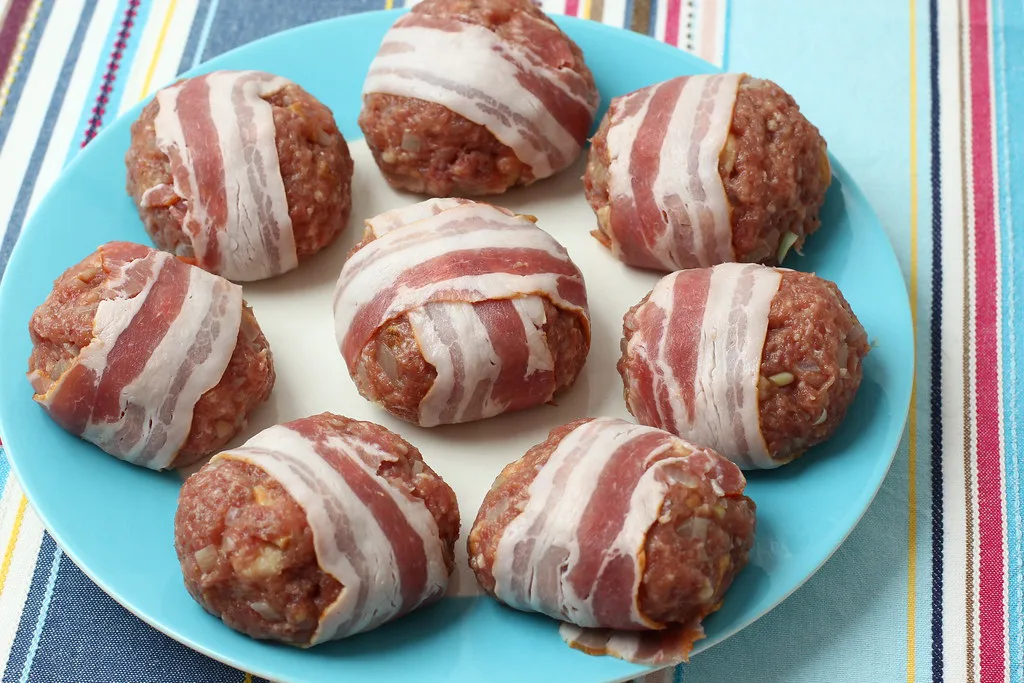
Butcher shops (Metzgereien) are the most reliable counter for Frikadellen, often sold warm or cold for takeaway along with other prepared items. Look for them in the display case next to sausages and cold cuts.
The patties are also a home-cooking staple, which means they show up on Gasthaus menus and family tables as a daily plate rather than a specialty dish. They are part of the everyday German food landscape rather than a dish saved for occasions.
Frikadellen are sold both as a warm plate and as a cold takeaway item, so you can eat one at a table or on the move depending on the counter.
Frikadellen vs. a Hamburger Patty
The two are related but not interchangeable. A burger patty is ground meat seasoned and cooked alone, usually served in a bun; a Frikadelle has soaked bread, egg, and often mustard and onion in the mixture, making a softer, denser patty that stands on its own with a side.
That is also why a Frikadelle is a complete main dish rather than a component, and why it holds up cold in a roll long after a burger wouldn't. If you want to compare the two, order the warm plate version first.
Frikadelle or Bulette: What Should You Order?
Order a warm Frikadelle with potato salad for the classic plate, or a cold one in a roll from a butcher counter for a quick lunch. Use the regional name you see on the menu: Frikadelle anywhere, Bulette in the north, Fleischpflanzerl in Bavaria, Fleischküchle in Franconia.
Whichever version you get, check the crust and the juiciness: that is where the soaked bread roll shows its worth.
Explore more Germany guides
Frequently Asked Questions
How do you pronounce Frikadellen?
Frikadellen is pronounced roughly frih-kah-DELL-en in German, with a short, crisp first syllable and a stressed middle. The singular is Frikadelle, and in the north you will also hear Buletten, which is easier for English speakers.
What is the difference between Frikadellen and Buletten?
Buletten is the northern German name for the same pan-fried meat patty, and a breaded version is specifically a Berlin Bulette. Fleischpflanzerl is the Bavarian name, while Fleischküchle and Fleischkräpfle are Franconian names for the same dish.
Sources
Notes for your next German food trip
Optional updates to our guides.
You might also like



Continue reading
More guides you'll find useful



