
Franconia Beer: How to Plan a Trip Around Breweries and Bierkeller
Franconia has more breweries per square kilometer than anywhere in Europe. Here is what to drink, where to base yourself, and how a countryside visit works.
On this page
Franconia is the beer heartland of Germany: the region packs in more breweries per square kilometer than any other area in Europe, and most of them are small, family-run houses in villages rather than big-city plants. Plan a trip here around two anchors, Bamberg for smoke beer and a cluster of classic breweries, and the countryside around it for barrel-fresh lager served in a hillside cellar.
What follows is a working plan: the four styles to know first, which beer to order at each Bamberg address, why the villages are worth the logistics, and how seating, ordering and getting there work when you do not have a car. Prices, opening days and tour times change constantly and breweries rarely publish them in English, so confirm directly with the house before you build a day around it.
What Franconia Beer Is and Why the Region Matters
Franconia sits roughly halfway between Cologne and Munich, and its brewing identity is bound up with history rather than scale. Franconian monasteries were brewing several beer styles, including Bock, as early as the Middle Ages, under a purity law that can be traced back to the fourteenth or fifteenth century, and that tradition survives in working monastery breweries and old village houses. The result is a landscape where a town of a few hundred people can still support its own brewery and taproom.
For a traveler, that density changes the shape of a beer trip. You do not need to chase a handful of famous names across long distances; you can pick one base and reach several distinct breweries in an afternoon. The trade-off is that the best places are often rural, with thin public transport and kitchen hours that assume you arrived by car. Decide early whether you want the convenience of Bamberg's walkable cluster or the quieter, harder-to-reach village experience, and build the rest of the plan around that choice.
The Beers to Know First: Rauchbier, Kellerbier, Schwarzbier and the Seidla
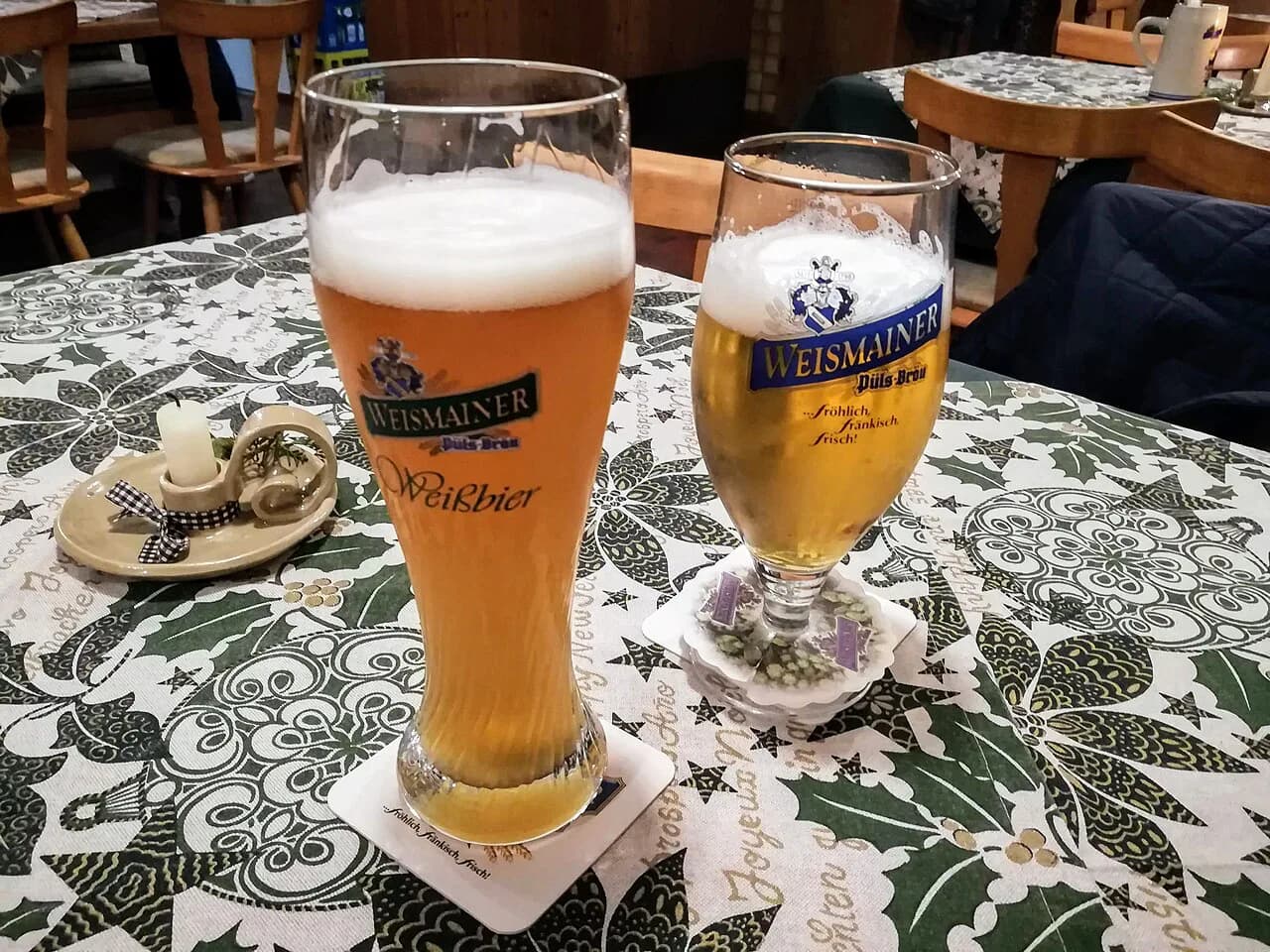
Rauchbier, or smoke beer, is Franconia's signature style and the reason many drinkers come at all. Bamberg's two reference points are Schlenkerla, whose smoke is deeper and more pronounced, and Spezial, whose version reads as almost delicate by comparison. If you only try one, taste both side by side and you will understand the style's range in a single evening.
Is Franconia the region with the most breweries in Germany? By the tourist board's measure, it is the densest: Franconia has more breweries per square kilometer than any other area in Europe. That comes from hundreds of small village houses rather than large industrial plants, which is why so many of them are family operations with short opening windows.
What beer is Franconia known for? Rauchbier, the smoked beer, is the style most associated with the region, above all in Bamberg at Schlenkerla and Spezial. Kellerbier, the unfiltered lager served young and often from the barrel, is just as central to a visit to the countryside breweries, and Schwarzbier rounds out the darker end.
Can you visit Franconian breweries without booking ahead? For Bamberg's city taprooms, yes: you can walk in, find a seat and order. Village breweries and their kellers are smaller and more variable, so it pays to call or email ahead, especially for a group, a tour or a weekend evening.
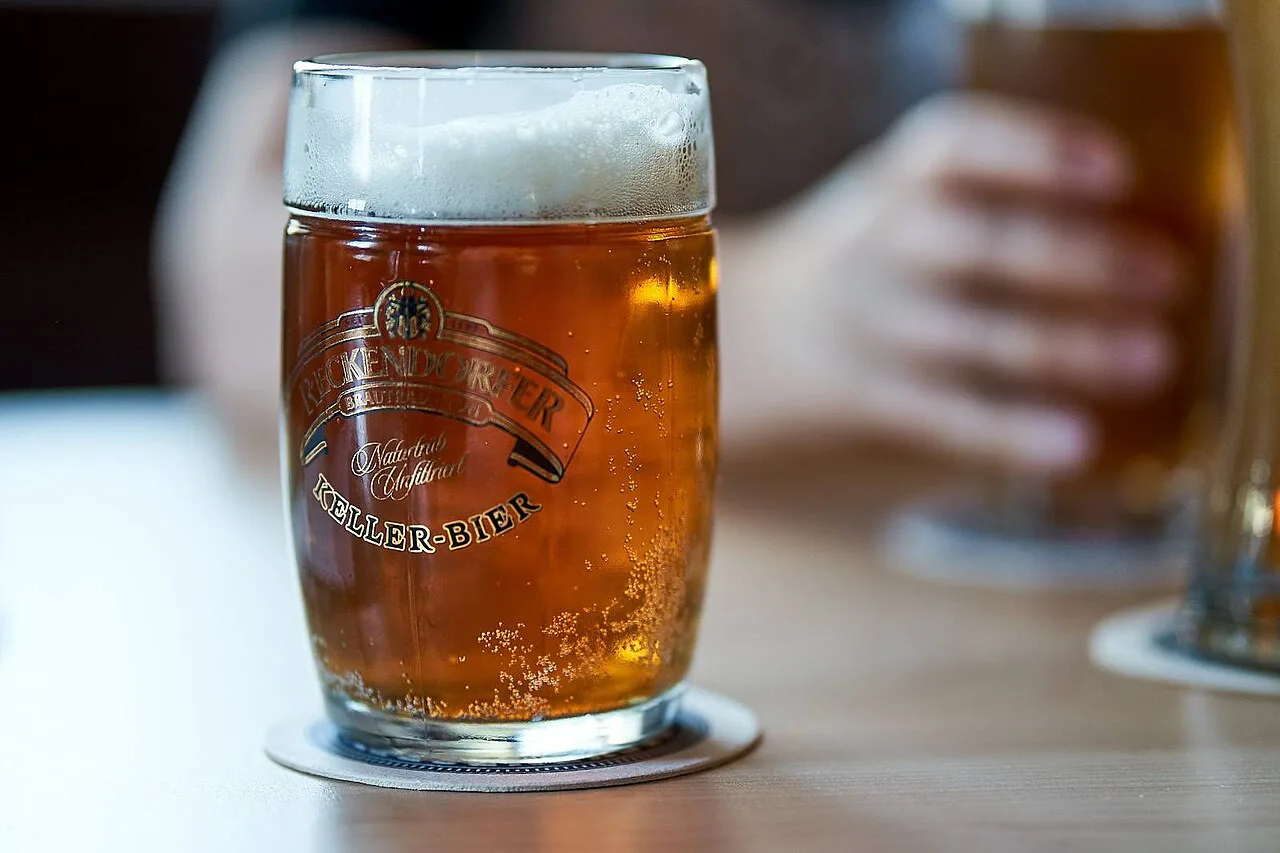
Kellerbier is an unfiltered lager served young, with lower carbonation than a standard lager, and often poured from a gravity barrel in the countryside. Expect a softer, rounder texture with live yeast still present, a color somewhere between gold and amber, and a thick, puffy head. It arrives in a ceramic mug called a Krug, which hides the beer's color but keeps it cold and, by local logic, tastes better. Order it wherever a brewery serves from the barrel rather than from a tank.
Schwarzbier is the dark counterpart, a black lager with roasted depth; in Bamberg, Klosterbräu serves a darker, roastier version of a black lager it calls Schwärzla. The Seidla is not a style but a measure, the Franconian glass of beer you order by the round, and it is the unit in which a long evening is actually counted. Learn the word and you will order more naturally in a village taproom than any phrasebook will teach you.
Bamberg: Which Beer to Order at Each Brewery
Start with the two smoke houses. At Schlenkerla, the brewery tap draws crowds that sometimes line the street out front, where you can also stand and drink; go early in the evening or accept the crush as part of the experience. Spezial is the quieter counterpart with the more restrained smoke, and it also runs a legendary Bierkeller on a hill above its original cellars with sweeping views, a fine place to spend a warm afternoon.
Then work through the city's classic names with a specific order in mind. At Brauerei Keesmann, ask for the Herren Pils, a beer with striking bitterness balanced by rounded malt. At Mahr's Bräu, order the Ungespundet, known simply as the U, an unbunged lager and a long-standing local favorite; the E.T.A. Hoffmann dunkel there is darker and more Munich in style, with chocolate and caramel layers.
Two more earn a stop. Brauerei Fässla sits directly across from Spezial and covers a well-balanced range of traditional beers, which makes it a sensible second stop on the same evening. Klosterbräu Bamberg pours the Schwärzla, a darker, roastier version of a black lager, and Weyermann, the famous maltster, runs a small pilot brewery with tours and a gift shop for anyone curious about the grain side of the trade.
Why the Villages Beat the Cities
Bamberg is the obvious base, and its breweries deserve the time. But the villages are where Franconian brewing feels least staged: fewer visitors, shorter menus, and beer that rarely leaves the immediate area. The trade-off is plain. You will spend more of the day on transport, the kitchens keep rural hours, and English thins out fast once you leave town, so a village evening rewards planning more than improvising.
One worth building an afternoon around is Brauerei Zehendner in Mönchsambach, about a twenty-minute drive west of Bamberg. It has stayed in the same family since 1938 and still serves its lager from the barrel by gravity, which gives it a soft edge and a complexity you do not get from a tapped keg. The brewery's own kitchen runs alongside the dining room, so you can eat and drink in one place rather than moving on.
East of Bamberg, Brauerei Eichhorn in Dorfleins is a short bus or train ride plus a walk, or a bike ride, from the city, which makes it the most realistic village option without a car. Its lineup includes a kellerbier of the kind that shows why the style matters, served young and lively rather than polished. If you have one countryside evening in you, pick the village you can actually reach and skip the one that requires a taxi you may not find back.
The Countryside Bierkeller: How a Keller Visit Works
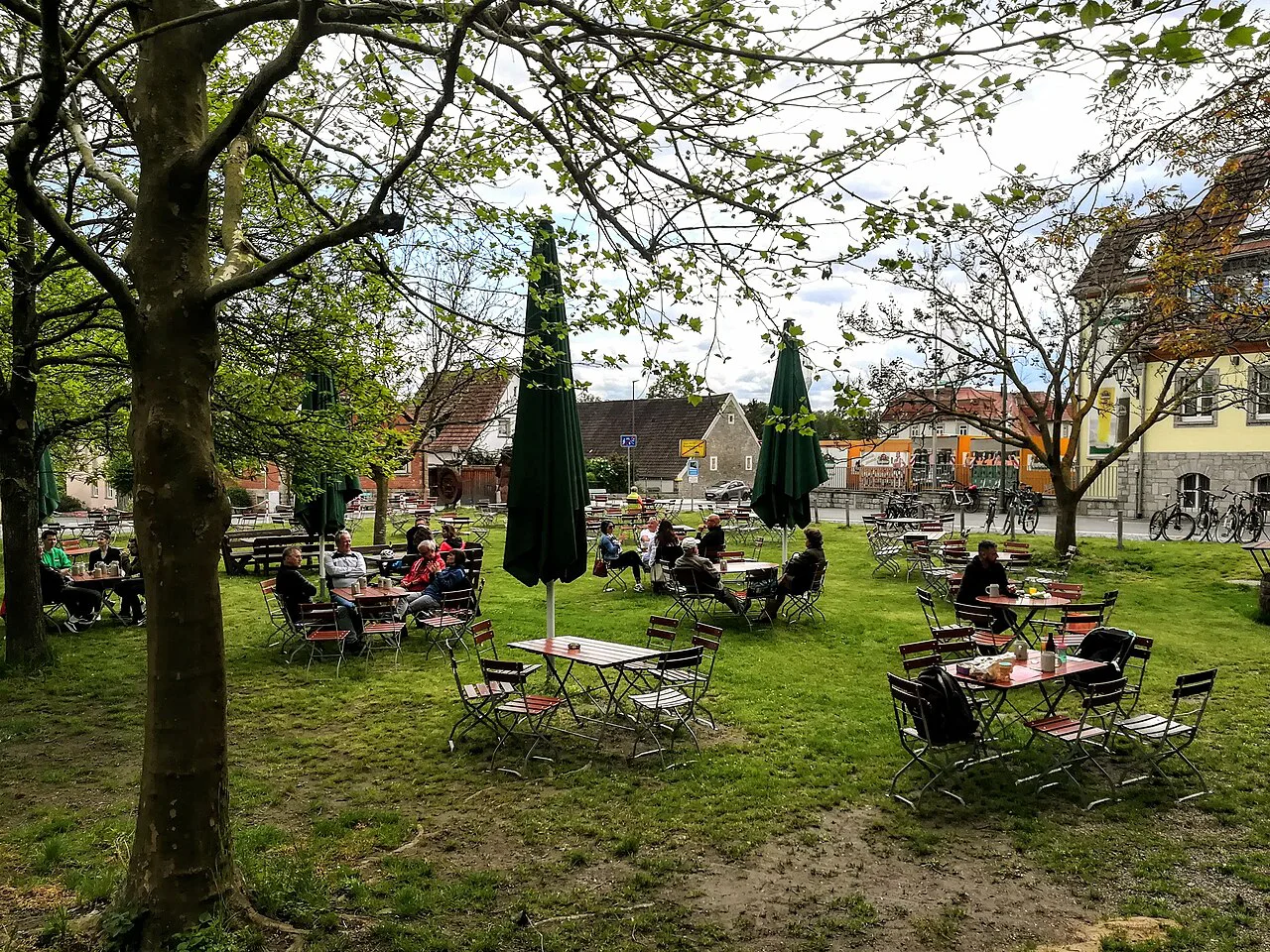
A Franconian Bierkeller is not a cellar you sit in. It is a pub or taproom built on the hillside above the brewery's original underground storage cellars, where the beer was once kept cold; today you sit outside under the trees, drink from a Krug, and look down over the valley. Spezial's keller is the model to picture, sitting above the old cellars with a wide view. Going in the warmer months is the point, since the appeal is the open-air setting rather than the room.
Practically, a keller works like a beer garden with a narrower menu: find a seat, order your beer and food from the staff rather than at a counter, and expect the pace to slow when it is busy. Because kellers open seasonally and typically only in good weather, they are the least predictable part of any Franconian itinerary. Build keller days loosely, keep a city brewery as the backup, and you will not lose an evening to a closed gate.
Communal Tables, the Krug and Ordering by the Round
Village breweries often seat strangers together at long communal tables, and the evening works on rounds rather than individual orders. At Gold Ochsen in the tiny town of Spielbach, a retired farmer spent a whole evening gesturing his way through the history of the brewer's star with a visitor who shared perhaps a hundred words of German, which tells you how much of the experience runs on goodwill rather than language. Sit down, order a Seidla, and let the table fill in around you.
Ordering by the round is the local rhythm: someone at the table orders for everyone, glasses get refilled before they empty, and the bill is settled at the end rather than per drink. Keep your own pace moderate, since the rounds do not slow down to match you, and carry cash, because small village houses are the least likely to take a card. If you want a quiet table for two, say so at the door and you may get one outside the main room.
Brewery Tours, the Aufseß Breweries Way and Beer Trails
Brewery tours exist across the region, from small village houses to Weyermann's pilot setup in Bamberg, but they run on the brewery's own schedule and usually need booking in advance. The Franconian tourist board points travelers toward themed trails, museums and even brewing seminars, and the Breweries Way in Aufseß is the best-known route, a cluster of breweries packed into one small valley. Signposted beer-themed hiking and cycling paths link many of the same places, which turns a tasting day into a walking day.
Beer trails are a genuinely good way to structure a day without a car, since the walking or pedaling keeps the distances honest and the countryside itself is the attraction between stops. Plan fewer stops than you think you want, one or two breweries plus a keller, and leave the rest for another trip. For a wider map of German brewing beyond Franconia, our guide to German breweries covers the country's major houses, from Kloster Andechs to Warsteiner Welt, and makes a useful next leg.
When to Go
The warmer months matter more here than in most beer destinations, because the countryside kellers and many beer gardens only make sense in good weather. Late spring through early autumn is the practical window, with long evenings and the hillside cellars at their best; the region's beer culture also spills into festivals such as the Annafest in Forchheim and the Erlanger Bergkirchweih, the so-called "Berch", if your dates happen to line up. Winter is quieter and far more indoor, which suits the Bamberg taprooms but closes off much of the village appeal.
Check the calendar against your own plans rather than assuming a keller will be open, since these are weather- and season-dependent operations run by families rather than companies. A trip that keeps one Bamberg day flexible to swap in for a rained-out village visit will feel far less frustrating than one built on a fixed schedule. If you are heading on to Munich afterward, our guide to Bavarian beer explains how the styles and the beer-garden culture differ once you cross into Bavaria proper.
Where to Base Yourself
Bamberg is the sensible base for almost every Franconian beer trip. It puts the city's cluster of classic breweries within walking distance, gives you a train station for the villages and the wider region, and keeps you near the road corridors out to Mönchsambach in the west and Dorfleins in the east. Staying one night here rather than commuting from Nuremberg is the difference between a brewery evening and a brewery stop.
If you want a second base, look at the small towns along the beer trails rather than a bigger city further out, and treat the countryside as the destination rather than a detour from it. Book directly with the brewery or the local tourist office if you want a room near a specific keller, since the villages are small and fill up around local events. Kulmbach, Forchheim and Bayreuth all work as alternative anchors if your route runs that way.
Getting to Village Breweries Without a Car
Trains and buses reach the larger Franconian towns without trouble, but the last stretch to a village brewery is where the plan usually breaks. Brauerei Eichhorn in Dorfleins is the easiest workaround, a short bus or train ride and walk, or a bike ride, from Bamberg, which is why it makes a good first countryside outing if you are relying on public transport.
For anything further out, plan the return before you leave: check the last connection, and know whether a taxi will actually come to a village in the evening. Cycling is often the most reliable way to link two or three rural breweries in a day, and the signposted beer-themed bike routes give you a route that also passes places worth stopping at. If you would rather drive, designate a driver for the evening, because rural roads and barrel-strength lager are a bad pairing.
Franconian Beer With Food
Beer is treated as a culinary companion in Franconia, not just a drink alongside the meal. It goes with most of the region's cooking and is also used in the kitchen itself, as a marinade or as the base for a flavorful sauce, which is a neat way to taste the local style in a dish as well as a glass. Order what the house is known for and ask which beer the kitchen would send with it; village menus are short enough that the answer is usually the one on tap.
The safest ordering strategy at a brewery tap is to match the beer to the plate rather than the other way round: a kellerbier with something hearty, a dunkel with roasted flavors, a pilsner where the food is lighter. At a communal table, watch what the regulars order and follow, since the kitchen's strengths are rarely hidden. You will eat better at a village house with four dishes than at a city restaurant with forty.
Which Franconian Beer Plan Fits Your Trip
If you have one evening, spend it in Bamberg: taste Schlenkerla and Spezial side by side for the smoke comparison, then order the U at Mahr's and the Herren Pils at Keesmann. If you have a full day, take the train or bike to Dorfleins for Eichhorn's kellerbier and keep a city taproom as your fallback in case a keller is closed. If you can drive or arrange a taxi, give the evening to Zehendner in Mönchsambach and eat at the brewery table.
The best Franconian beer days are built around fewer stops than you expect and a willingness to let the table set the pace. Confirm the essentials with the brewery itself before you commit a day to a village, then leave room for the round you did not plan on.
Explore more Germany guides
Frequently Asked Questions
Is Franconia the region with the most breweries in Germany?
By the tourist board's measure, it is the densest: Franconia has more breweries per square kilometer than any other area in Europe. That comes from hundreds of small village houses rather than large industrial plants, which is why so many of them are family operations with short opening windows.
What beer is Franconia known for?
Rauchbier, the smoked beer, is the style most associated with the region, above all in Bamberg at Schlenkerla and Spezial. Kellerbier, the unfiltered lager served young and often from the barrel, is just as central to a visit to the countryside breweries, and Schwarzbier rounds out the darker end.
Can you visit Franconian breweries without booking ahead?
For Bamberg's city taprooms, yes: you can walk in, find a seat and order. Village breweries and their kellers are smaller and more variable, so it pays to call or email ahead, especially for a group, a tour or a weekend evening.
How do you get to the countryside breweries without a car?
Trains and buses cover the larger towns, and Brauerei Eichhorn in Dorfleins is reachable by a short bus or train ride plus a walk, or by bike, from Bamberg. For other villages, plan the return trip before you set out, since evening connections thin out fast.
Sources
Notes for your next German food trip
Optional updates to our guides.
You might also like



Continue reading
More guides you'll find useful





