
Beer Stein Guide: What It Is, Sizes, and Value
A beer stein is a heavy German drinking mug with a hinged lid, usually stoneware or glass. See how stein sizes compare to a pint and what drives value.
On this page
A beer stein is a heavy drinking mug, usually stoneware or glass, with a hinged lid that flips up on a thumb lever. In Germany the lid is the defining feature: without one, you have a mug or a glass, not a stein. This guide covers what steins are made of, how their capacities line up with a US pint, how they fit into German beer culture, and what makes some steins collectible and others purely decorative.
The practical question for most travelers is which version to buy: a painted souvenir you display at home or a plain stoneware mug you actually drink from. The two are made differently, priced differently and cared for differently, so it helps to know the difference before you walk into a shop.
What a beer stein is, in plain terms
The word covers a family of vessels rather than one fixed shape. The common thread is a sturdy body, a handle big enough for a gloved hand, and a lid attached by a hinge so it stays with the mug when opened. Bodies are most often stoneware, a dense fired clay that keeps beer cold longer than thin glass and shrugs off knocks on a table edge.
A hinged pewter lid is the classic fitting, and the thumb-lift lever on top lets you open it one-handed while holding a plate in the other. Many steins also carry a pewter mount at the base or a band near the rim, which protects the edge and adds weight. The lid is not a decorative afterthought; it is the part that defines the object.
Why steins have lids
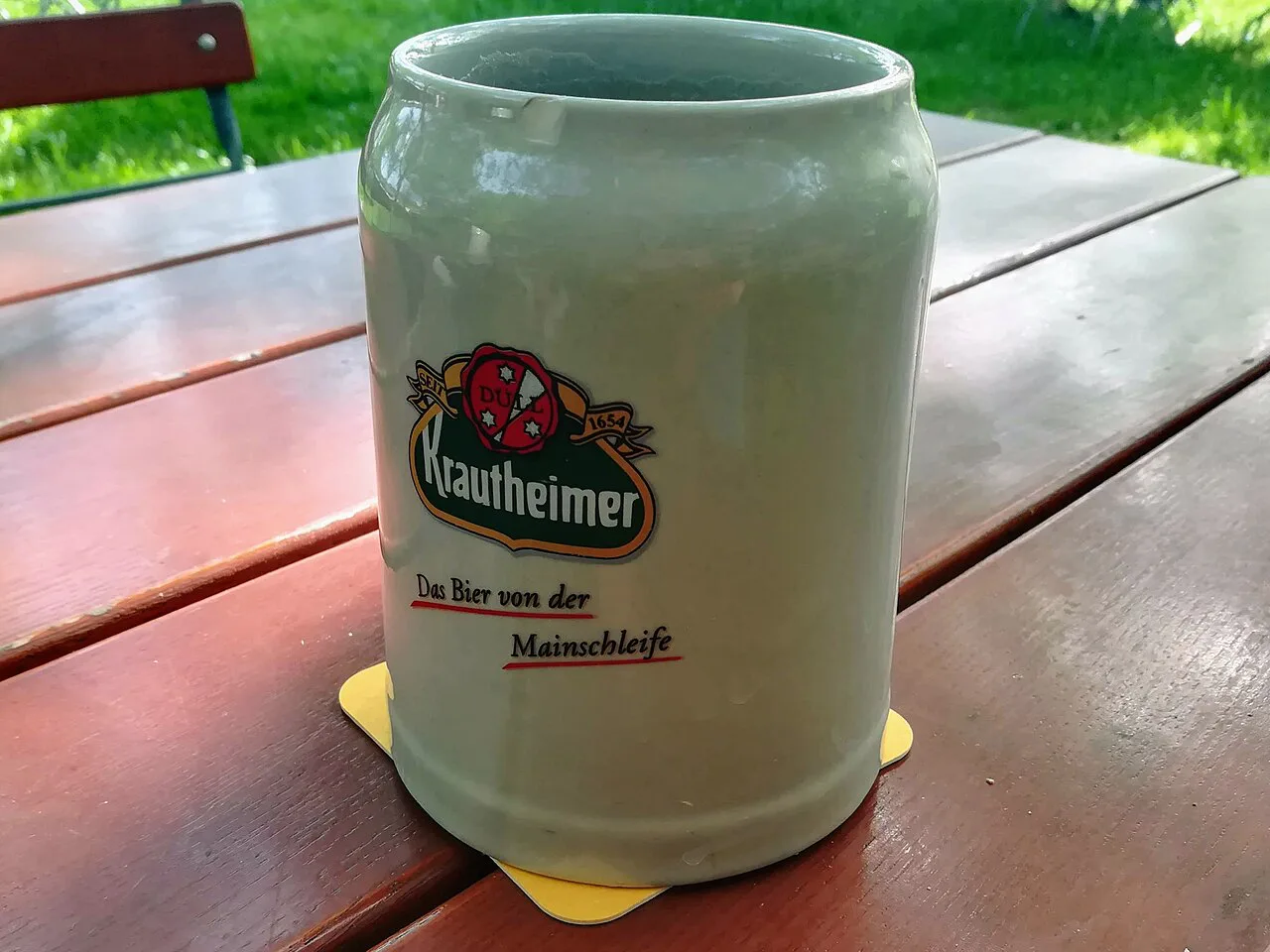
A lid keeps the beer covered. In a crowded tavern, that means dust, flies and the occasional splash from a neighbor's toast stay out of your drink, and the aroma stays in. It also slows the loss of carbonation, which matters with a large vessel that takes a while to finish.
What are the top beer glasses to know in Germany? The Maß is the one-liter glass mug of the beer garden, the Stange is the tall narrow Kölsch glass in Cologne, and the Weizenglas is the curved wheat-beer glass. A lidded stoneware stein is a separate, older vessel, more tavern than garden.
Do souvenir steins actually hold beer? Many do, but capacity is rarely stamped on the base, so check before buying. Painted and relief-heavy pieces are harder to clean and chip more easily, so a plain stoneware mug is the safer choice if you plan to drink from it.
For a visitor, the lid changes how you drink. You lift the lever with your thumb, tip the mug, and let the lid fall back as you lower it; there is a knack to it, and the first attempt usually announces itself with a clack. It is also why steins are awkward at a busy bar counter, where a plain glass is faster.

Materials and styles: stoneware, ceramic, pewter and glass
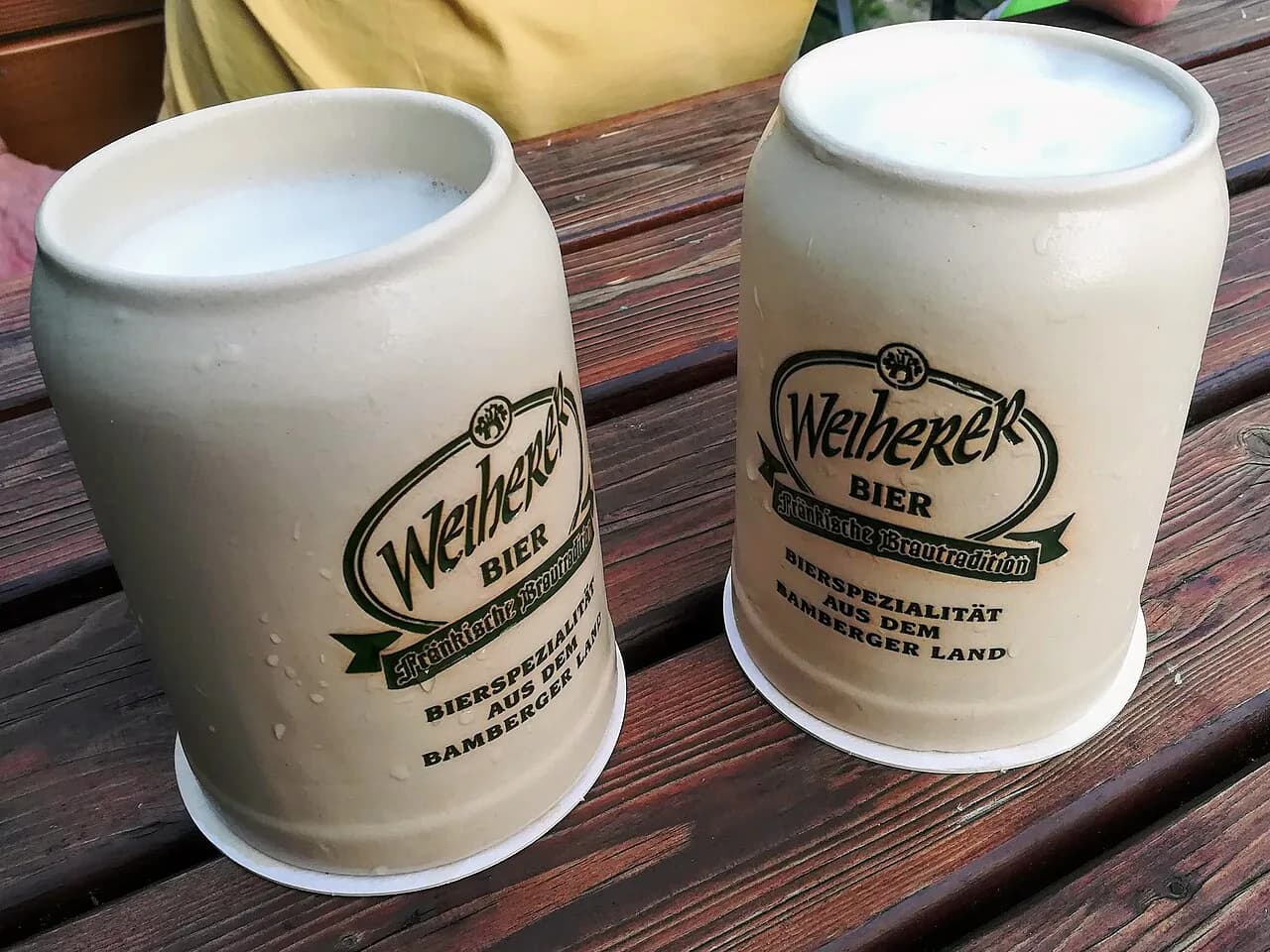
Stoneware is the workhorse material: gray or brown, often salt-glazed, sometimes decorated with raised relief scenes of hunting, city views or brewery crests. Painted ceramic is the showier cousin, with colored enamel decoration and a glossy finish, and it is what most souvenir steins are made from. Both hold beer well, but painted surfaces chip and fade in hot dishwasher cycles.
Pewter appears as lids, hinges, base rings and sometimes whole bodies, and its dull gray sheen is the quickest way to judge a piece at a glance. Glass steins exist too, often with a pewter lid, and they let you see the beer, which suits wheat beers that are usually poured into tall curved glasses instead.
Decorative styles run from simple crests to elaborate relief work with a figural finial on the lid. None of this changes how the beer tastes, so choose on whether you want to drink from it or display it. A relief-heavy stein looks impressive on a shelf but is awkward to wash by hand.
Stein sizes and how they compare to a pint
German beer is ordered by metric volume, not by pints. A Maß is one liter, a halbe Maß or simply a Halbe is half a liter, and a Seidla in Franconia is roughly a half-liter too. A US pint is about 473 milliliters, so a half-liter stein holds slightly more than a pint, and a full-liter Maß holds a little over two pints.
Two half-liter steins are not the same as two pints: you are getting a bit more beer than the US measure. The other common measures are the Stange, a tall narrow glass for Kölsch in Cologne, and the Weizenglas for wheat beer, both glassware rather than steins. If you want the full rundown on German measures and how to order them, the guide to mass beer covers the liter mug and its relatives.
A decorative stein bought in a shop is often around half a liter, but capacity is rarely stamped on souvenir pieces. If exact volume matters, look for a liter or half-liter mark on the base or ask before buying. For drinking at home, a half-liter stoneware mug is the more useful size; a full liter gets warm before you finish it.
What steins are used for today
There are effectively two markets, and they barely overlap. The first is drinkware: heavy stoneware mugs used at home, in traditional taverns and at brewery taps, valued for keeping beer cold and surviving daily use. The second is the collectible market, where hand-painted, limited-edition steins are bought to display and where condition and completeness drive everything.
Knowing which question you are asking saves money and disappointment. A chip on the base is irrelevant in a mug you use every week and a serious flaw in a piece you keep as a collectible. Decide before you shop whether your stein needs to hold beer or hold value.
Where steins show up in German beer culture
In everyday German drinking, the lidded stein is less common than outsiders expect. A Biergarten serves beer in glass mugs, Cologne serves Kölsch in narrow Stangen, and wheat beer arrives in curved Weizengläser. The stoneware stein belongs to traditional taverns, brewery taprooms and folk festivals, where it signals a slower kind of drinking.
If you do want a long, slow round from a heavy mug, a traditional Bierhalle with long tables and table service fits steins better than an open-air garden. A mixed beer-and-lemon radler is the lighter option when one liter is more than you want.
Where the stein still earns its keep is the folk-festival tent, poured alongside a halbes Hendl, the half roast chicken that is the standard festival plate.
Which beer steins are valuable
Value comes from a handful of factors, and none alone decides it. Age helps, but an old stein in poor condition can be worth less than a clean modern limited edition. Maker marks on the base, completeness of the pewter fittings, and whether the piece is a documented limited run all move the number.
Condition is the factor buyers weigh hardest. Cracks, chips, hairline fractures, replaced hinges and repainted decoration all cut value, and repairs are often invisible in photographs. A stein with its original lid, tight hinge and intact glaze sits in a different category from one with a wobbling top.
What you will see in a specialist stein shop is a range of brands rather than a clear hierarchy of rarity. Steincenter, for example, sells new and antique steins across collections it lists as Artina, Cornell, King Werks, Thewalt, Zoeller and Born, Zimmerman and Von Poschinger. A base mark is only the first step; edition size, production year and the condition of the specific piece separate a common stein from a sought-after one.
Beware the assumption that any old-looking stein is valuable. Mass-produced souvenir steins turn up in large numbers, and relief decoration with a brewery name is often advertising rather than a rarity. Age and rarity are different things, and only the second one reliably adds money.
Buying a stein as a traveler
A dedicated stein retailer such as Steincenter, which sells new and antique steins alongside custom orders, shows the range: relief scenes, pewter eagles, brewery crests and hand-painted finishes.
The trade-off is simple. A heavy relief stein is fragile in a suitcase and painted decoration can chip in transit, so pack it in clothing rather than against other hard items. A plain half-liter stoneware mug travels better and gets used at home; a figural showpiece travels badly and gets dusted.
Specialist retail pages also show that steins are sold as gift objects as much as drinking vessels, with seasonal and themed designs alongside plain mugs. That matters when you are choosing: a piece designed to be displayed may be finished in ways that make it less practical to drink from.
Check the capacity, the tightness of the hinge and whether the lid sits flush before you pay. Ask whether the piece is new, a reproduction or an antique, and get the answer written on the receipt if the price reflects age. For a piece you intend to drink from, confirm it is food-safe inside, because decorative finishes sometimes are not.
Reproductions versus antiques: how to tell at a glance
Reproduction steins are made to look old, and the fastest tell is often the hinge. Original pewter hinges show wear, slight looseness and a patina in the crevices; a reproduction hinge is stiff, bright and mechanically perfect. Look underneath the lid and inside the handle, where finishing is rougher and less visible.
Glaze and paint are the second check. Genuine old decoration sits under the glaze and shows fine crazing; new paint often sits on top and looks uniformly flat. Base marks matter too: a crisp modern-looking stamp on a supposedly nineteenth-century piece is a warning sign, and a base that has been ground or obscured deserves a question.
Weight and sound help as a rough filter but prove nothing on their own. If a seller is asking antique money, an independent appraisal is the sensible step, and Steincenter offers appraisals as a service. Treat any claim about a specific maker, year or edition as unverified until someone qualified confirms it.
Which stein should you actually buy?
Buy for use if you want a stein you will drink from: a plain half-liter stoneware mug with a tight pewter lid, packed in clothing for the trip home. Buy for display only if you have a shelf in mind and accept that heavy relief work and hand-painted finishes need careful handling and hand washing.
Buy for value only if you are prepared to research maker marks, confirm condition in person, and pay for an appraisal on anything expensive. For most visitors a stein is a souvenir of German beer culture, not an investment, and a sturdy mug that holds slightly more than a pint is the version that earns its place in the kitchen.
Explore more Germany guides
Frequently Asked Questions
What are the top beer glasses to know in Germany?
The Maß is the one-liter glass mug of the beer garden, the Stange is the tall narrow Kölsch glass in Cologne, and the Weizenglas is the curved wheat-beer glass. A lidded stoneware stein is a separate, older vessel, more tavern than garden.
Do souvenir steins actually hold beer?
Many do, but capacity is rarely stamped on the base, so check before buying. Painted and relief-heavy pieces are harder to clean and chip more easily, so a plain stoneware mug is the safer choice if you plan to drink from it.
Sources
Notes for your next German food trip
Optional updates to our guides.
You might also like



Continue reading
More guides you'll find useful




