
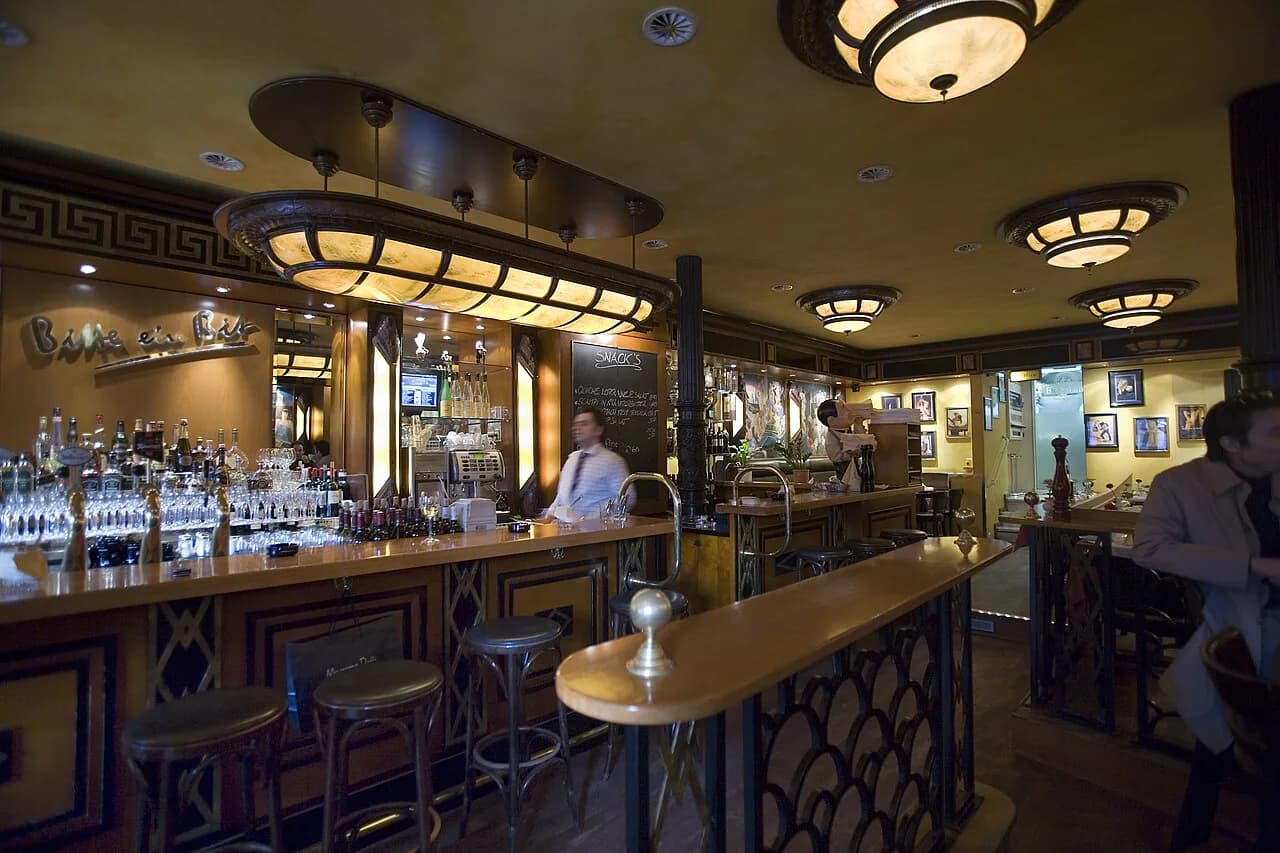
What Is a Bierhalle? How German Beer Halls Work
A Bierhalle is a German beer hall where you share long tables, order beer by the half-liter or liter, and eat hearty Bavarian food. Here's how it works.
On this page
A Bierhalle is a large indoor German beer hall: rows of long wooden tables, beer served from the brewery whose name is on the door, and a menu built for drinking rather than fine dining. You walk in, find a seat or share a table, and a server takes your beer and food order at the table. This guide explains the vocabulary you meet on German signs and how the room actually works, with four Munich halls to start with.
The format belongs to Bavaria, and Munich carries the weight of it. Several of the city's historic breweries run their own halls near the center, which is why a short walk around Marienplatz can put you in front of more than one option for a beer and a plate of pork.
Bierhalle, Brauhaus, Bierkeller, Biergarten: What the Words Mean
A Bierhalle is the indoor room: high ceilings, long communal tables, and beer from the brewery whose name is on the door. A Brauhaus is a brewery with a drinking and dining room attached, so the word usually signals a house that brews its own beer.
A Biergarten is the outdoor version, with trees, gravel, chestnut shade and often self-service food counters, and it follows its own set of habits. If you are deciding between a sunny afternoon under the trees and an evening in a loud hall, compare the two formats before you commit; our guide to the Biergarten in Germany covers the outdoor rules and what to order there.
In Munich you will also meet the name Weisses Bräuhaus, literally white brewery, historically a wheat-beer brewery. The name on the door usually tells you whose beer you will be drinking, and that is often the fastest way to choose between two halls.
How a Beer Hall Works: Walk In, Share a Table, Order From the Server
The hardest part of a Munich beer hall is finding a seat, not understanding the menu. You walk in, look for empty places at a long table, and sit down next to whoever is already there. A server comes to the table to take your order, so you are not queuing at a counter. This is how Munich visitors routinely handle these halls.
How a Beer Hall Works: Walk In, Share a Table, Order From the Server. The hardest part of a Munich beer hall is finding a seat, not understanding the menu.
The Beer: Augustiner, Hofbräuhaus and What to Order First. Munich's halls pour the city's brewery beers, and the house name on the door usually settles your first order.
What to Eat With a Beer: Schweinshaxe, Sausages, Pretzels. Schweinshaxe, roasted pork knuckle, is the substantial order you see at the communal tables alongside a beer, and it is heavy enough to share if you have already eaten.
These rooms are busy most of the time, and not only with visitors; locals of all ages fill them too. If the first table is full, keep walking toward the back rather than waiting at the entrance.
Expect to order everything from your server, beer and food together or in rounds. Offerings range from smaller glasses to the full liter, so ask what sizes the hall pours before you commit.
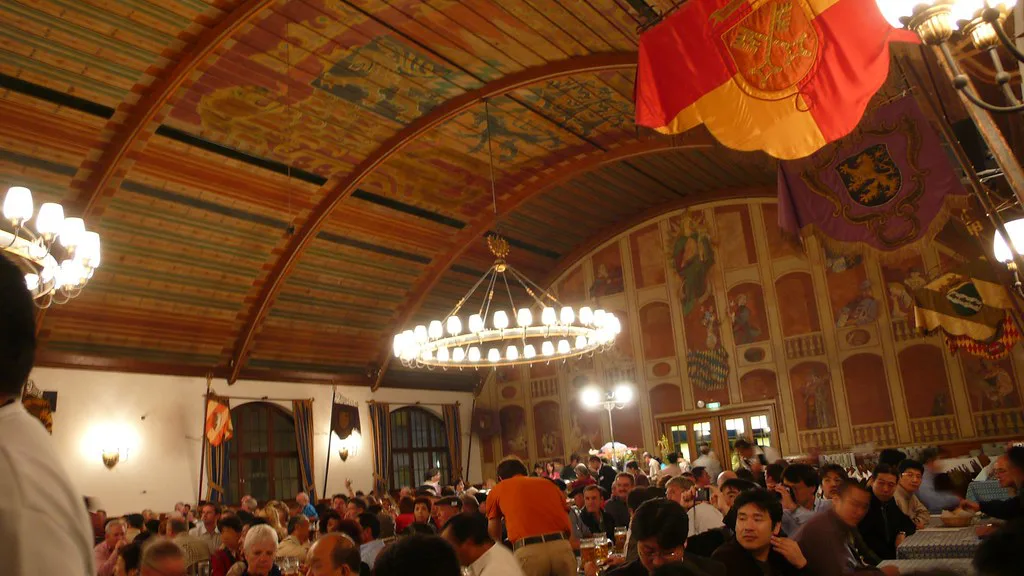
The Beer: Augustiner, Hofbräuhaus and What to Order First
Munich's halls pour the city's brewery beers, and the house name on the door usually settles your first order. Augustiner is one of the long-established Munich breweries, and the hall near Marienplatz, known as Zum Augustiner, is a convenient central option. If you have no strong preference, start with a smaller pour of the house lager and decide from there.
Hofbräuhaus is the most famous of the city's beer houses, spread over three floors with a gift shop attached. One practical detail sets it apart: the beers come in very large glasses, while other halls also offer a small size. If a full liter is more than you want before dinner, that difference matters.
Schneider Weisses Bräuhaus has the same communal, lively feel as the classic halls and is a good room for a shared table and a plate of sausages or pork knuckle. At Spatenhaus an der Oper the mood is different again, a formal, tablecloth restaurant with no communal benches where you can still order beer and a pretzel, though the focus is on a proper meal.
What to Eat With a Beer: Schweinshaxe, Sausages, Pretzels
Schweinshaxe, roasted pork knuckle, is the substantial order you see at the communal tables alongside a beer, and it is heavy enough to share if you have already eaten. Sausages with mustard and a bread roll are the lighter route, and a pretzel is the standard snack when you only want something salty with your drink.
Weißwurst is the pale veal sausage traditionally eaten with sweet mustard earlier in the day, so treat it as a separate stop and save the big halls for later.
Order food with your first beer rather than after the second. A liter is a long drink, and a plate of pork or sausages in front of you is what keeps the pace comfortable over a long sitting.
Communal Seating Etiquette: Strangers, Tipping and Paying
Sharing a table is the point of the room, not a compromise. You sit where there is space, greet the people already there, and keep your belongings under the table or on your lap rather than across the bench. Nobody expects a conversation, but a nod and a Prost when your beer arrives goes a long way.
Paying works at the table: you settle with your server, and if you are splitting a bill among a group at a shared table, say so clearly when you ask for the check.
Choosing Your Hall: Loud and Lively or Calm and Formal
The big halls run on noise: an oompah band, tour groups, and people hovering to grab a table the second one empties. That atmosphere is the reason many travelers come, and it works best if you arrive ready to sit with strangers rather than looking for a quiet corner.
The calmer alternative is the restaurant-style hall with tablecloths and no communal benches. Spatenhaus an der Oper is that kind of room, better suited to a seated dinner than to a stein and a pretzel, so pick it deliberately rather than by accident.
A beer hall is a beer place, and the menu reflects it. If you want a smaller pour, a non-alcoholic option, or a beer-free evening, plan around the format instead of forcing it: this guide to non alcoholic beer in Germany covers what the breweries produce.
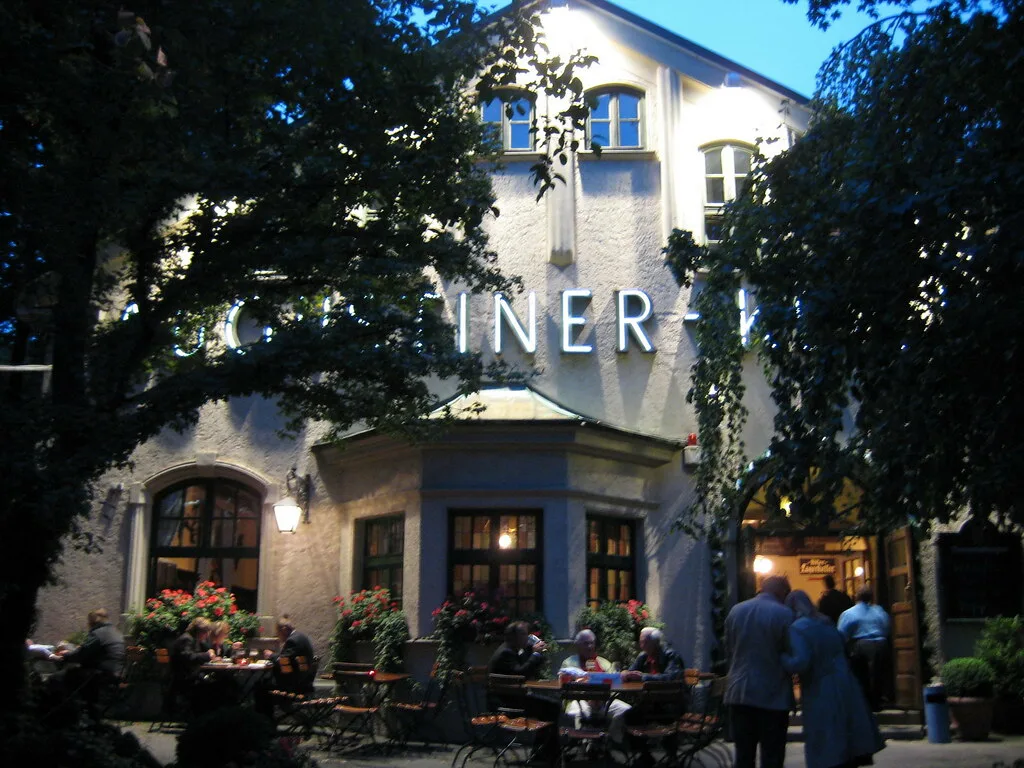
Pacing Yourself: Shandy, Half-Liters and Food
A liter is a long drink, and the room is designed for a long sitting rather than a quick one. Start with a smaller glass, eat something salty, and add a second round only when you actually want it.
A shandy, beer mixed with lemonade, is a common way to slow the pace without leaving the table; at Hofbräuhaus, where the beers come in very large glasses, it is a sensible order if you want to stay for the band. The same mixing idea appears across Germany as a radler, and you can read about it in What Is a Radler? Germany's Beer-and-Lemon Soda Drink.
Bread, sausage and pork are doing real work here, so treat the food as part of the drinking plan rather than an afterthought.
Where to Start in Munich: Four Halls to Compare
Start with Augustiner near Marienplatz for convenience and a classic Munich brewery beer, then head to Hofbräuhaus for the three-floor spectacle and the band. Both are central and both are busy, so expect to hunt for seats at prime dinner time.
Add Schneider Weisses Bräuhaus for a communal table, and Spatenhaus an der Oper when you want a formal dinner with beer rather than a hall experience. Two of these in one evening is a comfortable pace; three is a sprint.
Glass sizes differ between halls, so check what your beer arrives in before you order another round.
Which Hall Should You Pick First?
Pick Hofbräuhaus if you want the full spectacle of a Munich beer hall, with the band, the three floors and the large glasses. Pick Augustiner near Marienplatz if you want a central, traditional brewery beer without crossing town, and Schneider Weisses Bräuhaus if a shared communal table sounds better than a crowded floor.
Go in the evening, sit wherever there is space, and order a smaller glass and a plate of sausages or Schweinshaxe to start. Check the venue's own site for its current hours before you set out.
Explore more Germany guides
Sources
Notes for your next German food trip
Optional updates to our guides.
You might also like



Continue reading
More guides you'll find useful



