Nuremberg Food: What to Eat and Where
Nuremberg food means Rostbratwurst, Schäufele and Rotbier. Learn what each dish is, how it is served, and which Wirtshäuser and breweries to try it at.
On this page
Nuremberg food comes down to three things you should not leave without trying: Nürnberger Rostbratwurst, Schäufele and Rotbier. The first is a small, marjoram-seasoned sausage eaten three at a time in a roll; the second is a roasted pork shoulder with crackling skin, dumplings and dark gravy; the third is the city's copper-red lager, historically stored in rock cellars under the Kaiserburg. If you are weighing up which city's classics to build a trip around, Düsseldorf food offers its own distinct set of dishes to compare against these.
This guide explains each dish and beer in plain terms, tells you how it is ordered and served, and names the old-town addresses where you can sit down to it. It also covers the wider Franconian sausage table, Elisenlebkuchen, and the café-roastery pockets in Gostenhof and St. Johannis that make a good mid-afternoon stop. If you want a guided version of the same circuit, compare Nuremberg Food Tours and plan a street-side start with Street Food in Nuremberg.
What Nuremberg food is known for: the three classics
The trio that defines eating in Nuremberg is the Rostbratwurst, Schäufele and Rotbier. Each belongs to a different part of the meal: the sausages are a snack or a light plate, the Schäufele is the main event, and the Rotbier is what you drink alongside either.
Beyond the three, the region's menus also carry larger Franconian bratwurst, smoked Schloudengala, carp and Forelle (trout), and Schäufele served with Kloß (potato dumpling) and salad. Franconian cooking leans on fresh regional produce, and the Nürnberger Land's restaurants and country inns draw on farms and producers from the surrounding countryside. For a full table of sit-down options beyond these, see the best restaurants in Nuremberg.
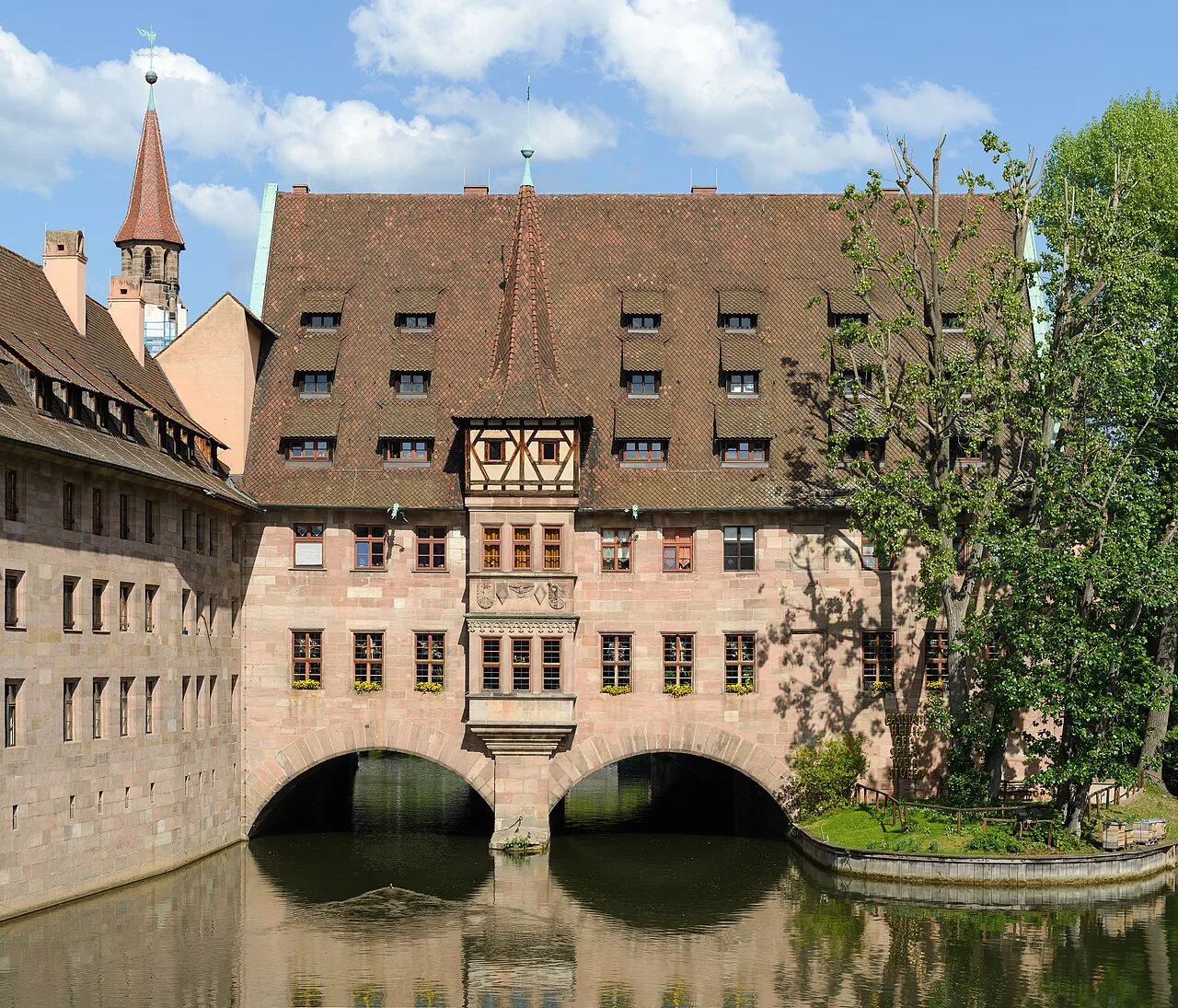
Nürnberger Rostbratwurst: small sausage, protected name
The Nürnberger Rostbratwurst is deliberately small, made from coarsely defatted pork, seasoned with marjoram and filled into sheep casing. Since 2003 it has held protected geographical indication status in the EU, which means the recipe is fixed and the sausage may only be produced inside the city of Nuremberg. That is why the name on a menu is a genuine signal of origin, not a marketing label.
Order the sausages as a plate and you get a handful of them, usually with sauerkraut and dark bread. They come off the grill with a taut, browned skin and a herbaceous, slightly resinous note from the marjoram. If you want to compare them with the larger Franconian bratwurst served elsewhere in the region, order both and notice how much coarser and fattier the bigger sausage is.
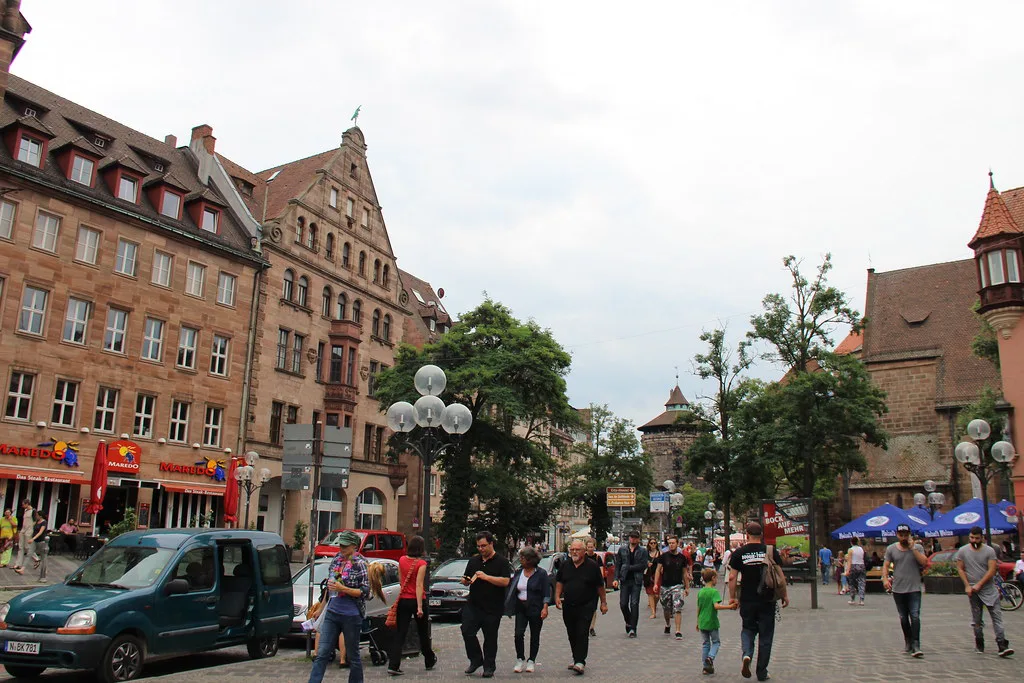
How to order bratwurst: three in a roll or a dozen on a tin plate
The two formats a visitor chooses between are drei im Weckla, three small sausages tucked into a crusty roll, and a half or full dozen on a Zinnteller (tin plate) with sauerkraut and Bauernbrot (farmhouse bread). Drei im Weckla is the stand-up snack, eaten with mustard from a paper sleeve; the tin-plate version is a sit-down dish that belongs with a beer.
If you are eating on the move, the roll is the practical choice and the version you will find at stands around the old town; our street food in Nuremberg guide maps the stands. If you have a table and time, order the dozen and add a Rotbier; the sausages are small enough that a full dozen is a proper meal rather than a stunt.
Where to eat bratwurst in the old town
Bratwursthäusle bei St. Sebald is the classic old-town address for the sausages, set in historic rooms near the Sebalduskirche. Expect a busy, plain setting where the grill is the point and the menu is short; this is the place to order a dozen on the tin plate with sauerkraut.
Hexenhäusle pairs deft Franconian classics with a beer garden tucked against the castle walls, so it works when you want the sausages but also a table outside. For a more modern room, Hausbrauerei Altstadthof on Bergstraße brews its own beer and serves Franconian cooking in a brewery-tavern setting at the foot of the Kaiserburg.
Schäufele: the roasted pork shoulder with crackling
Schäufele is a bone-in pork shoulder roasted until the scored skin puffs into a dark, brittle crust. In the Nürnberger Land it is treated as the national dish and is served traditionally with Kloß and salad. The meat should pull away from the bone; the crackling is the part locals prize most, so do not leave it on the plate.
Order it as your main meal rather than a starter, because the portion is substantial and comes with dumpling and gravy. If you only have one sit-down meal in Nuremberg, this is the dish to build it around.
Saure Zipfel and other Franconian dishes on Nuremberg menus
Saure Zipfel are bratwurst simmered in a sour onion broth, served with bread; they are a lighter, sharper alternative to the grilled sausages. Other Franconian plates that recur on Nuremberg menus include Pressack (head cheese), Schloudengala (a heavily smoked sausage) and, in season, carp and trout from regional waters.
Local butchers also produce their own cooked sausages and hams, and the regional Original Regional campaign lists specialties such as Stadtwurst, Krautwurst and Hofer Rindfleischwurst, which often appear on Wirtshaus menus. If a dish is unfamiliar, ask the server how it is served; Franconian menus tend to pair smoked and boiled sausages with bread, mustard or potato.
Nürnberger Rotbier: what the copper-colored lager tastes like
Rotbier is a bottom-fermented lager with a deep copper-red color and a malty, lightly roasted flavor. Nuremberg was a Rotbier city from the early Middle Ages, and the beer was historically lagered in the extensive rock cellars cut into the sandstone beneath the Kaiserburg. For the full picture of the style, see the Nuremberg Rotbier guide.
Order it by the half-liter or a smaller glass alongside sausages or Schäufele; the malt sweetness stands up to the marjoram and the pork crackling without overwhelming either. It is a session-strength beer, so one or two glasses with a meal is the sensible pace.
Where to drink Rotbier: brewery taps in the old town
Hausbrauerei Altstadthof on Bergstraße brews Rotbier on the historic site of the old Red Brewery at the foot of the Kaiserburg, making it the most direct place to taste the style where it was made. The brewery-tavern setting means you can order the beer with a full Franconian meal; the traditional German restaurants in Nuremberg guide adds more old-town rooms of the same kind.
For a beer-garden setting with Rotbier, Hexenhäusle near the castle walls is a useful second address. Both venues sit close enough to the Hauptmarkt and the Burg that you can walk between them in an evening without planning transport.
Beyond the classics: Franconian sausage variety
The bratwurst story does not end with the small Nuremberg sausage. Franconian bratwurst is noticeably larger, Coburger Bratwurst is grilled over pine cones and beechwood, and Schloudengala is a dark, heavily smoked sausage. Each has its own texture and salt level, and regional butchers make their own versions county by county.
Nuremberg's long butchery tradition is also on show at the Nürnberger Bratwurstmuseum, which traces the history of the protected sausage. If you want to take some home, buy from a butcher rather than a supermarket; regional Metzgerei counters sell cooked sausages and smoked goods that travel well.
Elisenlebkuchen: the gingerbread to buy from a maker
Elisenlebkuchen is Nuremberg's dense, spice-heavy gingerbread, traditionally made with nuts and candied peel and often glazed or chocolate-coated. It appears in the city's bakeries and confectioners well beyond the Christmas season, and the difference between a hand-made one and a supermarket box is considerable. The Nuremberg Lebkuchen guide sorts the makers worth a detour.
Buy it from a Confiserie or a bakery counter rather than a souvenir shop; the texture of a fresh Lebkuchen is softer and the spice sharper. Cafe Confiserie Neef is a Nuremberg café-confectioner where the gingerbread sits alongside cakes and coffee, making it a practical one-stop stop for both.
Cafés and roasteries in Gostenhof and St. Johannis
Gostenhof and St. Johannis hold the city's newer café and barista scene, with small roasteries serving single-origin coffee. Rösterei Machhörndl is one of the Nuremberg roasters worth seeking out for a mid-afternoon flat white or filter coffee. The neighborhoods are a short walk or tram ride from the old town and make a good change of pace after a heavy Wirtshaus lunch.
Nuremberg also has a coffee-roasting culture in its surrounding region, and cafés across the city serve house-made cake with coffee in the afternoon. If you want a lighter sit-down break between meals, aim for a café in Gostenhof rather than a third Wirtshaus.
Wirtshaus, brewery or café: how to pick for the meal you want
Choose a Wirtshaus when you want a full Franconian plate and a proper table; choose a brewery tap when the beer is as important as the food; choose a café when you want cake, coffee and a pause. The old town concentrates the first two, while Gostenhof and St. Johannis are better for the third.
For a single meal, a brewery-Wirtshaus like Altstadthof covers both food and beer without moving. For a sausage snack, a dedicated Bratwursthäusle is faster and cheaper. Mixed groups do well to book a Wirtshaus for dinner and leave the cafés for the afternoon.
Seating, ordering and reserving at a Nuremberg Wirtshaus
In most Nuremberg Wirtshäuser you seat yourself at a free table unless a member of staff directs you otherwise, and you order from the server rather than at a counter. At busy old-town rooms on weekend evenings, reserving ahead is sensible because the popular Stuben fill up, and the city's food guides advise booking well in advance rather than turning up.
Payment is usually at the table when you ask for the bill, and many traditional places still prefer cash, so carry some euros. Tap water is not automatically brought; if you want it, ask for Leitungswasser, and expect a small charge or a bottled alternative.
What a Nuremberg food day costs in euros
A practical food day in Nuremberg can be built from a sausage roll or stand snack at lunch, a coffee and cake stop in the afternoon, and a Wirtshaus dinner with one or two beers. Prices at individual venues change, so check the menu board or the current menu before you order rather than relying on any figure quoted elsewhere. For cheaper sit-down options, see cheap eats in Nuremberg.
Cash is still common in smaller Wirtshäuser and at stands, and card acceptance varies by venue. Budget for a modest meal and a beer rather than a tasting menu, and leave room for a Lebkuchen purchase on the way home.
If you only have one meal in Nuremberg
Order the Schäufele with Kloß and salad as your main, start with a half dozen Rostbratwürste on the tin plate if you are hungry, and drink a Rotbier. That single order covers the city's three signatures and gives you the full range of its cooking in one sitting.
If you have time for a second stop, make it a café in Gostenhof for coffee and Elisenlebkuchen, or a brewery tap for a second Rotbier. Either way, keep the meal in the old town and the coffee in the neighborhoods, and you will have eaten Nuremberg properly.
Which Nuremberg food to chase first
Start with the Schäufele if you have one dinner, the Rostbratwurst if you have one hour, and the Rotbier whichever you choose. The three together are the clearest expression of what Nuremberg cooking is, and each is easy to find in the old town around the Hauptmarkt and the Kaiserburg.
Book a Wirtshaus table for the evening, carry cash for the sausage stand, and leave the afternoon open for a café in Gostenhof or St. Johannis. That shape gives you the classics without turning the day into a checklist.
Explore more Nuremberg guides
Frequently Asked Questions
What food is Nuremberg most famous for?
Nürnberger Rostbratwurst, Schäufele and Nürnberger Rotbier are the three signatures. The sausage is small, marjoram-heavy and EU-protected since 2003, and may only be made in the city of Nuremberg; the Schäufele is a roasted pork shoulder with crackling, dumpling and gravy; the Rotbier is a copper-colored lager.
Do you wait to be seated in a German Wirtshaus?
Usually not. In most Nuremberg Wirtshäuser you find a free table yourself unless staff point you to one. At busy old-town rooms on weekend evenings, reserving ahead is the safer move.
What are the must-try foods in Nuremberg beyond bratwurst?
Schäufele, Saure Zipfel, Elisenlebkuchen and the wider Franconian sausage range, including Schloudengala and the larger Franconian bratwurst. Rotbier is the beer to drink alongside them.
Sources
Notes for your next German food trip
Optional updates to our guides.
You might also like
Continue reading
More guides you'll find useful