Best Restaurants in Münster: Where to Eat in Westphalia
Our picks for the best restaurants in Münster, from an inn trading since 1607 to the last Altbier brewery in town and starred French-regional cooking.
On this page
The best restaurants in Münster fall into four clear jobs: the historic inn, the modern Westphalian Gasthaus, the brewery Brauhaus, and the starred fine-dining table. Pick by the meal you want rather than by a single top-ten order, and the city gets much easier to eat in. This guide sorts the places worth a table by style, explains the Westphalian dishes to order by name, and notes the group and booking rules that change how you plan.
Two dishes anchor almost any traditional meal here. Töttchen is a tangy Münsterland meat ragout, once a poor man's dish and now close to a regional national plate, while Pfefferpotthast is beef braised with onions, bay and cloves and finished with plenty of pepper. Knowing those two names, plus Pumpernickel and westfälischer Knochenschinken (Westphalian bone ham), lets you read a menu with confidence; our guide to Münster Food covers the wider larder.
What to eat in Münster: Töttchen, Pfefferpotthast and Westphalian country cooking
Westphalian cooking is hearty and rural in origin: eggs and bacon, ham and sausage, substantial meat and vegetable dishes, bread and beer. The city's tourism office singles out Töttchen, Pfefferpotthast and Pumpernickel as the specialties to try, alongside Westphalian bone ham, which the region has been known for since the Middle Ages.
Order Töttchen when you want something sharp and sweet-sour, often served with fresh farmhouse bread; order Pfefferpotthast when you want a peppery braise that traditionally appears in autumn at the start of slaughtering season. Eintopf-style dishes built on regional vegetables such as Stielmus, broad beans and cabbage fill out the menu. If you want the detail on either dish before you commit, our explainer on Münster food walks through them and the rest of the regional repertoire.
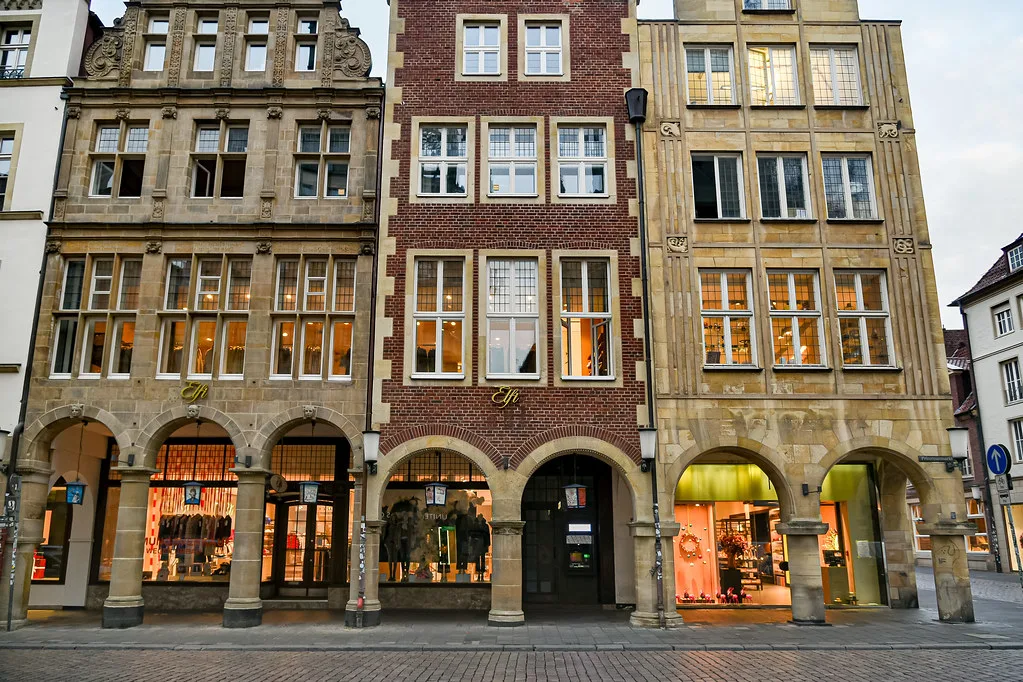
How to use this list: traditional, brewpub, fine dining, and what each costs in time
A Gasthaus meal is the relaxed option: one course of Westphalian home cooking, no fixed timetable, and portions built for appetite rather than tasting. A brewery Brauhaus adds beer made on the premises to that same formula, which makes it the obvious pick if drinking is part of the plan. Starred dining runs the other way, with a menu, an evening commitment and a bill to match.
The city's own food pages lay out this spread, grouping Westphalian kitchens, the brewery, and the fine-dining tables separately. Each carries a different expectation about how long you sit and what you order; read the venue sections below before you decide how to spend your one big dinner.
Altes Gasthaus Leve: Münster's oldest inn for Westphalian standards
Altes Gasthaus Leve has stood since 1607, long before the Peace of Westphalia, which makes it Münster's oldest restaurant by a wide margin. Its menu runs on typical Westphalian and seasonal dishes, so this is the address for the classic repertoire rather than a modern reinterpretation.
Choose Leve if you want the history and the standard dishes in the same room, and if you would rather order à la carte than commit to a menu. It suits a first evening in town, when a plate of something regional and a beer is the whole ambition.
Gasthaus Großer Kiepenkerl: the Kiepenkerlviertel address for modern Westphalian home cooking
Gasthaus Großer Kiepenkerl has been run by the same family since 2012 in the historic Kiepenkerlviertel, on a site that held a brewery and a bakery as far back as the thirteenth century. The kitchen takes typical Westphalian recipes and prepares them in a modern, straightforward style with regional produce, and seasonal and vegetarian dishes appear alongside the meat.
The house sources its meat from regional Naturland farms and says plainly that the higher price for that quality is worth it ethically and on the plate, so expect a Gasthaus bill rather than a cheap one. In 2015 and 2016 Greentable recognized it as an exemplary sustainable restaurant, and the 2016 Slow Food eating guide listed it among 400 Slow Food Gasthäuser nationwide.
It is a strong family choice: the children's menu for guests up to 12 was recognized by the German agriculture ministry, and gluten-free dishes have their own menu, with the service team advising on allergies. Tables for more than eight people can only be requested by email, so larger groups should write ahead instead of walking in.
Pinkus Müller: the last of 150 Münster Altbier breweries
Münster once had 150 Altbier breweries; Pinkus Müller is the only one left. The brewery ships worldwide and maintains traditional Westphalian cooking in its Brauhaus, which is what makes a meal here different from a plain restaurant dinner: the beer and the food come from the same house.
Altbier is the dark, top-fermented style of the Lower Rhine and Westphalia, and drinking it fresh at the source is the reason to book this table over a generic Gasthaus. Come for a sit-down meal with a glass alongside rather than a long session. For the wider picture of who brews in the city, see our guide to Münster Breweries.
Töttchen and Pfefferpotthast explained: what they are and where to order them
Töttchen is a savory meat ragout given a sharp, sweet-sour finish, originally food for poorer households and now served across the Münsterland in many variations, frequently with fresh farmhouse bread. Pfefferpotthast cooks beef in lard with onions, bay leaves and cloves until tender, then seasons it boldly with pepper and sometimes capers and lemon juice.
Both belong on a traditional Westphalian menu, so Münsters oldest inn, Altes Gasthaus Leve, and the Brauhaus of Pinkus Müller, the city's last surviving Altbier brewery, are the natural places to look for them; ask what is on that day's card. If neither appeals, Pumpernickel with Mettwurst and beer is the rustic alternative the region is known for.
Fine dining in Münster: Spitzner in the Oer'scher Hof
Restaurant Spitzner, in the Oer'scher Hof on Königsstraße, serves French-inspired cooking built on regional products, with a menu and a full à la carte offer at dinner and at Saturday lunch. It has held one Michelin star since 2023.
Two rules shape the booking. From six people the kitchen serves a single set menu, which you can discuss in advance, and any allergy, intolerance or vegetarian preference must be flagged at reservation because the kitchen plans the sequence around it. The restaurant does not offer vegan dishes, so a plant-based eater in the party should look elsewhere.
Spitzner also runs a Rôtisserie, preparing rustic dishes from the spit, oven or braising pot five days a week with matching sauces and sides, plus pâtés and terrines and a small dessert and wine of the day. It is the lower-commitment way to eat from this kitchen if a full menu feels like too much.
Coeur d'Artichaut and Brust oder Keule: two of Münster's starred tables
Münster has three chefs who held Michelin stars in the 2023 guide: Coeur d'Artichaut was awarded two stars, while Brust oder Keule and Restaurant Spitzner held one each. Coeur d'Artichaut, on Alter Fischmarkt, cooks French-modern food with a regional base; Brust oder Keule on Melchersstraße works in a traditional, classic idiom.
Treat those as a guide to the city's top tier rather than a live ranking, and pick between them by style: French-modern for a special-occasion menu, classic for a more traditional register. Two stars usually mean a longer sitting and a bigger bill than one.
Landhaus Eggert, Villa Medici and Von Rhemen: the other restaurants worth knowing
Beyond the starred rooms, the city lists further awarded restaurants: Landhaus Eggert, Villa Medici and Von Rhemen in Hotel Schloss Wilkinghege. These round out the upper end for travelers who want a quieter, more residential setting than the Altstadt.
They make sense if you are staying outside the center or want a destination meal away from the busiest streets; book them the same way you would the starred tables. If you are weighing other German cities for a similar eating trip, our picks for the best restaurants in Aachen and the best restaurants in Augsburg follow the same split-by-job logic.
Where to sit: Kiepenkerlviertel, the Altstadt and the neighborhoods beyond
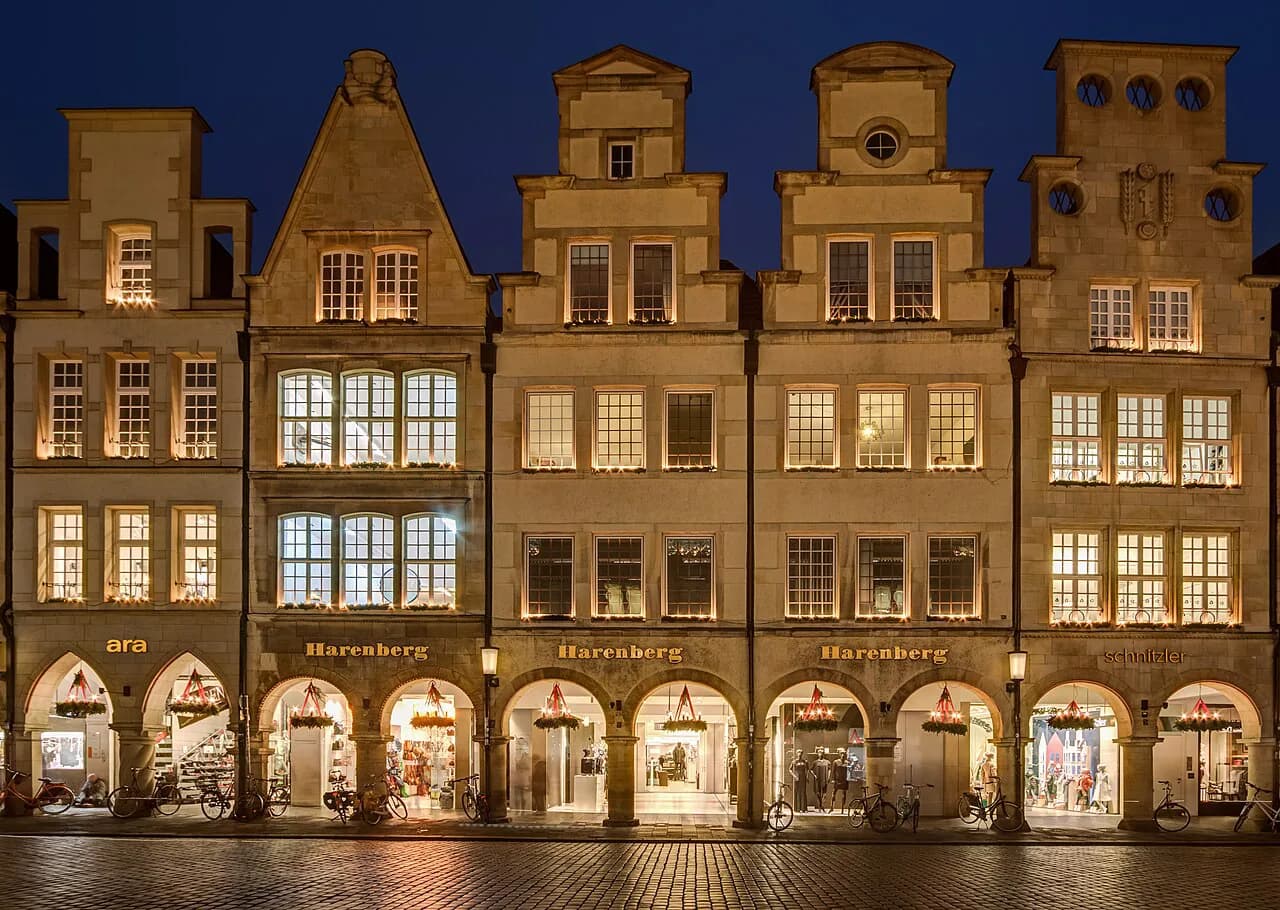
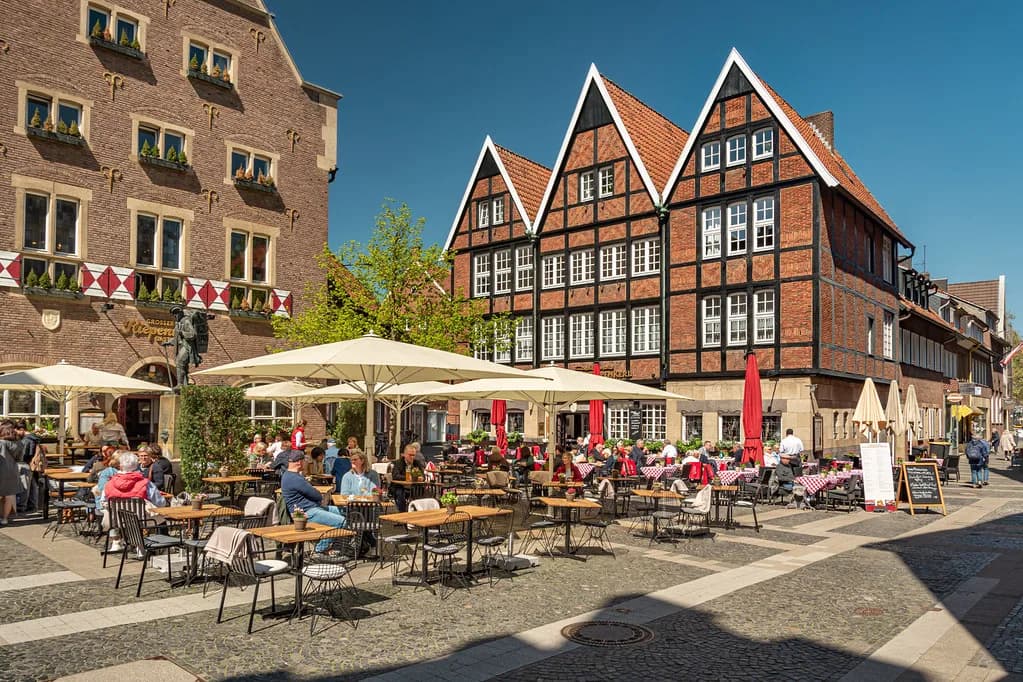
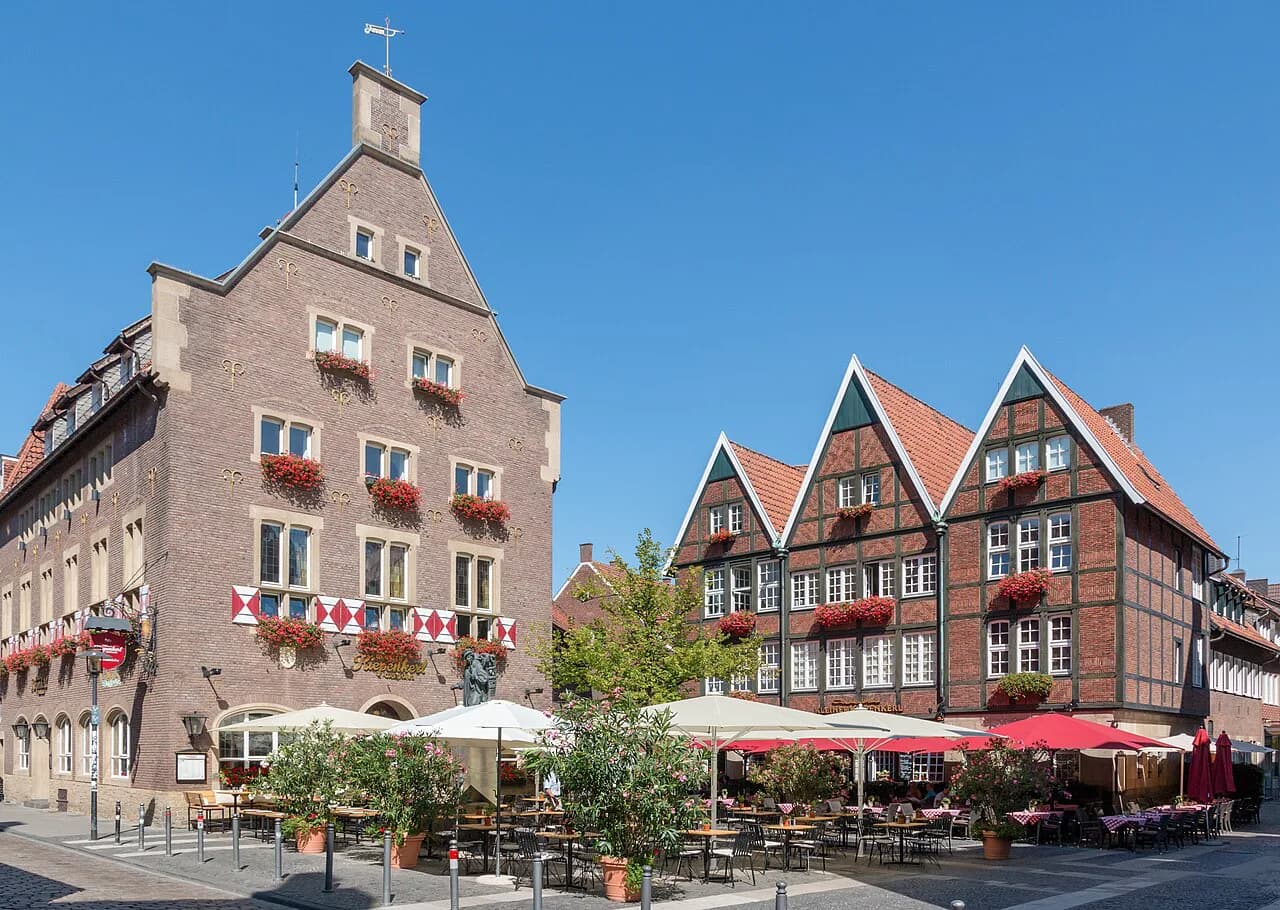
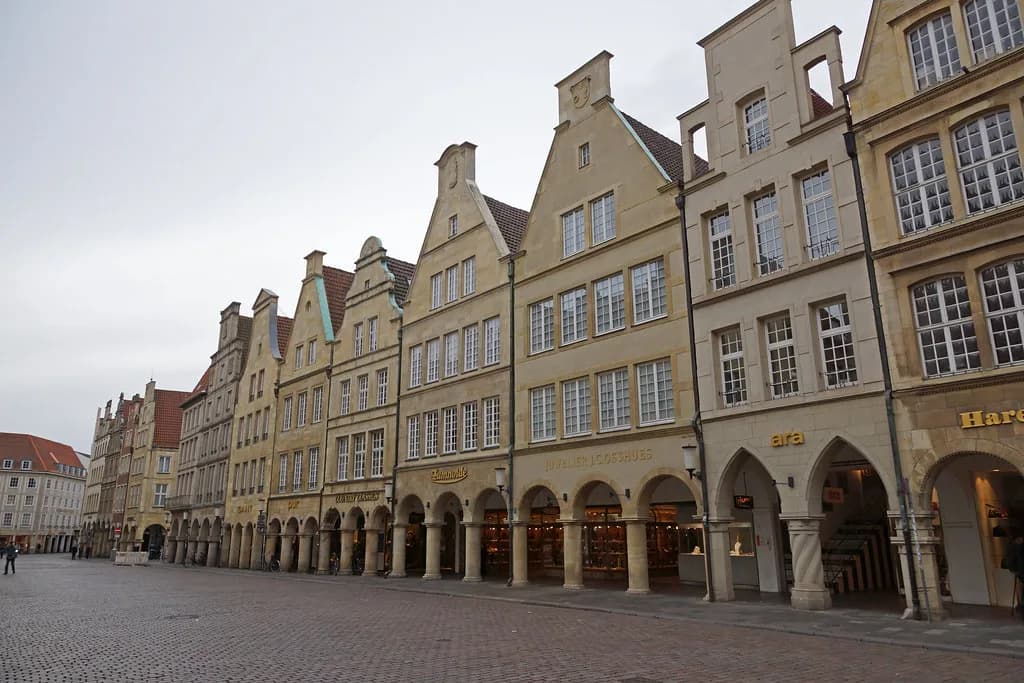
The Kiepenkerlviertel puts Großer Kiepenkerl at its heart, on Spiekerhof, in a quarter that was a meeting point for traders and travelers in the Middle Ages; it is the most atmospheric base for a Westphalian dinner. The Altstadt around Alter Fischmarkt and Königsstraße holds the fine-dining rooms and the brewery, all within a short walk of each other.
For a cheaper daytime stop, Münster's Imbiss counters and the farmers market stalls fill the gap between restaurant meals. If you eat plant-based, our guide to Vegan and Vegetarian Food in Münster maps the meat-free options, since the traditional kitchens lean heavily on meat and Spitzner's kitchen does not offer vegan dishes.
Beer gardens stretch the day in the warmer months, when an afternoon glass outdoors beats a formal sitting. In summer, a Biergarten stop before dinner keeps the evening flexible.
Reservations, group size and set menus: how booking works at Münster's busier tables
Group size is the rule that catches people out. Großer Kiepenkerl takes requests for more than eight people only by email, and Spitzner switches parties of six or more onto a single set menu that you should agree in advance.
For the starred tables, mention allergies, intolerances and vegetarian needs when you reserve, because the kitchen builds the menu around them. Warm, walk-in-friendly rooms suit a spontaneous dinner; the set-menu houses do not, so book those first and plan the rest of the week around them.
Who each restaurant suits: families, couples, beer drinkers, splurge nights
Families do best at Großer Kiepenkerl, where the children's menu and gluten-free options take the stress out of ordering. Beer drinkers should head to Pinkus Müller for Altbier with Westphalian food, and history-minded eaters to Altes Gasthaus Leve for the oldest room in town.
Couples and splurge nights belong at Spitzner, Coeur d'Artichaut or Brust oder Keule, where the menu format and the setting carry the evening. Pick one of those rather than trying to fit two into a short trip.
Which Münster table should you book first?
Book one starred table and one traditional one, then let the rest of the trip run loose. Spitzner or Coeur d'Artichaut covers the splurge, while Großer Kiepenkerl, Pinkus Müller or Altes Gasthaus Leve covers the Westphalian cooking you came for.
If you have only one night, choose by appetite: a Töttchen-and-beer evening in the Kiepenkerlviertel or a set menu in the Altstadt. Confirm current opening days and prices directly with the venue when you reserve.
Explore more Münster guides
Frequently Asked Questions
What food is Münster known for?
Töttchen, a sharp, sweet-sour Münsterland meat ragout, and Pfefferpotthast, beef braised with onions, bay and cloves and finished with plenty of pepper, are the two dishes most associated with the city. Pumpernickel, Westphalian bone ham and regional beers round out the traditional larder.
Do I need a reservation at Münster's better restaurants?
Book the fine-dining rooms ahead, and plan around group rules: Spitzner serves a single set menu from six people, and Großer Kiepenkerl handles parties of more than eight only by email. Mention allergies and vegetarian needs when you reserve so the kitchen can plan.
Can I eat well in Münster without booking ahead?
The traditional Gasthäuser and the brewery Brauhaus are the easier rooms to walk into for a Westphalian meal and a beer. For the starred tables and any large group, reserve first rather than turning up.
Sources
Notes for your next German food trip
Optional updates to our guides.
You might also like
Continue reading
More guides you'll find useful