Nuremberg Food Markets: Hauptmarkt and What to Buy
Nuremberg's Hauptmarkt weekly market sells regional produce, bread and flowers. Here is what the city's seasonal markets add to a food-focused visit.
On this page
The Hauptmarkt is where you shop for food in Nuremberg's Altstadt: a weekday market with regional fruit and vegetables, bread, herbs, flowers and international specialties, set on the square below the Frauenkirche. Seasonal markets temporarily replace it at points in the year, so what you find depends on when you come. This guide walks through the stalls, the seasonal markets and how the market connects to the city's signature foods, so you can plan a stop around eating rather than sightseeing.
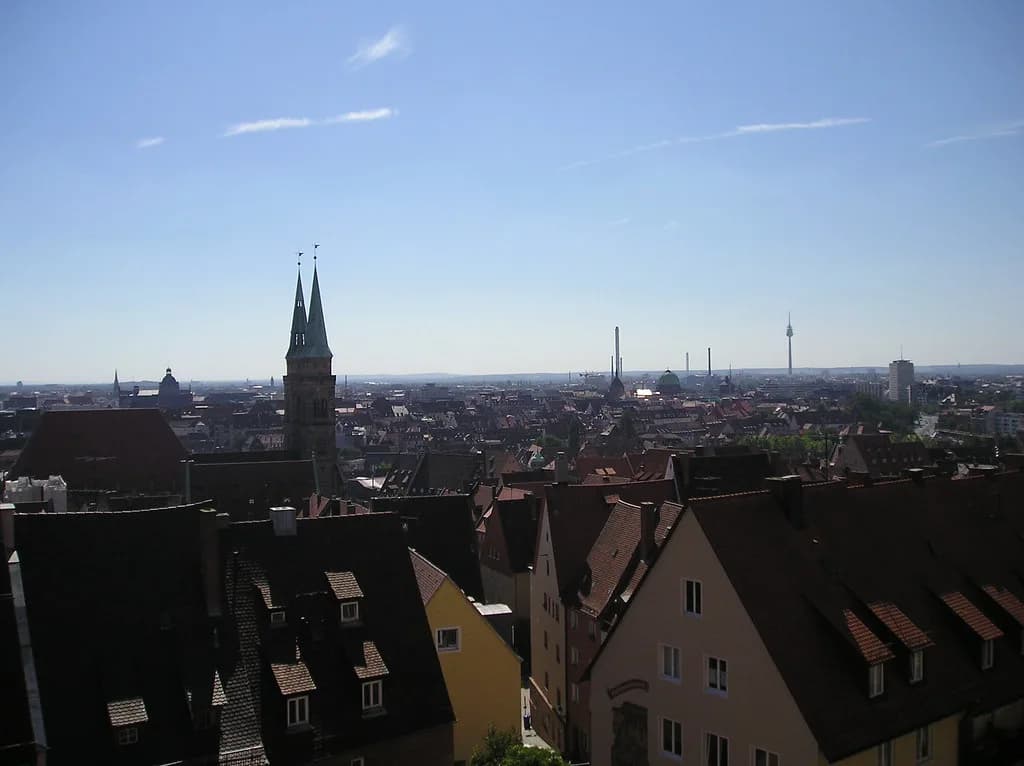
Where the Hauptmarkt sits in the Altstadt
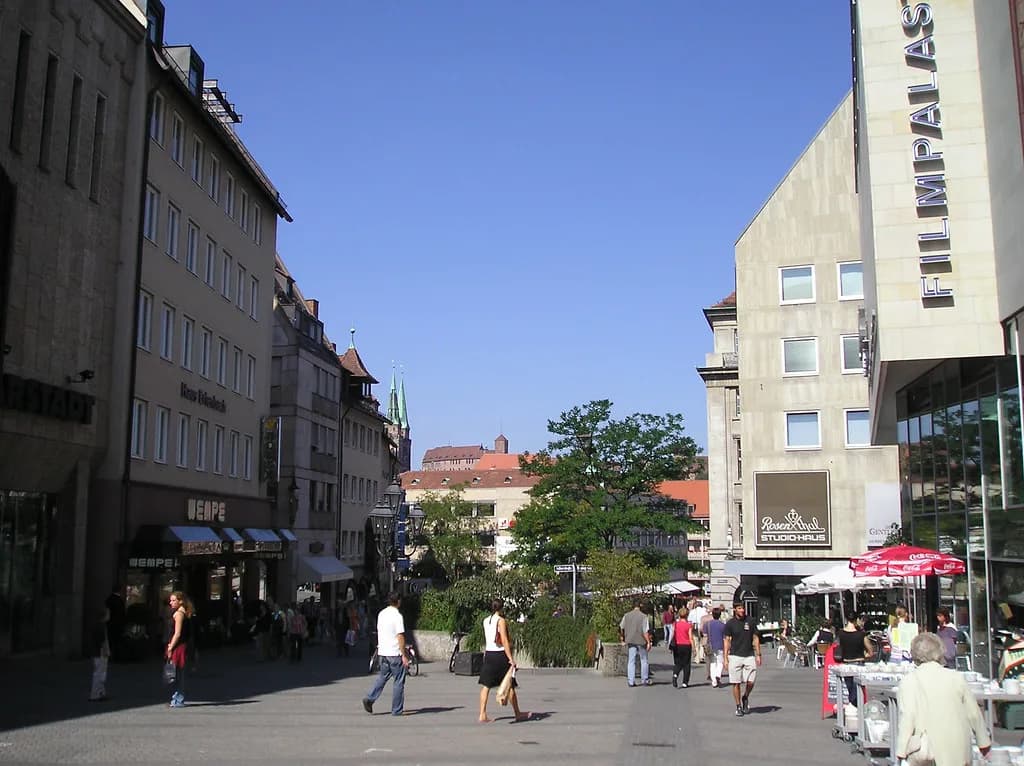
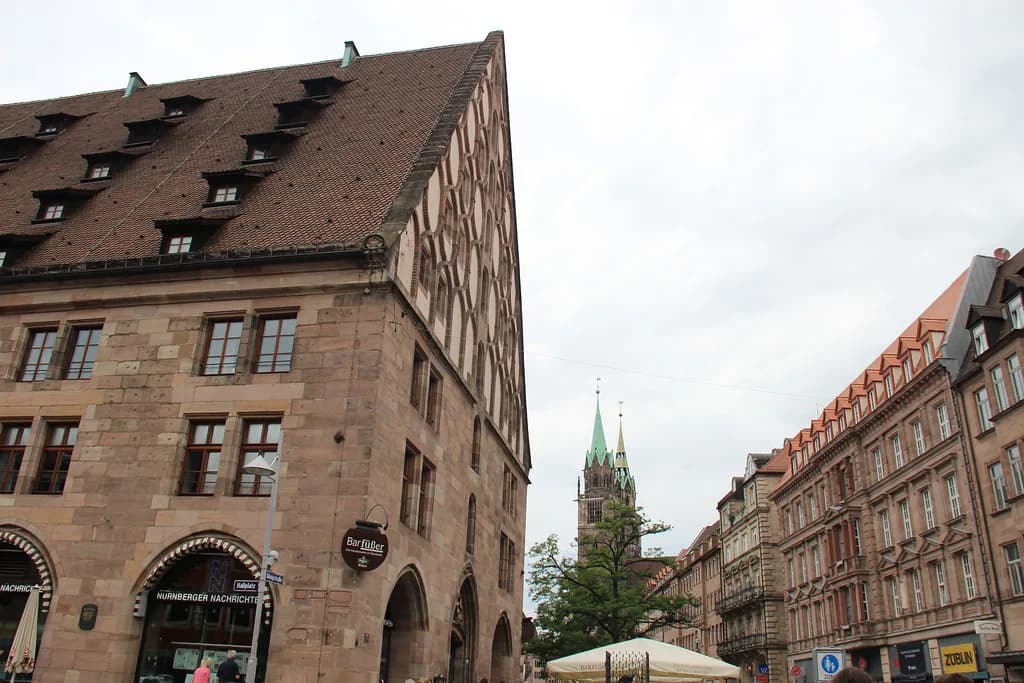
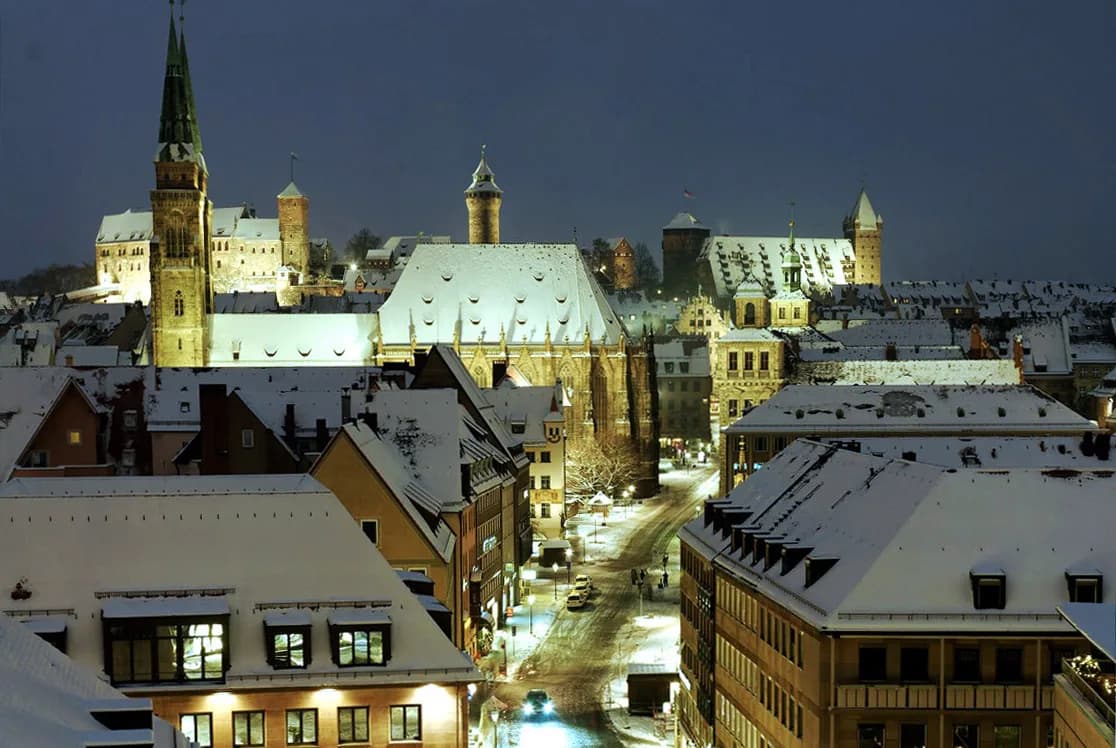
The Hauptmarkt is the central square of Nuremberg's old town, with the Gothic Frauenkirche dominating the square. Market stalls fill the open space, so you walk through the food stands on your way between the castle side of the Altstadt and the river. Treat the market as a midpoint of a morning walk: arrive hungry, buy bread and fruit, then continue on through the old town.
Because the market sits in the middle of the pedestrian old town, it works as a lunch stop rather than a detour. You can pair a market purchase with a sit-down meal nearby, or graze from the stalls and save the sit-down meal for the evening. The square also hosts cultural events through the year, including the Bardentreffen music festival shortly before the summer holidays, when the market gives way to a stage.
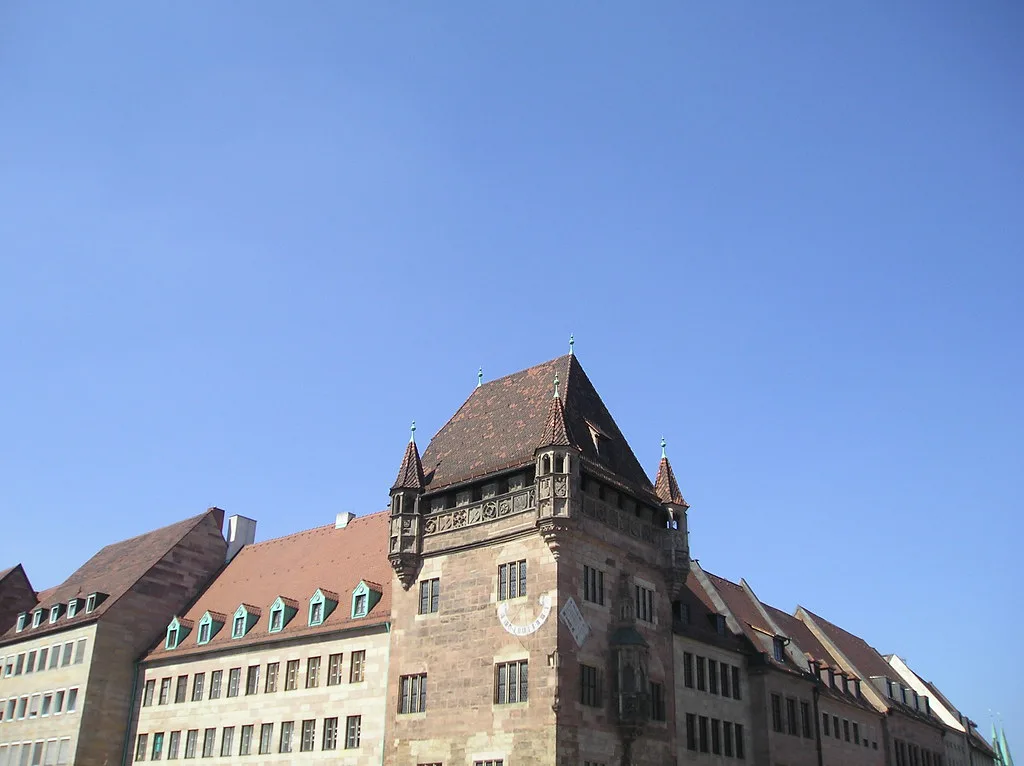
What the Hauptmarkt stalls sell
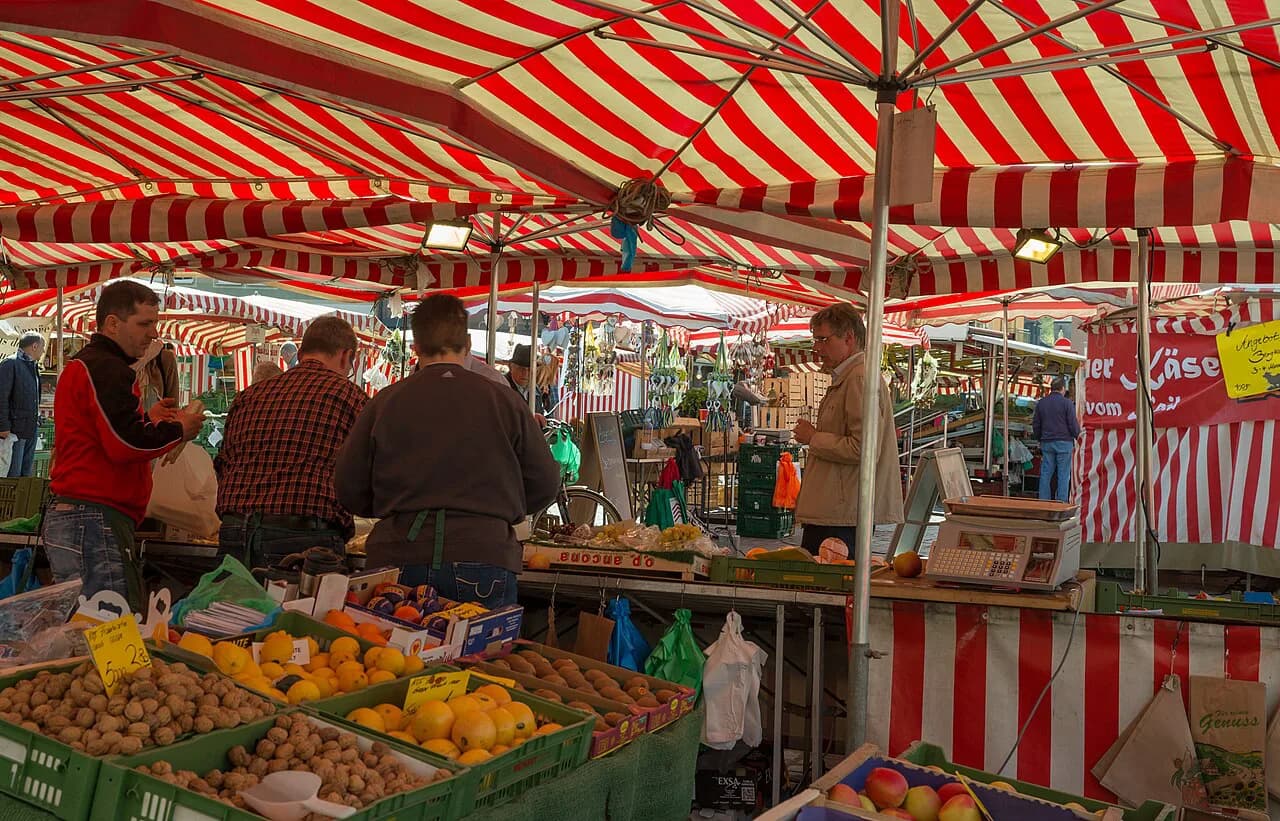
The weekday market sells regional fruit and vegetables alongside exotic fruit, delicatessen items, bread, herbs and flowers. This is a shopping market first: locals buy produce for the week, and the bread stalls are where a traveler picks up a loaf or a roll for a picnic. The mix of regional and international goods means you can assemble a light meal from Franconian produce and something imported in the same lap of the square.
For a food-focused visit, spend your money on what travels well: bread, cured items, fruit and a few herbs rather than a full picnic setup. The market women and men are the ones to ask about what is local that week; pointing at what looks good and asking for a piece is normal market behavior. Bring cash, since small stalls across Germany commonly run on it, and buy by weight when the stall sells produce loose rather than pre-bagged.
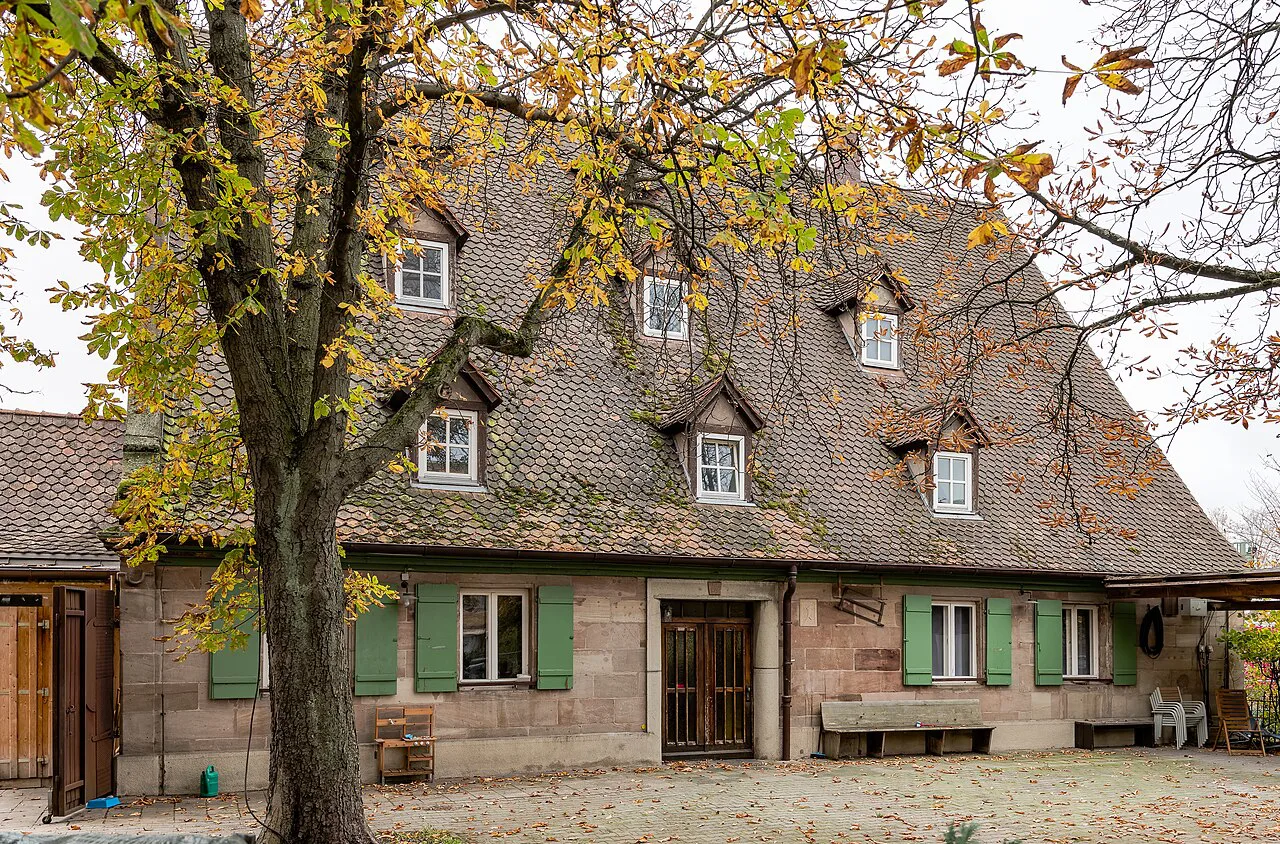
How to shop the market like a local
Start with the produce, then move to bread, then to anything you want to eat immediately. Buying by weight is the norm for loose fruit and vegetables, and asking for a smaller quantity than what is piled up is fine. If you are staying in a hotel without a kitchen, keep to items that survive a day in a bag, like bread, apples or a wedge of cheese from a delicatessen stall.
The market is also a place to eat standing up rather than a restaurant substitute. Pick up a roll and a piece of fruit and eat them on the square or on a bench near the fountain, which keeps your budget for a proper sit-down meal later. A guided food tour can do this groundwork for you if you would rather have someone else choose the stalls and explain what you are eating.
Seasonal markets that take over the Hauptmarkt
The Hauptmarkt is not only a produce market. Alongside the weekday market, the city runs the Ostermarkt in spring and the Herbstmarkt in autumn, and at certain seasons the regular market women and men make way for these seasonal setups. The most famous occupant of the square is the Christkindlesmarkt, the Christmas market that draws hundreds of thousands of visitors, but it is a seasonal event rather than a food-shopping stop.
That means your trip timing determines what you actually find on the square. In spring, expect the Easter market rather than the produce stalls; in September and October, expect the autumn market running parallel to the Altstadtfest. If you are coming specifically to shop for food, aim for a period when the weekday market is running and treat the seasonal markets as a bonus rather than the main event.
The Ostermarkt: Nuremberg's oldest market
The Ostermarkt is Nuremberg's oldest market, held at Easter on the Hauptmarkt. Its stalls sell pottery and household goods, clothing, craft work, curtains and basketware, alongside painted eggs and Easter decorations. This is a shopping market for the home rather than a food market, so come for the painted eggs and the craft stalls rather than lunch.
For a food traveler, the Easter market is best treated as a short browse on the way to eat, not a destination in itself. Buy a painted egg if you want a small, packable souvenir, and keep your appetite for the city's sausage and gingerbread instead. The craft and household stalls are the reason to walk through, and the eggs are the one item that ties the market to the season.
The Herbstmarkt: Federweißer and Zwiebelkuchen
The Herbstmarkt runs in September and October, in parallel with the Altstadtfest, and is where Nuremberg sees off summer with Federweißer, the partially fermented young wine, and Zwiebelkuchen, the onion tart that traditionally accompanies it. If your visit falls in early autumn, this is the seasonal market to plan around: the combination is a Franconian way of marking the change of season, and it is food and drink rather than crafts.
Treat the young wine as a small glass with food, not a session. Federweißer is sweet and low in alcohol early on but keeps fermenting, so it is a drink to taste while you eat onion tart and then move on. Outside the autumn window, the Hauptmarkt returns to its weekday produce role.
Nuremberg Lebkuchen and the gingerbread stands
Lebkuchen, Nuremberg's spiced gingerbread, is the city's most famous edible souvenir, and the city's market calendar includes a dedicated Lebkuchenmarkt in the run-up to Christmas. The Christkindlesmarkt fills the Hauptmarkt from the Friday before the first Advent, with red-and-white wooden stalls, lights and the smell of Glühwein and gingerbread.
If gingerbread is the point of your trip, buy it from the stands rather than a supermarket, where you can see the shapes and choose a small box to carry home. Lebkuchen keeps well, which makes it a better souvenir than fresh bread. The Christmas market itself is a seasonal event, so plan your gingerbread shopping around the weeks when the stalls are actually on the square rather than assuming year-round availability.
The Trempelmarkt: a flea market, not a food market
The Trempelmarkt is held twice a year, in spring and autumn, in Nuremberg's Altstadt, and the city bills it as the largest inner-city flea market in Germany. It is a flea market rather than a food market: the appeal is secondhand goods and browsing, not produce or lunch. If your trip coincides with it, expect the old town to be busier and the market square area to feel different from a normal weekday.
Do not confuse the Trempelmarkt with the food markets when planning a meal. It is worth a walk-through if you like flea markets, but a food-focused day is better built around the Hauptmarkt's weekday produce or the seasonal food stands. Check which market is actually running during your dates before you build a morning around it.
If you want to see the old town's market life without a specific event, the weekday Hauptmarkt stalls are the reliable option, and a street food stop can fill the gap on days when the square is given over to something else. Either way, the market is a supplement to Nuremberg's sit-down eating rather than a replacement for it.
Nürnberger Rostbratwurst and other foods the markets feed into
Nuremberg is known for Nürnberger Rostbratwurst, the small grilled sausages, and the city's food identity runs from those sausages to Lebkuchen. The markets supply the raw ingredients and the seasonal treats, while the city's taverns and stands supply the cooked versions. A market stop fits naturally into a day of eating: buy bread and produce in the morning, eat sausages at lunch, and finish with gingerbread.
If sausage is your priority, plan a sit-down stop at a tavern or a stand rather than expecting the produce market to feed you. The market's role is to set up the day: fruit, bread and a few local items to carry, then the cooked specialties later. Pair the sausages with a Franconian beer rather than a young wine outside the autumn window.
Which Nuremberg market fits your trip?
Choose the weekday Hauptmarkt if you want produce, bread and a sense of daily market life in the Altstadt, and choose the Herbstmarkt if your visit falls in September or October and you want Federweißer with Zwiebelkuchen. The Ostermarkt is for painted eggs and crafts, the Trempelmarkt for flea-market browsing, and the gingerbread stands for a packable souvenir.
Build the market into a day of eating rather than a standalone outing: buy breakfast or a picnic at the stalls, eat sausages and drink beer at a tavern, and finish with Lebkuchen. The two fixed points are the square and the season, so match your dates to the market that is actually running.
Explore more Nuremberg guides
Sources
Notes for your next German food trip
Optional updates to our guides.
You might also like
Continue reading
More guides you'll find useful