German Restaurant Nuremberg: Traditional Dining Guide
Traditional German restaurants in Nuremberg serve tiny rostbratwurst, Schäuferle and Franconian beer. Here is what to order and how each kind of place differs.
On this page
The German restaurant to pick in Nuremberg depends on how hungry you are: a Bratwursthaus for a quick plate of small grilled sausages, a Wirtshaus for a full Franconian meal with Schäuferle, or a bakery-café for something sweet near the castle. This guide sorts those three kinds of places by what they serve and how a meal there actually runs, so you can match the room to your appetite.
You will find the wider spread of addresses in our guide to the best restaurants in Nuremberg, while this page stays with the traditional German and Franconian side of the table: sausage, pork, beer and Lebkuchen.
What a Nuremberg German restaurant actually serves
Franconian cooking in Nuremberg is built around pork, and the two dishes you will see on nearly every traditional menu are small grilled sausages and a roasted pork shoulder with a thick crust. The local sausages are the city's signature, served by count rather than by weight, and the shoulder arrives as one large portion rather than a light plate. Both are plain, savory food designed to go with beer.
Beyond those two, look for the city's gingerbread, which is eaten as a sweet snack or taken home in a box rather than treated as dessert after a main course. The room matters too: a Bratwursthaus is a fast, focused stop, a Wirtshaus is a sit-down meal, and a bakery-café is for coffee and a slice.
Bratwursthäusle by St. Sebald's Church: the sausage stop
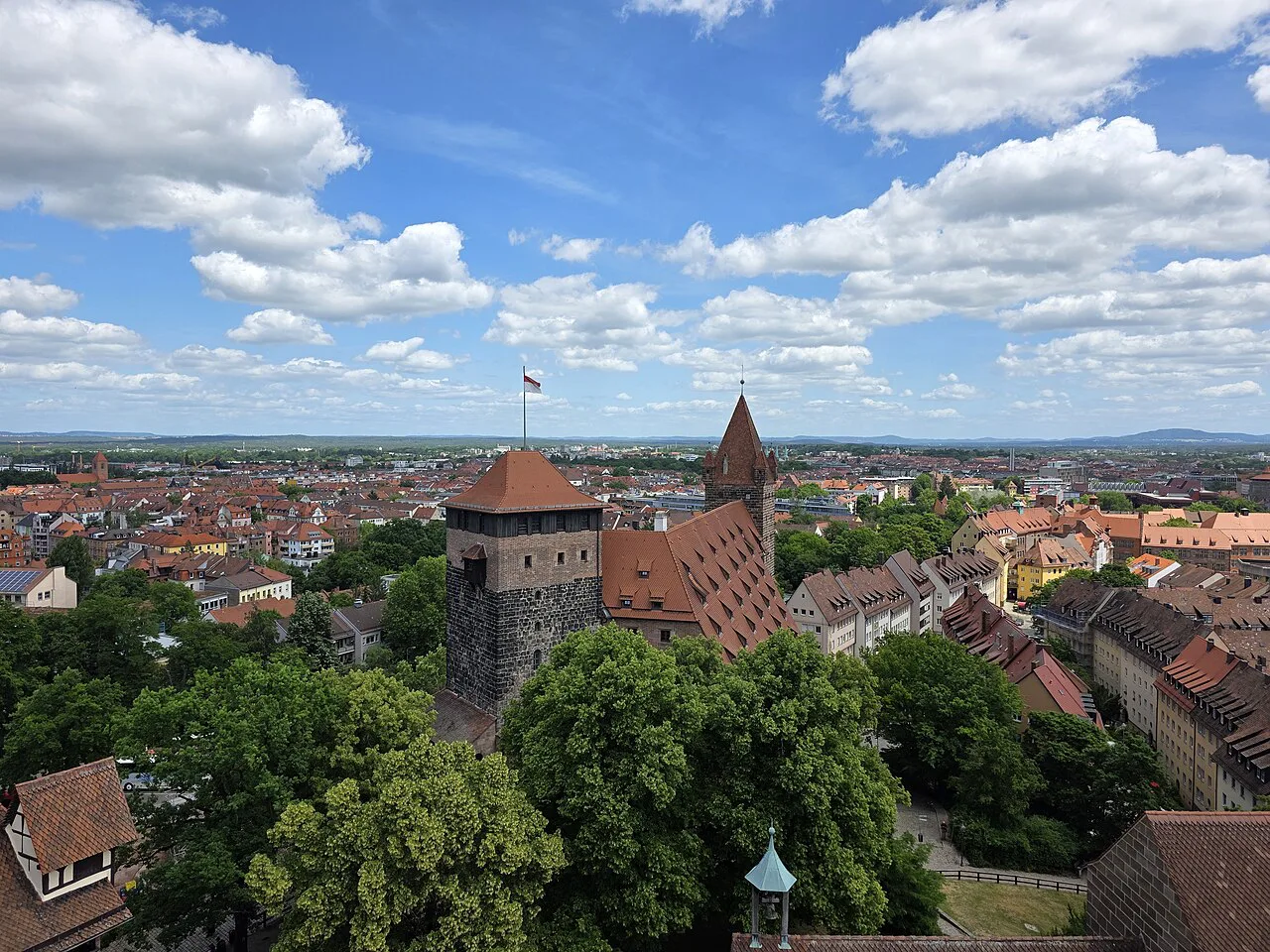
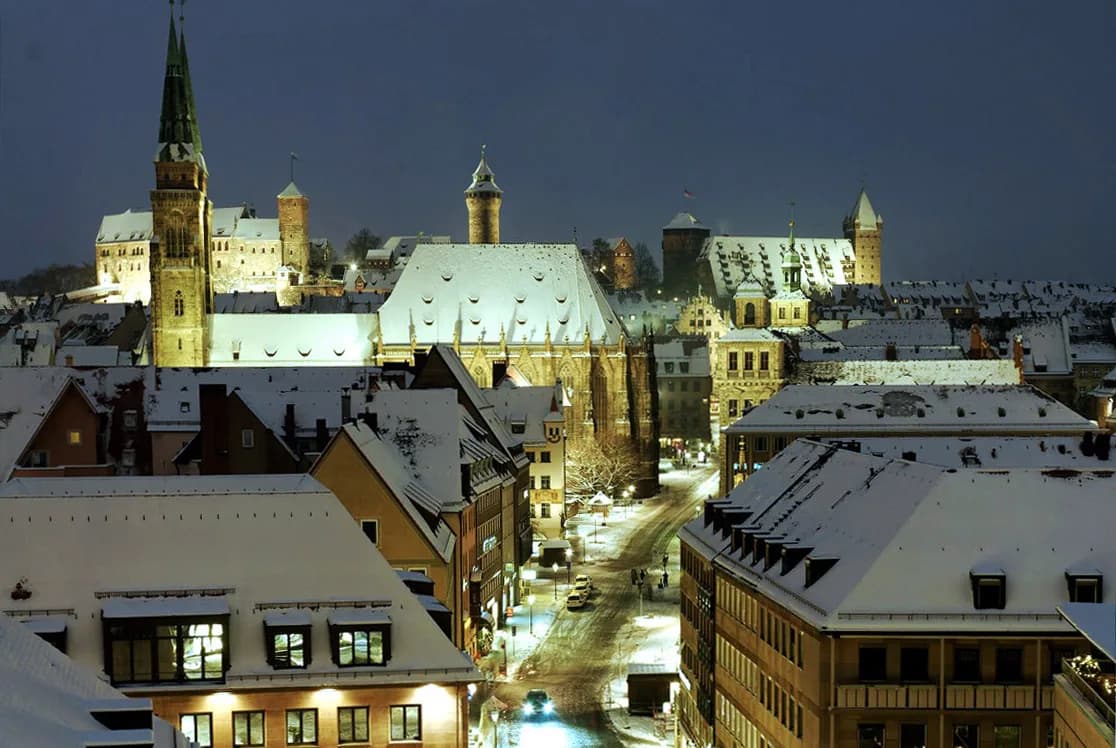
Bratwursthäusle sits next to St. Sebald's Church in the Old Town and is one of the best-known places in the city to try the local sausages. It is a sausage house in the literal sense: you come for grilled Nuremberg sausages, not for a long menu of roasts and stews.
The practical decision here is how many sausages to order, because a single one is a bite. The local sausages are deliberately small, and a proper meal can take up to a dozen of them. Order by the half dozen or dozen, add mustard and a pretzel, and you have a fast lunch in the middle of the Altstadt.
Because the church is a landmark most visitors pass anyway, this is an easy stop to slot into a walking day without planning a full sit-down meal. Go early or late for a shorter wait at peak lunch hours, and treat it as a counter-style meal rather than an occasion.
Wirtshaus Hütt'n: a full Franconian meal
Wirtshaus Hütt'n is the pick when you want a proper sit-down Franconian meal rather than a quick plate of sausages. A Wirtshaus is a tavern-style restaurant with a traditional menu and a beer list, and it is the right shape of place for a long lunch or a dinner where you order a main course, a side and a drink.
Use it for the dishes that need a knife and fork: roasted pork, dumplings and the heavier Franconian classics. A table here takes more time and more appetite than a sausage counter, so it makes sense to build an evening around it instead of squeezing it between sights.
Augustiner Zur Schranke: beer and history in one room
Augustiner Zur Schranke is the kind of Old Town tavern where the beer and the room are part of the reason to sit down. It suits a traveler who wants a traditional German pub atmosphere with a beer in hand and a plate of regional food alongside, rather than a formal dining room.
Order a local beer with your meal and keep the pace moderate, since these rooms reward a slow hour rather than a quick round. If you are choosing between several Old Town taverns, this one is worth considering for the setting as much as the food.
The Castle Bakery: a sweet stop near the castle
The Castle Bakery is a bakery-café near Nuremberg Castle, which makes it a natural pause on the climb up through the Old Town. It is not a restaurant in the sit-down-meal sense: think pastries, coffee and a sweet bite rather than a plate of sausages.
Pair it with a walk to the castle grounds and use it to break up a day of sightseeing, especially if you want something lighter between two heavy Franconian meals. A bakery stop also works well for breakfast pastries before the restaurants open for lunch.
Schäuferle and pork knuckle: what you are ordering
Schäuferle is the Franconian roast pork shoulder — the source translation calls it pork knuckle — and it is a large meal rather than a light one. The cut is roasted so the skin crisps, and it is a dish to order when you have a serious appetite.
Treat it as the main event of a meal and share a starter rather than ordering several heavy courses. If you are traveling with someone who eats less, one Schäuferle between two with an extra side is a sensible way to try it without over-ordering.
Nürnberger Rostbratwurst: why the sausages are small and how many to order
The city's sausages are short and thin by rule rather than by accident: they must be no longer than 9 centimeters, weigh no more than 25 grams, and be made from minced pork with a fat content under 35 percent. They have been made to those specifications for centuries, which is why a portion looks like a row of small bites rather than a single fat sausage.
Because each one is small, you need a good number for a meal, and up to a dozen is a reasonable order for a hungry adult. They are usually grilled over a fire and served with mustard, and the classic pairing is a pretzel and a beer.
Nuremberg beer and which local breweries to look for
Nuremberg has a long brewing tradition, and the traditional restaurants pour local beer alongside the food rather than treating it as an afterthought. Ask what is on tap from the region and order a small glass first if you want to compare styles without committing to a full pour.
One local style worth knowing is Rotbier, a dark amber lager associated with the city, which suits roasted pork and sausage well. If you plan a brewery stop, the rock cellars under the old town are part of how Nuremberg's beer was stored and aged.
Keep to a moderate pace across a long day of eating and drinking, and alternate beer with water. A single well-chosen local beer with a meal tells you more about the city's brewing than a long list of samples.
Lebkuchen: Nuremberg's gingerbread as a sit-down or takeaway sweet
Lebkuchen is Nuremberg's gingerbread, and it turns up in bakery windows and café counters across the Old Town. It is spice-heavy and often glazed or chocolate-coated, so it works as a small sweet with coffee or as a boxed gift to carry home.
Buy a single piece first to see whether the spice mix suits you before committing to a boxed selection. A bakery-café is the easiest place to try it sitting down, and it makes a good ending to a meal that started with sausage.
How ordering and paying work in a Nuremberg Gasthaus
In a traditional German restaurant, you usually order drinks first and the kitchen follows, and the bill stays on the table until you ask for it rather than arriving unrequested. Say zahlen or simply catch the server's eye when you are ready to pay, and have a card ready in case the room is cash-oriented.
Portions of Schäuferle and dumplings are large, so it is normal to order one main each and share a side or a dessert. If you are watching your budget, a sausage plate or a bakery lunch keeps the cost low, and our guide to Cheap Eats in Nuremberg has more options.
Choosing between a tourist-facing Old Town room and a local Wirtshaus
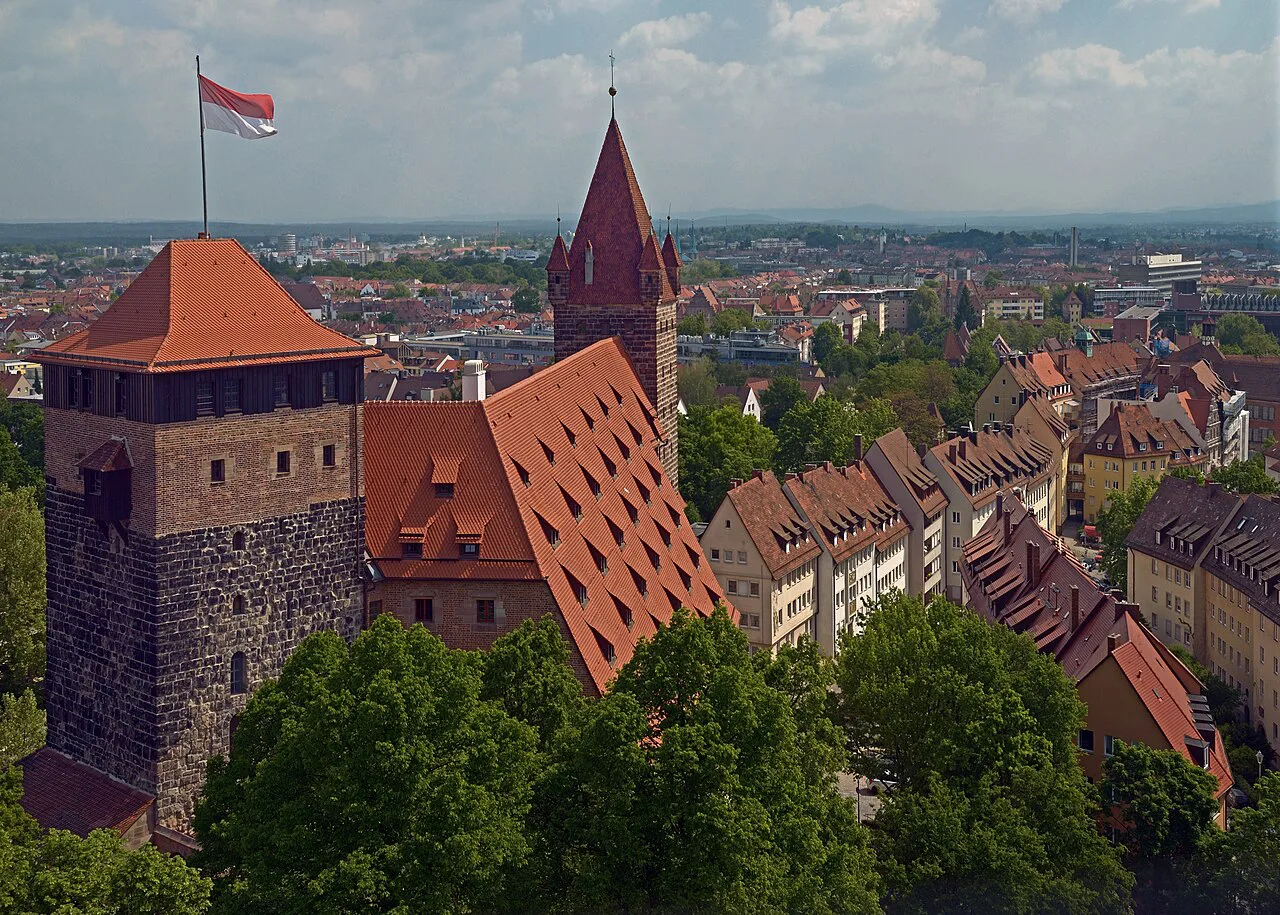
The Old Town rooms near St. Sebald's and the castle are convenient and put you in the middle of the historic streets, which is exactly what many visitors want on a short trip. The trade-off is that these are busy areas where you may wait for a table at peak times.
A local Wirtshaus further from the main squares tends to be quieter and more focused on the food, at the cost of a longer walk from the sights. Neither is automatically better: pick the central room for convenience and atmosphere, and the neighborhood tavern for a calmer, more food-led meal.
If you want to try several places without spending a lot, a sausage counter at lunch plus a bakery stop in the afternoon leaves room for a full Franconian dinner. That rhythm spreads the heavy dishes across the day instead of loading them into one sitting.
Which Nuremberg restaurant fits your day
Choose Bratwursthäusle for a quick plate of small sausages, Wirtshaus Hütt'n for a full Franconian meal, Augustiner Zur Schranke for a beer in a historic tavern room, and The Castle Bakery for a sweet stop on the way up to the castle. That four-way split covers the traditional side of the city without forcing you into a single long dinner.
Order the sausages by the dozen, treat Schäuferle as the main event of its meal, and try a local beer and a piece of Lebkuchen while you are in town. For the wider list of addresses, start with our guide to the best restaurants in Nuremberg for Franconian food and beer.
Explore more Nuremberg guides
Frequently Asked Questions
What is Nuremberg most famous for food-wise?
Nuremberg is best known for its small grilled sausages, Nürnberger Rostbratwurst, and for its gingerbread, Lebkuchen. Franconian roast pork shoulder, Schäuferle, is the other dish you will see on traditional menus across the Old Town.
How many Nuremberg sausages should I order?
Because each sausage is small, a proper meal can take up to a dozen of them, especially if you are ordering them as your main dish. Order by the half dozen or dozen and add a pretzel and mustard to round out the plate.
Are Nuremberg's traditional restaurants expensive?
Prices vary by room and dish, and menus are posted outside most traditional restaurants, so you can compare before sitting down. A sausage plate at a counter tends to cost less than a full Schäuferle dinner with beer.
Sources
Notes for your next German food trip
Optional updates to our guides.
You might also like
Continue reading
More guides you'll find useful