Nuremberg Food Tour: Which Walk to Pick and Eat Solo
Nuremberg food tours walk Gostenhof or the old town for tastings of Bratwurst, Blaue Zipfel and Lebkuchen. Here is what each route covers and how to eat solo.
On this page
A Nuremberg food tour is a guided tasting walk, not a restaurant crawl: you cover one neighborhood on foot and stop for small samples at several owner-run places. Two formats dominate, a Gostenhof route through the creative quarter west of the center and an official old-town walk that starts at the Altes Rathaus. This guide lays out what each one covers, how the pricing works, and how to eat the same specialties without a guide.
Expect two to three hours on your feet, samples served mostly standing, and a spread that runs from savory to sweet. Neither tour is a sightseeing itinerary with lunch attached, so it helps to know the dishes before you go.
What a Nuremberg food tour actually is
These are tasting walks: a guide leads a small group through one district, and the group stops at independent food businesses for a bite or two at each. The structure is the point. You taste widely in small portions instead of committing to one full meal, and the commentary ties each stop to the neighborhood around it.
That makes the route as important as the menu. A Gostenhof walk is about a residential, creative quarter away from the castle crowds, while the official old-town walk stays among the historic lanes. Pick the one whose district you actually want to spend time in.
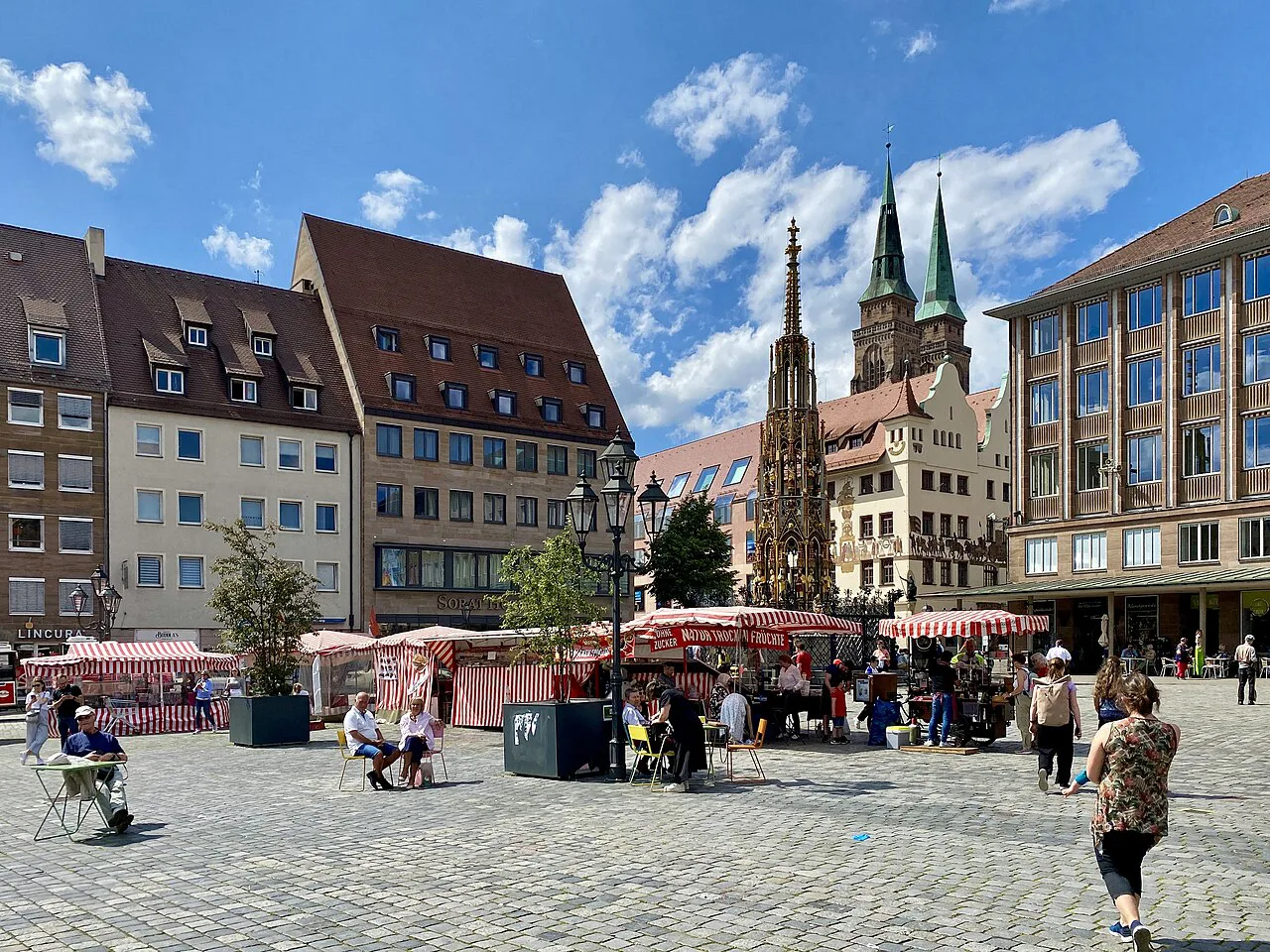
The Gostenhof route through "Goho"
Gostenhof, usually shortened to Goho, sits west of the old town and runs from the Plärrer outward through small side streets. The Eat the World tasting walk covers the quarter for around three hours and threads past the former Volksbad, the Rochus-Friedhof and the departure points of the first German railway.
The food side is built on six tastings at small, owner-run businesses, spanning sweet and savory, traditional and international. Stops like that mean the guide is introducing you to proprietors and their stories as much as to the food, which is the appeal of the format and the reason to look beyond the sample plate.
A booking-platform listing for a comparable Gostenhof team tour gives a length of 2.5 to 3 hours, runs of 5 to 6 tastings in cafés, restaurants and delis, and a published range of 47 to 78 euros per person. Treat that as one provider's published range rather than a market rate, and confirm the final figure with whoever you book.
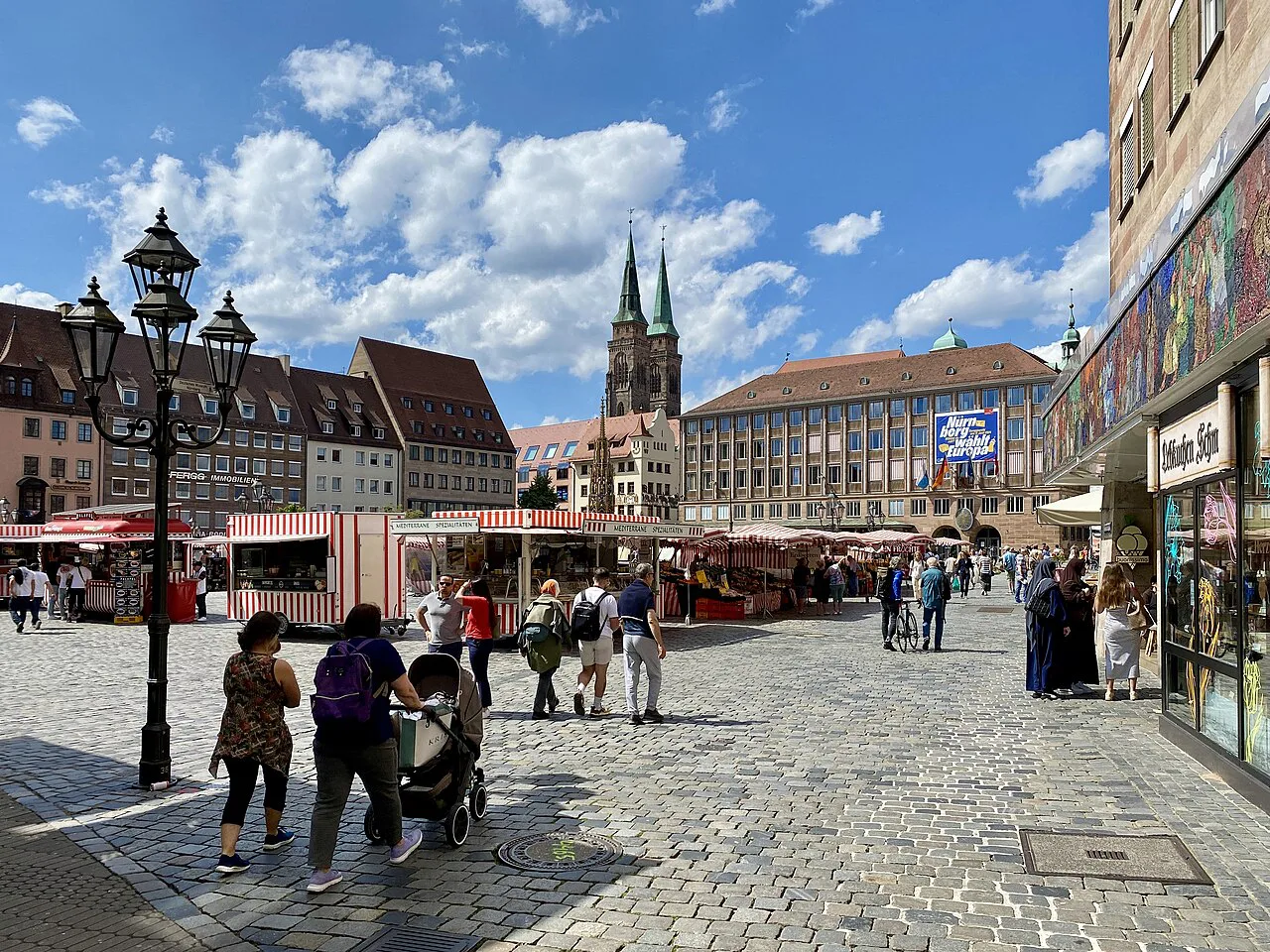
The official old-town walk from the Altes Rathaus
Nürnberg Tourism runs a two-hour walk called "Rotes Bier und blaue Zipfel," meeting at the Altes Rathaus on Rathausplatz and available in German or English. It handles the history questions behind the city's food: why the Bratwurst is called that, what makes the Lebkuchen distinctive, and how the city's cooking changed over the centuries.
The samples are not included in the guiding fee. The same page states additional tasting costs of 12 euros per person, and lists guiding prices valid from January 2022 at 145 euros for a German tour and 165 euros for a foreign-language tour, with a maximum of 25 people per guide. Read those as listed prices with their stated validity, not as today's rates.
The group format matters here. Because the fee is per guided group and the tasting supplement is per person, a group of friends sharing one guide pays very differently from a solo traveler joining a scheduled walk. Ask which option you are booking before you commit.
What you taste on these routes
Nürnberger Rostbratwurst is the anchor, a small, thin grilled sausage usually served several to a portion, and the old-town walk covers its name and history. Blaue Zipfel are the dish most visitors have never heard of: bratwurst simmered in a vinegar and onion broth, sour and savory rather than grilled.
Nürnberger Rotbier is the local red beer style and appears in the official walk's very title, so expect it poured alongside the savory stops. Rounding things out is Lebkuchen, the city's spiced gingerbread, which the official tour treats as a subject in its own right rather than a souvenir afterthought.
Group size, weather and diet requests
Both formats run mostly outdoors and go ahead in most weather, with samples often served standing and sometimes outside. Wear shoes you can walk in for two to three hours and bring a rain layer rather than expecting shelter at every stop. The official walk caps the group at 25 people per guide, so a large party may be split.
Diet needs are negotiable on the Gostenhof tour: the provider says it can run alcohol-free, vegetarian, or without fish and seafood on request. That same listing states the route is not barrier-free and that dogs are not allowed, so plan accordingly if either applies.
How to eat the same way without a guide
Pick one neighborhood and treat it as your route. Gostenhof gives you the same mix of small owner-run places the tours use, and you can walk the old town instead if you want the historic setting around your stops.
Order one specialty per stop and keep portions small, the way a tasting walk does. A pair of bratwurst here, a plate of Blaue Zipfel there, a piece of Lebkuchen to finish, spread across three or four addresses, gets you the variety without one heavy meal.
This is also the cheaper and more flexible version. You set your own pace, skip what does not appeal, and can follow a market stall or a bakery that catches your eye instead of sticking to a fixed stop list. Grilled sausages, pretzels and fried snacks at stands are the quickest way to graze, and a good street food stop doubles as a cheap lunch between tastings.
Ordering and pacing like a local
Bratwurst is ordered by count, typically as a pair or by the dozen on a plate with sauerkraut or potato salad, so a "dozen" is a portion size rather than an eating challenge. Street Food in Nuremberg rewards the same logic: buy in small units at a stall, then move on rather than sitting down for a full spread at the first counter you like.
Midday is when the city sits down for its main plate, which suits a food-focused day better than a late tasting menu. Small shops and market stalls often take cash only, so carry some euros even if you plan to pay by card elsewhere.
Where the routes sit in the city
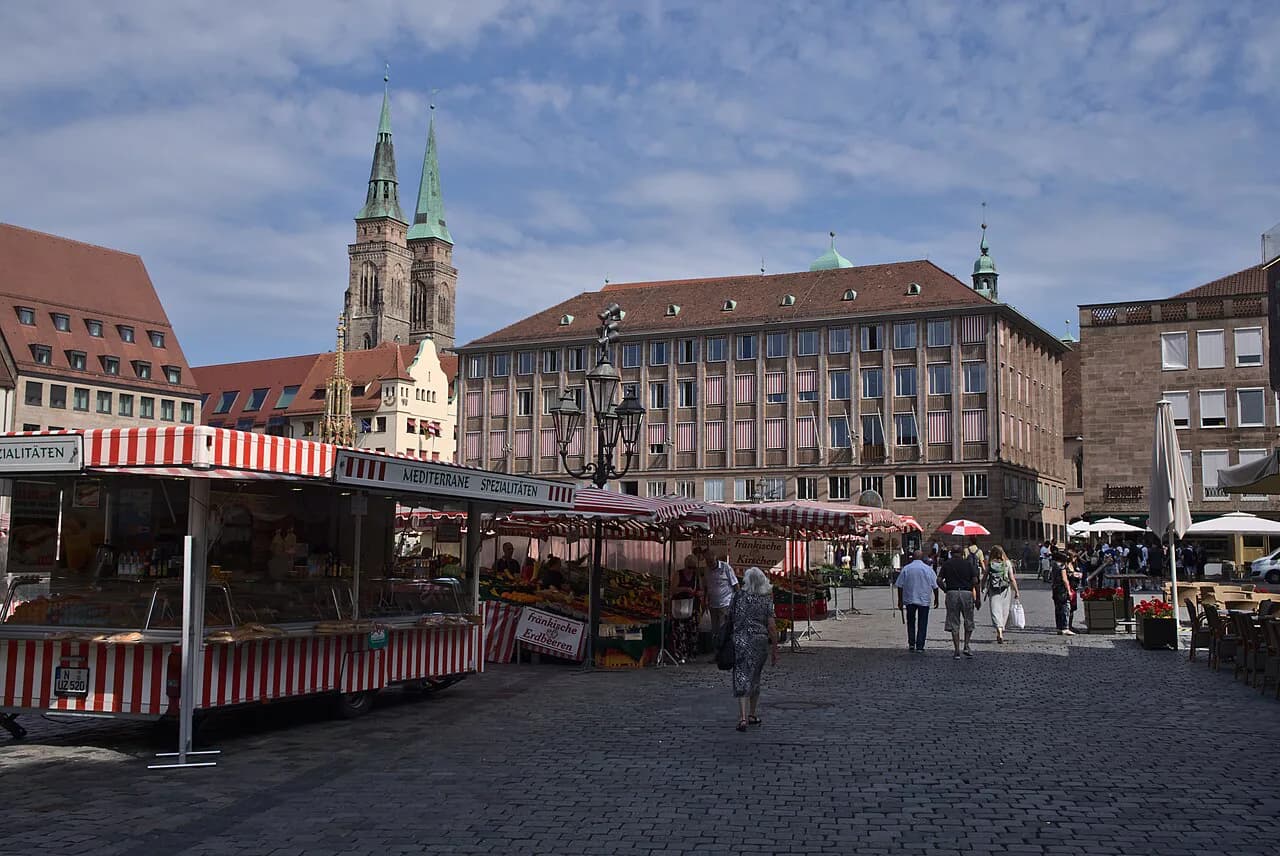
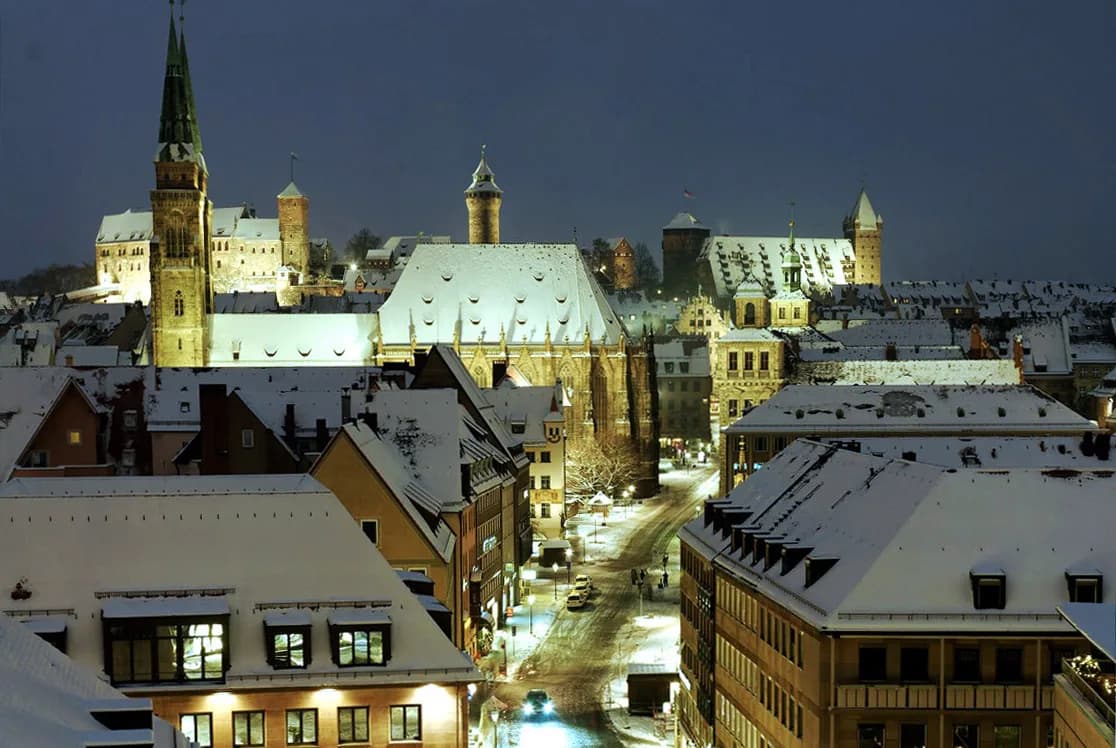
The old-town walk starts at the Altes Rathaus on Rathausplatz, which puts you in the middle of the historic center with the main square a short walk away. The Gostenhof route is a separate loop: it forms around the Plärrer and heads into the quarter's small side streets.
Each route works as the anchor for a half day. A morning on the old-town walk leaves the afternoon free for a browse through the food markets and a sit-down plate, while a Gostenhof tasting walk pairs naturally with a slower look at the quarter itself.
If you build your own day instead, the same two anchors work: a market-and-stall morning in the center, then a slow loop through Gostenhof for the small shops. Markets in Nuremberg are a morning affair, so plan your tasting stops for the hours after lunch and keep the evening light.
Who each format suits
The Gostenhof walk is built for teams and groups: the providers book it as a company outing, and the six tastings plus proprietor stories give a group plenty to talk about between stops. The official old-town walk suits anyone who wants the history behind the food as much as the samples, and its English option helps visitors.
Solo travelers and couples should check whether a scheduled public walk is running or whether the format is private group only. Where only group booking is offered, the do-it-yourself version covers the same specialties at your own pace.
What to skip
Do not try to chase every specialty in one day. Bratwurst, Blaue Zipfel, red beer and Lebkuchen are rich, and a tasting walk is not a full dinner, so treating it as one leaves you overfed and missing the evening.
Skip the assumption that a tour replaces your own exploration. The best use of a guided walk is orientation: learn the dishes and the quarter, then return to the places that appealed on your own schedule.
Book a Walk or Build Your Own Route?
Book a walk if you want the district explained, the dishes introduced and the choosing done for you, and if you are traveling as a group that can share the guiding fee. The official old-town walk is the pick for history and language support, the Gostenhof route for a neighborhood feel.
Build your own route if you are solo, on a budget, or simply prefer to graze. Pick Gostenhof or the old town, order one specialty per stop, and carry cash for the small places that make the city's food worth the trip.
Frequently Asked Questions
How long does a Nuremberg food tour last?
The official old-town walk from the Altes Rathaus runs two hours, and the Gostenhof tasting walk covers the quarter over roughly three hours, with an equivalent team tour listed at 2.5 to 3 hours. Plan the rest of your day around a half-day block rather than a quick stop.
Are Nuremberg food tours available in English?
The official old-town walk is offered in German and English, and its listed 2022 guiding fee was higher for the foreign-language version. For the Gostenhof walk, ask the provider which language your guide will use when you book.
Can I join a Nuremberg food tour as a solo traveler?
Some formats are sold as private group bookings, so a solo traveler needs to ask whether a scheduled public walk is available. Where only group booking is offered, eating the same specialties independently is the practical alternative.
Sources
Notes for your next German food trip
Optional updates to our guides.
You might also like
Continue reading
More guides you'll find useful