What to Eat in Mainz: Local Dishes and Food Spots
Mainz has its own food vocabulary: Spundekäs with pretzels, a Weck, Worscht un Woi lunch, and wine by the Schoppe. Here is what to order and where.
On this page
The first thing to eat in Mainz is Meenzer Spundekäs mit Brezelchen, a fresh cheese dip served with small pretzels and the city's clearest signature dish. After that, the Mainz lunch is a Weck, Worscht un Woi, a bread roll with sausage and a glass of wine, eaten standing or sitting at a tavern in the old center. This guide explains those two, plus Käsetort cheesecake, the local wine measures, and the taverns and brewery where you can order each one.
Mainz rewards people who eat by category rather than by ranking. Wine taverns serve cold and warm snacks with a glass; a brewery restaurant serves schnitzel and Spätzle; the market around the cathedral supplies a cheap assemble-it-yourself lunch three mornings a week. The sections below follow that logic, so you can pick by mood and budget instead of working through a list.
What to eat in Mainz: the short answer
Order Spundekäs with pretzels at least once, have a Weck, Worscht un Woi lunch in the old town, and finish with Käsetort and coffee near the cathedral. Those three cover the dishes Mainz itself claims, and each is easy to find. Add a plate of schnitzel or Spätzle at a brewery restaurant if you want a full sit-down meal.
The city's food identity is tied to wine, and the local vocabulary shows it: a Schoppe is a wine spritzer and a Halbe is a quarter-liter of wine. You will order both in the same taverns that serve the snacks, so the eating and drinking decisions are really one decision. Pick your tavern first, then let the menu set the food.
Meenzer Spundekäs mit Brezelchen: what the dip is and how it is served
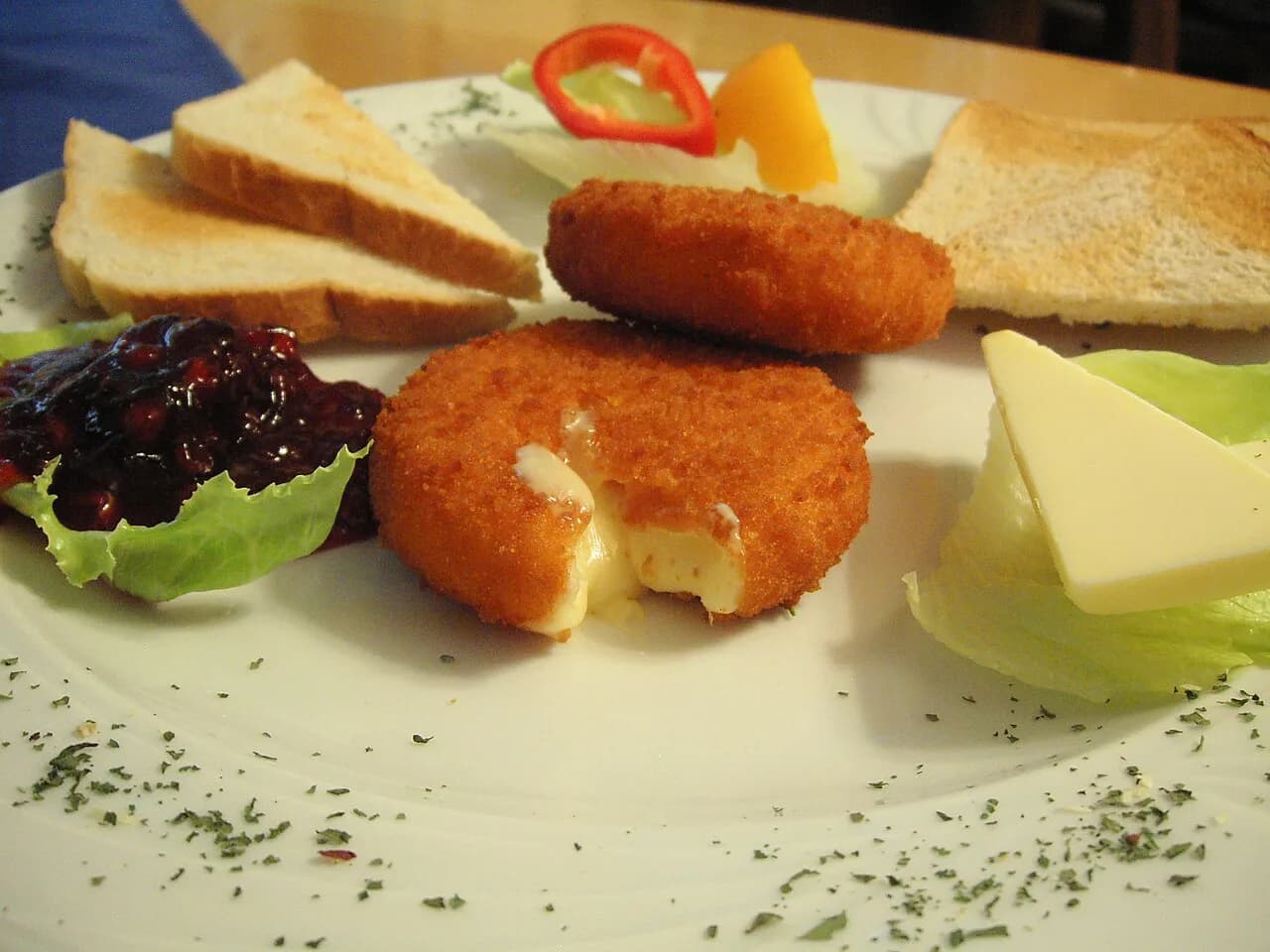
Spundekäs is a soft fresh cheese dip, and in Mainz it arrives as Meenzer Spundekäs mit Brezelchen, with small pretzels for scooping. The texture sits between cream cheese and a stiff dip, seasoned enough to eat on its own but built for bread. Treat it as a starter to share rather than a main course.
For the same dip with beer instead of wine, Eisgrub-Bräu is the practical stop: a former ice cellar that brews its own beer and serves pub-style dishes including schnitzel and Spundekäs. It suits a group that wants one table, a full plate, and a house beer rather than a wine glass.

Weck, Worscht un Woi: the Mainz bread roll, sausage and wine lunch explained
Weck, Worscht un Woi means a bread roll, sausage, and wine, and it is the local midday format rather than a sit-down meal. You get a roll, a piece of sausage, and a glass of wine, eaten at a tavern in the old city center or at a winery in the region. It is the fastest way to eat something local without committing to a full menu.
The taverns that serve this lunch are the same ones listed below for wine, so choose by atmosphere: Weinhaus "Zum Spiegel" for a historic half-timbered house in the old town, or Weinstube Hottum for a rustic room where tables fill quickly once the doors open. Both keep the food simple and the wine central.
Käsetort and the cathedral-side coffee-and-cake stop
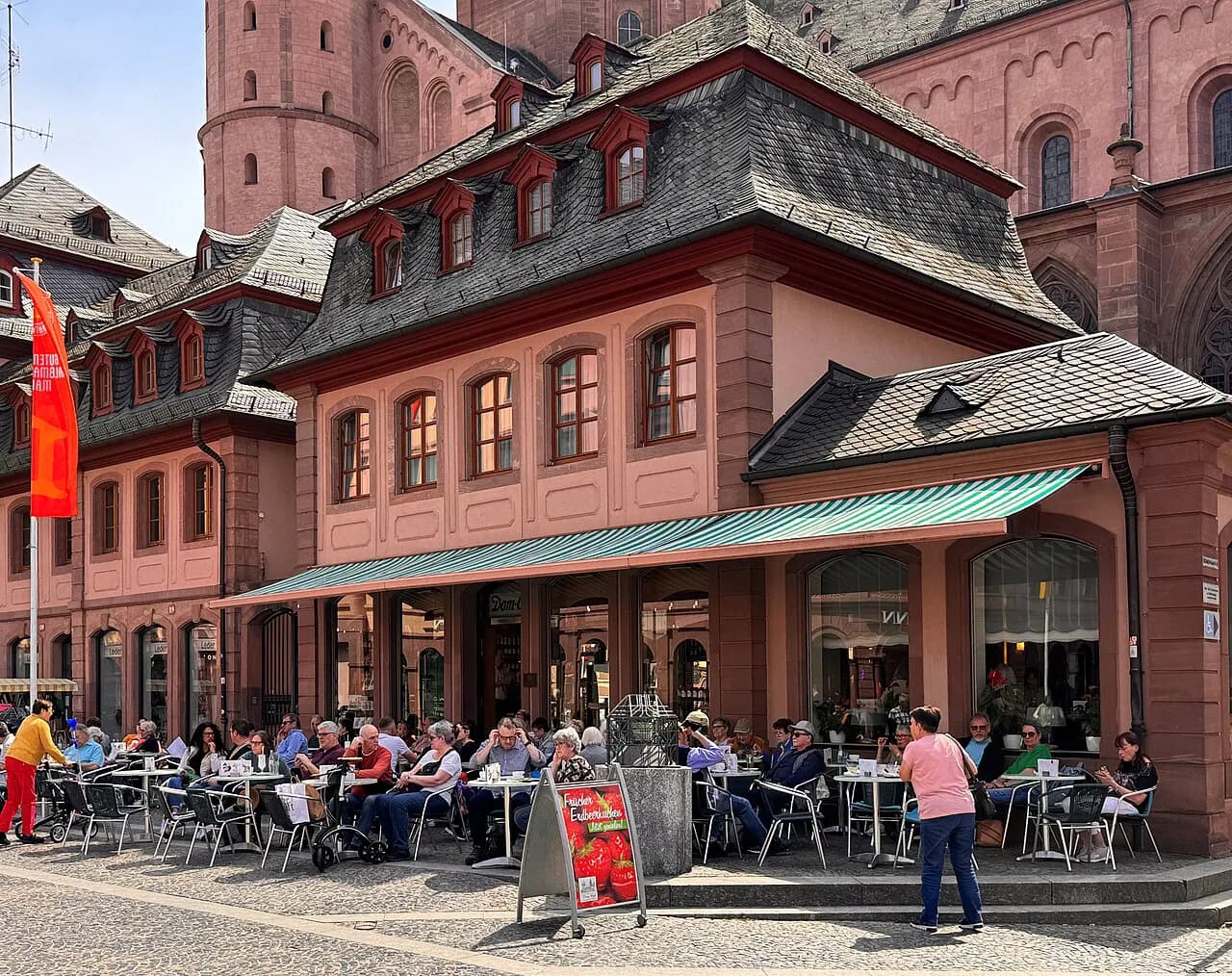
Käsetort is a baked cheesecake with marzipan and nuts, and it is the cake to order with coffee in Mainz. The cafés around the cathedral have the best views for this stop, which makes the cake a natural pairing with the market squares and the cathedral itself. Sit outside if the weather allows and order a slice with a plain coffee.
If cake is not the mood, a pretzel stand or café sits on nearly every corner in the center, so a quick coffee break needs no planning. Save the sit-down time for a tavern lunch or a brewery dinner instead.
Wine in Mainz: Schoppe, Halbe and how locals order a glass
A Schoppe is the everyday order: roughly 0.2 liters of wine mixed with 0.2 liters of mineral water, though the exact ratio varies by tavern. A Halbe, pronounced Halwe locally, is a quarter-liter of wine and is the choice when you want the wine undiluted. Knowing which word to use is most of the ordering problem solved.
Someone who enjoys a Schoppe is called a Schoppestecher in the local dialect, a word you will hear rather than need to say. Order one round at a time and keep the pace easy, especially at lunch, since these measures are built for sipping alongside food.
Wine taverns and Weinstuben in the Old Town
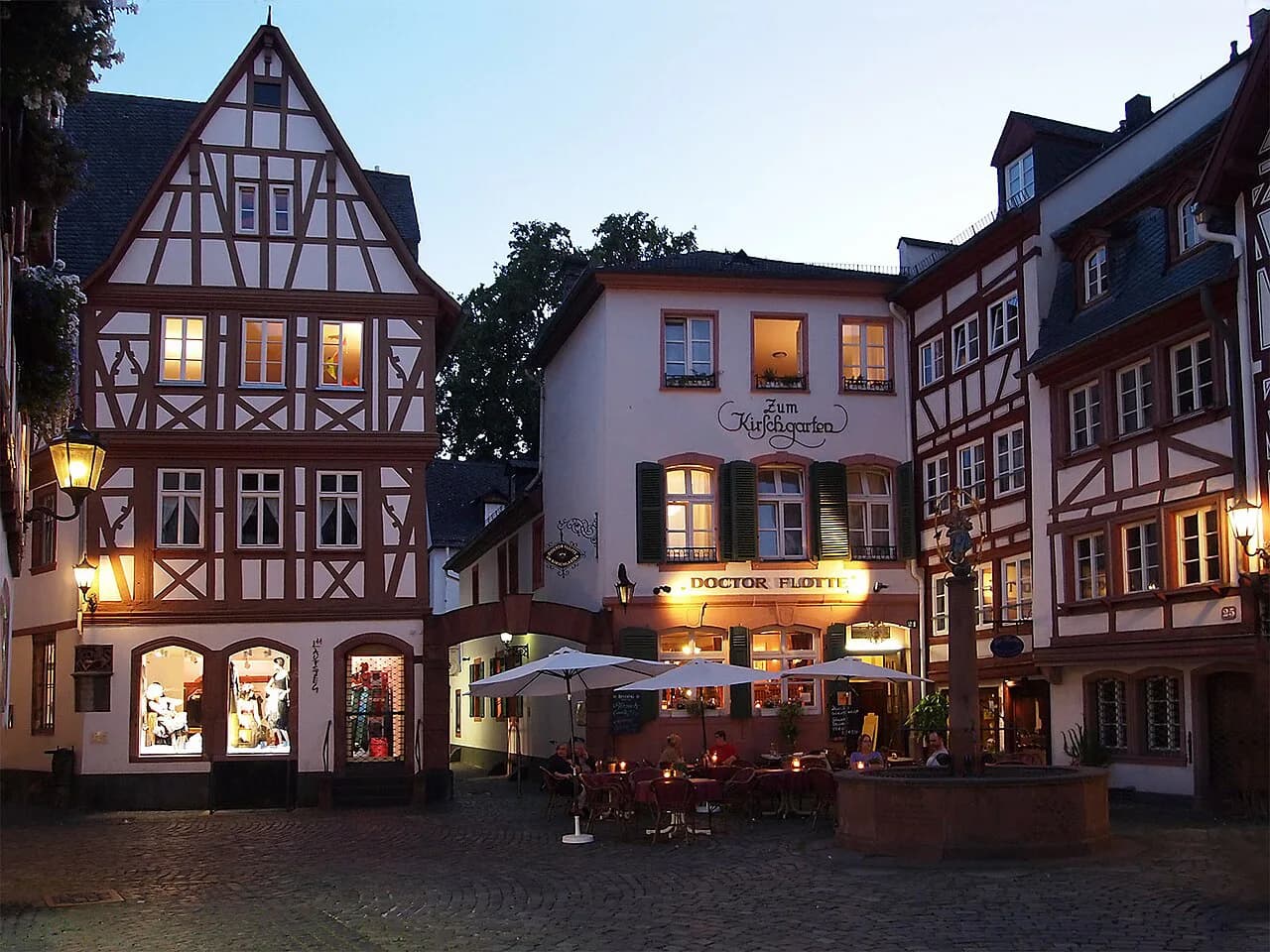
Weinstube Hottum is one of Mainz's oldest wine taverns, rustic and cozy, and it fills up as soon as the doors open at 4pm, so expect to share a table with locals. Weinhaus "Zum Spiegel" is a photogenic half-timbered house in the heart of the old town, good for a glass and a snack or a simple dinner of bread and cold cuts. Both are wine-first places where the food supports the glass.
Weinhaus Wilhelmi is quaint and busy, with the menu leaning to the Pfalz region and a solid wine list alongside beer. Weinstube Roter Kopf serves warm and cold snacks plus hearty mains and is notably open about sourcing from local producers. Ladendorf's Weinstube, at the edge of the old town, puts wine first but still expects you to order the excellent snacks alongside.
For a more refined version of the format, Weinhaus Schreiner runs a seasonal menu of regional specialties at a slightly higher price, while Laurenz Weinbar pairs modern food with a deep list of local wines by the glass and keeps rare bottles for anyone who asks for the full list. Heinrich's Die Wirtschaft, near St Stephen's Church, is a tiny room serving seasonal German and international dishes with a modest, mostly domestic wine list.
If you want a food-first walk through the old town that covers this ground on foot, the food tour Mainz options work the same streets. Going unaided is cheaper and lets you stop where the room looks right.
Where to eat German classics: Heiliggeist, Goldener Hirsch, Eisgrub-Bräu
Heiliggeist occupies a former 14th-century hospital building, a setting worth the visit on its own, and serves classics such as schnitzel and Spätzle. Goldener Hirsch sits in the Neustadt, modern but comfortable, popular with younger crowds and families, and offers a lunch menu. Use these when you want a proper plate rather than tavern snacks.
Eisgrub-Bräu covers the brewery side: three house beers and hearty dishes from schnitzel to Spundekäs. For a modern Italian menu in slick surroundings, Rheingold is the riverside alternative, with Flammkuchen, a thin square flatbread often translated as German pizza, on the menu.
Marktplatz around the cathedral: the Tuesday, Friday and Saturday market
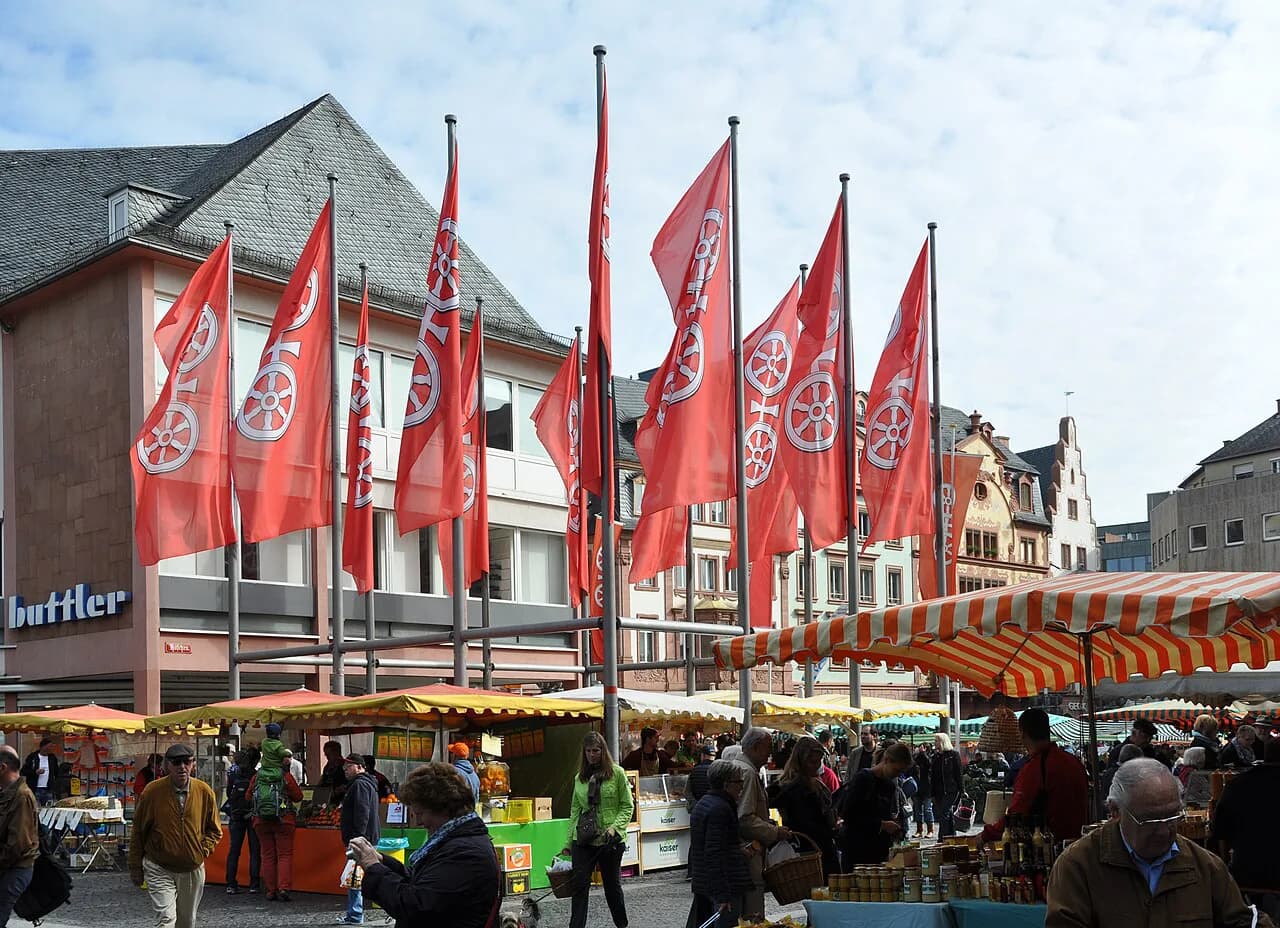
The weekly market runs Tuesday, Friday, and Saturday on the squares around Mainz Cathedral, and it is the cheapest way to assemble a Mainz lunch. Join the locals who shop and stroll here, or meet friends for a chat between stalls, and sample the local food before committing to a restaurant.
The Marktplatz sits directly outside St Martin's Cathedral, and regular lunchtime concerts run alongside the market, so a market morning can stretch into early afternoon without extra planning. Buy what looks good, then eat it standing or find a bench.
How to order and pay at a Mainz wine tavern
In a Weinstube, order wine by the measure rather than by the bottle: a Schoppe if you want it diluted, a Halbe if you want the wine neat. Ask for the snacks to come with the first round rather than after it, since the cold plates are meant to be eaten alongside the glass. Sharing a table is normal in the busiest rooms.
For groups, Mainz Tourism will reserve tables at selected restaurants, which removes the guesswork for a party of six or more. Restaurant websites and the tourism office are where current prices and opening days appear, so confirm those before a special-occasion booking.
What to skip if you only have one meal in Mainz
With a single meal, skip the fine-dining rooms and the Italian menu, and go to a wine tavern or Eisgrub-Bräu instead. That gets you Spundekäs, a local wine measure, and a room full of people from Mainz in one sitting. A brewery lunch is the alternative if beer matters more than wine.
If you have two meals, put the market or a Weck, Worscht un Woi lunch at midday and the tavern dinner in the evening. That splits the cheap, standing meal from the sit-down one and matches how the city eats.
Is Spundekäs worth ordering first?
Yes: Spundekäs with pretzels is the cheapest way to taste something Mainz-specific, and it turns up on both tavern and brewery menus, so you can order it wherever you end up. Build the rest of the day around the market if it is a Tuesday, Friday, or Saturday, and around a Weinstube if it is not.
For a second city with the same kind of eating, the Freiburg food guide covers Black Forest plates and tavern customs in the southwest, while Bamberg food covers smoked beer and its own sausage culture. Both make useful comparisons once Mainz's wine-led menu starts to feel familiar.
Explore more Mainz guides
Frequently Asked Questions
What is Mainz famous for?
In food terms, Mainz is known for Meenzer Spundekäs mit Brezelchen, a fresh cheese dip served with small pretzels, and for the Weck, Worscht un Woi lunch of a roll, sausage, and wine eaten in the old town. Wine is the thread running through both.
Is Mainz expensive for food?
It spans a wide range. A market lunch or a roll with sausage is the cheap end, a tavern meal of snacks and a glass sits in the middle, and refined rooms such as Weinhaus Schreiner and finer restaurants cost more. Restaurant menus and the tourism office list current prices.
What should I drink with Spundekäs?
A Schoppe, the local wine spritzer of roughly equal parts wine and mineral water, is the easy match and keeps the alcohol low across a long lunch. If you want the wine neat, order a Halbe, a quarter-liter of wine.
Sources
Notes for your next German food trip
Optional updates to our guides.
You might also like
Continue reading
More guides you'll find useful