Düsseldorf Food: What to Eat and Drink in the Altstadt
Düsseldorf food means Altbier, Senfrostbraten and Rheinischer Sauerbraten. Learn what each dish is and how to order and pay in the Altstadt brewpubs.
On this page
Düsseldorf food starts with Altbier, the dark top-fermented beer poured in small glasses across the Altstadt, and the dish most tied to the city is Senfrostbraten, a roast beef with a mustard crust. Around those two sit Rhineland plates such as Rheinischer Sauerbraten and Himmel un Ähd, plus Westphalian dishes that also appear on local menus. This guide explains what each one is, how the brewpubs work and which neighborhoods to head for.
The Rhineland and Westphalia meet on Düsseldorf menus, so it helps to know which is which. Sauerbraten, Himmel un Ähd and the mustard tradition are Rhineland; Pfefferpotthast, Panhas and Blindhuhn come from Westphalia. Both are eaten in the city, and both go well with a glass of Altbier.
What Düsseldorf food is
Düsseldorf food is Rhineland home cooking built around the brewpubs of the Altstadt, where roast meats, slow-cooked stews and potato dishes are served alongside freshly tapped Altbier. The regional kitchen leans on beef, onions, apples, black pudding and mustard rather than on the lighter plates of southern Germany. A typical meal here is sturdy and comes with a dark sauce, a starch and a beer.
North Rhine-Westphalia as a whole is known for its pork and ham dishes, its Pumpernickel and its beer, and Düsseldorf sits inside that belt. The city adds its own accent: a mustard culture tied to the roast, a brewhouse tradition in the old center and a rivalry with Cologne that shows up in the beer glass. Visitors who want to understand the local food should start with those two drinks and work outward from there.
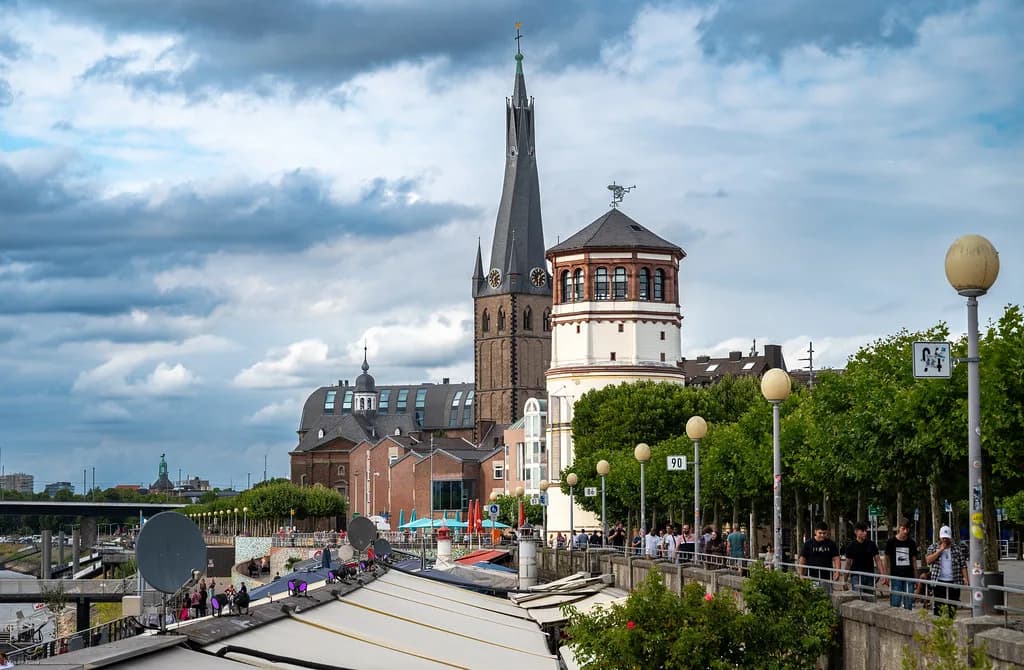
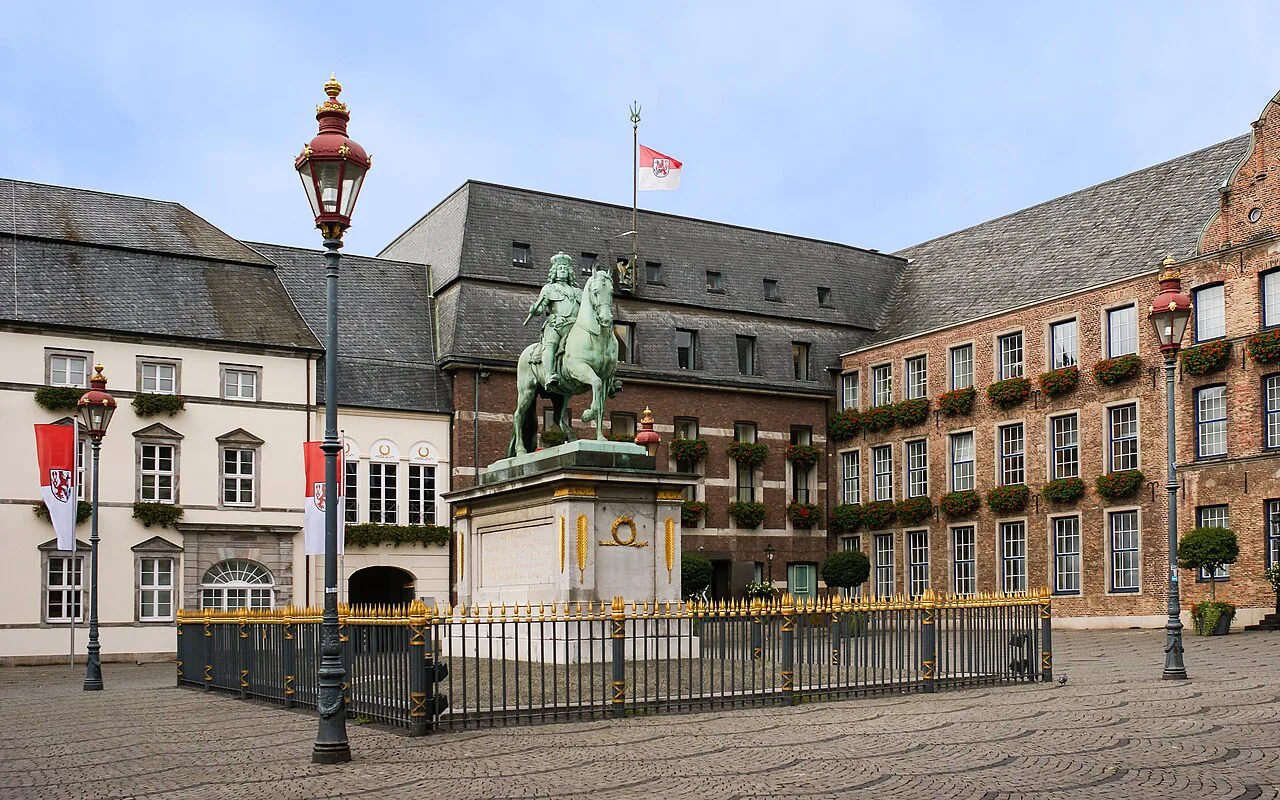
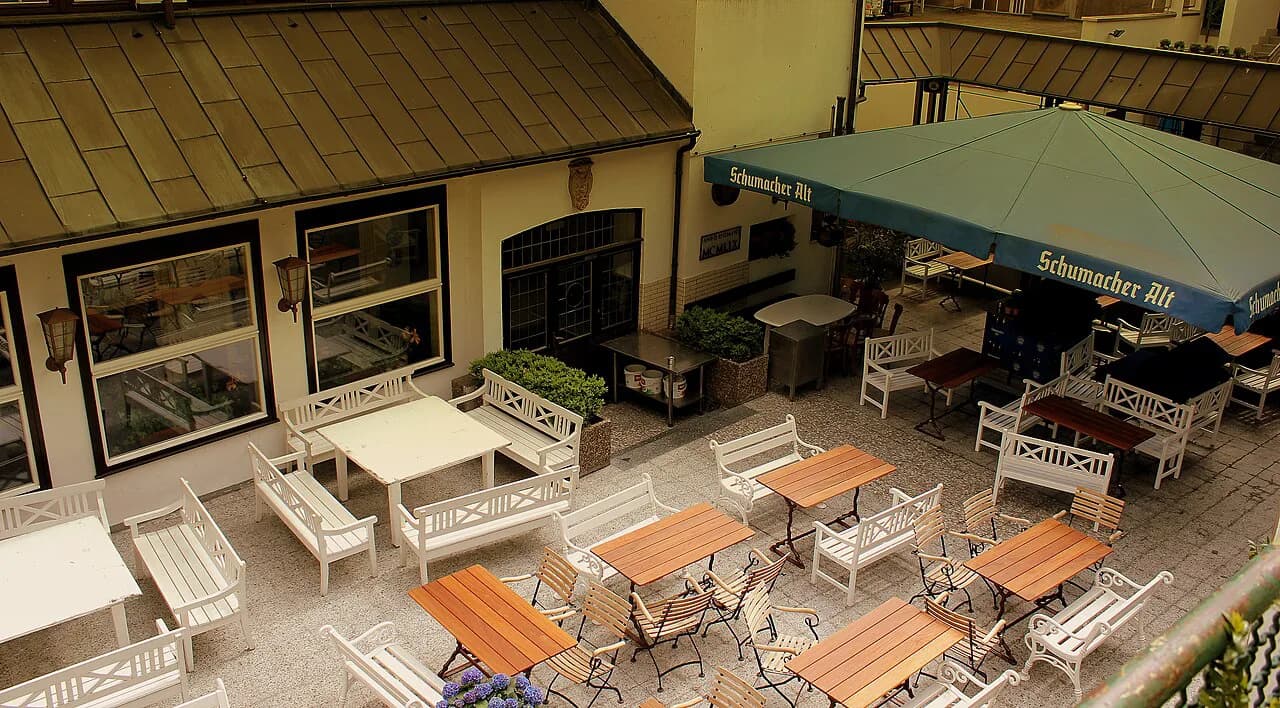
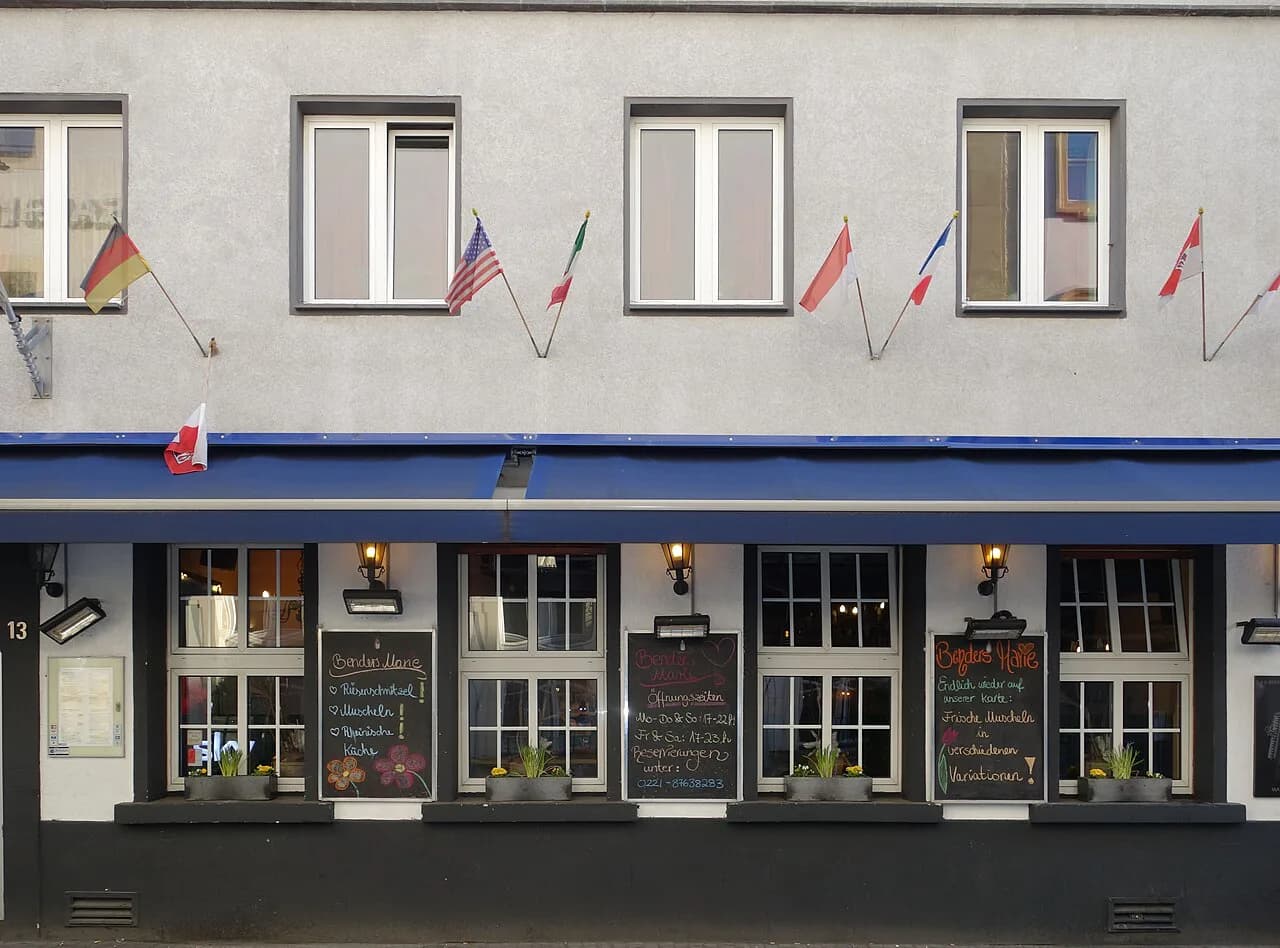
The Altstadt is dense with drinking and eating places, and the local brewpubs are the natural first stop because they serve both the beer and the dishes in one room. A Düsseldorf food tour can shortcut the choice if you want several stops in an evening without planning the route yourself. Otherwise, pick one brauhaus, order a Senfrostbraten and a glass of Altbier, and let the rest of the evening follow.
Altbier: what it is and how it is poured
Altbier is a dark, top-fermented beer brewed in and around Düsseldorf, and it is the drink that defines the city's brewhouses. It arrives in small, straight-sided glasses rather than a large stein, which keeps each pour fresh and lets you drink at the pace of the room. The beer is served cool but not ice-cold, so the malt and hop balance stays readable.
In a traditional brauhaus, the server, known as a Köbes, carries a tray of glasses and replaces your empty one without being asked until you signal you are done. Placing a coaster over the glass is the usual sign to stop. This keep-the-glasses-coming style is the part most visitors are caught out by, so decide early how many you want and use the coaster when you have had enough.
Cologne's Kölsch is a different beer from a different city, and the two towns have a long-running, good-humored argument about whose brew is better. Ordering Kölsch in a Düsseldorf Altbier house is a joke locals will recognize; ordering Altbier in Cologne works the same way. For a first evening, stay with Altbier and see how the small glasses change the pace of the meal.
Senfrostbraten: the Düsseldorf roast with a mustard crust
Senfrostbraten is a roast beef coated with a mustard crust, and it is one of the Rhineland dishes that Düsseldorf menus are known for. The mustard is the point: the sharp local style gives the roast its bite, which is why the dish is tied so closely to the city's mustard tradition. Order it when you want one plate that captures the local table rather than a broader German classic.
The dish appears on German menus across the Altstadt and is usually served with a dark sauce, potatoes and a vegetable, so it makes a complete meal without sides. Restaurants describe it with a mustard crust rather than a plain roast, and the crust is what separates it from an ordinary Sunday roast. Ask for it in a brauhaus where the kitchen is cooking Rhineland food rather than a broad international menu.
Rheinischer Sauerbraten: what makes it different
Rheinischer Sauerbraten is a pot roast marinated for days in vinegar, wine and spices before cooking, and the Rhineland version is finished with a raisin sauce. That sweet-sour balance is the local signature, and it is why the dish tastes different from Sauerbraten in other German regions. It is a slow, home-style plate rather than a quick order.
Restaurants in Düsseldorf serve it with Klöße, the German potato or bread dumplings, and the raisin sauce ties the plate together. The meat is usually beef, and the long marinade makes it tender enough to cut with a fork. It is a good choice if you want one substantial, traditional dish and are not in a hurry.
Himmel un Ähd: potato, apple and black pudding
Himmel un Ähd, literally heaven and earth, is a Rhineland plate of potato mash, apple sauce and fried black pudding, finished with roasted onions. The name plays on the apples from the tree above and the potatoes from the ground below. It is a simple, sweet-savory combination that works well as a lunch or a lighter evening plate.
Some versions swap the black pudding for Bratwurst, but in Düsseldorf the blood sausage is the usual partner. The apple sauce is not a dessert here; it cuts the richness of the sausage and the onions add a savory edge. If you are unsure about black pudding, this is a gentle introduction because the apple and potato soften it.
Rhineland and Westphalian plates worth knowing
Pfefferpotthast is a Westphalian beef and onion stew, dark and peppery, and it shows up on Düsseldorf menus as a cold-weather dish. Panhas is a Westphalian meat and buckwheat loaf, sliced and fried, while Blindhuhn is a Westphalian stew of ham or bacon with apples, pears and white beans. Despite the name, Blindhuhn contains no chicken at all.
Münsterländer Töttchen is a Westphalian dish of cooked veal in an onion and mustard sauce, and it is another reminder that the region's cooking leans on mustard. Pumpernickel, the dense dark rye bread, comes from Westphalia too and turns up alongside cold plates. Trying one of these alongside a Rhineland dish gives a clearer picture of what the city's menus actually mix.
Sweet side of the city
Aachener Printen are the spiced, hard-baked cookies from Aachen that are sold across North Rhine-Westphalia, and they are the easiest local sweet to take home. Bergische Waffeln are the waffles of the Bergisches Land, served as a café treat rather than a packaged snack. Both are regional rather than strictly Düsseldorf, but both appear in the city's bakeries and confectioners.
Westfälische Götterspeise is a layered dessert of cream, Pumpernickel crumbs, nuts, apples and cherries, and it is the most local of the sweets on offer. It is built from pantry ingredients rather than patisserie technique, which is why it tastes like a home dessert. Order it when you want something less sweet and more textured than a slice of cake.
How an Altstadt evening works
In a busy brauhaus you may be seated at a shared table, so expect to sit next to strangers and order from a menu that is often short and seasonal. Order food when you order your first beer, because the kitchen and the beer service run separately and the Köbes will keep refilling while you eat. If you want a quieter room, go earlier in the evening rather than at peak hours.
Paying is usually done at the table when you are ready to leave, and your coaster is often marked with each beer so the bill is counted at the end. Many traditional places still prefer cash, so carry some euros even if cards are accepted elsewhere. Tip by rounding up or leaving a few percent, and say the amount you want to pay rather than leaving coins on the tray.
Where to eat in Düsseldorf
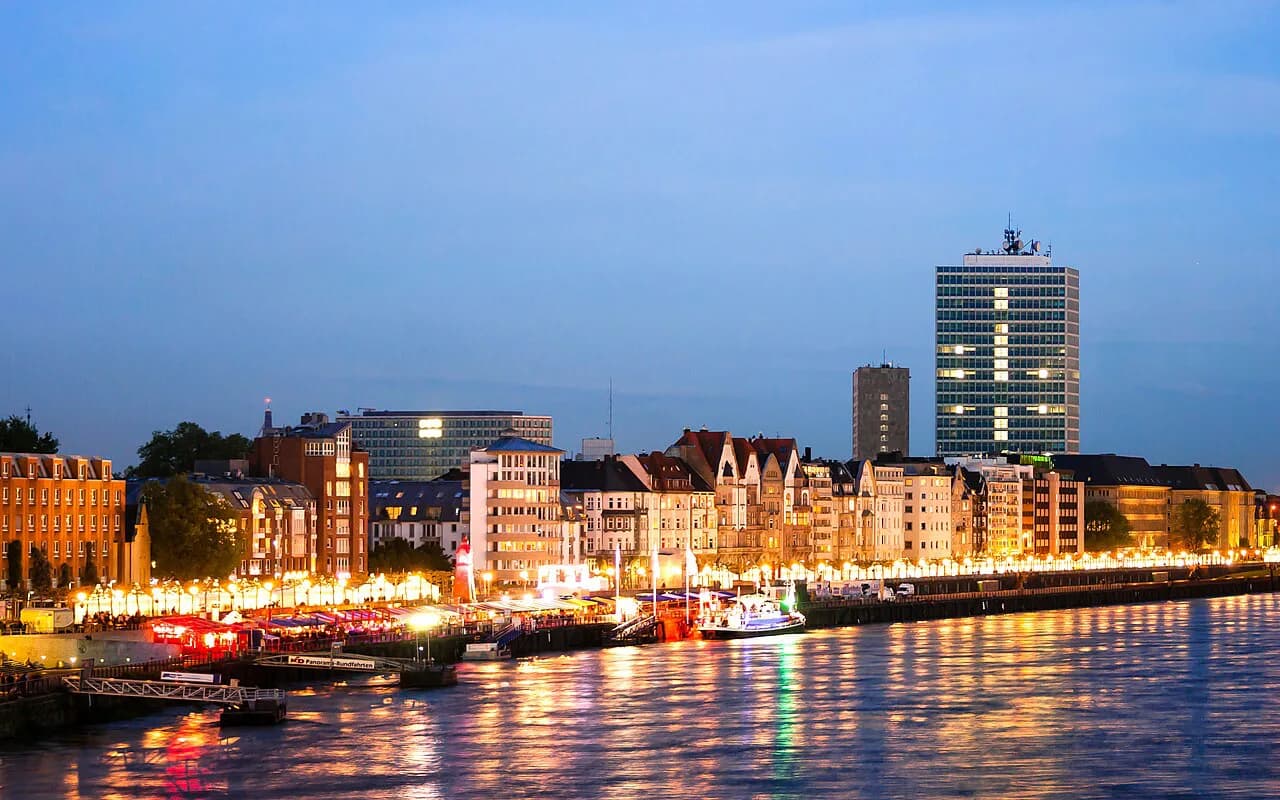
The Altstadt is the concentrated heart of the city's brewhouse culture, and it is where most visitors will find Altbier and Rhineland dishes in the same room. Oberkassel, Pempelfort and Kaiserswerth have traditional restaurants and neighborhood kitchens of their own, and they tend to be quieter than the old center. Staying in the Altstadt is the simplest plan if you want one walkable evening; heading out to one of those districts is better if you want a calmer table.
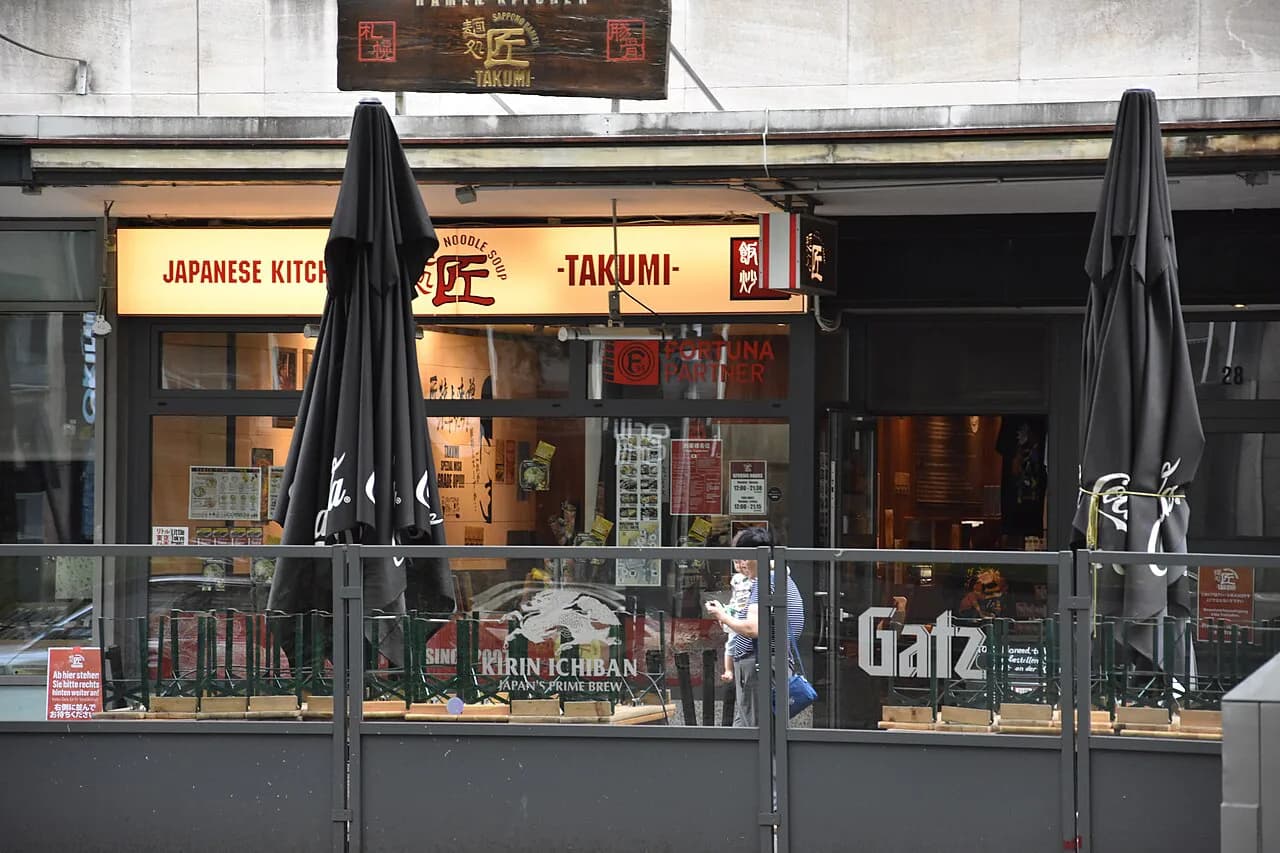
For a more structured route through the local dishes, Düsseldorf Food Tours Compared sets out the options for guided eating and drinking walks. Street food in Düsseldorf is a separate scene, with market stalls and quick stands alongside the sit-down brauhäuser. If you want Japanese food or other international kitchens, the city has those too, but they sit outside the Rhineland menu.
Mustard, Killepitsch and other tastes to bring home
Düsseldorf mustard is the local take-home taste, and it is the same sharp style that gives Senfrostbraten its crust. Buy a jar from a city shop or a market stall rather than a generic supermarket brand. Killepitsch is the city's herb liqueur, served in small glasses in the Altstadt and sold in bottles for the trip home.
Aachener Printen and Pumpernickel travel well and make better gifts than perishable pastries. If you want to see how another German city handles its local baking, the Bamberg food guide covers its own bread and sausage traditions. For a southern contrast, the Freiburg food guide shows how differently the Black Forest region eats.
Which Düsseldorf dish to order first
Start with Senfrostbraten and a glass of Altbier in an Altstadt brauhaus, because that pairing gives you both the city's signature dish and its signature drink in one sitting. Add Rheinischer Sauerbraten on a second evening if you want the slower, sweet-sour side of the Rhineland kitchen. Himmel un Ähd works as a lighter lunch, and the Westphalian stews are worth trying when the weather turns cold.
Explore more Düsseldorf guides
Sources
Notes for your next German food trip
Optional updates to our guides.
You might also like
Continue reading
More guides you'll find useful