Biergarten Münster: Where to Sit and What to Drink
Beer gardens in Münster mean brewery terraces and garden restaurants, from Pinkus Müller Altbier in the city to rural spots around the Münsterland.
On this page
Münster has no single beer-garden district; what it has is outdoor seating attached to restaurants and breweries, so you pick a place for the food and drink as much as for the sunshine. The city's own beer is Altbier, poured at the Pinkus Müller Altbierküche, and the square around the Kiepenkerl statue carries two classic terraces. This guide sorts city terraces from rural Münsterland beer gardens, names what to order at each, and explains how the seating and the seasons work.
What a Münster beer garden stop actually looks like
Expect a garden or terrace run by a restaurant, not a Munich-style hall with long shared benches and a brass band. The distinction is practical: you usually order from a menu and sit at a table assigned by staff, so the visit is closer to a relaxed restaurant meal outdoors than to a self-service beer garden. That makes Münster's outdoor spots good for a long lunch with a group, and less suited to a quick stand-up beer.
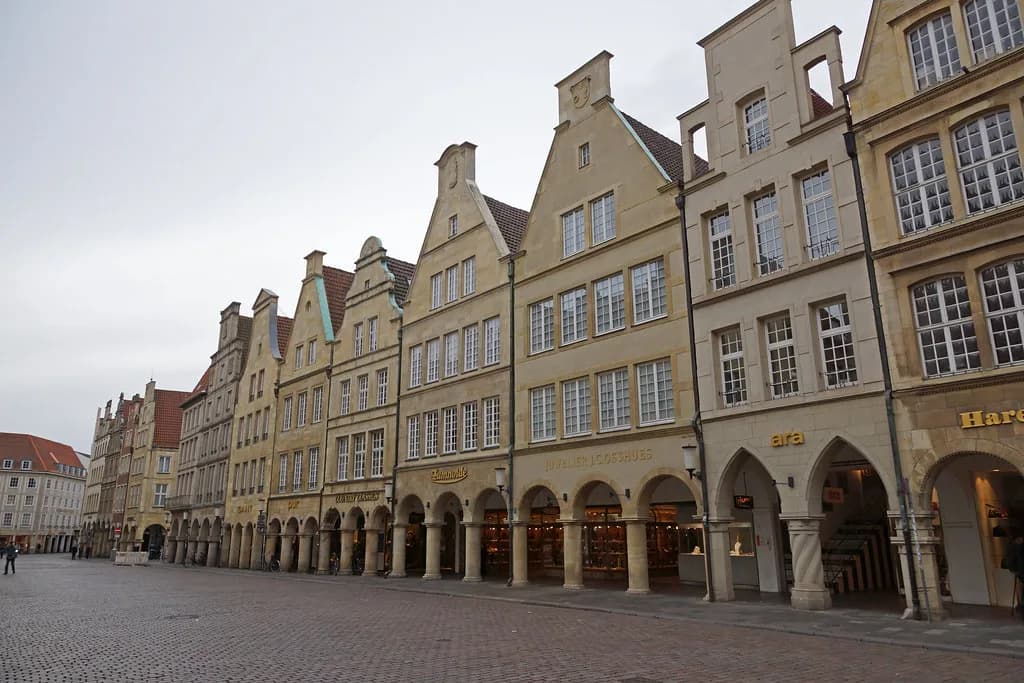
The local food scene splits into two zones, and knowing which you want shapes your day. The city terraces sit within walking distance of the Prinzipalmarkt and the Kiepenkerl square, while the rural gardens need a bike, a bus or a car and reward you with trees, lawns and quieter tables. If you are in Münster for one evening, stay central; if you have a free afternoon, head out.
Pinkus Müller Altbierküche: start with the city's own beer
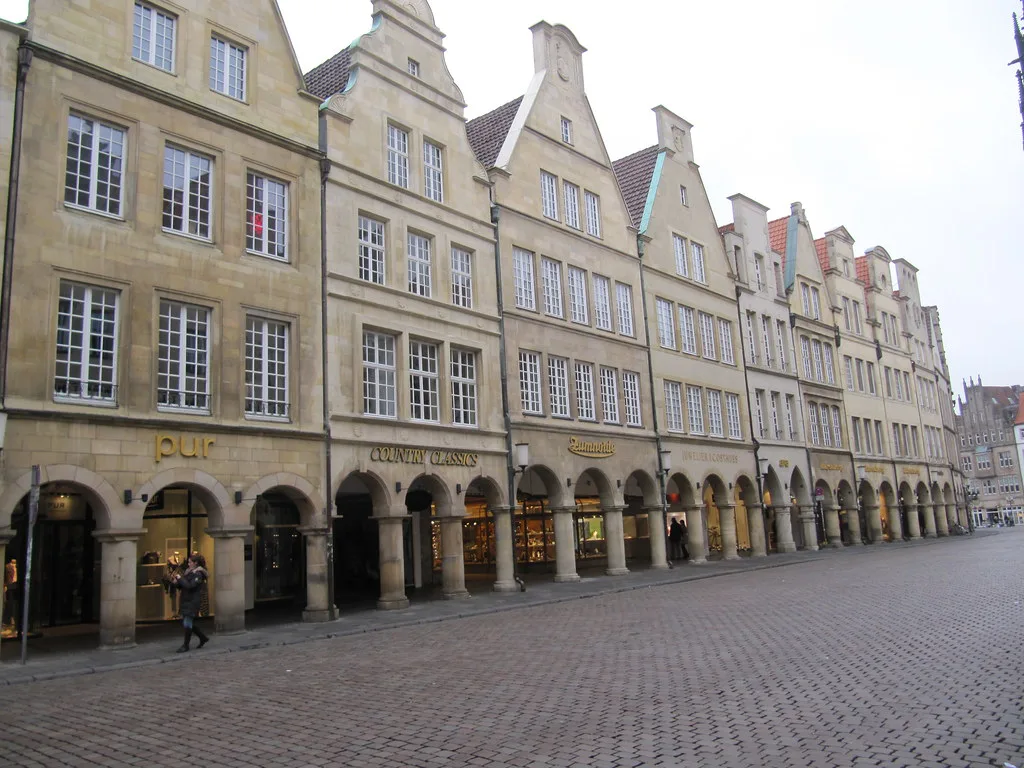
Pinkus Müller is the name to know in Münster, an Altbier house in the city center that appears on the local outdoor-dining lists for its kitchen as much as its terrace. Altbier is a top-fermented German ale, copper to dark brown in color, with a clean, hops-accented bitterness and a malt backbone that stops short of sweetness. Order it by the glass rather than in liter mugs: this is a northern German ale culture, not a Bavarian one.
Sit outside here when the weather cooperates and you want a proper table, a menu and a beer that belongs to the city rather than a national brand. The trade-off is that a brewery kitchen in the center draws visitors and locals alike, so a weekend lunch can be busier than a weekday one.
Kiepenkerl square: Kleiner Kiepenkerl and Mimigernaford
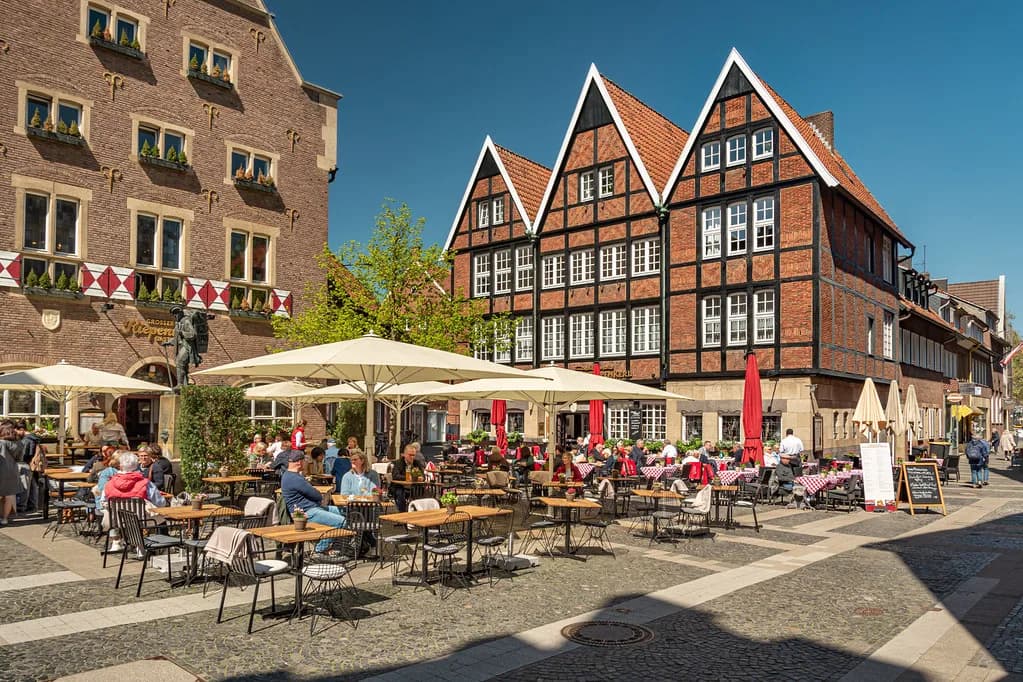
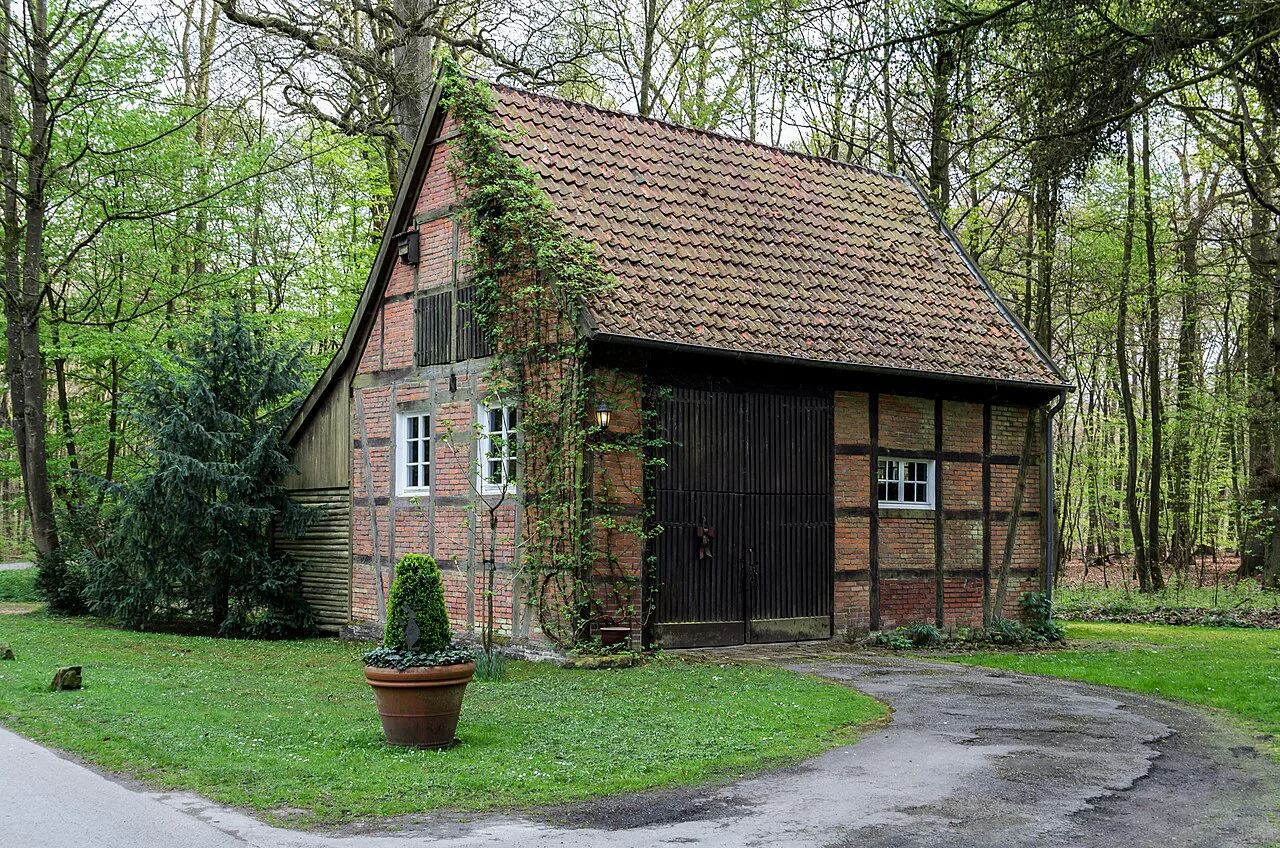
The Kiepenkerl square is centered on the statue of the Kiepenkerl, the peddler figure who carried goods such as potatoes, ham and dairy between towns, and it is the most atmospheric place in Münster to eat outdoors. Deckenbrocks Kleiner Kiepenkerl, also known as Mimigernaford, has been run by the same family for four generations and serves traditional Münsterland cooking on its terrace, with an emphasis on regional and fresh ingredients. In spring and summer the kitchen works with asparagus from a farm in Gelmer.
The square is tourist-facing by nature, which is the trade-off for the setting: you get the postcard view and a menu that caters to visitors, not a hidden local secret. For a broader survey of the city's tables, the best restaurants in Münster are worth a look before you commit.
Altes Gasthaus Leve and other city terraces
Altes Gasthaus Leve is a traditional Münster inn with outdoor seating, the kind of place where the point is a plain, well-cooked Westphalian meal rather than a view. Order the daily specials if you want to eat the way the region does, and keep the beer order simple with a local Altbier or a Pils. An inn like this suits a slower evening better than a quick stop.
The city's terrace list stretches well beyond these names, with Italian, Mediterranean and German kitchens all putting tables on the pavement in summer. Use it to match a neighborhood to your plan: the area between the Geist and Josef quarters is the city's going-out strip and has its own cluster of outdoor seats. If you want a smaller, faster meal instead, look at Imbiss in Münster.
What to order at a Münster table
Münsterland cooking is hearty Westphalian food: pork, potatoes, dark bread and vegetables, served in portions that assume you walked or cycled there. Krüstchen is a regional favorite, a breaded pork cutlet topped with a fried egg, usually with fried potatoes alongside. If you see Dicke Bohnen, those are broad beans cooked with bacon, a spring dish that fits the beer-garden season neatly.
Spring is asparagus season, and Spargel appears in many forms, from soup to asparagus with ham and hollandaise, so a May visit can be built around it. Look for the Münsterland-Siegel on a menu: this regional label, awarded since 2009, marks dishes made largely from ingredients grown, harvested or processed in the Münsterland, and more than 80 producers and restaurants carry it. It is a concrete sourcing marker rather than a vague claim of local food.
Vegetarians are not limited to side salads, but the traditional kitchens lean on meat, so check the menu before you pick a venue. Happily, a growing number of Münster places offer solid vegan and vegetarian plates, and the beer gardens often list lighter pasta and salad options in summer.
Beer gardens outside the city: Ennigerloh and Oelde
Landgasthaus Hohen Hagen in Ennigerloh sits on a hill above fields and woods, and its beer garden is laid out in bowers under tall beeches, birches and maples. The country inn occupies a former farmstead from the 17th century, with a meadow of old fruit trees and goats beside the terrace and a playground within sight. In 2022 it welcomed around 100 guests outside and served seasonal dishes including asparagus in spring and strawberry cake for dessert.
Potts Brau- und Backhaus in Oelde puts its terrace directly in front of the brewery, next to a glass-walled bakery where you can watch the bread come out of the oven. The summer menu leans on home-style classics: a warm Landbier baguette filled with a herb, cheese and butter cream, a Westphalian Rosenkranz of coiled bratwurst, and a veggie burger. On the beer side, the house pours its own Pils and Prinzipal alongside a light Landbier inspired by southern German helles.
Both are Münsterland day-out destinations rather than city stops, so plan transport before you go: the drive or ride is part of the outing, and you will want a sober way home if you are drinking. The rural beer gardens are also where families get the most value, thanks to lawns, animals and space between tables.
Can you bring your own food?
Treat these places as restaurants. Because Münster's outdoor spots are run by kitchens that serve at your table, the menu is the point, and packing your own picnic undercuts the business hosting you. The German beer-garden tradition of bringing your own food belongs to the big Munich-style gardens with shared benches, not to a terrace where staff take your order.
If you want a cheap, informal outdoor meal instead, the city has plenty of stalls and small shops for a bench or riverside lunch. Browse the farmers market for bread, cheese and fruit, or grab something hot from an Imbiss and eat it in a park.
When to go: season and Spargelzeit
Beer-garden season in Münster runs with the warm months, roughly from late spring through early autumn, and outdoor tables appear as soon as the weather holds. The outdoor areas at the rural gardens are summer operations: the Hohen Hagen garden and terrace trade in that window, and the asparagus and strawberry dishes mentioned in 2022 were spring and early-summer specials.
Spargelzeit is the German asparagus window in spring, when menus across the region fill with white asparagus, ham and hollandaise, and it is a good reason to look for an outdoor table in the warm months.
City terrace or a ride into the Münsterland?
Choose a city terrace if you want Altbier, a proper menu and a walk home: start with the Pinkus Müller Altbierküche and the Kiepenkerl square, then pick from the wider terrace list for your second evening. Choose a rural beer garden if you have a free afternoon and a way to get there, with Landgasthaus Hohen Hagen for trees and family space or Potts in Oelde for brewery-fresh beer and bread. Whichever you pick, go in the warm months and order the regional dishes when they appear.
Explore more Münster guides
Frequently Asked Questions
Why is it called a Biergarten?
The German word literally means beer garden, and the name comes from the tradition of serving beer outdoors under trees, originally in shaded plots attached to breweries. In Münster the idea survives as restaurant terraces and garden seating rather than a single dedicated garden culture, so you get the outdoors with table service.
Do Münster beer gardens take cards?
Payment habits vary by venue. Carry some euros as a backup and ask when you arrive if you are unsure.
Sources
Notes for your next German food trip
Optional updates to our guides.
You might also like
Continue reading
More guides you'll find useful