Münster Food: What to Eat in This Westphalian City
Münster food is Westphalian cooking: broad beans with bacon, potato pancakes, quark dessert and Pumpernickel. Here are the dishes to order and how meals work.
On this page
Münster food is Westphalian cooking: hearty meat and stew dishes with regional vegetables, traditional country cooking served in old-fashioned restaurants, and modern kitchens in the city. The dishes to seek out first are Dicke Bohnen "Münsterländer Art" (broad beans in a savory bacon sauce), Reibeplätzchen (potato pancakes) and Westfälische Quarkspeise (a cold quark dessert).
This guide translates the regional dish names once, explains what arrives on the plate, and splits the choice between a traditional Gasthaus meal and a modern Münster kitchen. It also covers the afternoon coffee-and-cake habit, how ordering and paying work, and why a Ruhetag (rest day) can catch you out.
What Münster food is
The region's cooking leans on substantial meat and one-pot dishes with vegetables grown nearby, and locals rarely say no to a plate of either. Alongside that sit rustic traditional restaurants and small farm shops, where a slice of gooseberry cream cake is part of the offer.
Münster also runs modern: polished fine dining, cafés with striking views and trendy sushi spots in the city. That range matters when you plan a day, because the same city can give you a slow Westphalian lunch or a quick cosmopolitan dinner depending on the neighborhood you end up in.
Dicke Bohnen "Münsterländer Art": broad beans, Münster style
Dicke Bohnen are broad beans, and "Münsterländer Art" means cooked the Münsterland way: the beans are pressed out of their skins so they turn out tender, then served in a savory sauce with bacon and a pot of medium-hot mustard alongside. It is a plate built for cool weather, and it reads as a main course rather than a side.
Dicke Bohnen are a Westphalian classic, and if a menu lists them under its regional dishes that is the version to order. Have it as your main and add bread to mop the sauce; the mustard is there to cut the richness, so use it.
Reibeplätzchen: potato pancakes with smoked trout
Reibeplätzchen are potato pancakes, grated and fried crisp, and in the Münsterland they come paired with Forellenschmand: a cream of smoked trout, the fish that is at home in this region. The combination is salty, smoky and rich, and it works well as a lighter main or a shared plate at lunch.
Order them when you want something distinctly regional without a heavy stew, and check whether the kitchen serves them as a portion or a side. Forellenschmand shows up in Münsterland cooking as a smoked-trout cream, but not every kitchen pairs the pancakes with it.
Westfälische Quarkspeise: the cold quark dessert
Westfälische Quarkspeise is a chilled dessert built on quark, the fresh, mildly sour curd cheese Germans eat sweet or savory. The Münsterland version is brightened with fruit and berries and finished with dark chocolate that cracks when you spoon into it.
It is the right finish after Dicke Bohnen or a plate of potato pancakes, since the acidity resets a rich meal. Quark also turns up in savory form in Westphalian cooking, so read the menu line carefully if you want the sweet version.
Westphalian ham and Pumpernickel on a bread plate
Westphalian ham and Pumpernickel, the dense, dark rye bread baked long and slow, are the backbone of a regional bread plate or open sandwich. The Münsterland food scene treats a Pumpernickel sandwich as picnic food, the kind you pack for the outdoors rather than order at a table.
Look for both on a bread or cold-cut plate in a traditional restaurant, where ham, bread and mustard come together for sharing or as a light lunch. It is a low-cost way to taste the region's cured pork and rye without committing to a full main course.
Traditional Gasthaus or modern kitchen
Choose a traditional restaurant when you want the Westphalian classics cooked plainly and served in a wood-paneled room, and a modern kitchen when the group cannot agree on stew. The Münster dining scene runs from hearty regional cooking to upscale fine dining, so a mixed group has options on the same evening.
For a shortlist of addresses by neighborhood and price level, the guide to the best restaurants in Münster is the place to start. If part of your group eats plant-based, check the vegan Münster picks before booking a table, because the classic dishes lean on bacon, cream and fish.
For a quick plate between sights, an Imbiss Münster stop covers the standing snack counters and takeaway counters rather than a seated meal. It suits a lunch where you want to eat and move on rather than linger over a menu.
Cafés and Konditoreien: the afternoon slice
The afternoon coffee-and-cake stop is part of how the region eats, with small charming farm shops out in the countryside serving cake such as gooseberry cream, and cafés in town doing the same job. Build it into the day as a break rather than an afterthought: a slice and a coffee in the mid-afternoon will carry you to a later dinner.
A Konditorei is a pastry shop with a café side, and it is where you go for a proper slice rather than a plastic-wrapped one. The Münster cafe roundup lists places for Kaffee und Kuchen, and the cake Münster guide narrows it down to the bakeries and cafés worth the detour.
On a warm afternoon, ice cream competes with cake, and the ice cream Münster list covers the parlors that locals head to. A Münster farmers market morning is another way to eat well cheaply, with bread, cheese and ham to assemble your own plate.
How a meal in Münster runs
German restaurant meals follow a fixed rhythm: you are seated, given a menu, and expected to order drinks first, and the kitchen will not rush you. Water does not arrive unasked, and if you want tap water you should say so; otherwise you order mineral water, beer or wine and the bottle stays on the table.
Smaller traditional places and bakeries often take cash only, so carry euros even in a city where card payment is common. When the table is busy you may be seated with strangers at a shared table, which is normal rather than rude, and tipping means rounding up and telling the waiter the total you want to pay.
Ruhetag: the weekday a restaurant closes
Ruhetag means rest day, and many traditional restaurants and country inns close on one weekday, often early in the week. This is a real planning factor rather than a detail: a Gasthaus that is your main target can be dark on the day you arrive, so spread your traditional-meal choices across two days so a closure does not spoil the plan.
Beer with the meal
Order a local beer with the Westphalian classics, since a crisp pilsner cuts through bacon, cream and fried potato better than a heavy dark beer. Münster has its own brewing history worth exploring on a separate afternoon, and the guide to Münster Breweries covers the city's brewery taps and what they pour.
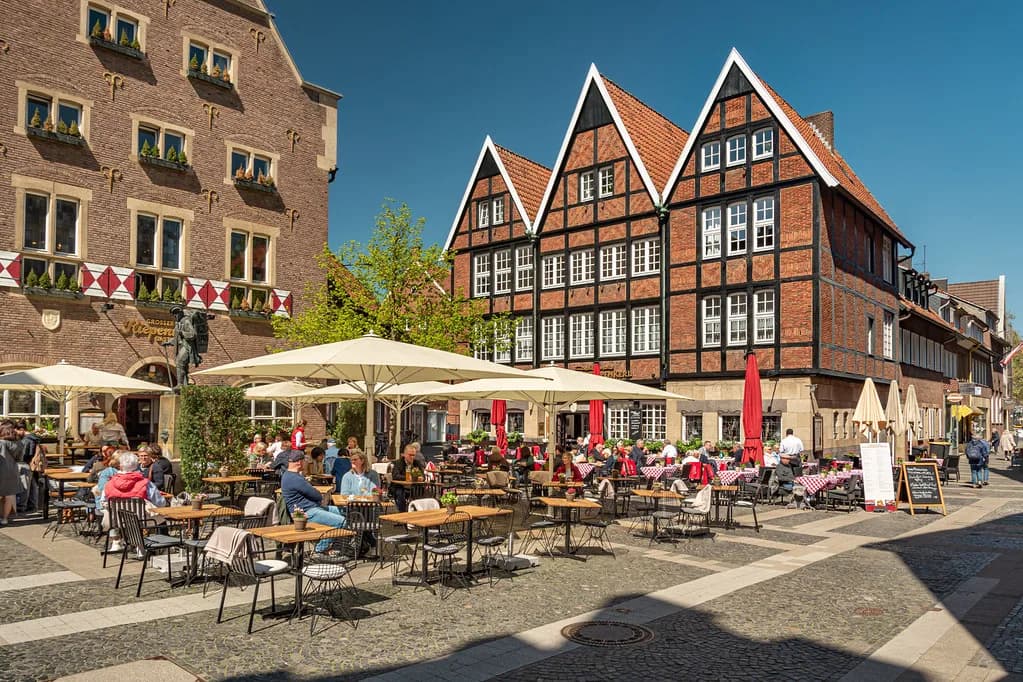
For a Brauhaus Münster stop, expect a brewhouse-style menu with beer served alongside, which suits a group that wants a single address for dinner. In summer, a Biergarten in Münster is the better option for a long lunch, and the Beer Gardens in Münster guide lists places to sit outside.
Which Münster dish should you order first?
Start with Dicke Bohnen "Münsterländer Art" if you want the region's signature plate, or Reibeplätzchen with smoked trout if you want something lighter and equally local. Finish with Westfälische Quarkspeise, and keep a Pumpernickel and ham board in reserve for a picnic or a shared starter.
Plan one traditional Gasthaus meal and one modern dinner, put the coffee-and-cake break in the afternoon, and carry cash for smaller places. Then use the best restaurants in Münster list to book the addresses that fit your days and budget.
Frequently Asked Questions
Is Münster food the same as Westphalian food?
Münster sits in Westphalia, and its cooking is Westphalian: hearty meat and stew dishes with regional vegetables, plus traditional country cooking served in rustic restaurants. Some dishes carry the Münsterland name because they come from the surrounding region rather than the city itself.
What does "Münsterländer Art" mean on a menu?
It means prepared the Münsterland way. On Dicke Bohnen, it signals broad beans pressed from their skins and served in a savory bacon sauce with mustard on the side. The dish is a main course, not a side.
Can I eat vegetarian Westphalian food in Münster?
The classic plates lean on bacon, cream and smoked trout, so ask before ordering. The city's modern kitchens and cafés are the easier route for plant-based eating, and the vegan and vegetarian guide lists where to look.
Sources
Notes for your next German food trip
Optional updates to our guides.
You might also like
Continue reading
More guides you'll find useful