Cafés in Münster: Coffee, Cake and a Place to Sit
Use this Münster café guide to pick between a Konditorei, a coffee house and a modern café, order Kaffee und Kuchen, and time your sit-down break.
On this page
For a Münster café stop, decide first what you want from it: a slice of cake in a Konditorei (a bakery-café specializing in pastries and confections), an unhurried cup in a coffee house, or a quick modern espresso. Getting that choice right matters more than chasing a specific address, because each type works for a different moment in your day. This guide covers the three formats, the German coffee and cake vocabulary you will see on boards, how ordering and paying work, and the best times to sit down.
Münster is a compact, largely flat city where a coffee break slots easily between errands, market browsing and lunch. Westphalian eating habits shape what you find: cream-heavy cakes, strong filter coffee and a genuine afternoon ritual around Kaffee und Kuchen (coffee and cake). Knowing that rhythm lets you plan a break instead of wandering into a crowded café at the worst moment.
What a Münster café stop looks like: coffee, cake and a seat
A typical Münster café visit is built around a drink and, more often than not, a piece of cake or a pastry. You order at the counter in smaller bakeries and pastry shops, or wait for table service in larger coffee houses and cafés, and you are generally welcome to sit as long as the table is yours. The pace is unhurried: nobody will rush you out after one cup.
Where cafés sit in the meal plan matters. Münster's sit-down restaurant culture runs to hearty Westphalian plates, so a café is best treated as a pause rather than a meal: coffee and cake mid-morning, or between a late lunch and dinner. If you want a full lunch instead, compare the best restaurants in Münster before you go, then keep the café for the afternoon.
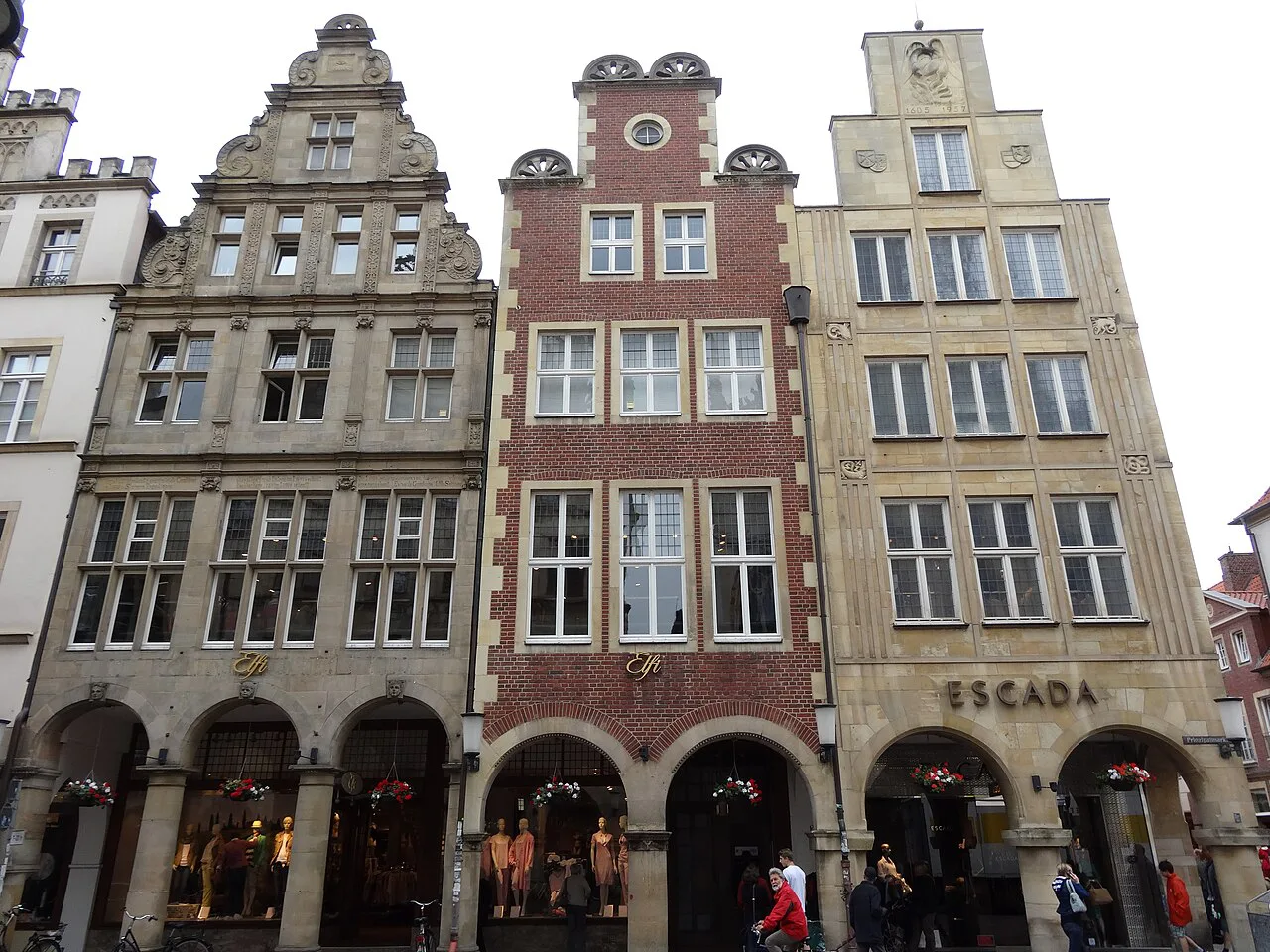
Konditorei versus coffee house versus café: which to pick
A Konditorei is the place for cake: it is part bakery, part confectioner, and its display case is the menu. Choose it when you want a proper slice of Kuchen (cake), a Torte (layered cake) or a small pastry with your coffee, and expect a bright, often busy room with a counter where you point at what you want. A traditional coffee house is the opposite trade-off: fewer cakes, more time at the table and a stronger focus on the coffee itself.
A modern café is the flexible middle ground, with espresso drinks, milk-based coffees and often the option of takeaway. Pick it if you need to keep moving or want a flat white and a sandwich rather than cake. If you are traveling vegan, check the plant-based side of things first, since traditional pastry counters are heavy on butter and cream.
What to order: Filterkaffee, Milchkaffee, Kuchen and Torte in plain English
The core vocabulary is short. Filterkaffee is drip or filter coffee, usually served strong and in a generous cup. Milchkaffee is coffee with warm milk, closer to a latte than a cappuccino, and it is the drink most people pair with cake. Kuchen means cake in the broad sense, often a single-layer sheet cake, while Torte is a layered, constructed cake, richer and usually more expensive.
Beyond that you will see Apfelkuchen (apple cake), Käsekuchen (baked cheesecake), Schwarzwälder Kirschtorte (Black Forest cake with cherries and cream) and seasonal fruit tarts. In autumn, plum and apple cakes dominate; in late spring, strawberry cakes appear. If you want something savory instead of sweet, order a belegtes Brot (a topped bread slice) or a Laugenbrezel, the lye-baked pretzel you find across Westphalia.
How ordering and paying works at a Münster café counter or table
In a Konditorei or bakery-café, you usually go to the counter first: pick your cake from the case, pay there, then carry it to a table or wait for table service if there is any. In a full café or coffee house, a server takes your order and you pay at the end, either at the table or at the till. Tell the server you are paying together or separately before they settle up, because splitting bills happens differently here than in the US.
Cash is worth carrying for a Münster café stop: pastry counters and smaller cafés generally handle cash without any fuss, and it is the simplest way to pay for a coffee and a slice. Tipping works by telling the server the total you want to pay, rounded up, rather than leaving coins on the table. In many cafés you are not expected to vacate your seat quickly, but at lunchtime the staff may ask if they can seat others at busier tables.
Best timing: mid-morning coffee versus the afternoon Kaffee und Kuchen hour
There are two peaks in a Münster café day. The first is mid-morning, roughly between breakfast and lunch, when the room is calm and a pastry case is still full. The second is the afternoon Kaffee und Kuchen hour, the classic German coffee-and-cake pause, when families and friends take over the bigger tables in Konditoreien and coffee houses.
For a quieter sit, go mid-morning or shortly after the lunch rush has cleared. For the full cake-table atmosphere, aim for the afternoon, when the display cases are at their busiest and the choice of Kuchen is at its widest. Sundays bring a third pattern: the afternoon is the big cake moment, so the good tables and the popular cakes go early.
Sitting inside or outside, and when outdoor seats fill up
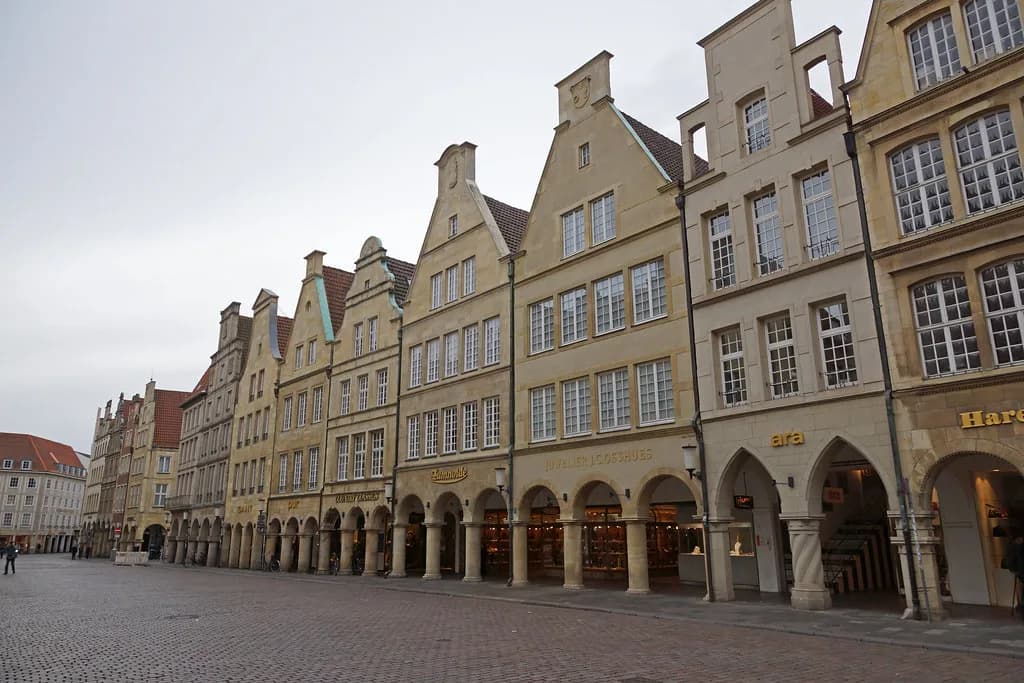
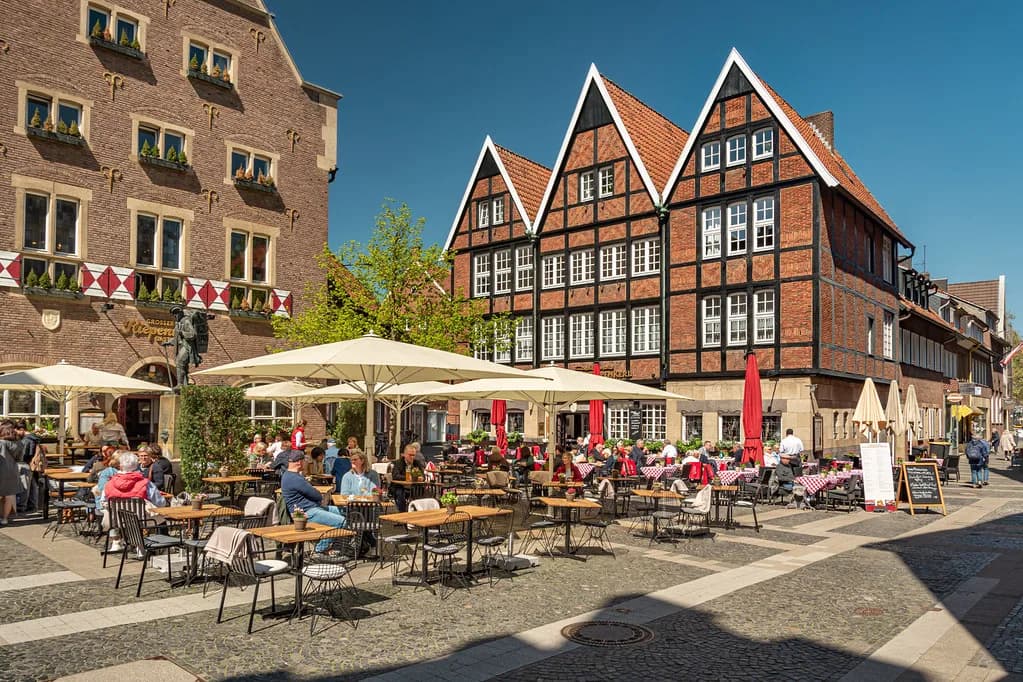
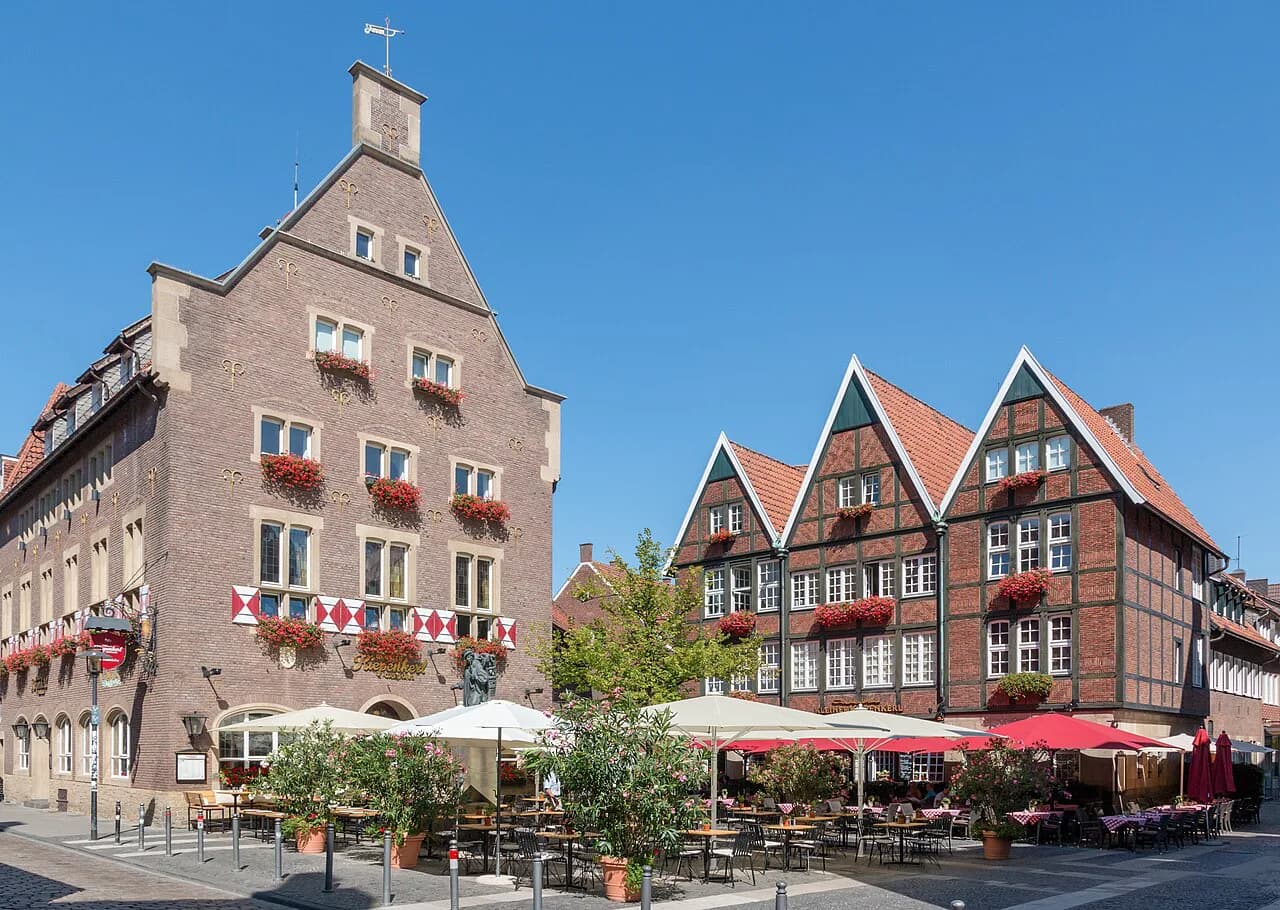
Münster's café terraces fill up as soon as the sun is out, and the city's café streets have a lot of pavement seating. Prime outdoor tables disappear first around midday and again during the afternoon cake hour, and they stay busy through the warm months. If you specifically want to sit outside, arriving just before the rush gives you a real choice.
Indoors can actually be the better trade-off on a busy Saturday: you get a seat, a quieter room and service that reaches you faster. In cooler months the inside tables near the window are the popular ones, so it pays to look past the front row of seats for space further back in the room.
Where cafés fit into a Münster day of eating: between market browsing and lunch
The easiest way to build a café stop into your day is to place it between a market visit and a sit-down meal. Browse a Münster farmers market in the morning, then take a coffee and a small pastry, then eat a proper Westphalian lunch later. That keeps a heavy lunch from following an equally heavy cake and gives you a long walking break in between.
If you would rather eat standing or on the move, the Imbiss in Münster counters are a better fit for the gap between meals, and a café can wait until you actually want to sit. One useful rule for the whole day is to decide the shape of your eating before you set out: café first, lunch second, and a brewery stop kept for the evening rather than crowded into the afternoon.
What to do when a café is full or closed on a Sunday
Sunday is the day to be flexible. In Münster, as across much of Germany, the key is to check the door and the window before you commit; many businesses state their hours on a sign by the entrance. When your first choice is full or shut, walk one street further rather than waiting in a queue, since the side streets usually hold another Konditorei or café within a couple of minutes.
If you want a guaranteed seat and a drink with your coffee stop, head for a Brauhaus instead, where Westphalian tradition comes with a menu. Pinkus Müller Brauereiausschank, the brewery tap room on Kreuzstrasse, serves its Westphalian kitchen Monday to Saturday from noon and is closed on Sundays and public holidays — so it is not a Sunday substitute, but it is a solid stop on any other day when you want a proper sit-down drink with your beer.
Which café type fits your day?
Choose a Konditorei when cake is the point, a coffee house when you want the room and the clock to yourself, and a modern café when you need espresso and a quick exit. Plan the stop either mid-morning or during the afternoon Kaffee und Kuchen hour, and let lunch follow it rather than crowd it.
Keep the day honest: one good coffee stop, one proper sit-down meal, and no scramble to squeeze in everything else. On Sundays, assume the afternoon is busy and head out earlier or look one street off the main route for a table.
Explore more Münster guides
Frequently Asked Questions
What is the difference between Kuchen and Torte?
Kuchen is the general word for cake and often means a simpler sheet cake, while Torte is a layered, constructed cake such as a fruit or cream gateau. Torte is usually the richer and pricier choice on the counter.
Is a café in Münster a good place for a light lunch?
It can be, but most cafés are built around coffee and pastry rather than a full plate. If you want a proper meal afterward, plan the café as a pause and eat lunch at a sit-down restaurant later in the day.
Sources
Notes for your next German food trip
Optional updates to our guides.
You might also like

Continue reading
More guides you'll find useful