Münster Farmers Markets: What to Buy and Where
Münster's weekly farmers markets include the Wochenmarkt am Dom on the Domplatz and the Friday market in Hiltrup, selling produce, cheese, bread and honey.
On this page
For a farmers market in Münster, the Wochenmarkt am Dom is the central market listed on the Domplatz, in the middle of the old town. If you are staying in the south of the city, the Wochenmarkt Hiltrup trades every Friday from 7:30 to 12:30 on the Parkplatz Hiltrup-Mitte, between Hohe Geest and Moränenstraße, with regional produce, cheese, baked goods, sausage, eggs, honey and flowers.
This guide covers what a Münster Wochenmarkt actually is, how the central Domplatz markets differ from the district markets, what to buy and eat on the spot, and how shopping works when you are not a regular.
What a Münster Wochenmarkt is
A Wochenmarkt is a recurring open-air market, held on set weekdays on a square or parking lot, where farmers, bakers, butchers and cheesemakers sell directly from stalls. That makes it different from a supermarket run in three practical ways: the range is seasonal rather than constant, portions are often weighed to order, and the person serving you usually knows the product.
For a visitor, the appeal is less about saving money and more about assembling a picnic or breakfast from good bread, cheese, sausage and fruit while seeing what the region actually produces. The trade-off is timing: markets run on weekday mornings, so they fit a slow start better than a packed sightseeing day.
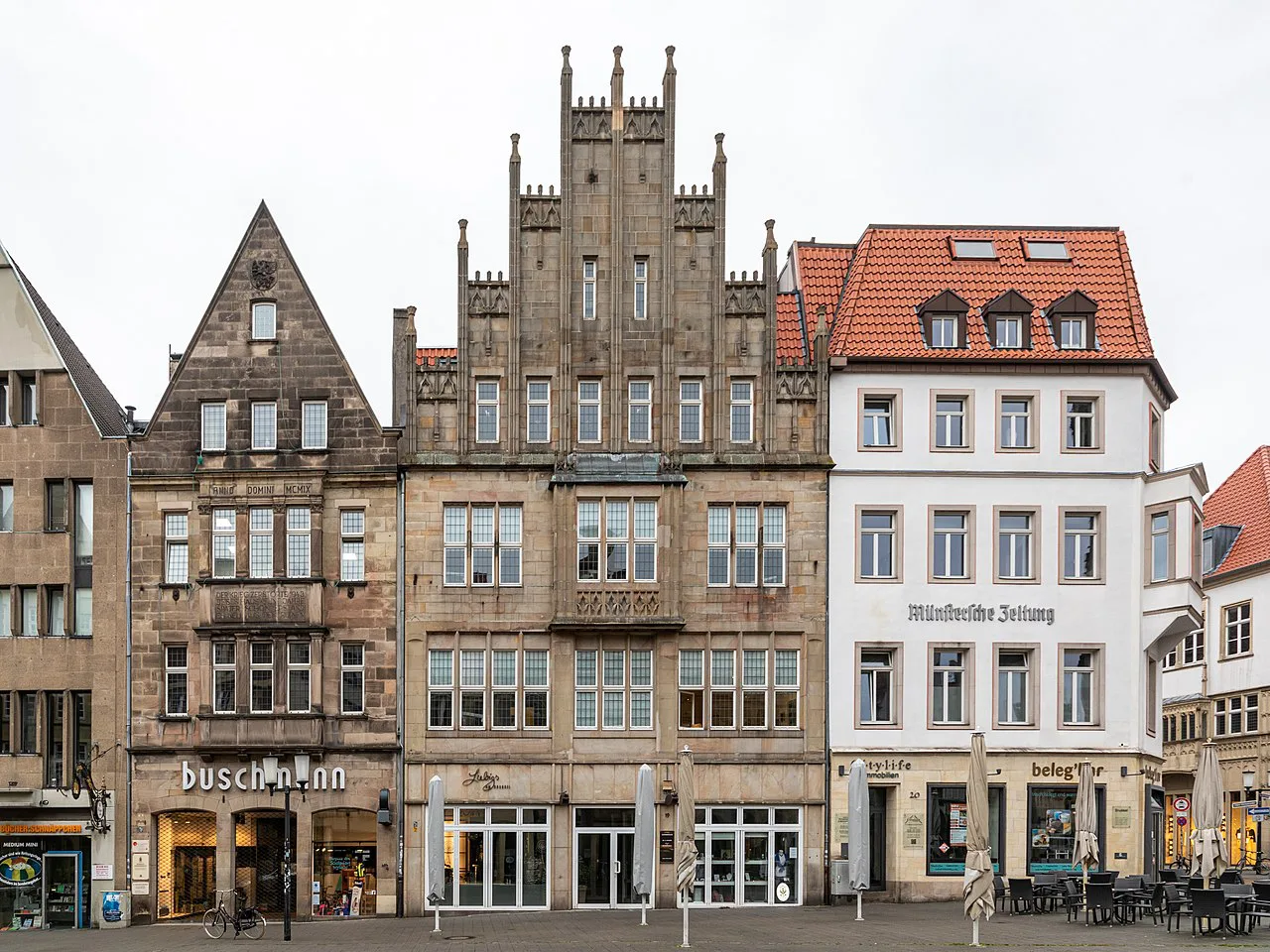
The Wochenmarkt am Dom on the Domplatz
The Wochenmarkt am Dom is the central market, listed on the Domplatz in the historic center, which makes it the easiest one to reach on foot from most of the old town. It runs as a recurring invitation to shop the stalls rather than a special event, so treat it as a normal weekly market rather than a festival.
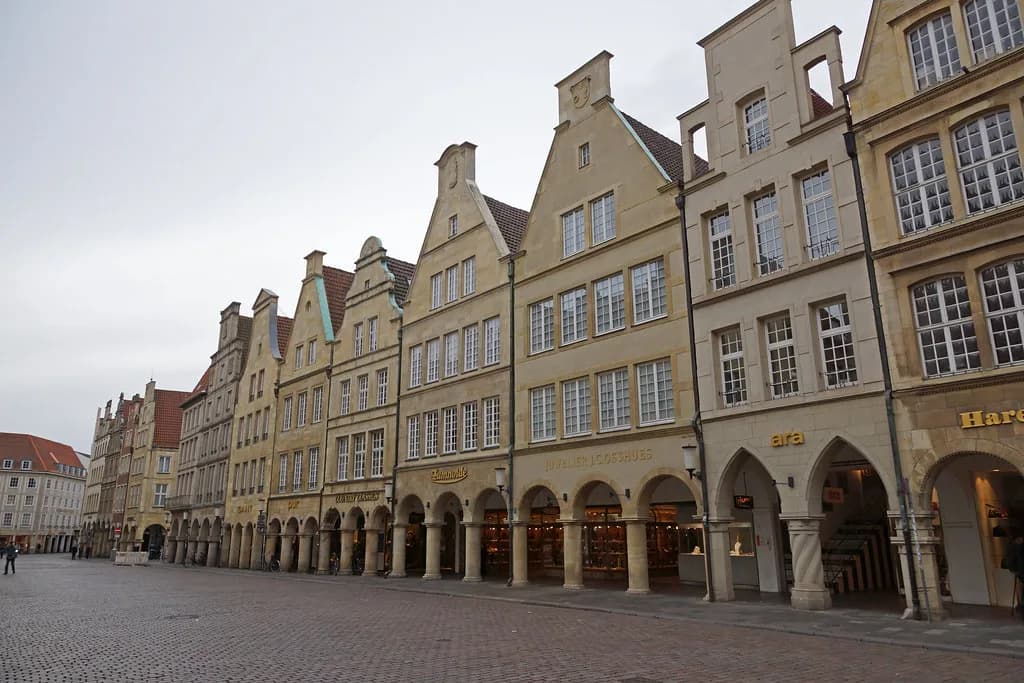
Its setting does most of the work: stalls on the cathedral square, with the market acting as a natural meeting point for the center. It is the central market rather than a district one, so pair it with a morning walk through the old town.
Plan on browsing first to see what looks good, then buy on a second pass. The Domplatz location also puts you within a short walk of the center's cafés if you would rather sit down with coffee and cake after shopping for groceries; our guide to cafés in Münster covers where to land.
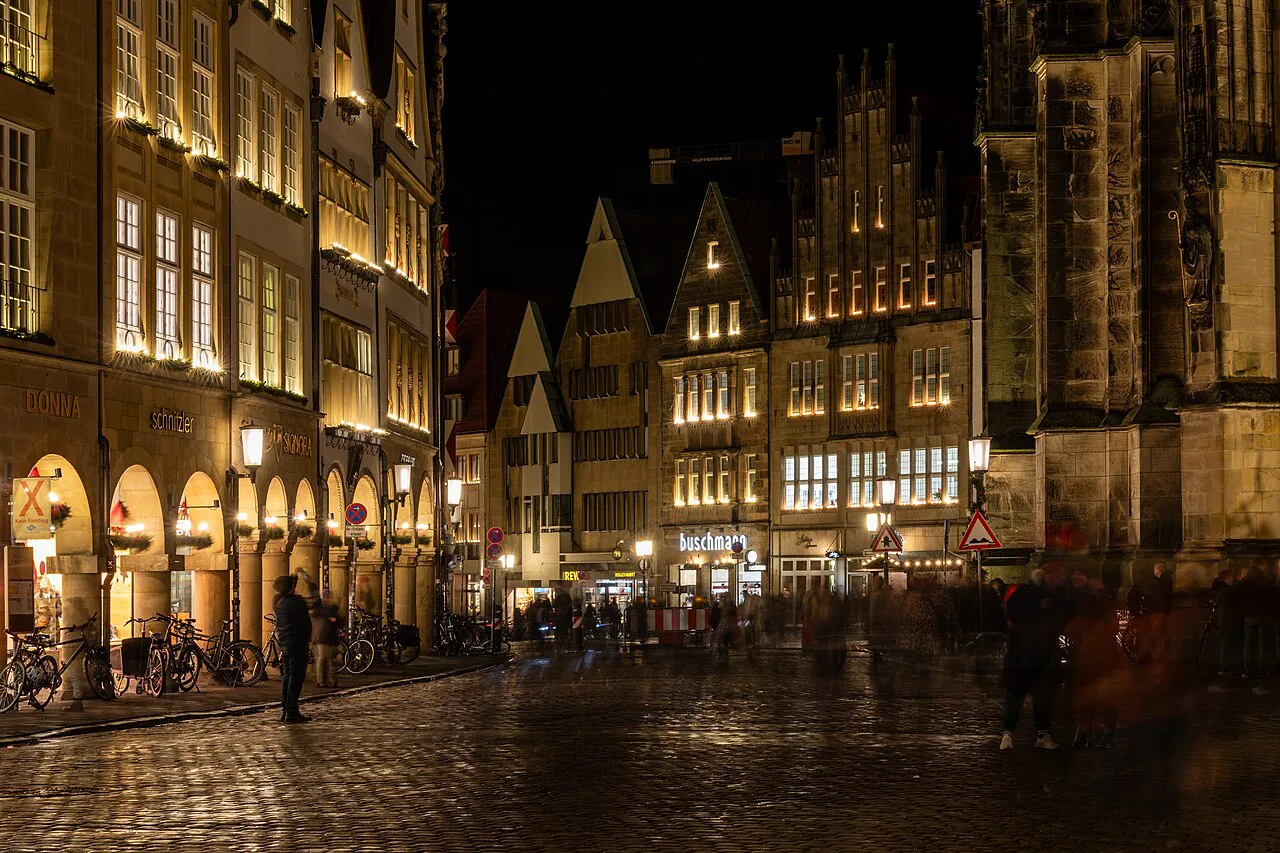
The Ökologischer Bauernmarkt and organic buying
Münster also lists an organic farmers market, the Ökologischer Bauernmarkt, at the Domplatz, so check which market is running on the square on the day you are in town, since the two are separate operations with their own stallholders.
In practical buying terms, an organic market usually means a narrower, more tightly sourced range and less of the cheap volume produce you might find at a conventional weekly market. What you gain is clarity about origin and farming method, which is worth paying for if you are buying cheese, eggs or meat to carry home rather than just a snack.
If your priority is a plant-based picnic, both market types are useful: fruit, vegetables and bread are easy to buy, while cheese and sausage stalls are the limiting factor. Our guide to Vegan and Vegetarian Food in Münster helps you pair market shopping with places to eat afterward.
Wochenmarkt Hiltrup: the district market
The Wochenmarkt Hiltrup is the worked example of a Münster neighborhood market: it runs every Friday from 7:30 to 12:30 on the Parkplatz Hiltrup-Mitte, between Hohe Geest and Moränenstraße in the 48165 district. Hiltrup is the largest district in the south of the city, so this is a proper local shop rather than a tourist stop.
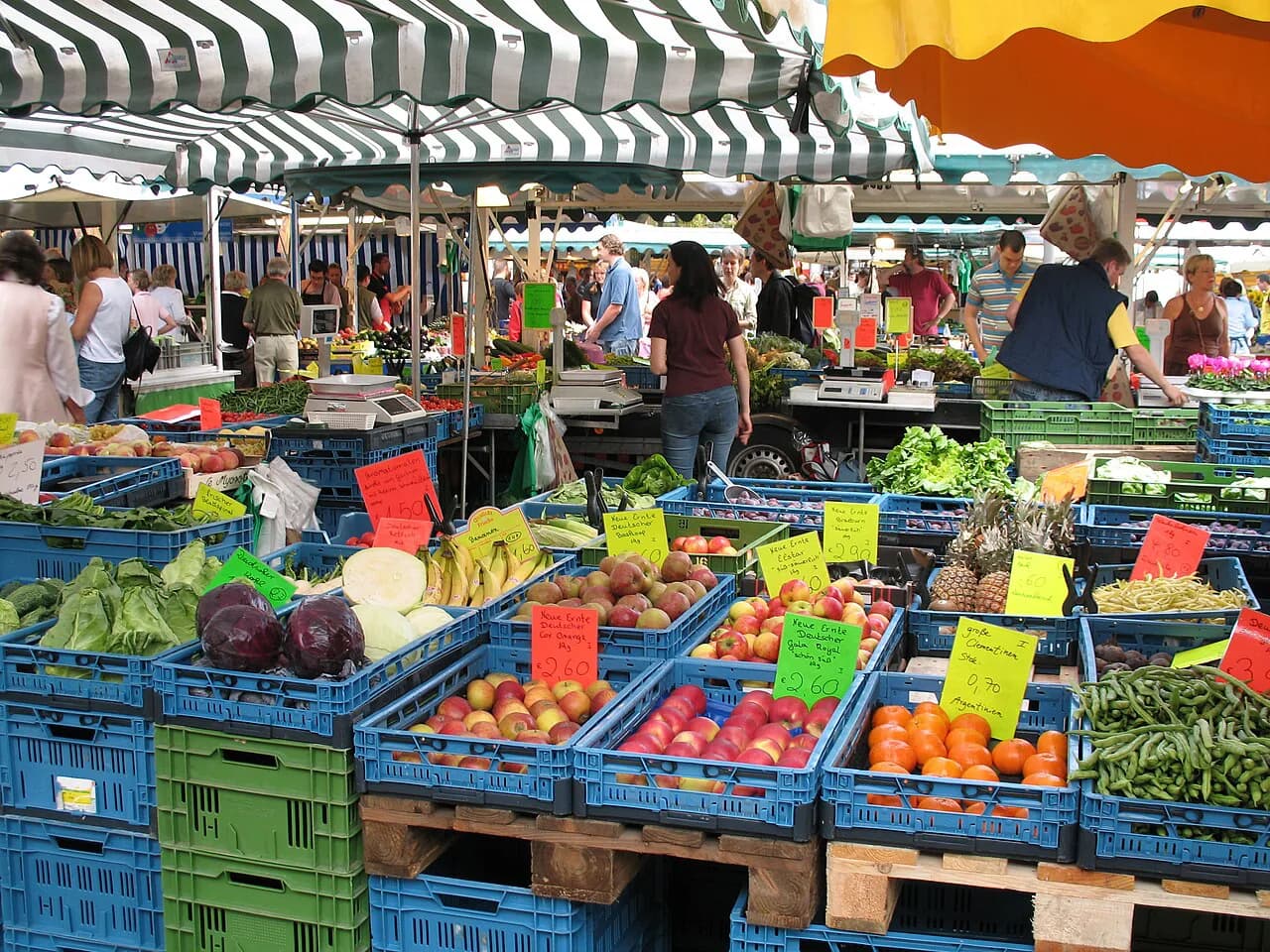
The stalls carry fresh fruit and vegetables, cheese, baked goods, meat and sausage, eggs, honey and cut flowers, mostly from regional producers. That mix makes it a good single stop for a self-catered breakfast or a picnic assembled in one lap.
Münster also runs district markets at other locations, including Berg Fidel and Amelsbüren, so if you are staying outside the center, a nearby market may be closer than the Domplatz.
How to shop a Münster market
Bring cash in small notes. German weekly markets commonly run on cash, and having a few small euro notes ready makes a quick bread or cheese purchase easier for everyone; cards are more common in shops than at open-air stalls.
Bring a bag, or expect to buy one. Stallholders hand over loose produce, bread and cheese rather than bagging everything, so a cloth tote and a small container for soft cheese or sausage keep things intact on the walk back.
At a cheese or sausage counter, point, say how much you want in grams, and let the vendor slice or weigh it. Ask for a taste if you are unsure between two cheeses; a small sample is normal market practice and helps you avoid buying a wedge you do not like.
Order in plain German or point with a smile: "ein Stück" (one piece), "zweihundert Gramm" (two hundred grams) and "bitte" go a long way. Vendors dealing with tourists are used to pointing and gestures, so do not overthink the language.
What to buy and eat on the spot
The strongest market breakfast is bread, cheese and sausage eaten standing or on a nearby bench. Buy a crusty loaf or rolls from a bakery stall, a wedge of regional cheese, and a few slices of Wurst, the German catch-all for sausage and cold cuts.
Honey from local beekeepers is one of the best things to carry home because it travels well and is genuinely regional. Eggs and fresh fruit are excellent for a hotel-room breakfast if you have a small fridge, while cut flowers are best left for locals with a vase.
If you want to continue eating your way through the city after the market, our pick of The Best Restaurants in Münster is the natural next stop for a sit-down meal built around Westphalian cooking.
Spargelzeit and autumn: how the stalls change
Spargelzeit, the asparagus season, is the biggest seasonal shift on German market stalls: white asparagus appears in bundles in spring and dominates menus and market tables while it lasts. Look for bundles and ready-peeled packs in season.
Autumn brings the opposite: pumpkins, apples, pears, cabbage and root vegetables, along with heartier baked goods. The practical rule is to buy what looks abundant and cheap rather than shopping from a fixed list, because the whole point of a weekly market is that the range follows the harvest.
Outside those seasons, expect a steady core of potatoes, onions, carrots, salad, cheese, bread and sausage rather than spectacular fruit. That is still enough for a good picnic, and it is what locals are actually cooking with.
Central Domplatz or a neighborhood market?
Choose the Domplatz if you want the central, atmospheric market within walking distance of the old town and are happy to browse alongside other visitors. Choose a district market like Hiltrup if you want a quieter, genuinely local shop and are staying in the south of the city.
If you are building a food day around the market, combine a morning at the stalls with an afternoon of eating and drinking elsewhere in the city. Our broader Münster food guide covers the dishes worth ordering, including Westphalian classics like Dicke Bohnen, thick broad beans.
Which market should you build your morning around?
Pick the Domplatz market if you want the central version within walking distance of the old town and the cathedral. Pick Wochenmarkt Hiltrup if you are based in the south and want a Friday morning shop that feels like a neighborhood routine rather than a visitor stop.
Either way, go early, bring cash and a bag, and buy what looks best that week rather than shopping from a list. That is how a Münster farmers market turns into the most useful food stop of your day.
Explore more Münster guides
Frequently Asked Questions
Is there a farmers market in Münster on Saturday?
The market documented with firm days in this guide is the Wochenmarkt Hiltrup, which runs on Fridays from 7:30 to 12:30 on the Parkplatz Hiltrup-Mitte, so it is not a Saturday market. The central Domplatz markets follow their own weekly schedule; check the day the Wochenmarkt am Dom runs before planning a Saturday visit.
Are Münster farmers markets cash only?
German weekly markets generally run on cash, and small notes make quick purchases easier. Bring euros in small denominations rather than relying on a card at an open-air stall.
What time do Münster farmers markets open?
Opening times vary by market. The Wochenmarkt Hiltrup trades from 7:30 to 12:30 on Fridays, so an early start gets you the fullest stalls and the thinnest crowd.
What should I buy at a Münster market?
Bread, regional cheese, sausage, seasonal fruit and vegetables, eggs and local honey are the reliable picks. In spring, look for white asparagus during Spargelzeit; in autumn, pumpkins, apples and cabbage take over the stalls.
Sources
Notes for your next German food trip
Optional updates to our guides.
You might also like

Continue reading
More guides you'll find useful