Brauhaus Mainz: Brewpubs and Beer Halls Worth Your Evening
Mainz is wine country, but two brewpubs pour their own beer: Eisgrub-Bräu in the old town and Kuehn Kunz Rosen near the river. Here is what each does best.
On this page
For a Brauhaus in Mainz, you have two real choices: Eisgrub-Bräu, the city's first brewhouse tavern, in vaulted cellars off the Weißliliengasse, and Kuehn Kunz Rosen, a craft brewery on the Weisenauer Straße with its own taproom and beer garden. Both brew on site, both pour their own beer, and they feel nothing alike. This guide covers what each one is for, which house beers to order and how the styles translate, so you can pick the right room for the evening you have in mind.
Mainz sits at the edge of Rheinhessen, Germany's largest wine region, so wine shapes most of the city's tables and the beer scene stays small but genuine. That is the useful expectation to carry: you are not choosing among a dozen beer halls, you are choosing between a historic tavern and a working brewery taproom. Our best restaurants in Mainz round-up maps the wider food side of the city if you want to eat beyond the brewpubs.
What a Brauhaus means in Mainz, and why the beer scene is small but real
A German Brauhaus is a house that brews its own beer and serves it where it is made, usually with food and long communal tables. In Mainz that tradition runs through two very different operations rather than a single beer-hall street. Eisgrub-Bräu opened in 1989 as the city's first Gasthausbrauerei, a tavern brewery, which tells you how recently the format arrived here.
Kuehn Kunz Rosen started in 2014 as a gypsy brewer, meaning it brewed on other people's equipment, and has run its own 15-hectoliter brewhouse in a former pipe warehouse since 2017. The result is a beer map with two fixed points: an old-town cellar tavern and a small production brewery with a taproom. If you want a German restaurant with a broader menu alongside your beer, the city's traditional kitchens are the next place to look.
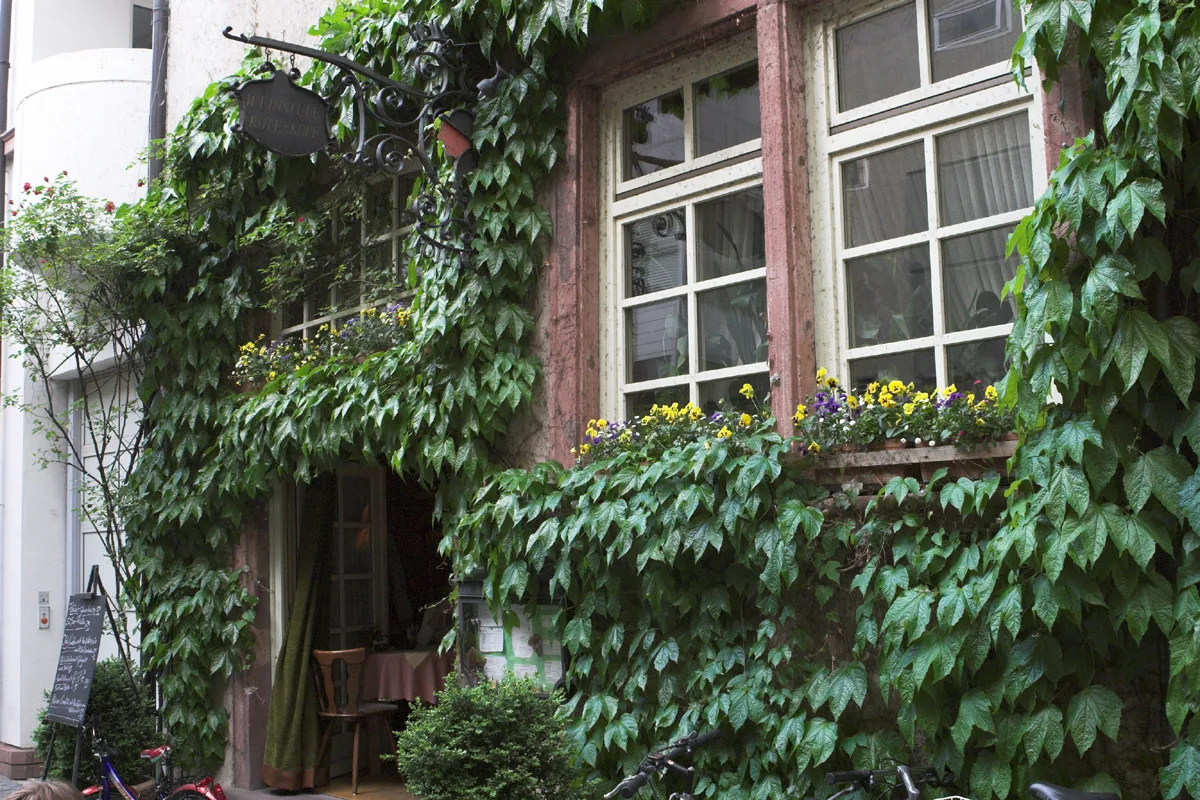
Eisgrub-Bräu: Mainz's first brewhouse tavern, in 1872 vaulted cellars off the Weißliliengasse
Eisgrub-Bräu occupies vaulted cellars built in 1872, which once served as the city's ice storage, in the Altstadt near the Weißliliengasse. The brewery itself opened in 1989, so keep the two dates apart: the vaults are old, the brewing is late twentieth century. The copper kettles stand in view of the tables, and the house runs brewery tours with a beer tasting.
This is the place for a sit-down evening rather than a quick pint. As a brewery tavern, it pours its own unfiltered beer in a cellar setting that stays atmospheric year-round. Groups and anyone wanting the classic old-town beer-night feel should start here.
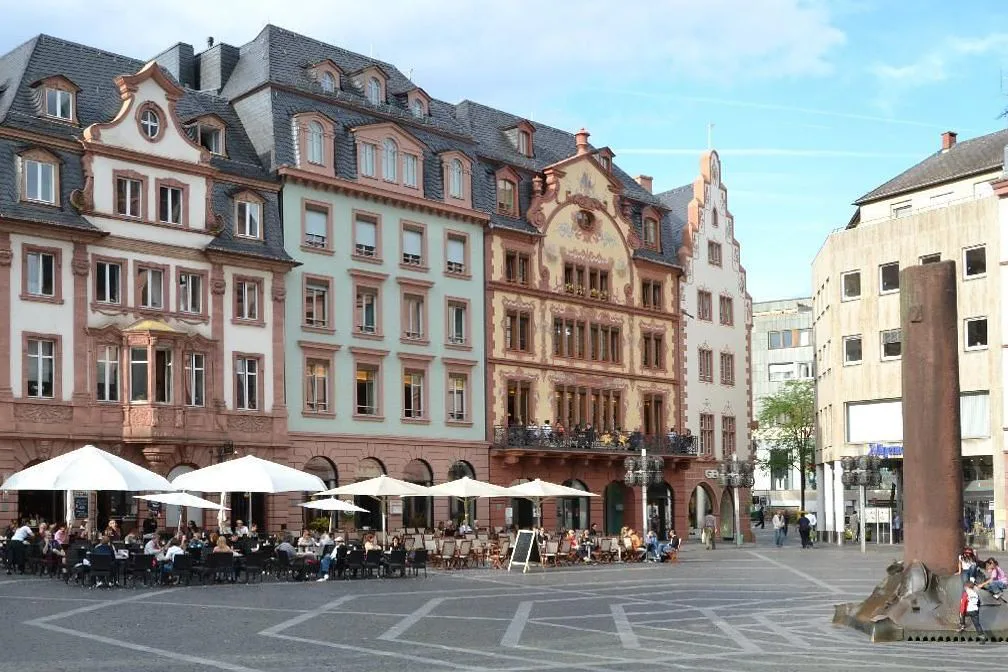
What to order at Eisgrub-Bräu: the unfiltered Helles Märzen and the Schwarzbier
Start with the Helles Märzen, Eisgrub's house staple: a pale, unfiltered, naturally cloudy Märzen that drinks mild and malty with a clean finish. Despite the name it pours golden rather than amber, closer to a sturdy pale lager than to a heavy festival beer. Order it in the vaulted cellar and you are drinking what the house is known for.
For a second round, the Schwarzbier is the other house signature, a full-bodied, rustic black lager with pronounced malt flavor, brewed and served unfiltered. It is a good counterpoint to the Märzen rather than a heavier version of it. If you want to watch the brewing while you drink, this is the one of the two venues where the kettles sit in the room with you.
Kuehn Kunz Rosen: a craft brewery with its own taproom and beer garden on the Weisenauer Straße
Kuehn Kunz Rosen brews on the Weisenauer Straße, and the site includes a taproom with a view into the brewhouse plus a beer garden on the brewery grounds. The brewery describes its taproom as the space for October through April and the garden for May through September, so plan the season around where you want to sit. It is a working brewery first, which makes the visit feel more like a small production hall than a restaurant.
Come here for the beer itself and for the sight of the brewhouse, not for a long, multi-course dinner. The two spaces give you a choice: a warm indoor room in the colder months, an open-air garden when the weather cooperates. If you simply want a Biergarten afternoon without committing to a brewery visit, the city's garden scene has more options.
What to order at Kuehn Kunz Rosen: Mainzer Dom Bräu, Gutenberg Bock, Meenzer Gutsje
Mainzer Dom Bräu is the flagship pale lager, named for the cathedral: a Helles with a bit more body than the norm, bright gold from regional malt, and a fine aroma from the German hop varieties Hüll Melon and Monroe. Gutenberg Bock is a pale Doppelbock, a strong lager brewed for the cold months, with warming malt, caramel notes and a hint of orange; it takes its name from Johannes Gutenberg.
Meenzer Gutsje is a Festbier at 5.4 percent, full-flavored and easy to drink, brewed for Fastnacht, the Mainz carnival season, with a name in the local dialect. Order it if you are in town during the carnival weeks and want the beer tied to the calendar. Each of these is a house beer with a local name rather than a guest tap, which is the whole point of drinking at the source.
Taproom in cold months, beer garden in warm ones: how the two Kuehn Kunz Rosen spaces differ
The split is practical. From October to April the Schankraum, the taproom, is the place to be, with the brewhouse visible through the room. From May to September the beer garden on the brewery grounds takes over, and that is where a sunny afternoon belongs.
Treat those windows as the brewery's own seasonal arrangement rather than a fixed guarantee, and check the current opening times before you build an evening around it. If your trip falls in the shoulder weeks, the taproom is the safer bet for a sit-down beer.
Seasonal drinking in Mainz: Fastnacht beer, winter bock, Eisgrub's rotating seasonals
Mainz's beer calendar follows its civic calendar. Fastnacht, the carnival season, is when Meenzer Gutsje is the beer to order at Kuehn Kunz Rosen. In the cold months the same brewery pours Gutenberg Bock, and Eisgrub-Bräu rotates seasonal beers of its own, including a Maibock in spring.
Time your visit around the season rather than the other way round: carnival for the Festbier, deep winter for the Doppelbock, spring for whatever the old-town cellar has on. One more date worth knowing is the Mainzer Bierbörse, when the Rheinufer am Raimunditor turns into a large open-air beer garden with hundreds of beers pouring; in 2026 it ran July 3 to 5, a timetable that shows the shape of the event rather than a fixture for your year.
Beer with a view of the kettles: which of the two lets you watch the brewing
Both venues put the equipment near the drinker, in different registers. At Eisgrub-Bräu the brewhouse sits in the cellar room itself, so the brewing kit is part of the tavern's furniture and visible from the tables. At Kuehn Kunz Rosen the taproom looks into the brewhouse, giving you a view of a small working brewery rather than a decorative one.
If seeing the process matters more than the room, take the Eisgrub tour with its beer tasting and pair it with a meal afterward. If you prefer to sit with a glass and watch without a guided format, the Kuehn Kunz Rosen taproom delivers that in the colder months.
How to choose between the two for a group, a solo pint or a long dinner
For a group or a full evening with food, book the Eisgrub-Bräu cellar: the vaulted room, the tavern format and the visible kettles make it the stronger all-round night out, and the unfiltered Märzen and Schwarzbier give everyone a clear first and second order. For a solo pint or a short stop with a beer-geek bent, Kuehn Kunz Rosen is the better fit, especially if you catch the taproom in winter or the garden in summer.
For a long dinner built around something other than beer, neither venue is the obvious choice; the city's wider restaurant scene carries that load, from fine dining to everyday Mainz cooking. And if your group splits between beer drinkers and everyone else, the cafés and Konditorei side of the city fills the afternoon nicely before the evening pint.
Which Mainz brewhouse fits your evening?
Choose Eisgrub-Bräu for the historic vaulted tavern, a proper sit-down evening and the unfiltered Helles Märzen or Schwarzbier in front of the kettles. Choose Kuehn Kunz Rosen for a working-brewery taproom or beer garden and the named house beers, Mainzer Dom Bräu, Gutenberg Bock and Meenzer Gutsje, matched to the season.
Either way, build the evening around one brewery rather than trying to fit both in, since the two sit in different parts of town and each rewards a slow round. Order the house beer first and let the second round follow the season.
Explore more Mainz guides
Sources
Notes for your next German food trip
Optional updates to our guides.
You might also like


Continue reading
More guides you'll find useful