Wiesbaden Farmers Market: What to Eat at the Weekly Market
Wiesbaden's weekly market runs on Dern'sches Gelände every Wednesday and Saturday, with bratwurst, fish, coffee and regional produce.
On this page
Wiesbaden's farmers market is the Wochenmarkt on Dern'sches Gelände, held every Wednesday and Saturday, and it splits into two jobs: buying produce and eating a hot snack at the Schlemmerplatz tables. This guide covers which stalls to target on which day and how to build a market morning around food.
What the Wiesbaden weekly market is and where it sits
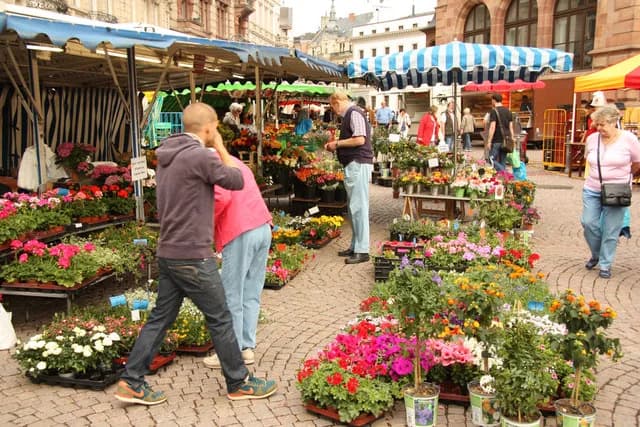
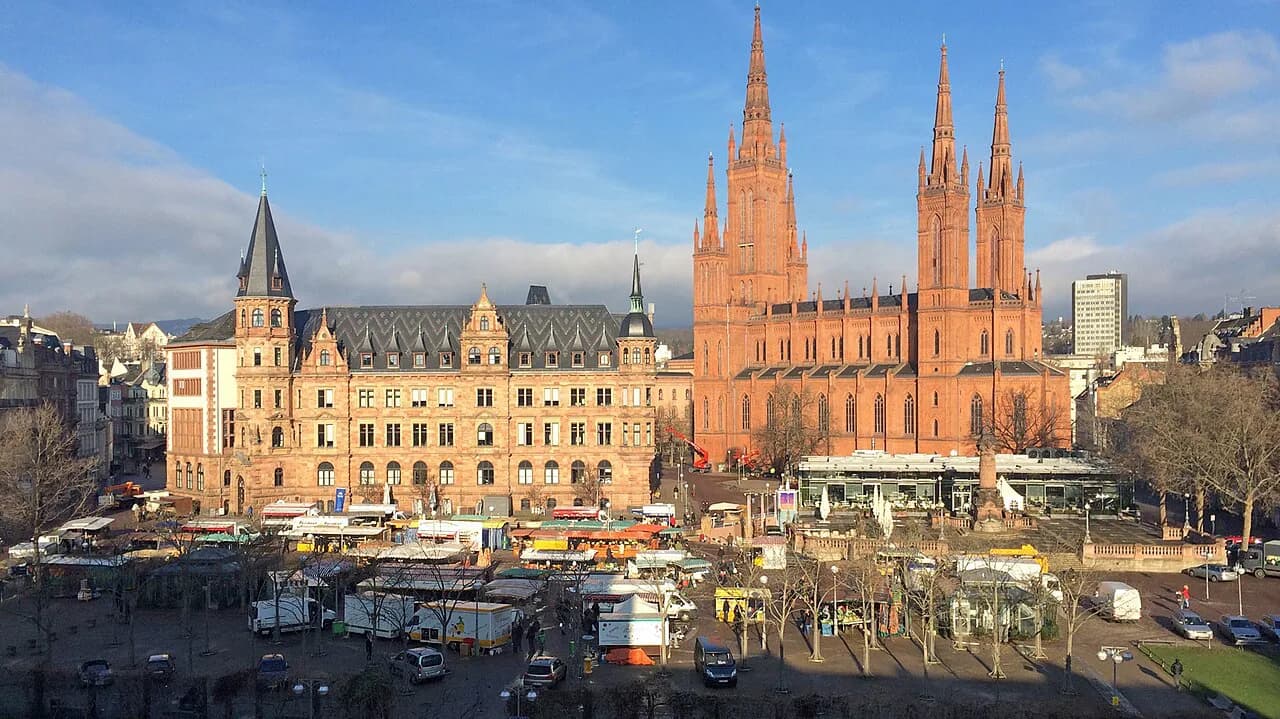
The market occupies Dern'sches Gelände, a central square in Wiesbaden, and runs Wednesday and Saturday from 7 to 14. Producers and traders sell food here with an emphasis on freshness, and a good share of what you see comes from the surrounding region.
Organic goods are part of the mix too, so you can assemble a picnic or a self-catered breakfast from one loop of the stalls. Treat the site as two stops: the produce rows first, then the Schlemmerplatz food stands once you want to sit down.
For a fuller eating day, use the market as the morning anchor before a later meal from our pick of the best restaurants in Wiesbaden.

When to go: Wednesday and Saturday mornings
Both market days run the same hours, so the choice between Wednesday and Saturday is really about which food stalls you want, since the Schlemmerplatz coffee roaster changes with the day.
Arrive mid-morning, walk the produce aisles while they are still well stocked, then take a table at the Schlemmerplatz for a hot snack and a coffee before the vendors pack up. Between April and November, rotating winemakers also pour at the market's wine stand, a pleasant add-on rather than the reason to come.

The Schlemmerplatz food stalls
The Schlemmerplatz is the eating heart of the market: a cluster of food stands with seating and standing tables under the trees on both market days. It is where you go when the shopping is done and you want something hot.
Lilien-Grill, run by event professional Michael Hess, sells bratwurst and fries. A bratwurst is a coarse German pork sausage, grilled and usually served in a crusty roll or with mustard, and it is the classic market-morning bite.
Ordering at the Schlemmerplatz stands is casual: step up to the counter, say what you want, and take your food to one of the tables. For a proper sit-down German meal afterward, our German Restaurants in Wiesbaden guide covers the Gasthaus side of the city.
Dutch kibbeling, backfish and Belgian-style fries at Dovil's Star Food
Dovil's Star Food, run by Uwe Zelczak from Taunusstein, brings Dutch kibbeling, fresh backfish and Belgian-style fries to the Schlemmerplatz, and it has also been part of the Biebricher Wochenmarkt since December 2021. This is the stand to try if you want something other than sausage.
Kibbeling is chunks of white fish in a light batter, fried and served with a dipping sauce, while backfish is the broader category of battered fried fish. The fries are the Belgian style, thicker and double-fried.
Portions at a market stand are generous, so if you are grazing across stalls, share one order of fish and fries and save room for coffee.
Coffee at the market: which roaster is there on which day
Two Wiesbaden-area roasters share the coffee duty, and the day matters: Kaffeerösterei Laux is at the Schlemmerplatz on Wednesdays, and Maldaner Coffee-Roasters is there on Saturdays. Laux brings specialty coffees, fair-trade beans and close relationships with the farmers it buys from.
If a specific roaster is the reason for your visit, go on the matching day rather than hoping both are set up. A bag of beans also makes a light, packable souvenir.
For a sit-down café rather than a market stand, our cafes in Wiesbaden guide covers the city's coffee rooms and Konditoreien in more depth.
Café NINI: matcha, smoothies and paninis
Café NINI rounds out the Schlemmerplatz with matcha, smoothies and freshly made paninis, a lighter alternative to sausage and fried fish. It is the stall to remember if someone in your group wants vegetables or a cold drink with their coffee.
Because the paninis are made to order, expect a short wait at peak market time and use it to claim a table before the lunch rush. Travelers eating plant-based will find more in our vegan Wiesbaden guide.
Buying to take home: regional produce and organic goods
Much of the produce comes from Wiesbaden's surrounding countryside, and organic products are part of the regular offer. Buy what looks good that morning rather than arriving with a fixed list, since the stalls follow the season.
Cheese, cured sausage, bread, fruit and a jar of honey travel well and need no cooking; save delicate greens and anything that needs refrigeration for a day when you have a kitchen. For the dishes worth seeking out beyond the stalls, see our Wiesbaden food guide.
How to eat your way through the market without over-ordering
Pick one hot dish as your anchor, add a coffee, and let the produce shopping be the takeaway rather than a third meal. A sensible route runs produce first, then a savory stop at Lilien-Grill or Dovil's Star Food, then coffee or a panini at the end.
Market food is snack food, so plan the rest of the day accordingly: a lighter evening meal or an afternoon stop at a Konditorei Wiesbaden balances a bratwurst-and-fries morning nicely.
Why a permanent market hall on Dern'sches Gelände is being discussed
Dern'sches Gelände has also been the subject of a proposal for a Kleinmarkthalle, a permanent indoor market hall, with architects' plans presented as a potential new meeting point in the city center. A Wiesbadener Kurier commentary argued the idea would be a real gain for Wiesbaden; as of that commentary's February 2026 publication, this remained a proposal, not an open hall.
That debate matters for visitors only in one way: what you find on Dern'sches Gelände can change from season to season, with the weekly market the reliable draw. If the market leaves you wanting a longer meal, our Michelin restaurants Wiesbaden guide covers the city's higher-end tables.
Practical notes on ordering and paying at a German weekly market
At the Schlemmerplatz you order at the stand, then find a seat at the tables under the trees. Carry some euros as a matter of habit at German market stalls.
When buying produce, point at what you want and say how much, either in grams or by number of pieces. Bring a cloth bag, since plastic bags are not always available or free.
If breakfast is your priority rather than a late-morning snack, our Where to Eat Breakfast and Brunch in Wiesbaden guide fills in the city's café options.
Is the Wiesbaden farmers market worth a morning?
Yes, if you want a low-key morning that combines shopping with a hot snack; no, if you are looking for a grand food hall experience. The market is at its best as a slow start to a Saturday, with produce bought for later and one proper plate eaten at the Schlemmerplatz tables.
Go early enough to see the stalls at full stock, choose your day based on which coffee roaster you want, and leave the rest of the day open for a German restaurant or a beer garden.
Explore more Wiesbaden guides
Frequently Asked Questions
Is there a Christmas market in Wiesbaden, Germany?
Christmas markets are seasonal and separate from the weekly market on Dern'sches Gelände. The city's official tourism pages list seasonal market dates before a winter visit.
What is sold at the Wiesbaden weekly market?
Vendors sell regional produce, organic goods, cheese, bread, fruit and honey alongside hot food at the Schlemmerplatz, plus roasted coffee beans to take home.
Sources
Notes for your next German food trip
Optional updates to our guides.
You might also like

Continue reading
More guides you'll find useful