Dresden Food: The Local Dishes to Eat and Where to Find Them
Dresden food means Eierschecke, Sauerbraten, Quarkkeulchen and Christstollen. Learn what each dish is, how it is served and where to order it.
On this page
Dresden food is Saxon cooking built on potatoes, quark, pork and sweet yeast baking, and the quickest way to taste it is to split your day in two: a savory plate at lunch, then coffee and cake in the afternoon. Dresdner Eierschecke, a layered quark-and-custard cake, is the city's signature bake, while Dresdner Sauerbraten and Sächsische Kartoffelsuppe carry the savory side. This guide explains what each Dresden specialty is, how it is served, and where in the city to order it, from the Altstadt to the Neustadt, with the best restaurants in Dresden for a full sit-down meal listed separately.
The dishes below come up across Saxony, but Dresden gives each one a local name and a local setting: the cake counters of the old town, the dairy shop in the Neustadt, and the everyday lunch tables in between. Use the sections that match your appetite and your hour of the day, then pick a neighborhood and a table.
What Dresden Food Is: A Saxon Table Built on Potatoes, Quark, Pork and Sweet Baking
Saxon cooking is filling and unfussy, leaning on potatoes, quark (a fresh, slightly sour soft cheese), pork and root vegetables, with a separate tradition of sweet yeast and quark baking that shows up at coffee time. In Dresden that means hearty main plates at lunch and cakes in the afternoon, and the two are treated as different meals rather than substitutes. If you only have one day, a savory Saxon lunch plus an Eierschecke in the late afternoon covers the local range better than two restaurant dinners.
The regional specialty list for Dresden runs through Dresdner Christstollen, Fettbemme, Dresdner Eierschecke, Sächsische Kartoffelsuppe, Dresdner Sauerbraten with Rotkraut, Holunderbeerensuppe and Quarkkeulchen, which together show how much of the local table is built on baking, potatoes and fruit. Plenty of things to see fill the same squares, but the food is the reason to slow down.
Dresdner Eierschecke: The Layered Quark-and-Custard Cake to Order with Coffee
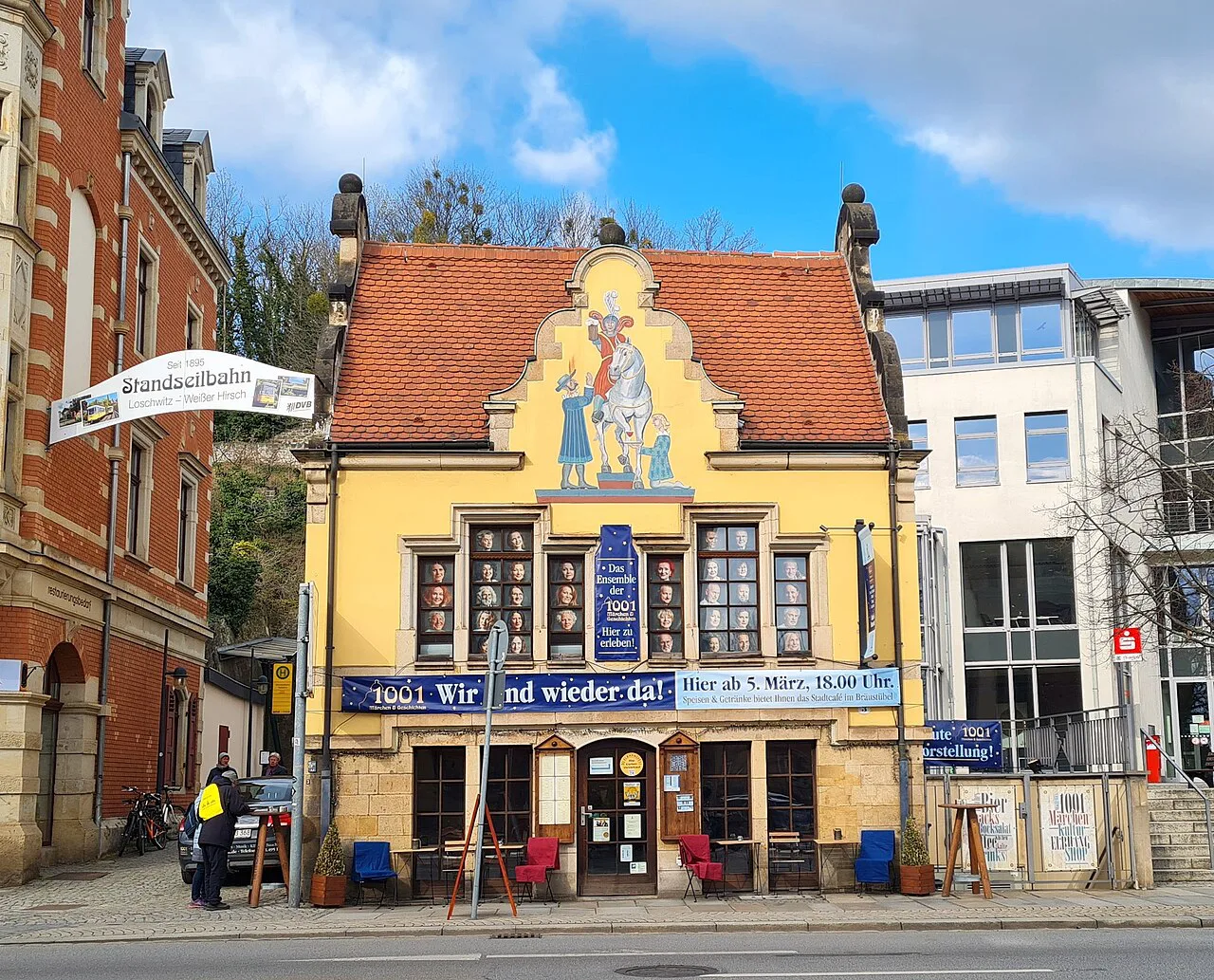
Eierschecke is Dresden's most characteristic cake: a base topped with a layer of quark, then a custard layer made with eggs, and often a thin finish on top. The texture runs from dense and creamy to light and airy depending on the bakery. Order a slice with coffee in the afternoon, when Saxon cafés fill up for Kaffee und Kuchen.
Dresdner Christstollen: What the Fruit Bread Is and How It Is Sold
Dresdner Christstollen is a heavy, long-keeping fruit bread packed with raisins, candied peel, almonds and spices, enriched with butter and finished with a thick coat of powdered sugar meant to resemble swaddling clothes. It appears in Dresden bakeries and specialist shops from late autumn. Buy a small loaf or a pre-cut piece if you are traveling, since a full Stollen is large and dense.
Festive Stollen season overlaps with Dresden's Christmas markets, which draw the biggest crowds of the year to the Altstadt squares. If you want the bread without the crush, shop a bakery counter in the Neustadt on a weekday morning instead.
Quarkkeulchen: Fried Quark Dumplings and When They Show Up
Quarkkeulchen are small, flattened dumplings of quark, potato and flour, fried in butter or oil until crisp outside and soft within, then dusted with sugar and served with apple compote or fruit. They sit between a dessert and a meatless main, which is why they turn up on Saxon menus as a sweet lunch, a children's dish or an afternoon plate. Look for them on German Restaurants in Dresden menus rather than international ones, especially in the cooler months when heavy, warm food is the default.
Dresdner Sauerbraten with Rotkraut: The Marinated Beef Plate
Sauerbraten is beef marinated in vinegar, wine and spices, then braised until it shreds, and the Dresden version is served with Rotkraut, the slow-cooked red cabbage that is sweet-sour rather than sharp. Expect a thick, dark gravy, and expect potato dumplings or boiled potatoes alongside, because the sauce is the point and needs something to soak it up. It is a heavy lunch, so make it the main meal of the day and plan a lighter evening.
Sächsische Kartoffelsuppe and Other Potato Soups and Sides
Sächsische Kartoffelsuppe is a creamy potato soup, often thickened with a little cream or sour cream and finished with marjoram, bacon or sausage slices depending on the kitchen. It is a starter or a light lunch, and it is one of the cheapest ways to eat Saxon food, which makes it a good first order if you are pacing yourself toward cake later. Potato sides more broadly, from boiled potatoes with parsley to dumplings, anchor most main plates in the region.
Fettbemme: The Lard-on-Bread Snack and Its Place in Saxon Eating
Fettbemme is a slice of bread spread thickly with lard, usually seasoned and sometimes topped with onions, gherkins or crackling, and it is a snack rather than a restaurant dish. It belongs to the same working-day food culture as the cold evening meal of bread, cheese and sausage, and you will find it in bakery counters, butcher shops and simple pubs. Order one if you want to understand everyday Saxon eating rather than special-occasion cooking; it is rich, salty and best with something sharp alongside.
Holunderbeerensuppe: Elderberry Soup as a Sweet Course
Holunderbeerensuppe is a sweet elderberry soup, served warm or chilled depending on the season, and it works as a dessert or a light afternoon dish rather than a starter. Elderberries are cooked down with sugar and spice, sometimes thickened, and the result is tart and aromatic, so it suits anyone who finds Saxon cakes too sweet. Look for it where the menu lists fruit soups, which are a summer habit in the region.
Pfunds Molkerei: The Tiled Dairy Shop in the Neustadt
Pfunds Molkerei is a dairy shop in the Neustadt, famous for its interior covered in hand-painted tiles, and it is worth treating as a place to buy cheese, dairy and food gifts rather than as a café stop. The tiled walls are the reason people walk in, but the counter is the reason to stay; pick up a cheese or a souvenir tin and move on. It pairs naturally with a Neustadt afternoon of coffee and cake nearby.
Where to Eat in the Altstadt vs the Neustadt
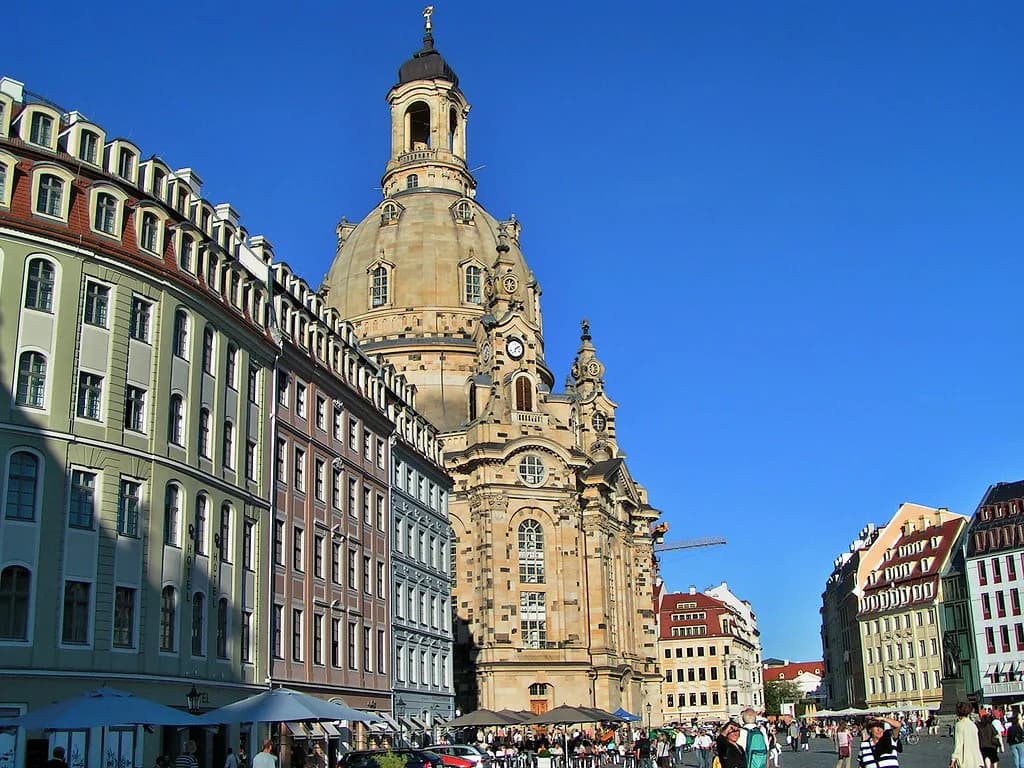
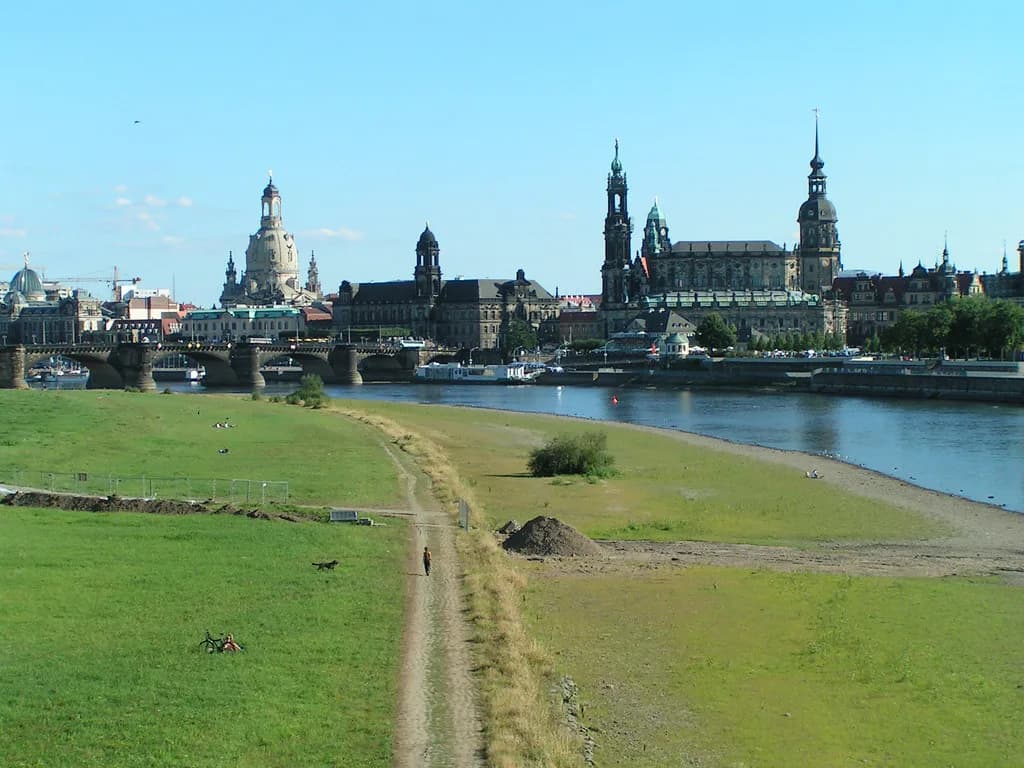
The Altstadt is where the postcard sights and the outdoor café terraces sit, and it is the easiest place to eat if you are spending the day around the Frauenkirche and the Zwinger. The trade-off is that prices and crowds rise with the view, so use the old town for one atmospheric meal and eat your everyday Saxon food elsewhere. The Neustadt, across the Elbe, is where the city's everyday and international dining concentrates, alongside street art and a busy student crowd.
A practical split is to eat lunch in the Neustadt, where Saxon plates and international options sit side by side, then cross to the Altstadt for coffee and cake near the river. If you want to base your whole day on food rather than sightseeing, work outward from the Neustadt's streets and treat the old town as a single stop.
Kaffee und Kuchen: How the Afternoon Cake Ritual Works
Kaffee und Kuchen is the Saxon afternoon ritual of coffee with a slice of cake, usually taken between mid-afternoon and early evening, and in Dresden it is the natural slot for Eierschecke. You order at the table in a café or Konditorei, choose from the cake counter, and take your time; this is a sit-down pause, not a takeaway snack. If you want a lighter version, order a smaller slice and a pot of coffee rather than a single cup, since the ritual is about lingering.
Ordering and Paying at a Saxon Restaurant
In most Saxon restaurants you wait at the entrance to be seated, or take a free table in a pub and expect a server to come to you, so standing at the bar to order is unusual outside breweries. Menus come to the table, you order drinks first, and you ask for the bill when you are ready rather than being presented with it automatically. It is worth carrying some euros in case a smaller place does not take cards.
Dresden beer is part of the food picture: a Radeberger or a local Helles alongside Sauerbraten is the standard pairing, and brewery taps double as places to eat. Keep the drinking moderate and treat the beer as an accompaniment to the meal.
Which Dresden Food Should You Order First?
If you eat one Dresden dish, make it Dresdner Eierschecke with coffee in the afternoon, because it is the most local and the hardest to find done well elsewhere. For a full meal, order Dresdner Sauerbraten with Rotkraut at lunch and follow it with a walk across the Elbe to the Neustadt. If your day is built around the old town sights, eat one terrace meal there and take the rest of your food budget to the neighborhood streets.
Explore more Dresden guides
Frequently Asked Questions
What is Dresden famous for food?
Dresden is known for Dresdner Eierschecke, a layered quark-and-custard cake, for Dresdner Christstollen fruit bread, for Sauerbraten with red cabbage, and for potato dishes such as Sächsische Kartoffelsuppe. Quarkkeulchen, fried quark dumplings, and Fettbemme, lard on bread, round out the everyday side of the local table.
Do you wait to be seated in Germany?
In most German restaurants you wait near the entrance for a server to seat you, though in a pub or a busy beer hall you may simply take a free table. If you are unsure, make eye contact with a server and wait for a nod rather than walking past the counter.
Where can I try Saxon food in Dresden?
Traditional German menus in both the Altstadt and the Neustadt are the reliable place to find Sauerbraten, potato soup and Quarkkeulchen, and café and Konditorei counters are where the cakes live. Pfunds Molkerei in the Neustadt is a dairy shop for buying cheese and food gifts rather than a full meal.
Sources
Notes for your next German food trip
Optional updates to our guides.
You might also like
Continue reading
More guides you'll find useful