Beer Gardens in Dortmund: Where to Sit and What to Order
Dortmund's beer gardens are where locals drink Dortmunder beer outdoors. Here is where to sit, what to order and how self-service and table service work.
On this page
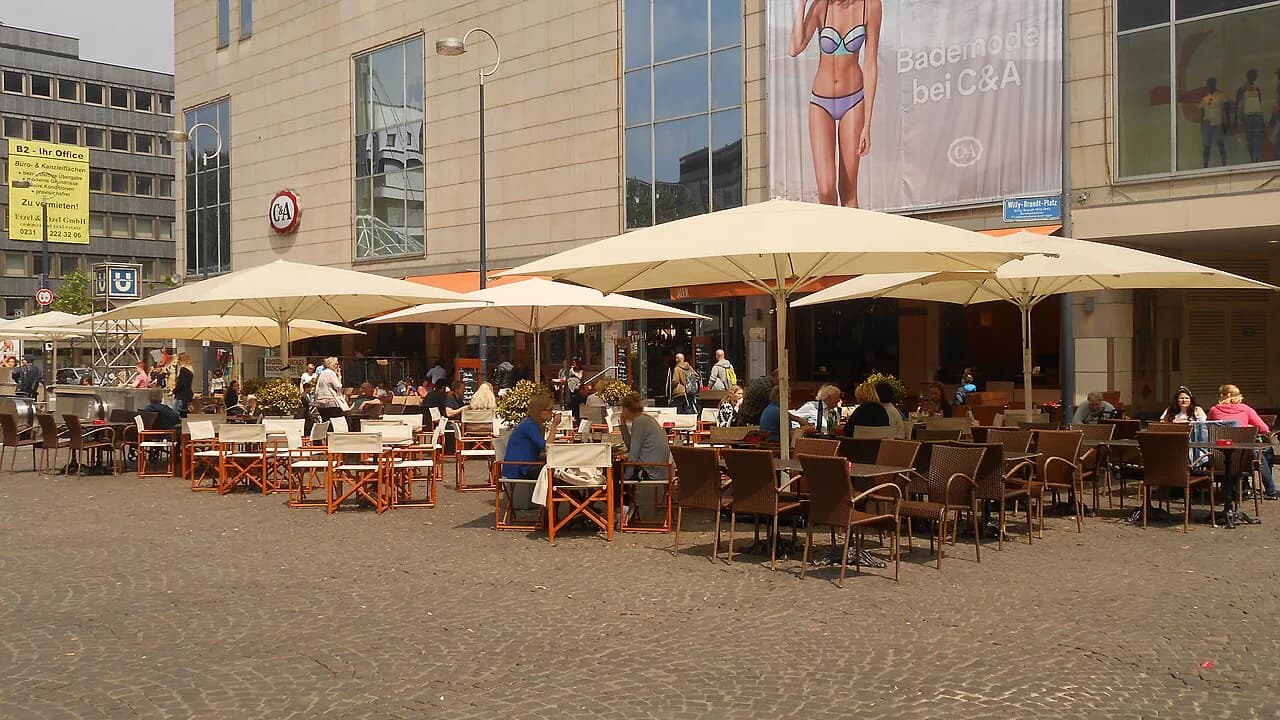
Dortmund's beer-garden scene is small and centered on Biergarten Rote Erde at the stadium, where you drink Dortmunder beer outdoors before or after a match. The city's brewing identity runs through that beer style, a pale lager with more malt backbone than a standard Pils, which is what you order in any Dortmund beer garden. This guide covers where to sit, how the bench-sharing and paying rules work, and how to pair an outdoor round with a city-center brewery.
What makes a Dortmund beer garden different
Dortmund built its reputation on industrial brewing, and the beer that came out of it is Dortmunder Export, a golden lager that sits between Pils and Helles, fuller in body than the former and drier than the latter. That balance matters in a beer garden, because it stays drinkable over a long afternoon without becoming sweet or heavy. Order it by style rather than by brand if the menu is unfamiliar; Dortmunder Union and DAB Export are the names most likely to appear.
The beer culture here still leans on its industrial past, and much of it has been rebuilt around new breweries and taprooms rather than the old mass-market halls. A Dortmund beer garden therefore tends to feel more like a working city's outdoor table than a postcard Bavarian setup. That is the appeal: fewer chestnut trees and brass bands, more benches, stadium proximity and a direct line to the beer.
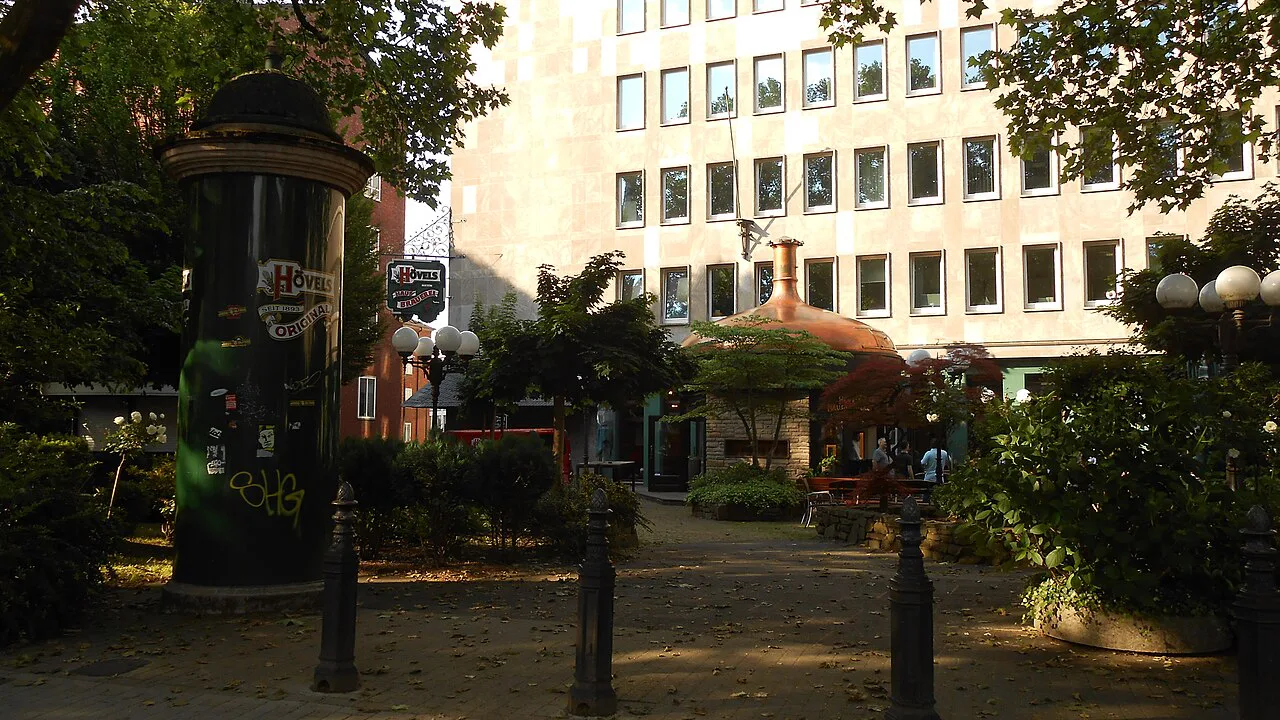
Biergarten Rote Erde at the stadium
Biergarten Rote Erde sits at the stadium complex and is the outdoor beer spot to plan around when you want to drink near the ground where Dortmund plays. Its own page lists opening hours from Tuesday to Saturday and on Sundays and holidays, weather permitting — the place to confirm before you go.
The setting is the point: open-air seating next to the stadium, serving the beer the city is known for. On match days the area around the ground fills up early, so a table is a matter of timing rather than booking. Treat it as a place to drink and eat around a fixture, not a quiet retreat.
If you want a full sit-down meal with German dishes rather than a bench and a round, German Restaurants in Dortmund has plenty of options away from the stadium, and those kitchens are easier to plan around than a beer garden tied to the match calendar.
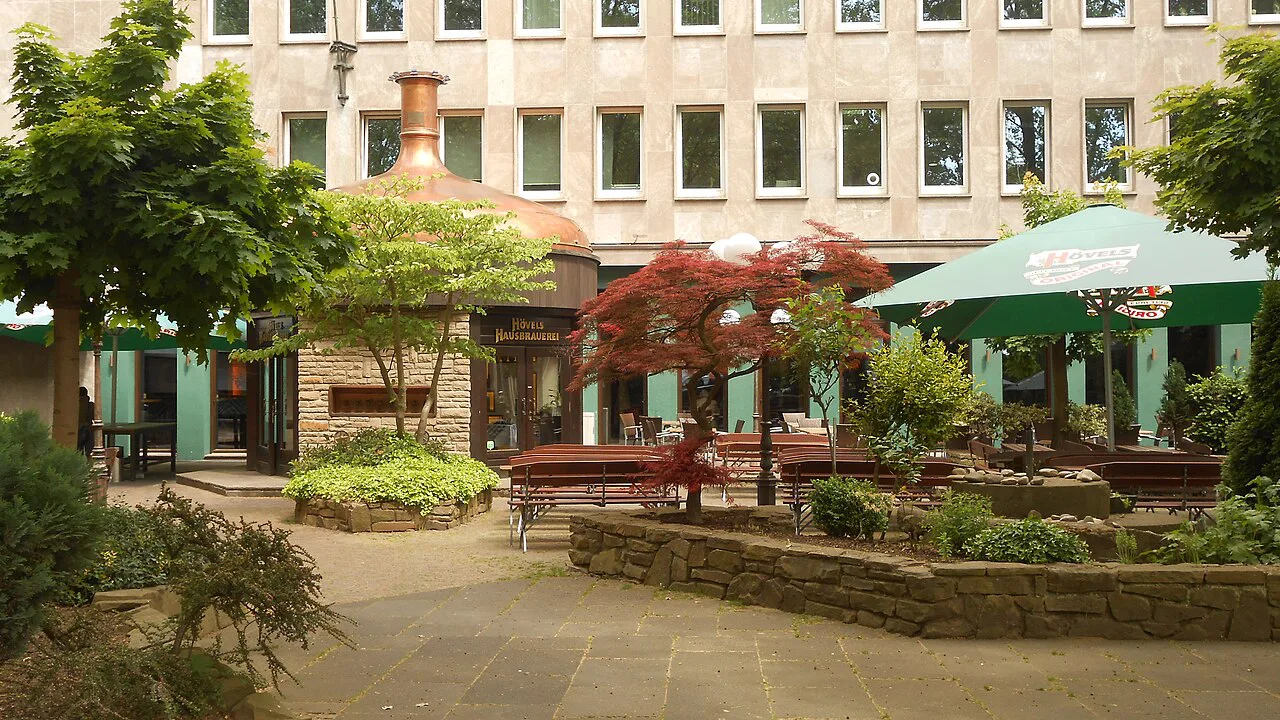
How seating works: benches and served tables
German beer gardens generally work on two models: self-service benches where you fetch your own drinks from a counter and return the glassware, and served tables where a waiter takes the order and adds it to a tab. At Biergarten Rote Erde, look at the tables around you and follow what they are doing before you sit.
Long benches mean sharing. If there is space, sitting down next to strangers is normal, and asking whether a spot is free is enough to start. Keep your spot by leaving a jacket or bag on the bench rather than hovering, and do not shift other people's glasses to make room.
Cash remains the default in much of Germany's beer-garden and brewery culture, and card acceptance varies by stand and by day. Carry notes and coins for your round, and if you are running a tab, tell the server at the start. That one habit prevents most awkward moments at the end of the evening.
What to order with a round
Start with a Dortmunder, ideally on tap, in the size the house pours. Ask what is poured fresh rather than what is bottled, since that is where the style shows best.
For food, look at what the tables around you are eating and order the same thing; at stadium-adjacent spots the offer is built for speed and volume, not for a long menu. For a broader picture of the city's cooking, from currywurst to the plate of the day, browse What to Eat in Dortmund before you go. Use the house's printed board or counter menu as the authority on what is actually being served.
Season and timing: weekday afternoons vs. match days
Beer-garden weather in the Ruhr runs roughly from late spring into early autumn, with the most comfortable outdoor afternoons in May, June and September and the busiest days whenever the sun first appears after a gray stretch. Weekday afternoons are the calm option: shorter queues at the counter and space on the benches.
Match days flip that entirely. Crowds arrive well before kickoff, the beer garden fills, and the atmosphere becomes the reason to go rather than the seating. Check the fixture list before choosing a day, and if you want a quiet round, avoid match days entirely.
Dortmund's calendar of beer-culture events also shapes the outdoor-drinking season, layered on top of the regular rhythm of the beer garden. Those events change from year to year, so confirm a given edition's date and location with the organizer before building a trip around it.
Etiquette: sharing, paying and tipping in cash
When you order at a served table, you will usually pay at the end rather than per round, so keep track of what you have had. Say whether you are paying together or separately when you ask for the bill; German servers will split a table without complaint but want to know before they start tallying.
Tipping is done in cash, rounded up to a convenient figure, and handed over with the bill rather than left on the table. A simple rule is to round up a round or two and say the total you want to pay, including the tip, as you hand over your money.
Treat the beer garden as a place for a measured round or two with food, not a long session. That fits the local pattern of drinking with a meal, and it leaves you clear-headed for the rest of the day in the city.
Pairing a beer garden with a city-center brewery
A stadium beer garden and a city-center brewery are complementary halves of a Dortmund beer day: outdoor benches in the afternoon, an indoor taproom or brewery kitchen later. Hövels Hausbrauerei is the name to know among the city's brewhouses, and the brewery roundup covers the taps worth planning around.
The Kaiserviertel, the Gründerzeit quarter near the Reinoldikirche, is the other useful anchor: a compact neighborhood of owner-run shops and small food stops that suits a walking loop before or after a brewery stop. Food tours of the quarter run with a handful of tastings across a few kilometers, and they are a reasonable way to get oriented if you want context beyond the beer.
If your group includes non-drinkers or vegetarians, check menus before committing to a beer garden, since the stadium-side offer is narrower than in the city center. The vegetarian and vegan options across Dortmund are worth sorting out in advance for a mixed group.
Which Dortmund beer garden should you pick?
For most visitors, Biergarten Rote Erde is the outdoor round to build into a Dortmund day, ideally on a weekday afternoon and paired with a brewery visit in the center. Check the beer garden's page that it is open before you travel across town for it, and carry cash for the round.
If you want a proper sit-down meal instead of benches, switch to a German restaurant in the center, or work through the Best Restaurants in Dortmund for a brewery kitchen. Either way, order the Dortmunder first and decide from there.
Explore more Dortmund guides
Frequently Asked Questions
Is there a beer garden at the Dortmund stadium?
Yes. Biergarten Rote Erde sits at the stadium complex and is the outdoor beer garden to plan around near the ground. Its page lists opening hours Tuesday to Saturday and on Sundays and holidays, weather permitting; check it before you go, since the stadium calendar drives its busiest days.
What beer is Dortmund known for?
Dortmunder Export, a golden lager with more malt body than a standard Pils and a drier finish than a Helles. It is the beer to order in a Dortmund beer garden, ideally on tap.
Do Dortmund beer gardens take cards?
Card acceptance varies by stand and by day, so carry cash for your round. In served areas you usually pay at the end rather than per round, and tips are given in cash when you settle the bill.
When is beer-garden season in Dortmund?
Outdoor beer-garden weather runs roughly from late spring into early autumn, with the most comfortable afternoons in late spring and September. Weekday afternoons are quieter; match days around the stadium fill up well before kickoff.
Sources
Notes for your next German food trip
Optional updates to our guides.
You might also like
Continue reading
More guides you'll find useful