Dresden Cafés: Where to Drink Coffee and Eat Cake
A practical guide to Dresden cafés: Konditorei cake, Kaffee und Kuchen, neighborhoods to look in, and how ordering, seating and paying work for visitors.
On this page
For a Dresden afternoon, pick your café by what you want in front of you: a slice from a Konditorei cake counter, a bakery roll and coffee, or a longer sit over a pot of coffee in the old center. Most visitors get the most out of the city by treating cake as the main event between roughly three and five in the afternoon, when the coffee-and-cake habit peaks. This guide sorts the three café types, names the cakes on the counter, and covers ordering, seating and paying.
Two very different addresses anchor the practical side: a neighborhood café-bakery on Boltenhagener Straße in the north, and an Altstadt cake shop on Ringstraße a short walk from the old market square. Use them as models for what to expect, then apply the same questions to whichever café you pass.
What a Dresden café is: Konditorei, café-bakery or coffee house
A Konditorei is a pastry shop first and a café second: the display case of tortes and sheet cakes is the reason to come, and the sit-down area exists so you can eat a slice properly with coffee. A café-bakery works in the other direction, selling Brötchen (bread rolls), loaves and pastries over the counter with a few tables for people who want to linger. A coffee house puts the drink in charge and the cake in a supporting role.
Knowing which one you have walked into saves confusion at the till. In a Konditorei, cake is typically chosen at the display case before you sit.
If cake is your goal, this site's guide to where to eat cake in Dresden pairs well with this page, because it narrows down specific slices rather than café types.
Kaffee und Kuchen: the afternoon cake habit and what to order with your coffee
Kaffee und Kuchen translates simply as coffee and cake, and it is a fixed late-afternoon ritual rather than a dessert course. You order a hot drink and one slice, sit for as long as the cup lasts, and treat it as the bridge between an afternoon walk and dinner. Aim for mid-afternoon if you want the full case to choose from; going earlier can mean the day's baking is still arriving.
The drink to order is filter coffee, a Milchkaffee (coffee with milk, roughly a large milky coffee) or a pot of tea if you want to stretch the sit. Cappuccino and latte are widely available in city cafés but are not the traditional partner to a slice. If you only want a small hit of sugar, ask for a piece of something from the counter rather than a whole portion.
The cake counter: Bienenstich, Streuselkuchen, Butterkuchen and seasonal fruit cakes
Bienenstich, literally bee sting, is a yeast cake with a caramelized almond topping and a cream filling; it is rich, sticky and best eaten with a fork. Streuselkuchen is a sheet cake under a crumb topping, plain or over fruit, and Butterkuchen is a flat yeast cake with butter and sugar baked on top. All three are sold by the slice and are the everyday repertoire of a Dresden café.
Zwetschgenkuchen is a plum sheet cake and appears when plums are in season, which makes it a marker of late summer and early autumn rather than a year-round order. Ask what came out of the oven that day instead of assuming a specific cake is available.
Eierschecke is the Dresden cake worth knowing by name, so it has its own guide on this site.
Konditorei-Bäckerei-Café Thomas Zscheile in Boltenhagener Straße: a neighborhood café-bakery in the north
Konditorei-Bäckerei-Café Thomas Zscheile is listed at Boltenhagener Straße 89 in the 01109 postcode north of the center, a residential stretch rather than a sightseeing street. Directory entries describe it as a bakery selling rolls, bread and cake, which makes it a sensible stop if you are staying or walking in that part of town.
Treat it as a plain neighborhood bakery rather than a grand coffee house: the draw here is convenience and location, not atmosphere.
Kuchen Atelier on Ringstraße in the Altstadt: an afternoon cake stop near the old center
Kuchen Atelier is listed as a café-Konditorei at Ringstraße 1 in the 01067 Altstadt, close to the old center and a short walk from the Altmarkt. Directory entries describe it as selling cake, tortes and sweet pastries.
Its hours are an afternoon block rather than an all-day window, so plan it as a Kaffee und Kuchen stop instead of a breakfast café. The listing shows it closed on Monday and Tuesday and open from 13:00 to 18:00 Wednesday through Sunday, with the caveat that holiday hours can differ.
For a broader sweep of sweet stops in the same district, including ice cream in summer, this site's guide to ice cream in Dresden is the seasonal counterpart.
How to order at the counter versus from the table, and how to pay
In a bakery-café, order and pay at the counter, then find a table; nobody will come to take your order. In a café with table service, wait to be seated or pick a free table and expect a menu, with payment at the end. The awkward middle case is the Konditorei, where you often choose the cake at the case first and then tell staff where you are sitting.
Tipping at a German café is simple: round up to the next euro or add roughly five to ten percent, and say the total you want to pay when you hand over the money rather than leaving it on the table.
A word on timing helps: German cafés are daytime places, and a table is yours for the length of a coffee and cake rather than an afternoon of laptop work. If you want to sit for a long time, order a second drink.
Sitting inside or outside, and why the afternoon is the busiest slot
Outdoor seating is the prize in Dresden from spring into early autumn, and cafés with a terrace fill their pavement tables first. Inside, you get a calmer room and often more space, which matters if you are with a group or want to read. In the shoulder seasons, check whether the terrace is actually open before you count on it.
The busy window is mid-afternoon, when the Kaffee und Kuchen crowd arrives at once; late morning is the calm opposite and the better bet for a seat and a quiet coffee. If you want a specific central café in the afternoon, arrive at the start of its opening block rather than the middle.
Prices you can expect for a slice of cake and a coffee
Price expectations split by type rather than by city: a bakery counter selling rolls, bread and cake by the piece usually costs less than a Konditorei with table service, and a sit-down terrace in the Altstadt generally runs higher than a residential bakery.
Read the board or menu at the counter before ordering — that is where the shop's own current figures are.
Which neighborhood suits your day: Altmarkt and the Frauenkirche area versus residential streets
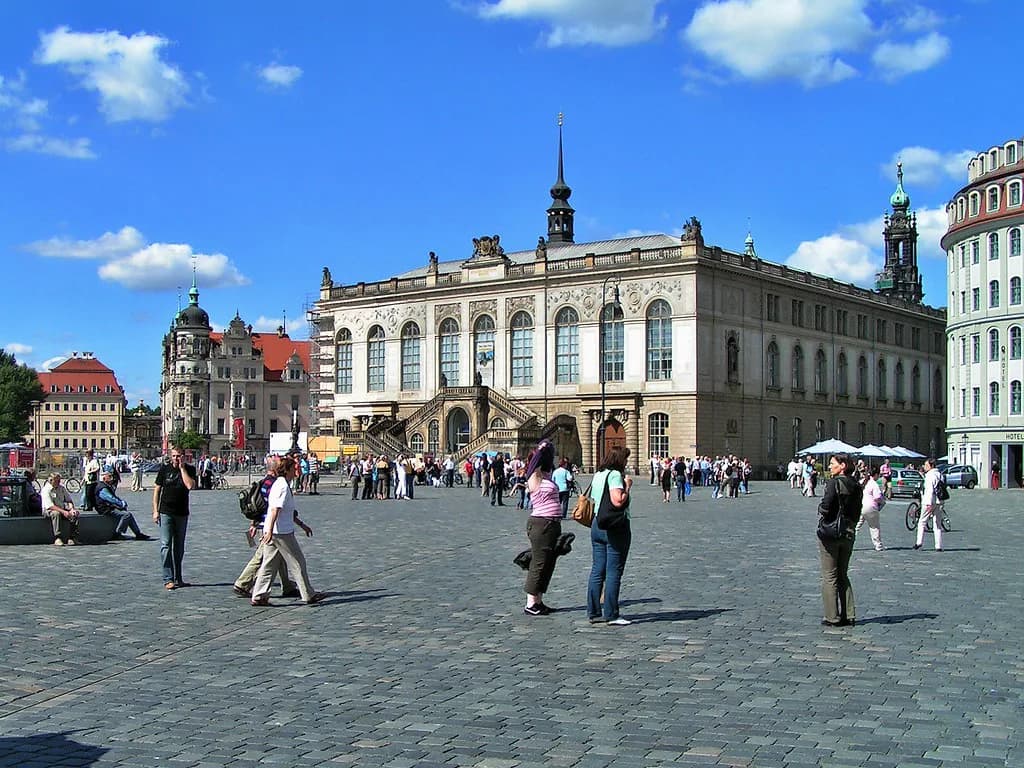
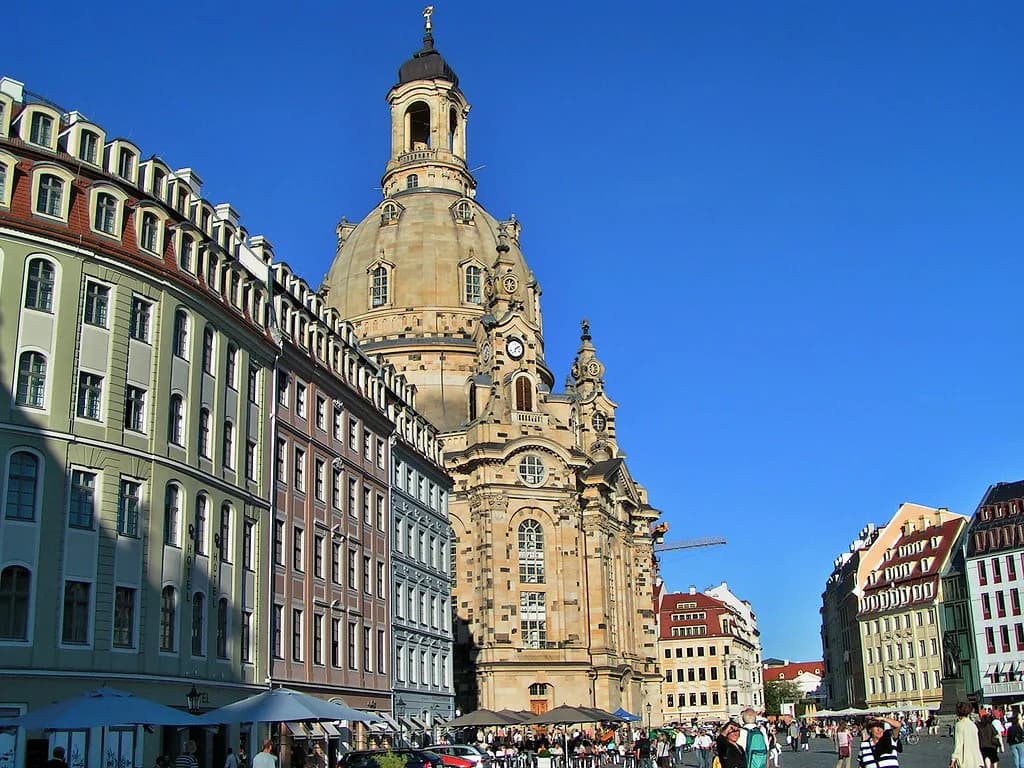
The Altstadt around the Altmarkt and the Frauenkirche concentrates cafés within a few minutes of each other, which suits a sightseeing day when you want cake without a detour. The cost is crowds and slightly higher prices, and the reward is choice: if one case looks picked over, the next is a block away.
Residential streets north of the center, such as the Boltenhagener Straße area, give you the opposite trade: fewer cafés, plainer rooms and a bakery rhythm tied to local customers. Pick that side of town if you want a cheap breakfast roll and coffee rather than a cake destination.
Seasonal cake and the winter pastry case
Dresden's winter pastry season brings Stollen, the heavy fruit bread dusted with sugar, into bakery windows from autumn onward. A slice with coffee is a legitimate café order in December.
Outside that season, look to the fruit cakes: rhubarb and berries in late spring, plums and apples in autumn. A café that posts its cake of the day is telling you what is fresh, so order that rather than a fixed favorite.
Which Dresden café fits your afternoon?
Choose by mood: the Altstadt for a central cake stop with a choice of cafés, a residential bakery-café for a fast, cheap coffee and roll, and a Konditorei when the slice itself is the point. Build the visit around mid-afternoon for the full cake case, or late morning if you want a quiet table.
If you want more cake options first, this site's guide to where to eat cake in Dresden is a natural next stop for narrowing down specific slices.
Explore more Dresden guides
Frequently Asked Questions
How long can you sit at a café in Germany?
As long as your order reasonably supports. A coffee and a slice buys you a relaxed sit, but German cafés are daytime places and tables turn over around the afternoon cake rush, so order a second drink if you plan to stay longer. Nobody will rush you out, but camping on one coffee through the busiest hour is not the local habit.
What are typical German café menu items?
Expect filter coffee, Milchkaffee, cappuccino and tea alongside a cake counter of sheet cakes and tortes such as Bienenstich, Streuselkuchen and Butterkuchen. Bakeries add Brötchen, loaves and pastries, and many cafés serve a small breakfast of rolls, butter and jam. Seasonal fruit cakes appear when the fruit is in season.
Sources
Notes for your next German food trip
Optional updates to our guides.
You might also like
Continue reading
More guides you'll find useful