Dortmund Food: What to Eat and Where
Dortmund food pairs hearty Westphalian cooking with Turkish grills, Swabian plates and Neapolitan pizza. Here are the dishes and neighborhoods to try first.
On this page
Dortmund food splits into two clear tracks: the hearty Westphalian cooking of the Ruhr industrial belt and the Turkish, Levantine and Mediterranean kitchens that grew up alongside it. For a first evening, head to the Nordstadt for charcoal grills or the Unionviertel for Swabian plates and Neapolitan pizza, then work outward by neighborhood. This guide covers what to order, which streets to walk, and how a table works in a German restaurant so you can eat well without guesswork.
What Dortmund Food Is
Dortmund is a Ruhr city, and its table reflects that: filling Westphalian dishes built on pork, rye bread and root vegetables, eaten in Gasthäuser and simple counters. Alongside that older cooking sits a large Turkish and Mediterranean scene, concentrated in the Nordstadt, where grills and bakeries serve a city with a long immigrant history. The two traditions do not compete; they sit streets apart, and a good food day in Dortmund moves between them. For a broader list of sit-down addresses, the best restaurants in Dortmund guide goes deeper.
Local Dishes to Order First
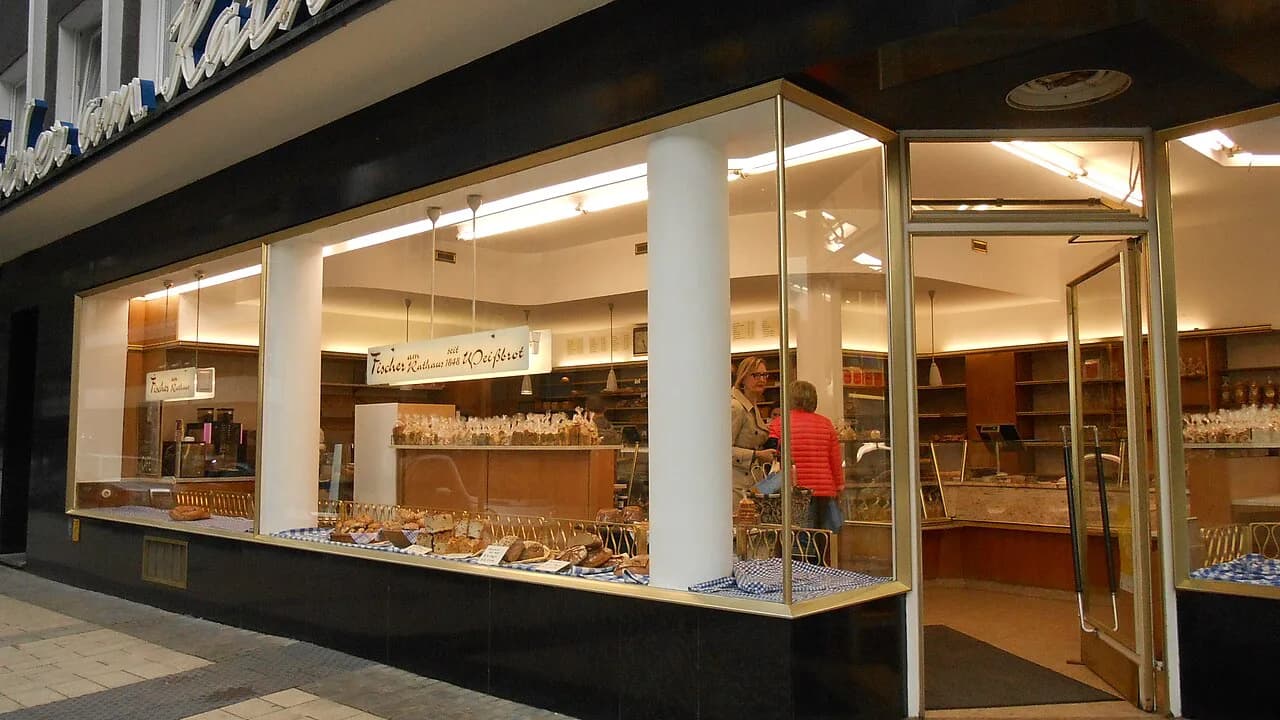
Pfefferpotthast is the dish to know: a dark Westphalian beef stew, heavily peppered and thickened with bread or flour, traditionally served with boiled potatoes and often with beetroot. Order it when you see it on a menu in cooler months, because it is winter cooking rather than summer fare. Westphalian rye bread, dense and sour, anchors breakfast and the Abendbrot cold evening meal, and it is what makes a Westphalian ham or cheese plate worth ordering.
At the snack counter, look for Currywurst, Bratwurst and Frikadellen, the flat German meat patties sold warm with mustard or a roll. These are everyday Ruhr food, cheap and fast, and they tell you more about how the city eats on a weekday than any restaurant tasting menu. For a sit-down version of the same regional cooking, a German restaurant Dortmund list is the place to start.
Turkish and Levantine Food in the Nordstadt
The Nordstadt is where Dortmund's Turkish and Levantine cooking concentrates, and Münsterstraße is the street to walk. The kitchens here go well beyond the corner Döner: Bosporus, at Chemnitzer Straße 94, serves Turkish cooking with lamb and beef from the grill, often as skewers, plus fish and pan dishes, soups and salads to start, and baklava for dessert. Caracalla, at Münsterstraße 75, began as an Imbiss stand and now pairs European and Middle Eastern seasoning around a central charcoal grill, where you can watch the grill work; in warm weather you can sit outside.
What to look for is the ocakbaşı setup, the open charcoal grill that signals freshly grilled meat rather than reheated slices. Order a mixed grill if you want to taste several cuts, and finish with baklava and a glass of tea. Ask for the spicier preparations if you like heat; German Turkish kitchens often keep the heat mild by default.
Where to Eat in the Unionviertel
Rheinische Straße in the Unionviertel has become one of the most concentrated eating streets in the city. Labsal, at Rheinische Straße 12, brought Swabian cooking to Dortmund in autumn 2017: Spätzle, Maultaschen (filled pasta pockets) and Zwiebelrostbraten, the onion-topped roast beef that is a southern German staple. It shares the building with De Rosa, a family-run pizzeria that opened at the end of 2019 and proofs its dough for 72 hours on a traditional Neapolitan recipe, giving a crust that is both airy and thin.
This is the neighborhood to pick when a group cannot agree: one table can order Spätzle while another orders pizza, and both leave satisfied. It also works for a casual lunch, since Labsal serves a midday menu alongside coffee.
Small Plates and Asian Kitchens in the Klinikviertel and Innenstadt-Ost
In the Klinikviertel, Chuzo at Kleine Beurhausstraße 26 cooks tapas in an open show kitchen, with grill skewers as the house specialty in versions from chorizo to duck breast to seafood, plus a spice station where you season your own plate. It suits a larger group because you order many small plates and share.
Nearby, Tam Nag Thai at Hohe Straße 13 is a modest storefront with a wood-paneled interior of low tables and gold accents that reads as a Thai temple, and a menu that covers the Thai canon. For something different, NoMoreRice at Märkische Straße 62 is a Chinese kitchen built around dumplings rather than rice, served in many shapes and colors and eaten tapas-style with friends.
Café and Cake Stops in the Kaiserstraßenviertel
Küchenwirtschaft Bismarck at Bismarckstraße 1 sits in the quiet Kaiserstraßenviertel and works as an all-day café: breakfast and quiche in the morning, cake in the afternoon, all from an open kitchen in a living-room setting, with occasional evening concerts. It is the stop for a slow sit rather than a quick meal, and it fits a rainy afternoon. If cafés are the point of your day, the cafes in Dortmund guide covers more ground.
Vegetarian and Vegan Options in the Saarlandstraßenviertel
Delikat Essen at Alter Mühlenweg 14 in the Saarlandstraßenviertel makes a point of catering to everyone at the table, with seitan, steak and zander fillet dishes cooked without flavor enhancers or additives, and a menu that changes with the seasons plus a weekly card. That makes it the easiest place to bring a mixed group where one person eats vegan and another wants fish. For a dedicated list, see the vegan Dortmund guide.
Portuguese and Spanish Corners
The Nordstadt also covers Iberian cooking. Churrasco Grill at Münsterstraße 109 is Portuguese, with beef and lamb on the skewer and grill, plus chicken and fish, served in generous portions in a plain room that keeps the focus on the food. Taberna Andaluza serves Spanish tapas meant to be eaten across an evening alongside drinks, with chorizo and serrano ham worth ordering.
Choose Churrasco for a big plate of grilled meat and Taberna Andaluza when the table wants to graze and talk. Both reward ordering several dishes and sharing rather than committing to one main. To drink alongside, the city's beer tradition is worth knowing: Dortmunder Export is the local pale lager style, and the Dortmund beer guide explains it.
How Eating Out Works in Dortmund
In a German restaurant you usually wait to be seated in the dining room, then order from the menu; at a café or Imbiss, order at the counter and take your food to a table. When you want to pay, catch the server's eye and ask to pay together or separately, since splitting the bill is normal. Tipping is rounded up rather than calculated as a percentage, handed to the server directly.
For groups, book ahead, especially at the smaller neighborhood places where tables are limited. A culinary walking tour is another way to cover several kitchens in one go: Eat the World runs a three-hour tour in Dortmund with stops at six food businesses, including traditional bakeries, long-established butcher shops, bistros, cafés and Italian delicatessens, and private group tours can take up to 48 people split into three staggered groups.
Dortmund Food by Neighborhood
Use this as a quick decision tool. For Turkish and Levantine grills plus Portuguese and Spanish cooking, go to the Nordstadt around Münsterstraße. For Swabian plates and Neapolitan pizza, walk Rheinische Straße in the Unionviertel. For tapas, Thai and Chinese dumplings, head to the Klinikviertel and Innenstadt-Ost. For breakfast and cake in a quiet residential quarter, pick the Kaiserstraßenviertel, and for a mixed group with vegetarian needs, the Saarlandstraßenviertel.
Which Dortmund Neighborhood Should You Eat In Tonight?
Pick by mood and group rather than by cuisine alone. A shared, sociable dinner points to the Nordstadt grills or Chuzo's small plates; a mixed group with dietary needs is safest at Delikat Essen; a slow morning belongs to Küchenwirtschaft Bismarck. Whichever you choose, order the regional dish once: Pfefferpotthast in winter, Westphalian rye bread at breakfast, and a Dortmunder Export with the grill.
Explore more Dortmund guides
Frequently Asked Questions
What food is Dortmund known for?
Dortmund is known for hearty Westphalian cooking such as Pfefferpotthast, a peppery beef stew, and dense Westphalian rye bread, alongside a strong Turkish and Levantine restaurant scene in the Nordstadt and a broad international mix in the Unionviertel.
Where can I find good Turkish food in Dortmund?
The Nordstadt is the center of Turkish and Levantine eating, particularly along Münsterstraße. Bosporus on Chemnitzer Straße and Caracalla on Münsterstraße both serve grilled meat, with Caracalla cooking over a central charcoal grill.
Is Dortmund good for vegetarian eaters?
Yes. Delikat Essen in the Saarlandstraßenviertel serves vegetarian, vegan and fish dishes together, and many other kitchens offer meat-free plates, so a mixed group can eat at one table.
Do I need to book a table in Dortmund?
For small neighborhood restaurants it is wise to reserve, especially for groups. Larger parties should call ahead, since several of the places described here seat only a handful of tables at a time.
Sources
Notes for your next German food trip
Optional updates to our guides.
You might also like
Continue reading
More guides you'll find useful