German Restaurant Dortmund: Where to Eat in Dortmund
Traditional German restaurants in Dortmund cluster around the city center, serving Westphalian dishes and Dortmunder beer. Here is what to order and where to go.
On this page
For a traditional German meal in Dortmund, head to the center and pick between two rooms: a Brauhaus pouring the city's own beer, or an old Gasthaus serving Westphalian cooking. Wenkers am Markt on Betenstraße is the brewery-owned option, and Zum alten Markt at Markt 3 is the classic regional kitchen.
This guide separates those two traditions, explains the dishes that define the local plate, and walks through ordering, portions and paying. It also marks where the center's international restaurants fit if your group wants pizza or sushi instead.
What counts as a German restaurant in Dortmund
Dortmund's traditional food splits into two formats. A Brauhaus is a brewery-owned tavern: beer made by or for the house, hearty German cooking, and long tables built for groups. A Gasthaus or Wirtshaus is the older inn format, where the kitchen is the point and the beer is whatever the local brewery supplies.
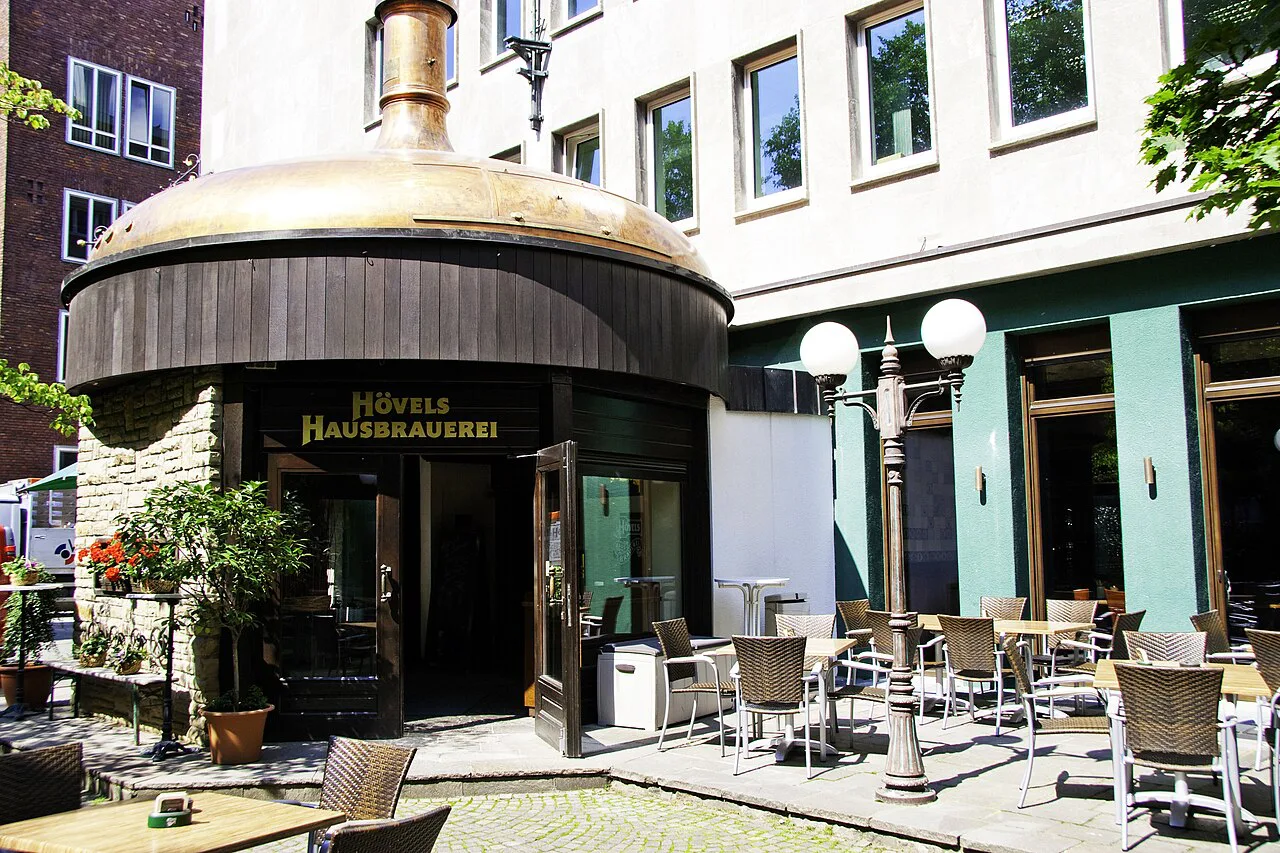
Wenkers am Markt describes itself as the Stammhaus of Dortmunder Kronen, meaning the original house tied to that brewery, and serves its own beer alongside German food and Schnitzel specialties on Betenstraße in the center. Zum alten Markt bills itself as a traditional Dortmund location at Markt 3, with regional specialties and a Ruhr-region feel.
That distinction matters when you book. At a Brauhaus you are choosing a beer first and food second; at a Gasthaus the dish you came for sets the pace. If you only have one evening, decide which of those two you actually want before picking a name.
Dortmunder beer and the Brauhaus table
Dortmund's beer identity rests on Dortmunder Export, a pale lager style that is drier and more bitter than a Munich helles. In a Brauhaus it arrives as part of the meal rather than as a separate stop: you order a round with the food and the table keeps going from there.
At Wenkers the house beer is the draw, and the food list runs to German standards with Schnitzel as a specialty. The house keeps its beers and seasonal plates on one page, and the wider picture of Dortmund beer is worth reading before you sit down.
Expect the glassware to be smaller than you might assume. The traditional Dortmund serve is the Stößchen, a slim glass that widens toward the top and holds only a small pour, so a table orders several rounds rather than one tall glass.
Westphalian dishes to order
The two dishes to know in Dortmund are Pfefferpotthast and Dortmunder Krüstchen. Pfefferpotthast is a dark, peppery beef stew thickened with bread and served with boiled potatoes and pickles; it is a winter dish by instinct, though kitchens serve it year-round. Dortmunder Krüstchen is a breaded pork cutlet on a slice of bread, topped with a fried egg and usually a thick gravy.
Zum alten Markt lists both among its regional specialties, which makes it the straightforward stop if you want to try the local canon in one sitting. Portions in Westphalian kitchens tend to be generous, so two dishes between three people is a reasonable opening order rather than a stingy one.
Beyond those two, Westphalian cooking leans on pork, potatoes, kale and rye bread. Westfälischer Grünkohl, a slow-cooked kale dish with sausage and smoked meat, is the regional winter plate to look for once the weather turns. For a wider spread of options chosen by what they do well, start from the fuller list of the best restaurants in Dortmund and work backward from the dish you want.
How a Dortmund meal works
German menus are usually divided into starters, mains and dessert, and a main is sized to be a full meal. Ordering a starter each and a main each is a lot of food; sharing a starter or skipping it is normal and not remarked upon.
Paying is the part American visitors most often get wrong. Many traditional rooms in Germany still expect cash, and splitting a bill across several cards can be awkward, so carry euros even at places that accept cards. Tipping works by rounding up or adding roughly five to ten percent and telling the server the total you want to pay.
If you want a beer garden Dortmund style rather than a dining room, treat that as a summer plan: the two formats are not interchangeable on a cold evening, and a terrace lunch does not replace a proper Westphalian dinner.
Dortmund vs the rest of the Ruhr on the plate
Dortmund shares the Ruhr's working-class food instincts with Essen and Bochum: pork, potatoes, root vegetables and beer, built for cold weather and long shifts. What changes from city to city is the beer and the local name attached to the dish, not the basic logic of the plate.
The city is also associated with football, beer and its industrial heritage, which is why the traditional rooms here feel less like tourist theatre than in prettier German towns. The food is regional and unpretentious, and the menu is written for people who eat this way regularly.
Where the center cluster sits and how to plan around it
Both traditional addresses sit within a short walk of each other in the Altstadt: Wenkers on Betenstraße and Zum alten Markt directly on the Markt. That makes a single evening easy to plan, since you can look at both rooms before committing and still be near the main shopping streets.
Elsewhere in the city, the eating neighborhoods people mention are the Kreuzviertel and the area around Phoenix-See. Those are useful for a second night but do not change the fact that the traditional German rooms cluster in the center.
When German isn't what you want
Dortmund's restaurant scene is broader than Westphalian cooking, and most of the accessible options near the center are international. You will find Neapolitan pizza at 60 seconds to napoli on the Markt, and crossover Asian cooking including sushi at Monchi on Essenerstraße 12.
These are sensible fallbacks for a mixed group or a second evening, and they are not a substitute for the regional dishes. If your priority is plant-based eating rather than Westphalian pork, plan around that separately instead of hoping a traditional menu will stretch, and start from the vegan Dortmund addresses before you settle on a night.
Fine dining is a different night entirely, and the city has dedicated addresses for it if the room matters as much as the plate; keep that as a separate plan from a Brauhaus or Gasthaus evening.
Which Dortmund restaurant fits your night
If you want one glass of house beer with a schnitzel and no ceremony, sit down at Wenkers am Markt. If you want the peppery stew and the cutlet that define the local table, book your evening around Zum alten Markt instead.
With a group that disagrees, split the difference: traditional rooms for the first night, an international spot for the second.
Brauhaus or Gasthaus?
Pick the Brauhaus if beer is the reason you came and the Gasthaus if the Westphalian plate is. In Dortmund the two are a few minutes apart, so the choice is about the evening you want, not about logistics.
Either way, order the Pfefferpotthast or the Krüstchen once, carry cash, and keep to a couple of the small glasses rather than a long run of them.
Explore more Dortmund guides
Frequently Asked Questions
Is Dortmund worth visiting for food?
Yes, if you want regional Westphalian cooking rather than polished tourist menus. The traditional rooms sit in the center near the Markt, so a good evening meal fits easily into a day in the city.
What is a must-eat dish in Dortmund?
Pfefferpotthast, a peppery beef stew with potatoes and pickles, and Dortmunder Krüstchen, a breaded pork cutlet on bread topped with a fried egg and gravy. Both appear among the regional specialties at Zum alten Markt.
Do German restaurants in Dortmund take cards?
Many traditional rooms in Germany still lean on cash, so carry euros even where cards are accepted. Tipping is done by telling the server the total you want to pay, usually rounding up or adding five to ten percent.
Sources
Notes for your next German food trip
Optional updates to our guides.
You might also like

Continue reading
More guides you'll find useful