Cafés in Dortmund: Coffee, Kuchen and Bakery Counters
A practical pick of cafés in Dortmund, from bakery-cafés on Kleppingstraße and Wißstraße to breakfast spots in the northern Innenstadt.
On this page
For a Dortmund coffee stop, decide first whether you want a bakery counter or a table. Café Lotte at Kleppingstraße 8 in the western Innenstadt opens every day, including Sunday from 10:00, while Kamps on Wißstraße 9 runs Monday to Saturday only — so a Sunday morning points you toward Lotte and a weekday early start works at either.
This guide sorts Dortmund cafés by how they work: bakery-cafés with trays and counters, breakfast addresses in Innenstadt Nord, and the Kuchen stops that fill the afternoon. It covers what Brötchen, Laugenbrezel and Franzbrötchen actually are, how ordering and payment differ between a bakery and a café table, and why the neighborhood you are standing in decides the choice more than any citywide list does. When you want a full meal afterward, the best restaurants in Dortmund pick up where the coffee ends.
Dortmund cafés at a glance: what kind of coffee stop you are choosing
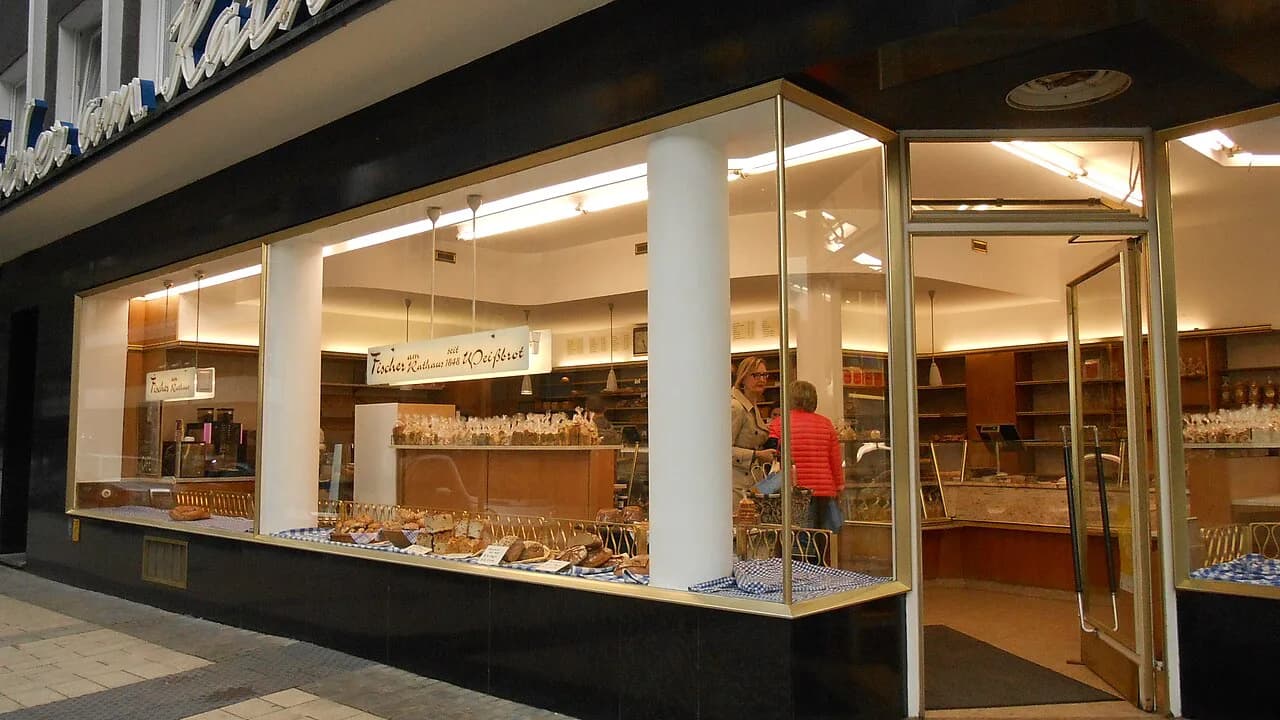
Two formats cover most of what you will find. A bakery-café such as Café Lotte or Kamps is a working bakery with indoor seating: you pick pastries and bread from the counter, pay, then sit with a coffee. A café proper, the kind listed across Innenstadt Nord, is built around sitting down — breakfast plates, coffee refills, a table you keep for an hour.
The distinction matters for timing and for groups. At a bakery counter a queue of five people moves fast and you can be out in ten minutes with a Laugenstange — a lye-water bread stick with a dark, slightly salty crust — and a coffee. At a sit-down café the same ten minutes gets you seated and handed a menu.
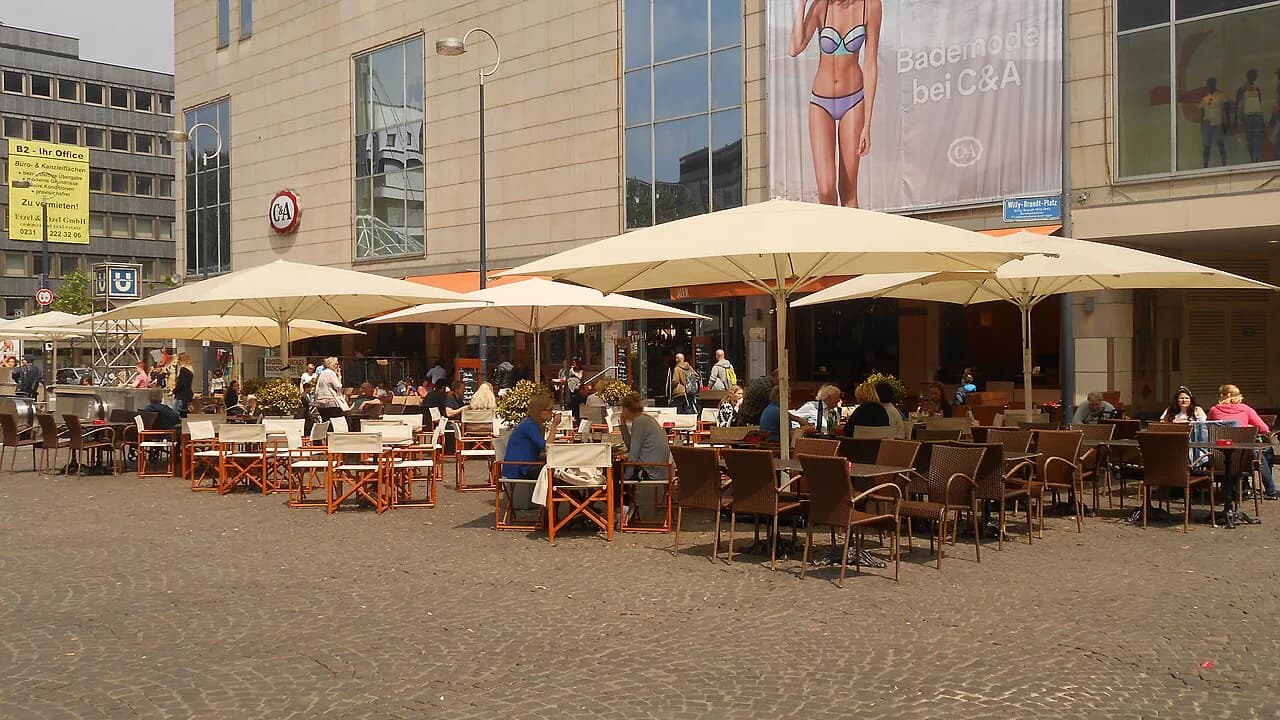
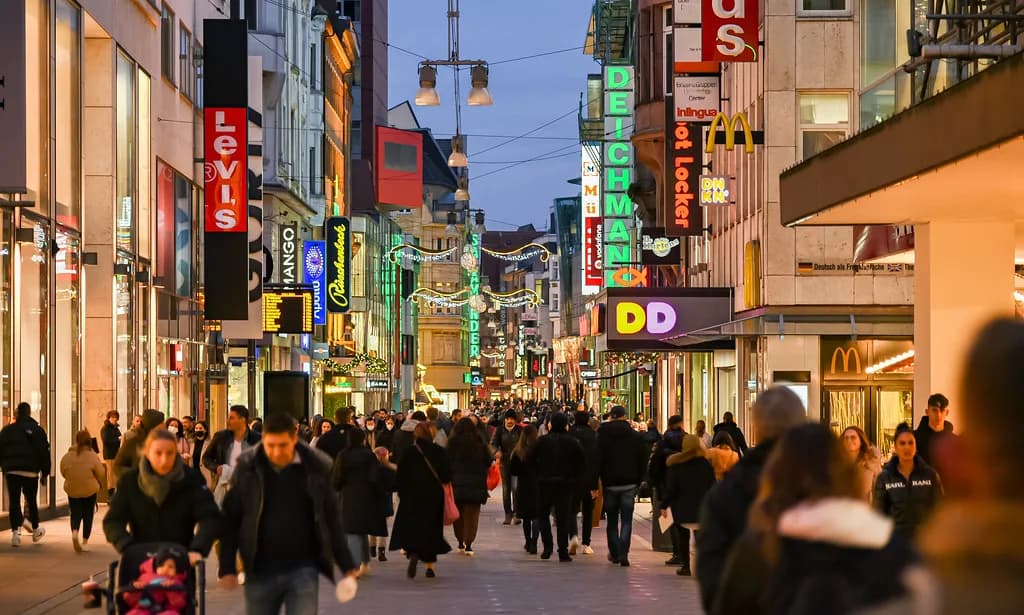
Dortmund's café addresses cluster in the western and northern parts of the Innenstadt, which sit within walking distance of each other and of the main shopping streets. Picking by neighborhood saves you a tram ride for a cup of coffee.
Bakery-cafés in the Innenstadt: Café Lotte on Kleppingstraße
Café Lotte sits at Kleppingstraße 8 in Innenstadt West, roughly 520 meters from the densest shopping area. It is a bakery with a café, meaning indoor seating and a customer toilet, and it keeps long daily hours: Monday to Saturday 9:00 to 19:00, Sunday 10:00 to 19:00.
That Sunday opening is the practical reason to remember the address. Kamps keeps Sunday as a closed day, so a 10:00 start at Lotte still leaves you the whole morning for a late breakfast of rolls, butter and jam with coffee before the day properly begins.
Order the way Germans do at a bakery counter: point at what you want behind the glass, name the number of rolls, and pay at the till. A Weizenbrötchen is a plain wheat roll, a Kaiserbrötchen is the same dough with a star-scored top, and a Laugenstange is the lye-bread version — all standard breakfast building blocks rather than a Dortmund specialty.
Kamps on Wißstraße: fast counter, closed Sundays
Kamps at Wißstraße 9 is a branch of a German bakery chain, in the same western slice of the Innenstadt as Café Lotte. It opens earlier, Monday to Saturday 7:00 to 17:00, and stays closed on Sunday.
The early opening is what makes it useful: a 7:00 start catches commuters and anyone moving between the station and the city center before shops open. The listing notes wheelchair-accessible entrance and cash payment, with indoor seating if you want to sit rather than walk with your coffee.
Its range covers the sweet side as well as the savory one. A Franzbrötchen is a flat, caramelized cinnamon-sugar pastry from Hamburg that is now standard in northern German bakeries; a plain croissant or a chocolate croissant does the same job if you prefer.
Because it closes at 17:00, Kamps is a morning and lunchtime stop, not an afternoon Kuchen destination. Plan it for breakfast or an early sandwich and keep the later coffee for a café that stays open into the evening.
Breakfast cafés in Innenstadt Nord: what is on the list
North of the main shopping axis, around Münsterstraße and the streets running off it, the café addresses shift toward sit-down breakfast places and neighborhood spots. The Dortmund café directory lists addresses in Innenstadt Nord alone, among them Café Rif on Münsterstraße 81, Café Kreidezeit on Münsterstraße 271, Coffee Tom and Kaffeepott, described as a breakfast café.
This is likely the part of town to head for if you want a proper Sunday breakfast rather than a roll eaten standing up. These are smaller operations with their own opening patterns, so not every one is necessarily open on the morning you turn up — the Kaffeepott entry showed as closed on the day the directory was compiled.
If breakfast is the main event rather than a coffee and a pastry, Where to Eat Breakfast in Dortmund is worth reading before you commit to a neighborhood, since the format ranges from a quick plate to a long brunch.
Kuchen and afternoon coffee
The German afternoon ritual is Kaffee und Kuchen: a coffee and a slice of cake taken around three or four in the afternoon. Bakeries supply the cake, but a bakery-café that shuts at 17:00 is a short window; a sit-down café with later hours suits the ritual better, and the Innenstadt Nord list is where those addresses are concentrated.
At the counter, the sweet side of a German bakery is broader than cake alone: plunder pastry, an Amerikaner (a flat iced sponge cake, despite the name), croissants and seasonal fruit tarts. None of this is specific to Dortmund, but it is what you will find on the tray, and pointing is a perfectly good way to order.
If you would rather sit down for something more substantial than cake, a German restaurant covers the afternoon and evening end of the day, with the Gasthaus cooking that a bakery counter cannot offer.
How ordering works: counter vs table, cash vs card
At a bakery-café, ordering happens at the counter: you choose from the display, pay at the till, and then sit if there is seating. At Kamps the listing notes that cash is accepted, so carry euros even if other places in the center take cards.
At a sit-down café the routine is the German standard: seat yourself if there is no sign asking you to wait, order from the menu, and pay at the table when you are ready to leave. Card acceptance varies by venue and is worth asking about before you order if you are traveling cash-light.
Tipping is simple: round up, or add five to ten percent on a larger bill, and hand it over with the total rather than leaving it on the table. Say the amount you want to pay when you hand over the cash — that is the normal German way of doing it.
What to order: the bakery vocabulary
Brötchen means a small bread roll, the base of every German breakfast; you order them by number and by type. A Laugenbrezel is the lye-dipped pretzel with its mahogany crust and coarse salt, and a Laugenstange is the same dough shaped as a stick — both are savory and best eaten the same morning.
Bread is the other half of the bakery: a Roggenmischbrot is a rye-and-wheat mixed loaf, and a Vollkornbrot is whole grain, sold by weight and usually sliced for you on request. Buying a loaf for a picnic or a train ride is a normal, cheap way to eat well in Dortmund for a day.
Beyond the bakery, the city's own plate is worth knowing — Dortmund food runs to hearty Westphalian cooking, and a sit-down café breakfast or lunch is a natural bridge into it.
Timing: morning rush vs quiet late afternoon
Bakery counters are busy early. Thebakery listings estimate the peak around 9:00, when the city is buying rolls and coffee on the way to work, and the late afternoon before closing as the calmest stretch of the trading day — estimates based on a typical bakery day, not live counts.
That pattern suggests a simple rule: go early for a quick roll and a shorter queue, mid-morning for breakfast if you are willing to wait a few minutes, and later in the afternoon for a quieter sit-down. Sunday mornings sit somewhere between, since café hours start later than weekday bakery hours.
Choosing by neighborhood: Innenstadt West vs Innenstadt Nord
Innenstadt West, around Kleppingstraße and Wißstraße, is the bakery-café district: two everyday bakery counters within a few minutes of each other, both close to the shopping core. It is the place to go when you want a roll, a pretzel and a coffee without ceremony.
Innenstadt Nord, around Münsterstraße, is the breakfast and sit-down café district: smaller places with tables, longer visits and their own opening patterns. If your morning needs a menu rather than a tray, start north rather than west.
Both areas are compact enough to cross on foot, so the decision is really about format rather than distance. A useful plan: bakery counter in the west on a weekday, sit-down café in the north on a Sunday, and a long lunch or dinner afterward from one of the city's fine dining picks if the day calls for it.
Which Dortmund café fits your morning?
Pick by format and by day, not by a ranking. If it is Sunday, Café Lotte at Kleppingstraße 8 opens at 10:00, while Kamps keeps Sunday as a closed day. If it is a weekday and you are moving early, Kamps on Wißstraße 9 opens at 7:00 and gets you out with a roll and coffee fast. If you want a table and a proper breakfast, go north to Münsterstraße and give yourself time to find somewhere open.
For the rest of the day, German Restaurants in Dortmund and the wider Dortmund eating guide make the natural next stop after coffee.
Explore more Dortmund guides
Frequently Asked Questions
Do Dortmund cafés take card?
It varies by venue. The Kamps branch on Wißstraße is listed as accepting cash, so carry euros for bakery counters, and ask at a sit-down café before ordering if you plan to pay by card.
What time do cafés open in Dortmund?
Bakery-cafés tend to open earliest: Kamps on Wißstraße runs from 7:00 Monday to Saturday, and Café Lotte on Kleppingstraße from 9:00 Monday to Saturday and 10:00 on Sunday. Sit-down cafés in Innenstadt Nord keep their own hours.
Are cafés open on Sundays in Dortmund?
Some are and some are not. Café Lotte opens Sunday from 10:00, while Kamps is closed on Sunday. For a Sunday breakfast, plan around venues that open rather than expecting a full choice.
Sources
Notes for your next German food trip
Optional updates to our guides.
You might also like
Continue reading
More guides you'll find useful