Rauchbier in Bamberg: What to Try and How to Drink
Rauchbier is a Franconian smoked beer made with malt dried over open fire. Learn what it tastes like, where it comes from, and how to order it in Bamberg.
On this page
Rauchbier is a German beer style whose smoky flavor comes from malt dried over an open wood fire, and Bamberg in Upper Franconia is the city most associated with it. This guide explains the brewing process behind the smoke, what the beer smells and tastes like, the serving you can expect, the Bamberg name to know, and the Franconian food that goes with it.
The short version for a first visit: order a classic smoked Märzen, treat the smoke as a seasoning rather than a flavoring, and drink it alongside hearty tavern food. If you want the wider eating plan around it, the guide to the best restaurants in Bamberg picks out where to sit down for lunch and dinner.
What Rauchbier is: beer built on smoke-dried malt
The smoke in Rauchbier does not come from a flavoring added at the end. It comes from the malt: barley is dried over an open wood fire, and the grain picks up the smoke before brewing even begins, a technique beer sellers trace back to the Middle Ages. While other regions abandoned the old wood-fired kilning, Oberfranken — Upper Franconia, especially Bamberg — kept the smoked-malt method alive and made it the region's signature.
That single detail explains everything else about the glass. Because the smoke sits in the malt rather than on top of the beer, it reads as part of the grain flavor rather than as a separate smoky layer, and brewers can dial it up or down by blending smoked and unsmoked malt. It also means Rauchbier is a family of beers rather than one recipe: dark lagers, wheat beers and lighter styles can all be built on smoked malt.
Why Bamberg and Upper Franconia became the home of Rauchbier
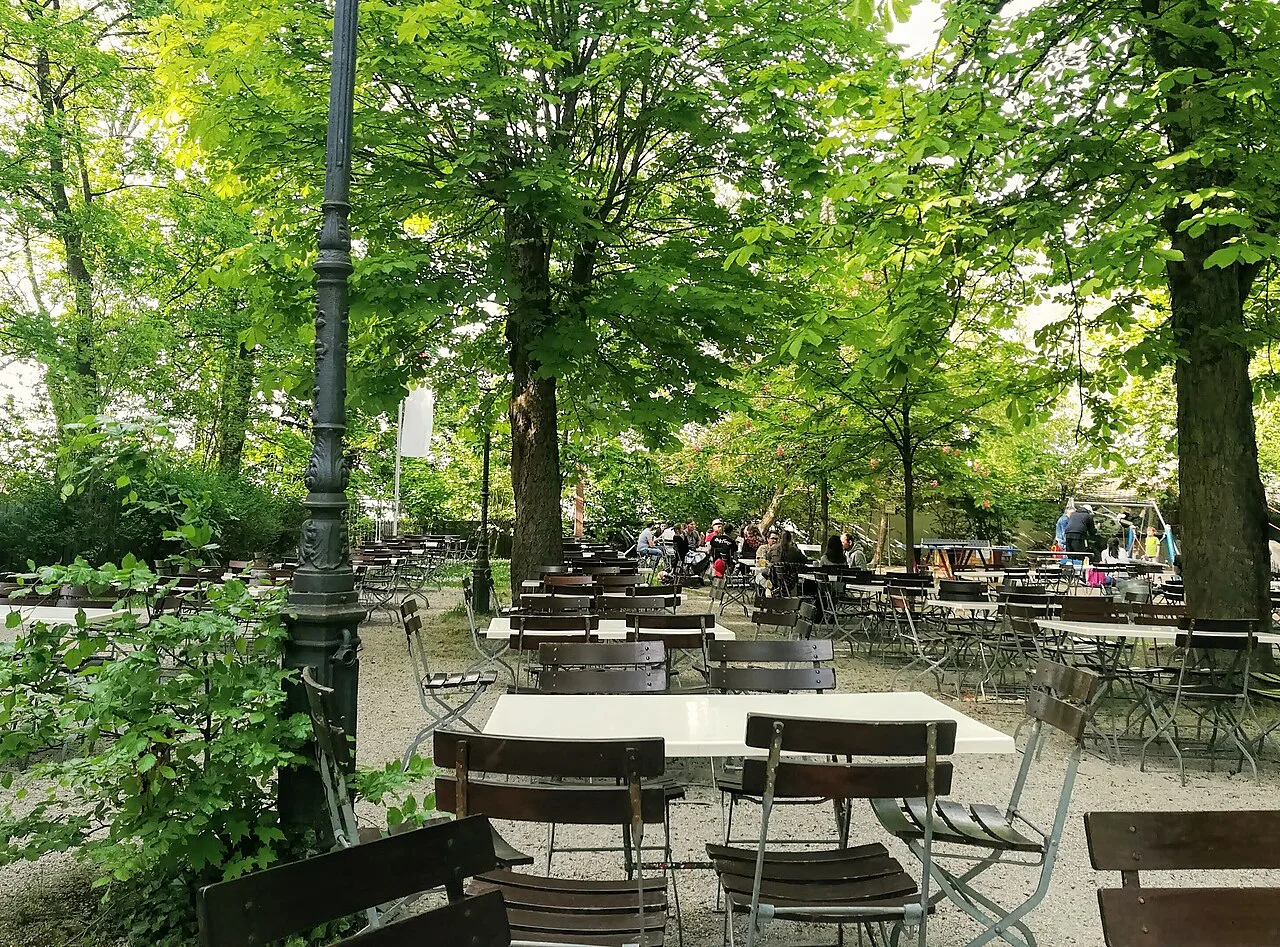
Bamberg's position rests on a real tradition rather than marketing. Oberfranken, or Upper Franconia, kept the old kilning method alive while other regions abandoned it, and the Bamberg area became what the beer trade calls the center of the style, with the tradition preserved and reworked rather than frozen. The city's brewery taverns are where the beer is actually drunk, which is why a Rauchbier visit and a Bamberg tavern evening are the same outing.
For orientation on the brewing side of the city, including the family-run houses behind the well-known labels, the guide to Bamberg beer lays out the breweries and what distinguishes them. Pair it with a glance at the broader Bamberg Attractions: 10 Visitor Guides hub if you are shaping a full day around the tavern stop.
What Rauchbier tastes like, from bacon-heavy to gently smoky
The classic Bamberg expression is powerful, with an intense smoky aroma and a distinct note that beer sellers describe bluntly as bacon. That is the version to expect from a traditional smoked Märzen such as Aecht Schlenkerla's: the smoke hits on the nose before the first sip and stays through the finish. Order it if you like smoked meat, campfire and peat; skip it if assertive smoke sounds like a defect rather than a feature.
The style is not all one volume. A dark beer such as Meinel Mephisto carries only a restrained smoke note and comes across as velvety and complex, which makes it a sensible entry point for anyone unsure about the style. Weiherer Oldskool Rauchweizen, a smoked wheat beer, sets fruity wheat aromas against a gentle wisp of smoke, while Rittmayer Smokey George is brewed with Scottish peat malt for a deeper, whisky-like smoke; a Franconian smoked-beer range that stocks all three describes them this way.
A practical way to choose: start with a smoked wheat beer or a mild dark example to test whether you enjoy the smoke at all, then move to the full-intensity classic once you know the answer. Drinking them side by side teaches more than any description.
How to drink Rauchbier: pace it with food
Treat Rauchbier as a beer to drink in modest quantity with food, not as a thirst-quencher to work through quickly. Exact strength and serving details vary from one beer and tavern to the next.
Serving temperature matters more than visitors expect. A smoked Märzen shows its malt and smoke best slightly warmed, so let the glass sit for a few minutes rather than drinking it ice-cold; the smoke turns harsher and the malt disappears when the beer is too chilled. If you are pacing a long evening, alternate a Rauchbier with a lighter lager or a soft drink.
The Bamberg name to look for: Schlenkerla's smoked Märzen
The benchmark bottle most visitors meet first is Aecht Schlenkerla Rauchbier Märzen, the classic Bamberg smoked Märzen and the beer that defines the intense end of the style. Aecht Schlenkerla Rauchbier is the name to ask for if you want to start with the reference version rather than a milder interpretation.
Schlenkerla's official shop sells its Rauchbier Märzen, and it is a useful check on what the brewery itself says about the beer you are about to order in a tavern. For the wider Bamberg tavern scene — the traditional smoke-beer houses and the brewery-run pubs where the beer is served fresh — the Brauhaus Bamberg overview maps the halls and brewery taps worth building an evening around.
Breweries beyond Bamberg also appear in the Franconian smoked-beer range, so the style is not limited to one producer. Meinel and Weiherer, mentioned above, are worth trying if you want to taste how differently smoke can be handled.
Rauchbier styles beyond the classic smoked Märzen
Smoked wheat beer is the most useful alternative for newcomers: the fruity wheat character softens the smoke and makes the beer drink lighter than a dark Märzen. Lighter and softer-smoked beers occupy the other end, and a peated interpretation such as Rittmayer Smokey George pushes in the opposite direction with a deeper, whisky-like smoke drawn from Scottish peat malt.
If you want to compare several at once, a mixed smoked-beer selection is the efficient route, and one Franconian beer merchant sells themed packs of six or twelve different bottles. That is a sensible way to work out your own preference before committing to a full evening of one beer in a tavern.
What to eat with Rauchbier in a Bamberg brewery tavern
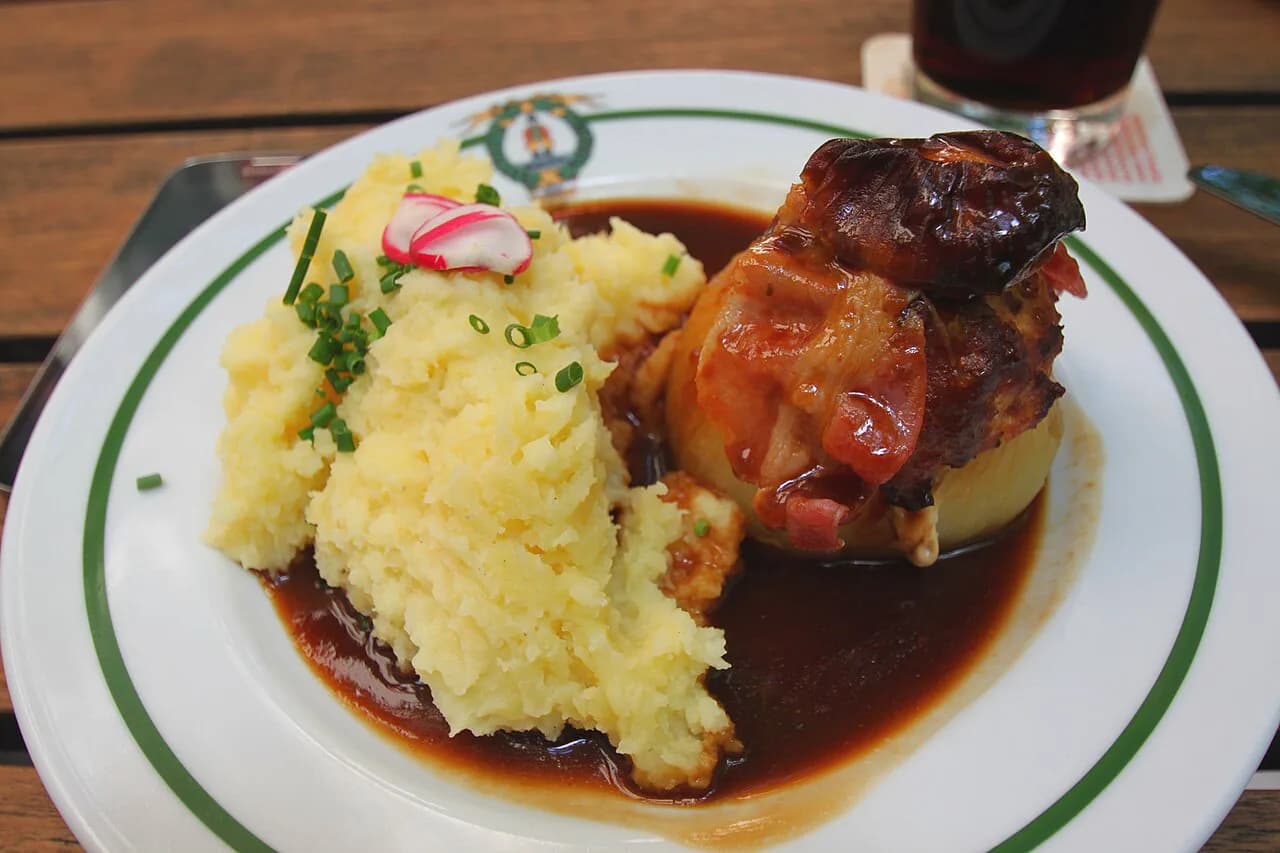
Smoke needs fat, salt and starch to sit against, which is why Rauchbier belongs with Franconian tavern cooking rather than light snacks. Think roast pork with crackling, pork shoulder in dark beer sauce, smoked sausage, dumplings and sauerkraut; the malt and smoke in the glass echo the browned, roasted notes on the plate. Order the heartier plate rather than a salad for the fullest match.
Bamberg's tavern menus also include lighter options, and the best restaurants guide covers the spread from brewery taverns to more polished kitchens. If you are eating vegetarian, plan ahead: the guide to Vegan and Vegetarian Food in Bamberg shows where meat-free plates fit into the city's menus.
Timing helps too. A smoked beer works best as the first or second drink of a meal, alongside the main course, rather than as a late-night finish after several lighter beers; the smoke becomes tiring on the palate when it follows a long round of lagers. Order it with food, then switch if you plan to stay longer.
How to order Rauchbier in a Bamberg pub and what to expect
Order by name rather than by style. Ask for the Schlenkerla or the house Rauchbier rather than saying smoked beer. If you want the milder option, ask which of the dark beers has the gentlest smoke.
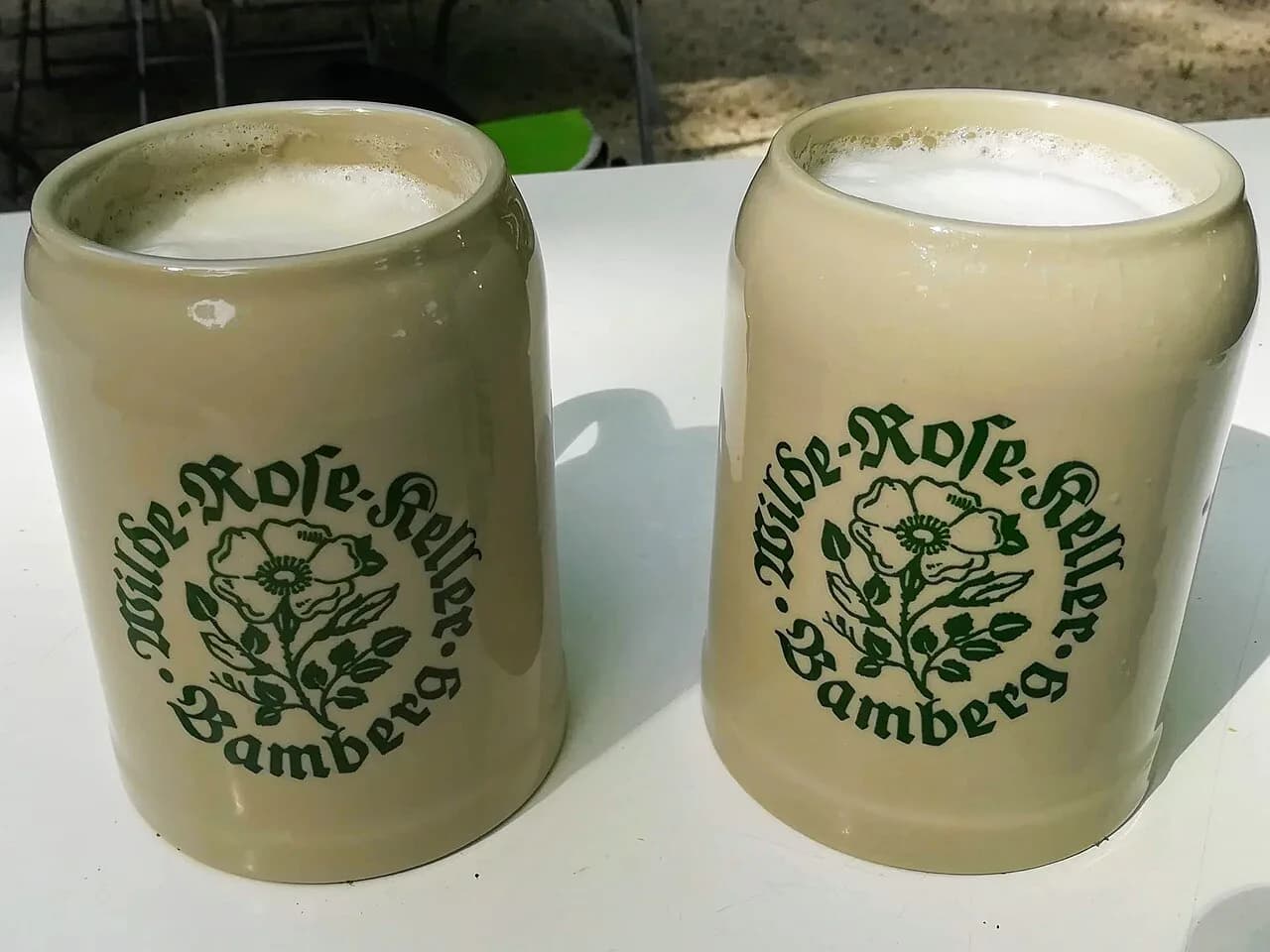
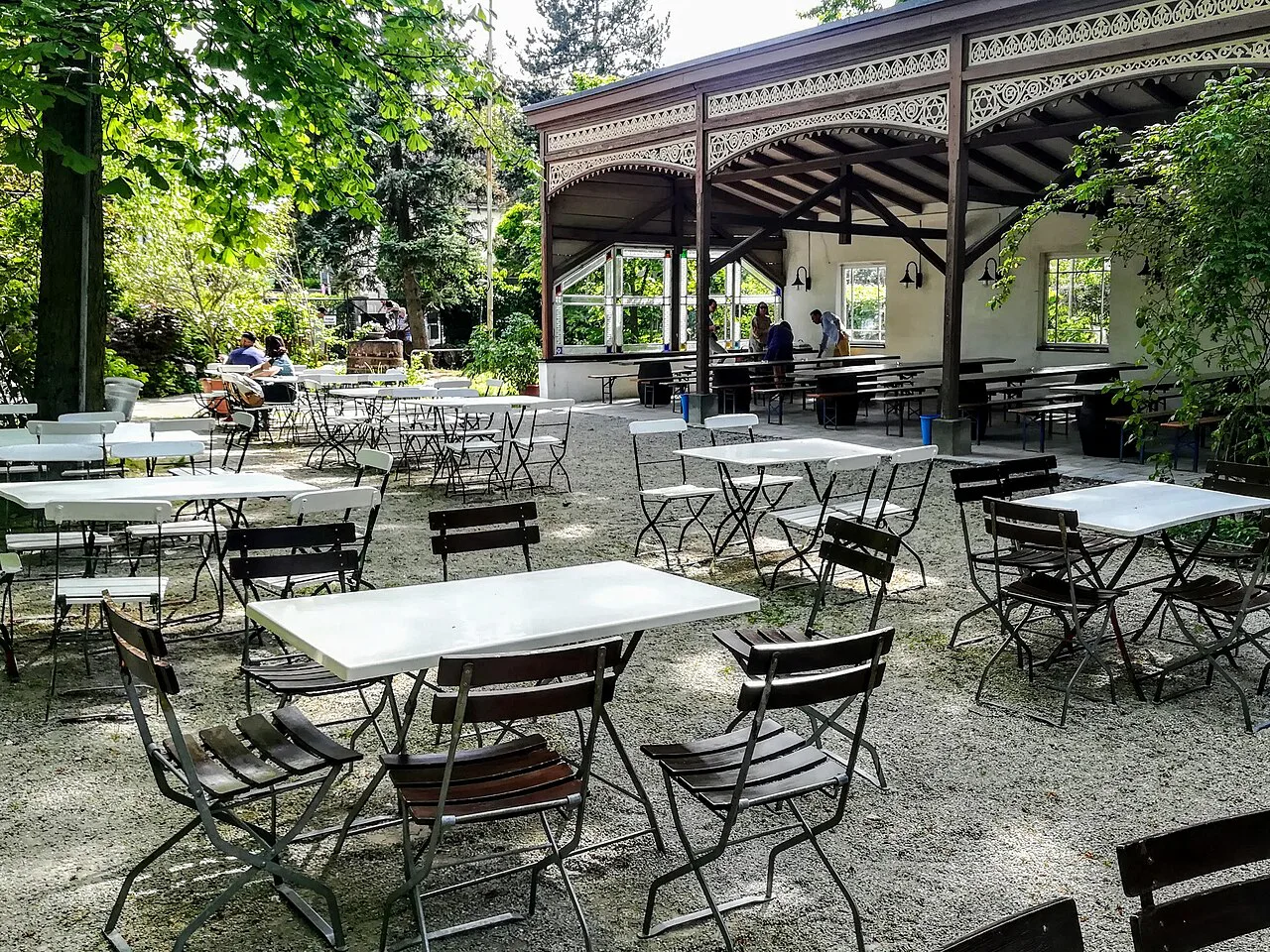
Expect the beer to arrive with a firm, fine head and a pronounced aroma before you taste it; that first smell is the smoke, not a fault. Many Bamberg brewery taverns are traditional operations, so arrive early at dinner or be ready to share a table. The best restaurants guide and the beer halls overview give you a sense of the range of tavern styles in the city.
If your day in Bamberg starts earlier, keep the smoked beer for the evening and use the morning for the city's cafés and bakeries; the Cafés in Bamberg and Bakeries and Konditoreien in Bamberg guides cover where to sit down before the taverns open. A Biergarten is the other good setting in season, and Beer Gardens in Bamberg explains how those work.
Is Rauchbier worth ordering on your first Bamberg evening?
Yes, if you like smoked food and you order it with a hearty Franconian plate rather than on its own. Start with a smoked wheat beer or a gently smoky dark beer if you are unsure, then move to the classic smoked Märzen once you know you enjoy the smoke.
If the smoke turns out not to be your thing, Bamberg's taverns pour plenty of unsmoked lagers alongside it, and the city's restaurant scene goes well beyond beer. Keep one Rauchbier in the round, eat well, and the style will make sense.
Explore more Bamberg guides
Frequently Asked Questions
What does Rauchbier taste like?
Smoke dominates, most strongly in a classic smoked Märzen, where the aroma is intense and carries a distinct bacon-like note. Milder examples, including smoked wheat beers and some dark beers, show only a gentle smoke over malt or fruit.
What type of beer is Rauchbier?
It is a German beer style defined by smoke-dried malt rather than by a single base recipe. The best-known version is the smoked Märzen, but smoked wheat beers and other smoked beers exist too.
Where did Rauchbier originate?
The technique of drying malt over an open wood fire goes back to the Middle Ages, and it survived as a living tradition in Upper Franconia, with Bamberg established as the center of the style.
How should a first-timer order Rauchbier in Bamberg?
Ask for a specific beer by name, such as the Schlenkerla Rauchbier Märzen or the house Rauchbier, and order it with food to balance the smoke.
Sources
Notes for your next German food trip
Optional updates to our guides.
You might also like
Continue reading
More guides you'll find useful