Bamberger Zwiebel: Bamberg's Stuffed Onion in Smoke Beer
Bamberger Zwiebel is a large onion stuffed with minced meat and braised in smoke beer, served with mashed potatoes. Here is what it is and where to eat it.
On this page
Bamberger Zwiebel is a large onion stuffed with seasoned minced meat and baked in a broth of Rauchbier, Bamberg's beechwood-smoked beer, then served with mashed potatoes. It is the clearest single plate where the city's two old trades, market gardening and brewing, end up in the same dish. This guide covers what goes into it, how it tastes, where to order it and what to drink with it.
What the Bamberger Zwiebel Is
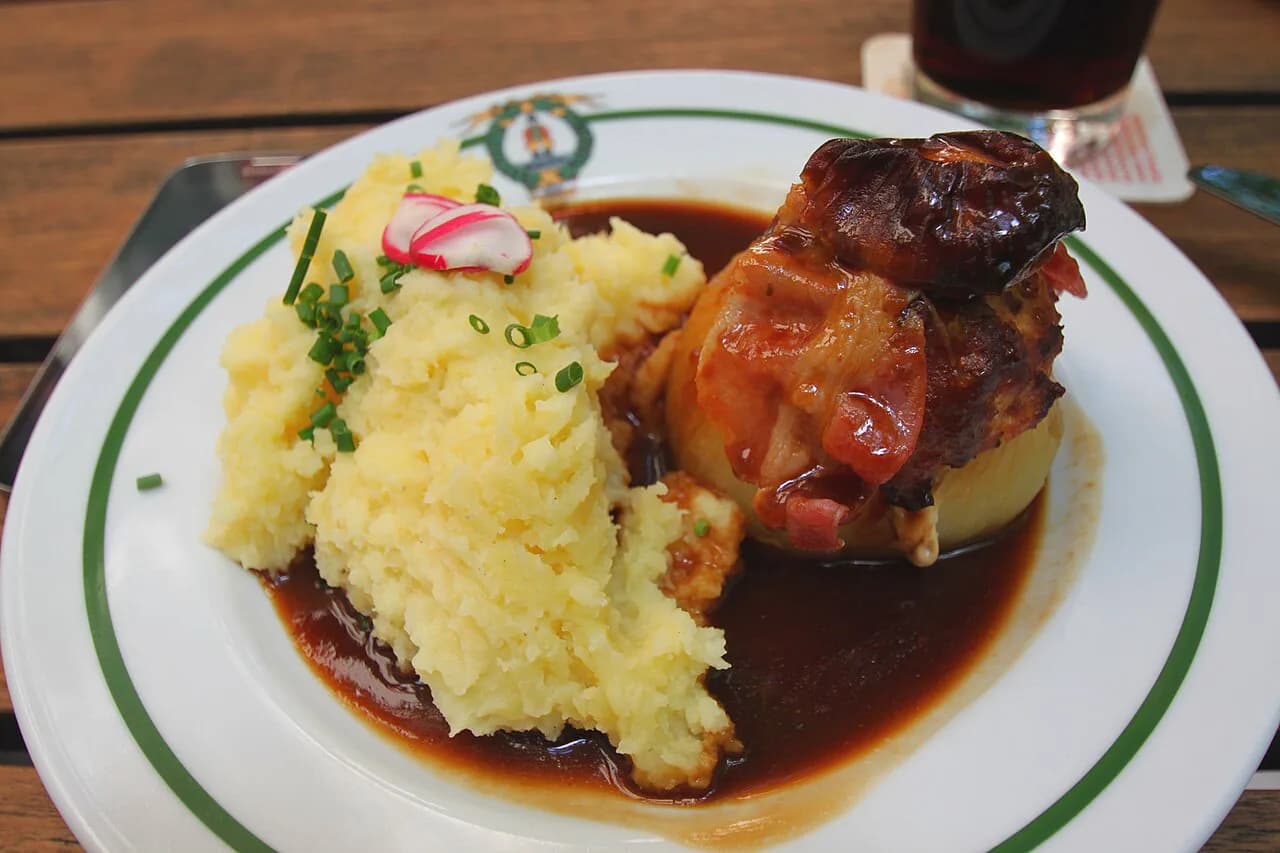
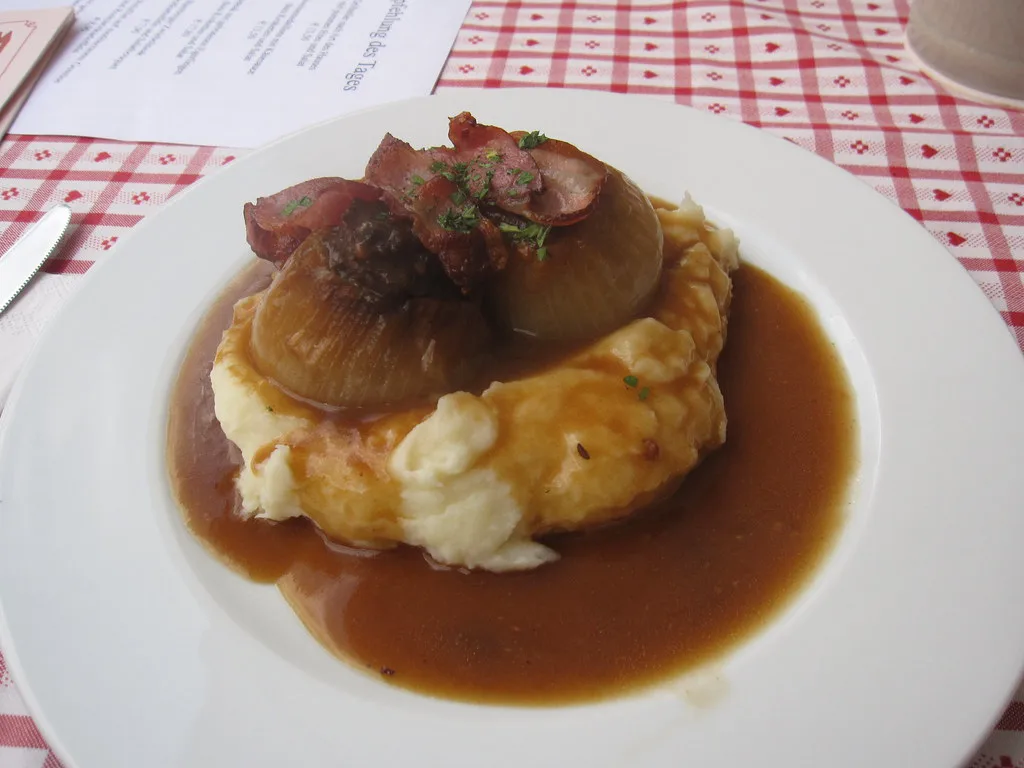
Take a big onion, hollow it out leaving a sturdy wall, fill it with minced meat and set it in a roasting dish part-filled with stock. Halfway through baking, smoke beer goes into the pan, and the onions finish cooking in that dark, malty liquid. The pan juices are thickened into a gravy and poured over, with mashed potatoes on the side to soak it up.
The dish is a plain, hearty Wirtshaus plate rather than a refined one: soft onion, coarse meat filling, a sauce that tastes of smoke and roasted malt. That smoke is the point. Without the Rauchbier braise you would have an ordinary stuffed onion; with it, the plate has the smoke-beer character Bamberg is known for.
Why Gardeners and Smoke Beer Meet in This Dish
Bamberg's gardeners' district, the Gärtnerstadt, is one reason the city's Old Town is a UNESCO World Heritage Site, and that inner-city gardening tradition shaped the local kitchen. Onions were part of that market-garden output, and Rauchbier was the city's signature brew, so a stuffed onion baked in smoke beer became a natural meeting point of the two trades. For the wider repertoire of local dishes, see What to Eat in Bamberg.
There is a popular tale that the stuffed onion was invented at a cooking competition run by the Bamberg gardeners' association in the 1960s. It is a nice story, but the recipe already appears in a Bamberg cookbook from 1805, where smoke beer and the local onion are brought together in the same way. Treat the contest story as folklore and the cookbook as the record.
What Goes Into the Filling
The filling is minced meat loosened with a soaked bread roll from the day before, bound with egg and seasoned with mustard, parsley and marjoram — the latter under its Franconian name Mussärol — plus salt and pepper. The onions are packed with the mixture and baked. Some cooks use Bratwurst sausage meat, fresh or smoked, instead of plain mince, which makes the filling richer and more heavily seasoned.
The recipe also calls for smoked bacon slices, fried crisp and scattered over the finished onions, which doubles down on the smoky note already coming from the beer. Expect a filling that is juicy and savory rather than spicy: mustard and marjoram give it depth, not heat.
The Onion Itself: Why Cooks Choose a Big One
Menus call the small, drop- or pear-shaped onion the Bamberger Birne, and the name means the vegetable, not fruit. For the stuffed version, the recipe gives either four large Metzgerzwiebeln, the hefty kind a butcher would use, or twelve of the ordinary Bamberger onions in place of four big ones, so the small onion can be used if you have enough of them and can hollow them out carefully.
For the stuffed version, the onions are hollowed with a small melon baller or spoon, leaving a rim of about half a centimeter so the shell holds its shape. The trimmed onion flesh isn't wasted: it is diced and softened in butter, then mixed into the meat.
How It Tastes
The onion softens into something sweet and jammy against the savory meat, and the sauce carries smoke, malt and a slight bitterness from the beer. It is a rich plate, so portions tend to be one onion or two rather than a spread, and the mashed potatoes are there to balance the intensity. If you like the idea of a Franconian Sunday roast but want the vegetable to do the work, this is the dish to try.
Where to Order It
The gefüllte Bamberger Zwiebel is the kind of dish that lands on Bamberg Wirtshaus menus, and it is the plate to look for when you sit down for a hearty Franconian meal; menus change with the season and the kitchen, so ask at the table whether it is on offer that day. If you want to build a whole eating day around the local repertoire, the guide to Bamberg food covers Schäuferla, the stuffed onion and the city's pastry, and a Bamberg food tour can put several of these plates in front of you in one walk.
Order it as a main course rather than a starter; the onion alone is substantial, and the mashed potatoes make it a full meal. The Schlenkerla tavern keeps it on its menu, and you can see how it is plated in a photograph of Schlenkerla's version.

What to Drink With It
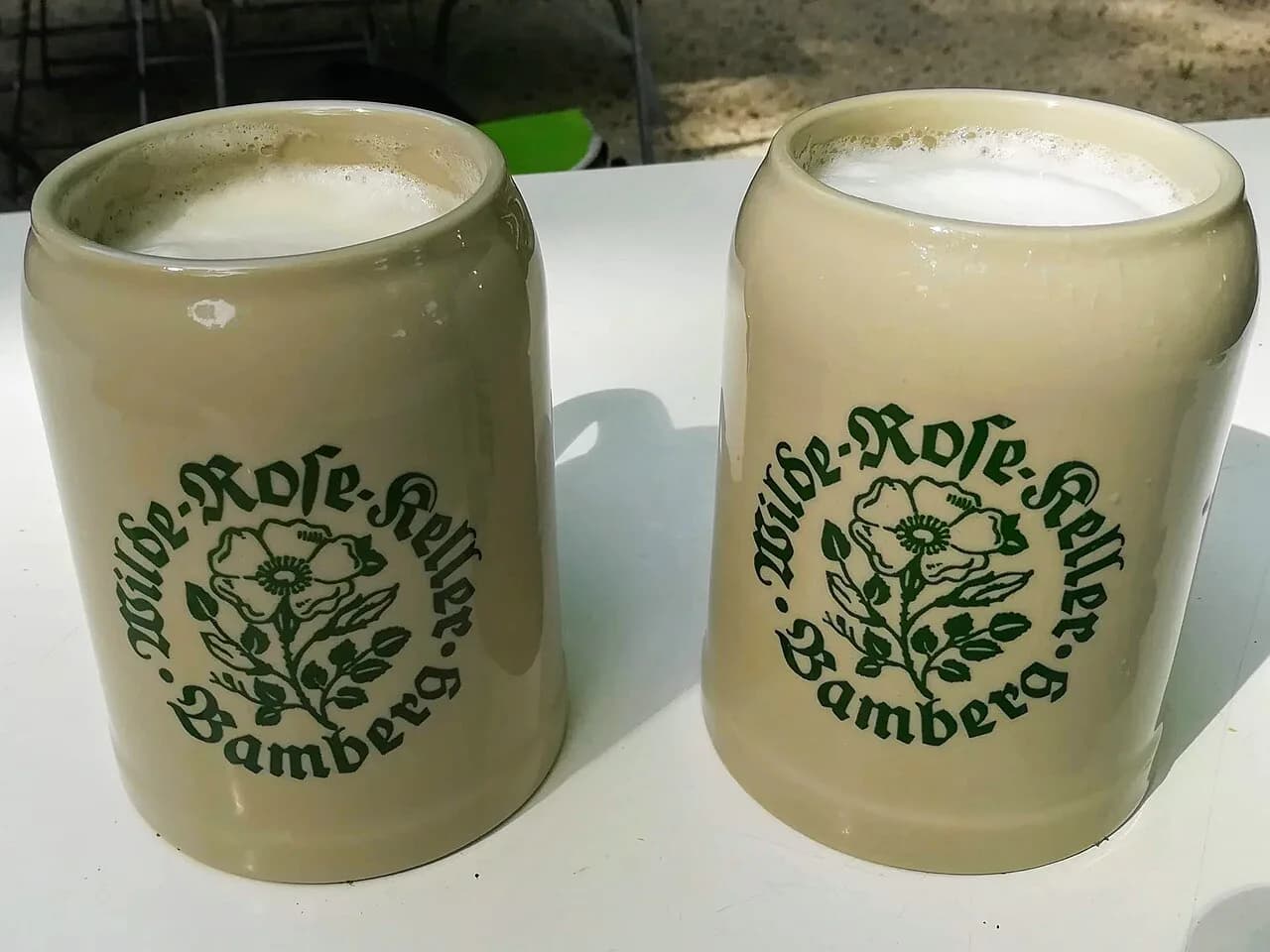
The obvious pairing is the beer that went into the pan. Bamberg's smoke beers range from the assertive, beechwood-smoked version to milder, rounder examples, and the milder end works well with the sweet onion. A stein of either cuts through the gravy and picks up the bacon on top.
If smoke on smoke feels like too much, order a clean, unfiltered lager instead and leave the Rauchbier for after the plate. Keep the pace easy: one beer alongside a heavy plate is plenty, and the walk back through the old town is part of the evening.
The Other Bamberger Onion: The Bamberger Birne at the Market
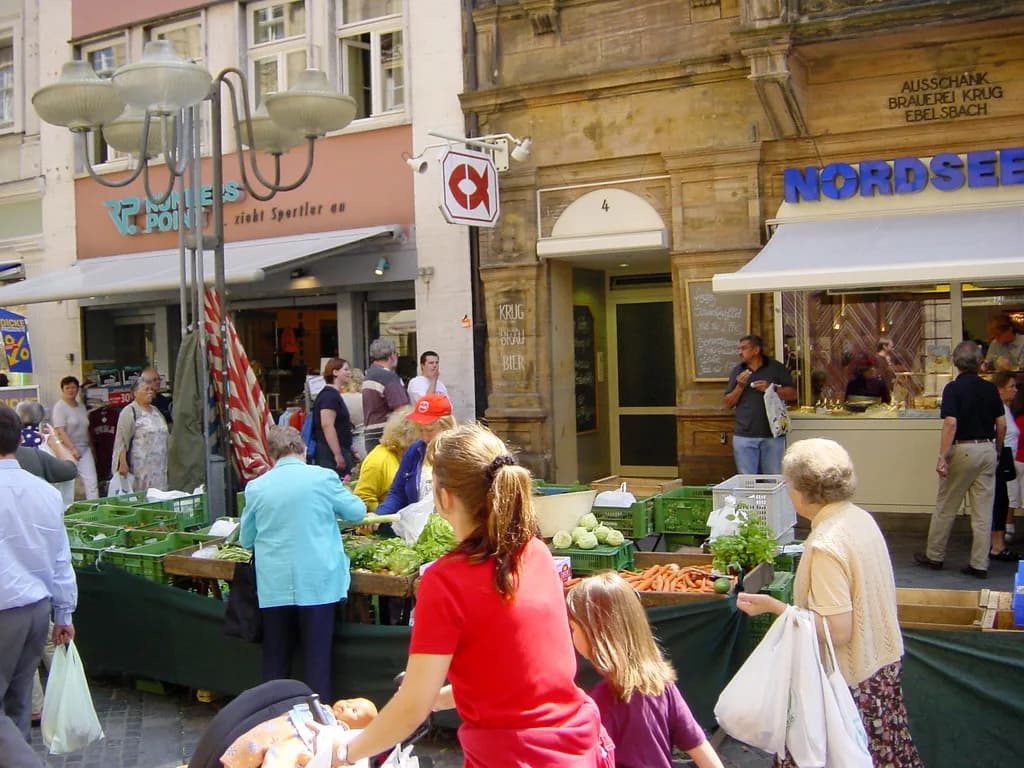
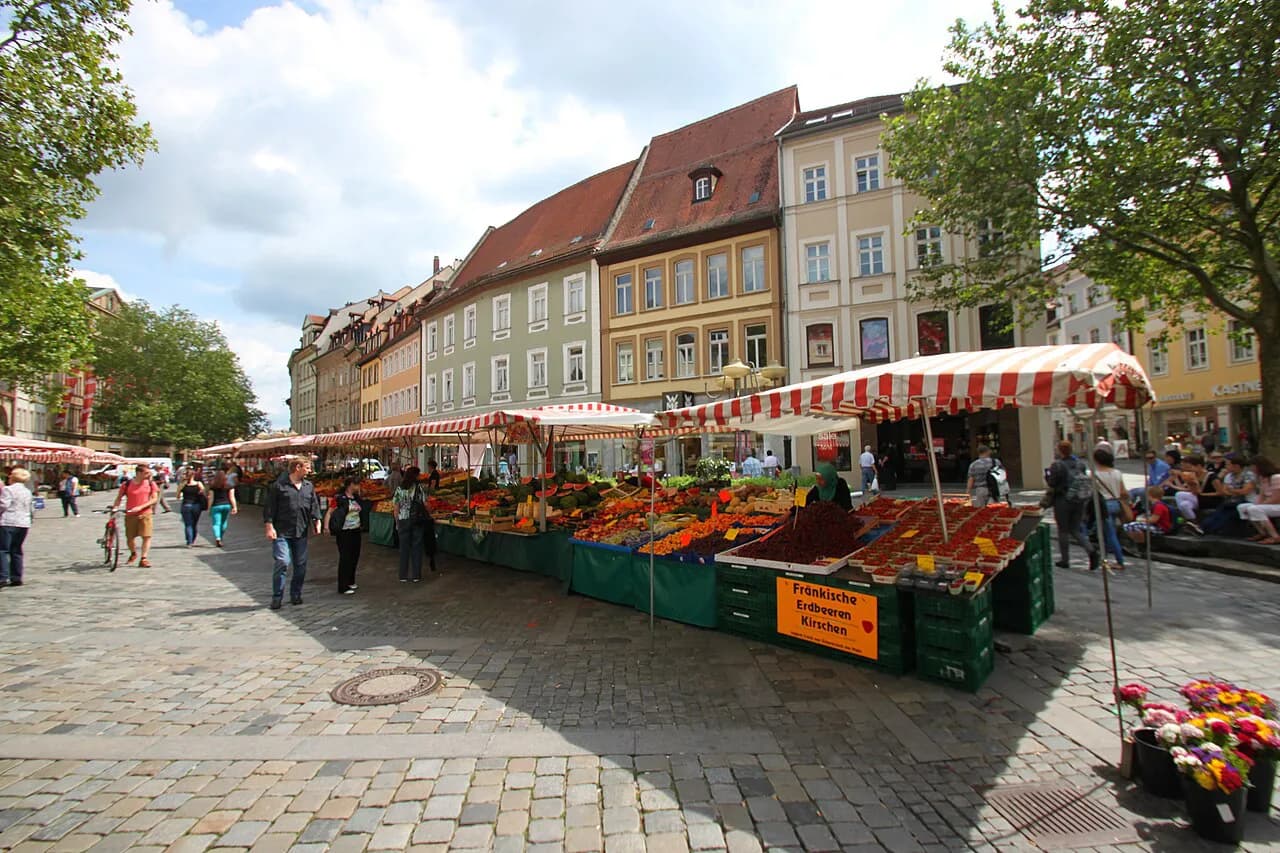
The stuffed dish and the small market onion share a name, so you may see Bamberger Birne on a produce stall at the Green Market, where producers from the region sell fruit, vegetables and seasonal goods from Monday to Saturday. In spring you may find Franconian asparagus alongside them; in late summer, plums. Buy a handful of the little onions to take home and you have the raw ingredient for the dish, though you will need larger bulbs to actually stuff.
The Green Market sits in the pedestrian zone around the Gabelmann fountain, an easy stop on a walk between the old town and the beer cellars on the Stephansberg hill. That layout is handy if you are shopping for a picnic or a kitchen of your own. For a closer look at the stalls' weekly rhythm, the guide to the Bamberg food market has the details.
Is the Bamberger Zwiebel Spicy?
No. The heat in this dish comes only from the mustard in the filling, and that is mild by the time the onion has baked. The dominant flavors are sweet braised onion, smoky gravy, savory pork and the herbal note of marjoram. If you want a kick, ask for mustard on the side.
Is There a Vegetarian Bamberger Zwiebel?
The classic recipe is built on minced meat, often with bacon on top, so the standard version is not vegetarian. A meat-free filling would mean substituting the mince, and menus vary, so ask the kitchen directly whether it can make one; otherwise plan on ordering something else and trying a bite of your companion's plate.
Should You Order It?
Yes, if you want one plate that explains Bamberg: the gardeners' onion, the brewers' smoke beer, and a sauce that tastes like both. Order it as a main with mashed potatoes, pair it with a Rauchbier or a clean lager, and ask whether the kitchen has it that day. If you are still planning your visit, the guide to Bamberg Attractions: 10 Visitor Guides puts the food stops in context with the rest of the city.
Explore more Bamberg guides
Sources
Notes for your next German food trip
Optional updates to our guides.
You might also like


Continue reading
More guides you'll find useful