Brauhaus Bamberg: Brewery Taverns and Beer Cellars
In Bamberg, a Brauhaus is a tavern with its own brewhouse; a Bierkeller is a shaded hillside cellar. Here is what each pours, what to order, and how a visit works.
On this page
A Brauhaus in Bamberg means a tavern with its own brewhouse, and the standard-bearer in the old town is Brauhaus Sternla on Lange Straße. The thing visitors confuse it with is the Bierkeller: a shaded hillside cellar where Franconians spend warm evenings over a Seidla, the small Franconian beer measure, and a Brotzeit, a cold snack plate. This guide separates the two, names the taverns and cellars worth planning around, and explains the beer and food to order at each.
Part of the appeal of Bamberg beer is smoke: the city's Rauchbier, or smoked beer, is a style of its own, and you can read how it is brewed and where to drink it in the guide to Bamberg beer. Save that for one glass in the evening, since a smoked lager is a full-flavored beer that most drinkers treat as a single order rather than a session.
What a Brauhaus is in Bamberg, and how it differs from a beer cellar
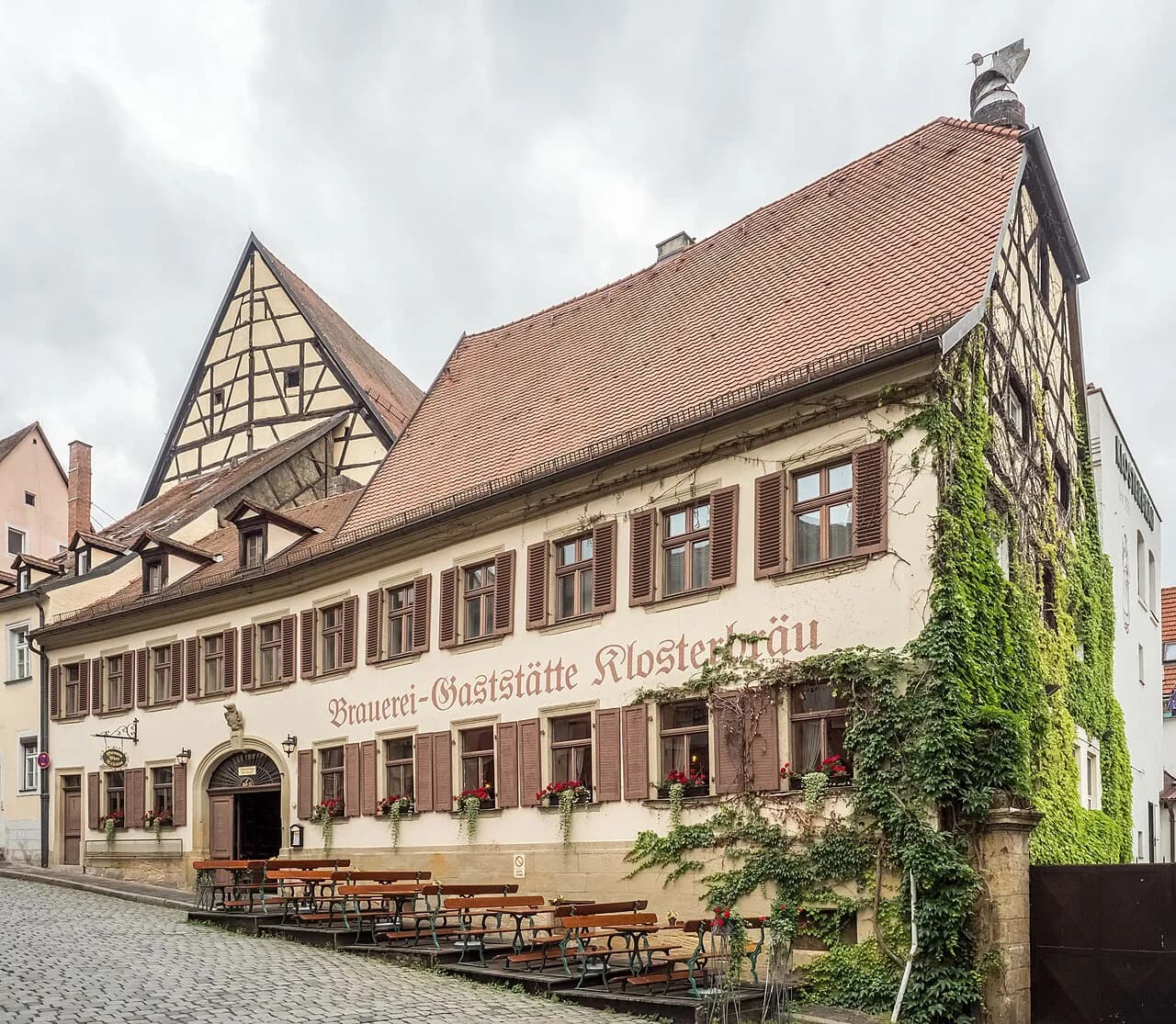
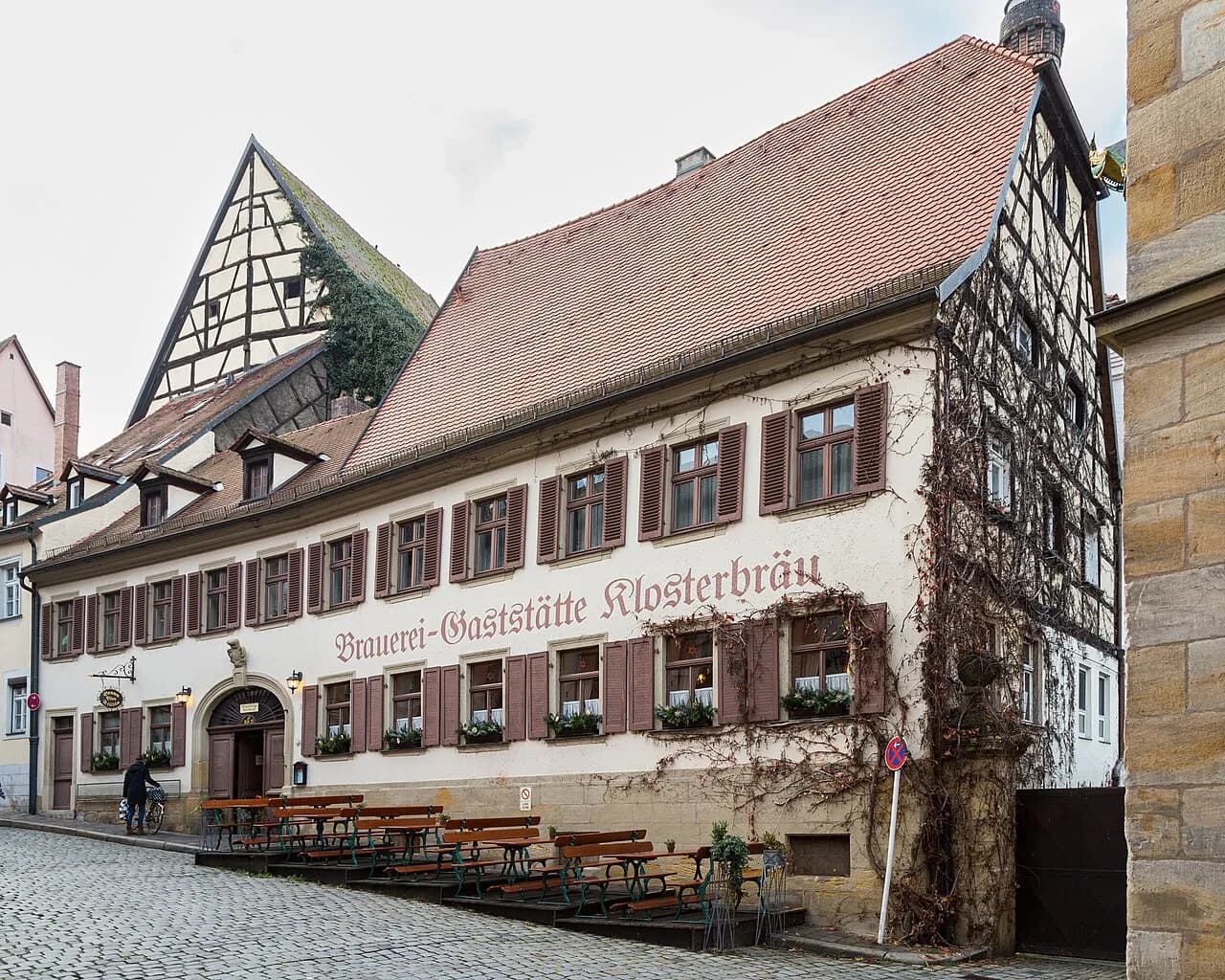
A Brauhaus is a brewery tavern: the beer is brewed in the building or by the house and served in the rooms and garden attached to it, so the point is a sit-down meal with fresh beer on the side. A Bierkeller is a different animal, a cellar cut into the hillside with shade trees, benches and long tables where people gather for the evening. The cellar exists because the beer used to be lagered underground; today it is where a warm-weather crowd drinks that beer under the trees.
The practical difference comes down to what surrounds the glass. A Brauhaus gives you a roof, a table, a menu of Franconian cooking and a short walk from the old town's streets. A Keller gives you a hillside walk, outdoor seating and a menu of Brotzeit rather than hot dishes, plus the Bamberg custom of bringing and sharing your own cold food alongside the beer at many cellars. Bamberg's tourist office keeps both lists, complete with which venues are open at a given hour, on its page on Bierkeller in and around Bamberg.
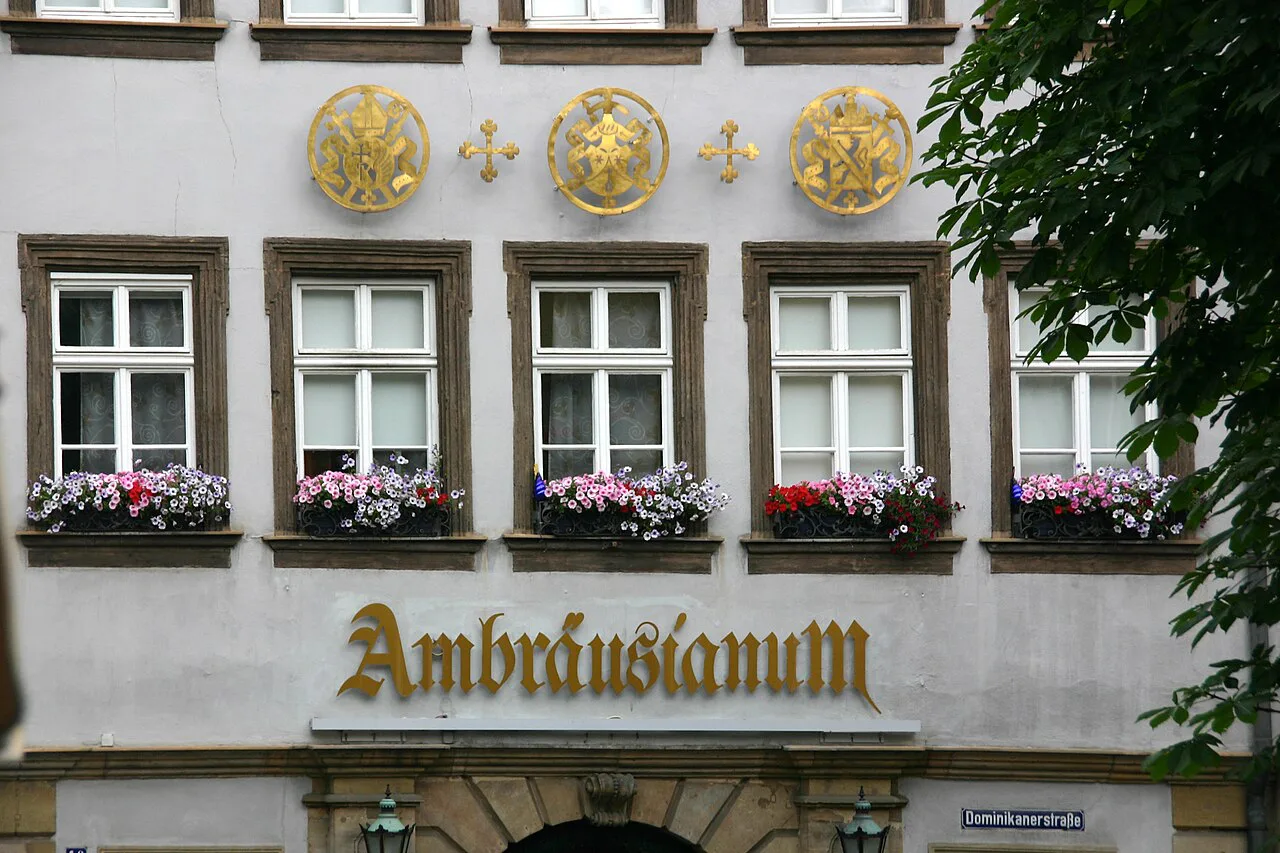
Brauhaus Sternla: a tavern on Lange Straße with its own brewhouse
Sternla sits at Lange Straße 46 in the historic center, an address that puts it on one of the old town's main walking streets and a natural stop between errands and dinner. It describes itself as fränkische Wirtshaus-Kultur, Franconian pub culture, with its own small brewery, a shady beer garden looking toward the brewhouse, and classic guest rooms that can hold groups. The beer is unfiltered and served fresh from the tank; the kitchen lists Schäuferla, a roasted pork shoulder, Pfannenschnitzel, a pan-fried cutlet, and grilled chicken, all traditional Franconian Schmankerln.
The house pours an Export and a Märzen, two familiar Franconian styles, and rotates seasonal specials; the brewery says all information on the seasonal beers appears on its website and Instagram. Because the tanks are in the building, the beer you get is at its shortest distance from fermentation, which is the reason to order the house beer rather than anything from a bottle. For a table of several people, a round of the house lager with a shared Brotzeit board is the simple approach before anything hot arrives.
What to order at Sternla: Export, Märzen and unfiltered beer from the tank
Start with the house Export if you want a clean, drinkable lager, or the Märzen if you prefer a maltier glass with more body. Both are served unfiltered according to the brewery, which leaves a fuller texture and a slightly rustic quality that filtered lagers lose. When a seasonal special is on, that is the beer to try, since the rotation is where a small house brewery shows what it can do.
If you drink little or not at all, Sternla also runs guided tastings built around low- and no-alcohol beers, a modern corner of Franconian beer culture worth booking ahead. Order food and beer at the table as in any restaurant, and reserve if you want a specific evening; the house publishes a reservation page. Prices and current opening hours are the venue's to publish and change, so confirm those with the house before you plan an evening around it.
Franconian food at the tavern: Schäuferla, Pfannenschnitzel and Brotzeit
The Sternla kitchen is explicitly regional and hearty, built around traditional Franconian recipes and matched to the house beer. Order the Schäuferla if you want the signature Franconian meat dish, a pork shoulder roasted until the crust crackles; the Pfannenschnitzel is the lighter, quicker pan-fried option. Brotzeit, the cold snack plate of bread, cheese, sausage and pickles, is the right choice if you are drinking more than eating or want to keep the meal small.
If you are traveling with a vegetarian, look at the broader Bamberg picture before settling on a tavern: Bamberg's vegetarian and vegan options are growing, and our guide to vegan Bamberg shows where to find meatless plates near the old town.
Bamberg's beer cellars: Seidla, Brotzeit and shaded seats in the Berggebiet
Order a Seidla in a Bamberg cellar and you get the standard small glass of Franconian drinking, a modest pour that lets you try more than one beer over a long evening. The seating is outdoors under trees in the Berggebiet, the hill area above the city, and the food is Brotzeit rather than a full menu. Bamberg's tourist office lists the classic cellars in the city's hill district alongside a larger set across the Bamberger Land, the countryside around Bamberg.
One custom catches visitors out: at many Bamberg cellars you may bring your own food if you want, and people spread out bread, cheese and sausage on the table while buying the beer from the cellar. That is the local reading of a Brotzeit evening, and it turns a cellar visit into a picnic with a bar attached. Ask at the counter before you unpack anything, since the arrangement is a house convention rather than a citywide rule.
Cellars in the city and in the Bamberger Land: Spezial-Keller, Wilde Rose-Keller and Greifenklau
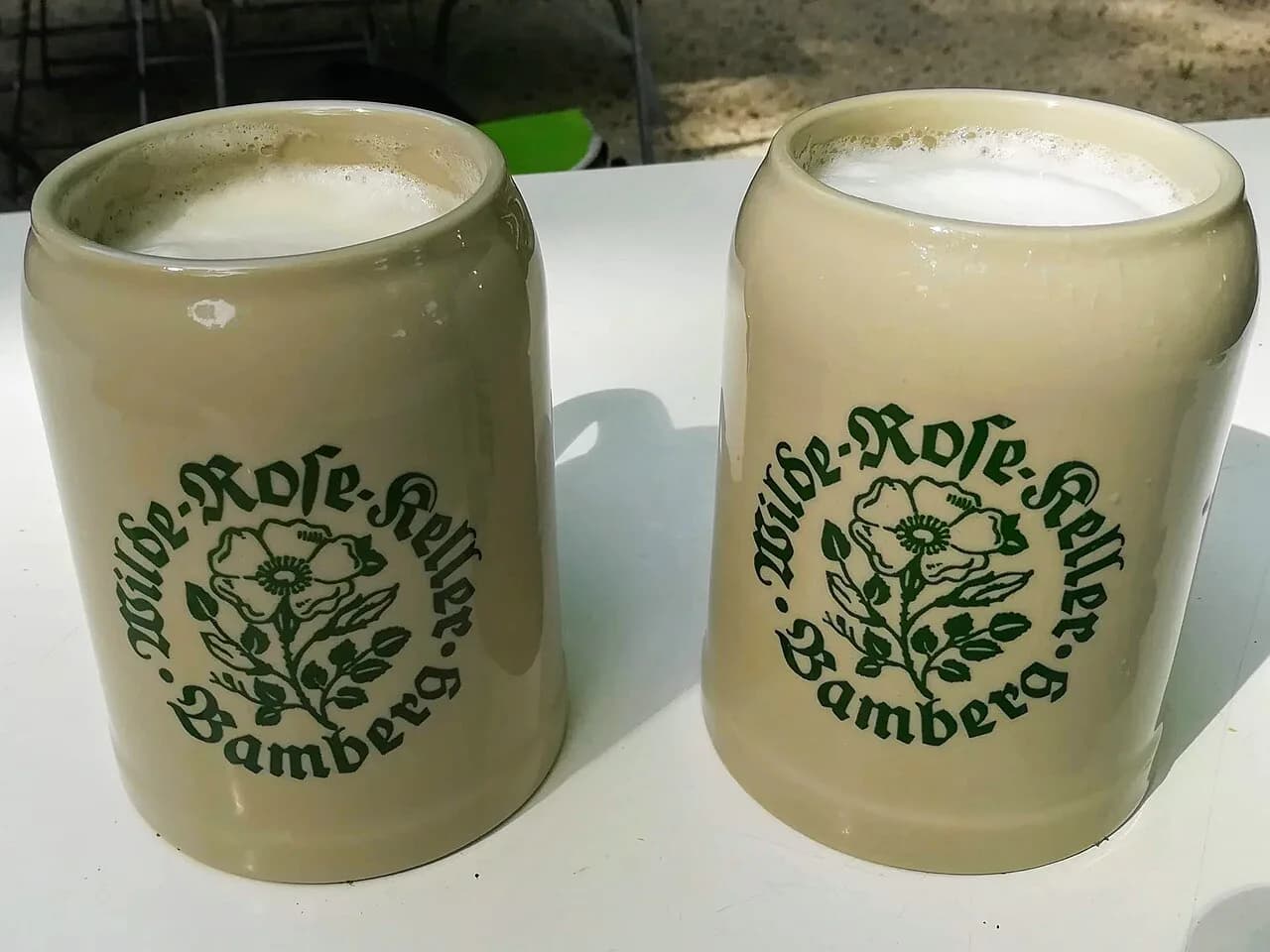
Inside Bamberg, the Spezial-Keller and the Wilde Rose-Keller are two of the cellars commonly named among locals' favorites. The Brauereigaststätte Greifenklau appears on the tourist office's cellar list as a brewery tavern with its own shaded outdoor seating, which makes it the bridge between the two categories. All three are in the city or its immediate surroundings, so you can reach them on foot or with a short ride from the center.
Out in the Bamberger Land, the list of cellars stretches across villages, with names like Kundmüller in Weiher and Eichhorn and Göller among the brewery addresses the tourist office keeps. These are rural excursions, and the beer is the reason to go rather than anything else on the route. If your main goal is tasting across the region's small breweries, our guide to Bamberg breweries covers the styles and the houses that make them.
Kundmüller in Weiher, Eichhorn and Göller: brewery taverns beyond the center
Kundmüller runs a Brauerei-Gasthof with a beer garden in Weiher, and the tourist office lists it among the cellars and brewery taverns around Bamberg worth the trip. Brauerei Eichhorn and Brauerei Göller are similarly listed as brewery addresses with places to sit and drink their own beer, but the food and the exact format differ from house to house. Treat these as village pubs rather than city venues, and plan your day so the brewery is the destination rather than a stop on the way to something else.
Because the setting is the point, choose according to the kind of evening you want: a shaded garden attached to a working brewery in the countryside, or a cellar full of benches and students on the hill.
Beer gardens attached to brewery taverns, and when they open for the season
Sternla keeps a large beer garden with a view of its brewhouse, which is the option to ask for on a warm evening when you still want the tavern's kitchen behind you. Bamberg's cellars are the other side of the same coin: outdoor seating in the Berggebiet, with the tourist office tracking which ones are open on a given day. Beer-garden season is a warm-weather affair in Franconia, so the garden is where you want to be in summer and the guest rooms are the answer in cooler months.
If the terrace rather than the cellar is what you are after, our guide to Beer Gardens in Bamberg lays out the options across the city and explains the self-service conventions that apply in them.
How a cellar visit works: ordering at the counter, cash, and bringing your own food
At a Bamberg cellar the evening is unhurried, with people arriving after work or after a walk on the hill and staying until the light goes. Many work with counter or window service, and small Franconian cellars can be the kind of place where cash is the safe bet, so keep some on hand. Check with the individual house how ordering and payment work on the night you go.
Food works differently depending on the house. Some cellars serve their own Brotzeit, some allow you to bring cold food of your own, and some do both; the tourist office and the individual venues are the place to confirm which arrangement applies on the night you go.
Choosing between a tavern in the old town and a cellar on the hill
Choose the Brauhaus if you want a proper Franconian dinner with beer brewed in the same building, a roof over your head and a short walk back to the old town. Choose the Bierkeller if the evening itself is the attraction: an uphill walk, a bench under trees, a Seidla in your hand and a Brotzeit on the table. If you have two evenings in Bamberg, do one of each, and put the cellar on the warmer night.
The city has plenty of other tables worth planning around, from Franconian restaurants to bakeries and Konditoreien for a mid-afternoon stop; our list of the best restaurants in Bamberg puts those alongside the taverns.
Which Bamberg beer stop fits your evening?
If the plan is dinner and a freshly poured house beer without leaving the center, book Brauhaus Sternla on Lange Straße and order the Export or the seasonal special with a Schäuferla. If the plan is a slow warm evening outdoors, head for a cellar in the Berggebiet such as Spezial-Keller or Wilde Rose-Keller, take a Seidla, and keep the food simple. Either way, the beer is the reason you came, so drink moderately and leave the rest of the evening to the walk home.
Explore more Bamberg guides
Frequently Asked Questions
Do you need to reserve a table at a Bamberg Brauhaus?
For a group or a specific evening at a tavern like Sternla, reserve ahead; the house publishes a reservation page and its guest rooms can hold larger parties. Cellars on the hill are more casual, but a sunny weekend evening fills the benches quickly, so arrive early rather than counting on a table.
Is Bamberg beer smoky?
Bamberg is known for Rauchbier, a smoked beer style brewed in the city. Not every beer poured in Bamberg is smoked, and a tavern like Sternla serves clean lagers such as Export and Märzen alongside its seasonal specials. Order a Rauchbier as one glass to taste rather than as your only beer of the evening.
Sources
Notes for your next German food trip
Optional updates to our guides.
You might also like
Continue reading
More guides you'll find useful