Würzburg Beer: Breweries, House Beers and Beer Gardens
Würzburg beer comes from one city brewery founded in 1643. Here is what Würzburger Hofbräu brews and which beer gardens pour it with a view.
On this page
Würzburg beer means Würzburger Hofbräu: the city's only brewery, founded in 1643 and still the oldest business in town. Almost every tap you meet in a Würzburg beer garden or Gasthaus pours its Pilsener, its Sternla or a seasonal pour, so understanding this one brewery takes you a long way. This guide covers what Hofbräu brews, the brewery's own Keller, two garden addresses that stock it, and the Franconian dishes to order alongside.
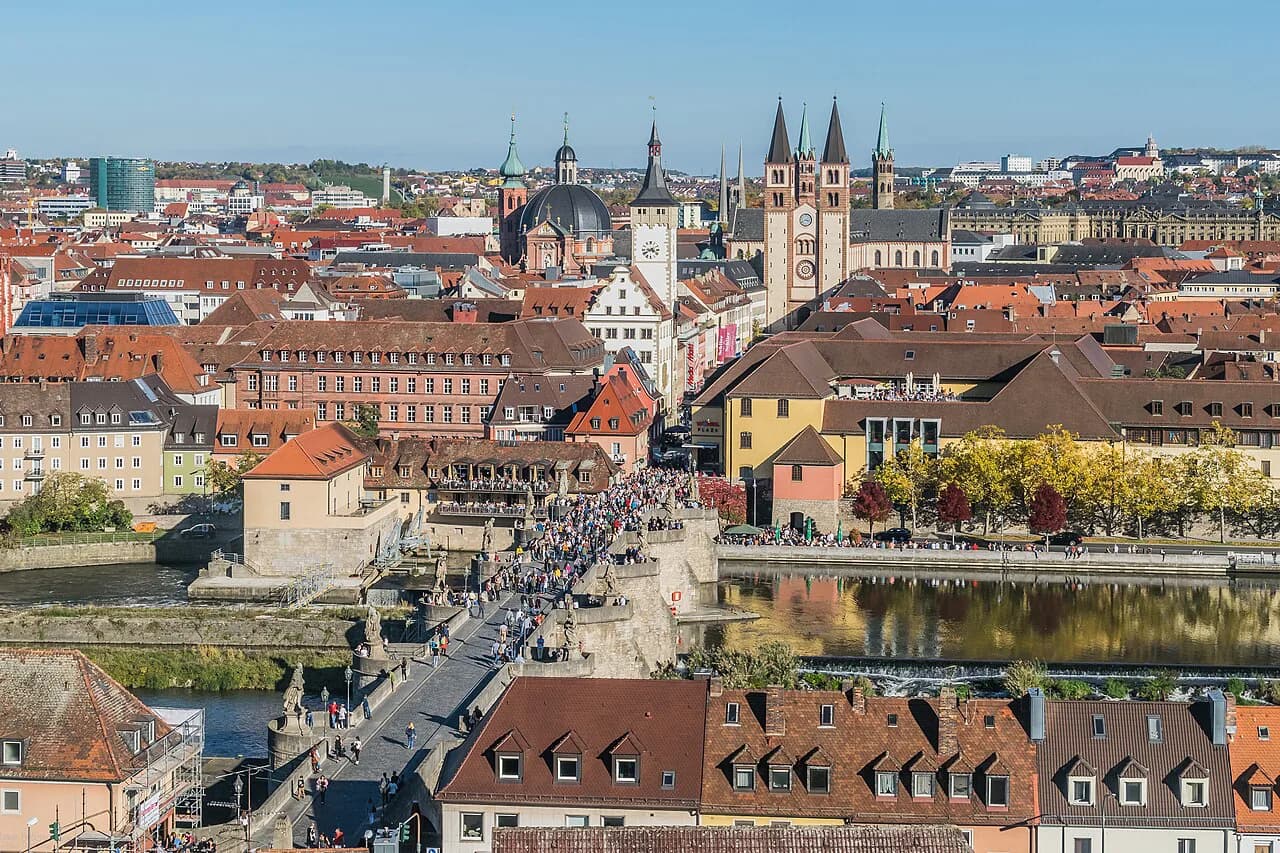
The practical case for planning an evening around beer here is the setting as much as the glass: gardens look up at the Festung Marienberg and sit within sight of the Alte Mainbrücke, the Old Main Bridge. Addresses and dishes below come from published garden listings, and you can pair a beer stop with a fuller meal by working through our picks for the best restaurants in Würzburg.
What Würzburg beer means: one city brewery, many taps
Würzburger Hofbräu is described as the only brewery in Würzburg, which simplifies ordering: the local beer you see on tap is almost always its own. The brewery was founded in 1643 by Prince-Bishop Johann Philipp von Schönborn and is called the city's oldest still-operating company, a lineage it prints on its labels through the prince-bishop's crown.
Ownership has moved well beyond the bishop: a takeover in 2005 folded the brewery into the Kulmbacher group, itself part of a larger German drinks holding. That history matters little at the table, but it explains why Hofbräu beers travel well beyond the city limits while the brewery address stays on Höchberger Straße in Zellerau, below the fortress.
For a visitor, the useful consequence is that Würzburg beer culture is about where you drink it more than which label you choose. The city's gardens range from traditional and Franconian to Mediterranean and bike-friendly, and locals treat them as summer living rooms rather than special-occasion stops.

Würzburger Hofbräu: founded in 1643 and still Würzburg's brewery
The brewery's own account traces its founding to 1643, when Fürstbischof Johann Philipp von Schönborn set it up, and notes that the prince-bishop's crown still sits on the brewer's star and logo. Recipes are described as long-standing and handed down between brewmasters, which is the kind of claim every old brewery makes, but the founding date and the city's oldest-company title are concrete.
Production sits at Höchberger Straße 28 in the Zellerau district, at the foot of the Festung Marienberg. That location makes the brewery a landmark you pass rather than a visitor attraction: the drinking happens in its affiliated Keller and in the gardens and restaurants around town.
The 2005 acquisition by Kulmbacher connects the Würzburg brand to a group that also includes Paulaner, Fürstenberg and Hoepfner. For your evening, the takeaway is simple: you are drinking a Franconian brewery's beer with a corporate parent, not a small independent craft operation.
What to order: Hofbräu Pilsener, Sternla and the seasonal Festbier
Start with the Pilsener, the brewery's blond flagship and the beer most Würzburg taps keep ready. If you want something softer and more sessionable, ask for Sternla, a full-bodied lagered beer the brewery sells as an everyday pour at 4.9 percent alcohol. Order it by name at the table rather than pointing at a menu photo; staff pour it as a matter of course.
The brewery's range runs across Helles, Pils, Kellerbier, dark beer, nonalcoholic options, Weißbier and seasonal specialties, so a mixed table can order in different directions. If you only have one glass, make it a Pilsener or Sternla; if you have two, follow the pale beer with a dark one to taste the difference the malt makes.
The Festbier is the exception worth timing a trip around: it is brewed specifically for the two-week Kiliani fair in July and sold only during that window at the festival tent on the Talavera grounds. Treat it as a seasonal pour tied to the fair, not something you can order in any Würzburg garden in spring.
Away from beer, the city's other historic drink stops are worth knowing for a mixed group, including the Staatlicher Hofkeller Würzburg, the state wine cellar, which our Würzburg food guide covers alongside the dishes to seek out.
Würzburger Hofbräukeller: the brewery's own beer garden and restaurant
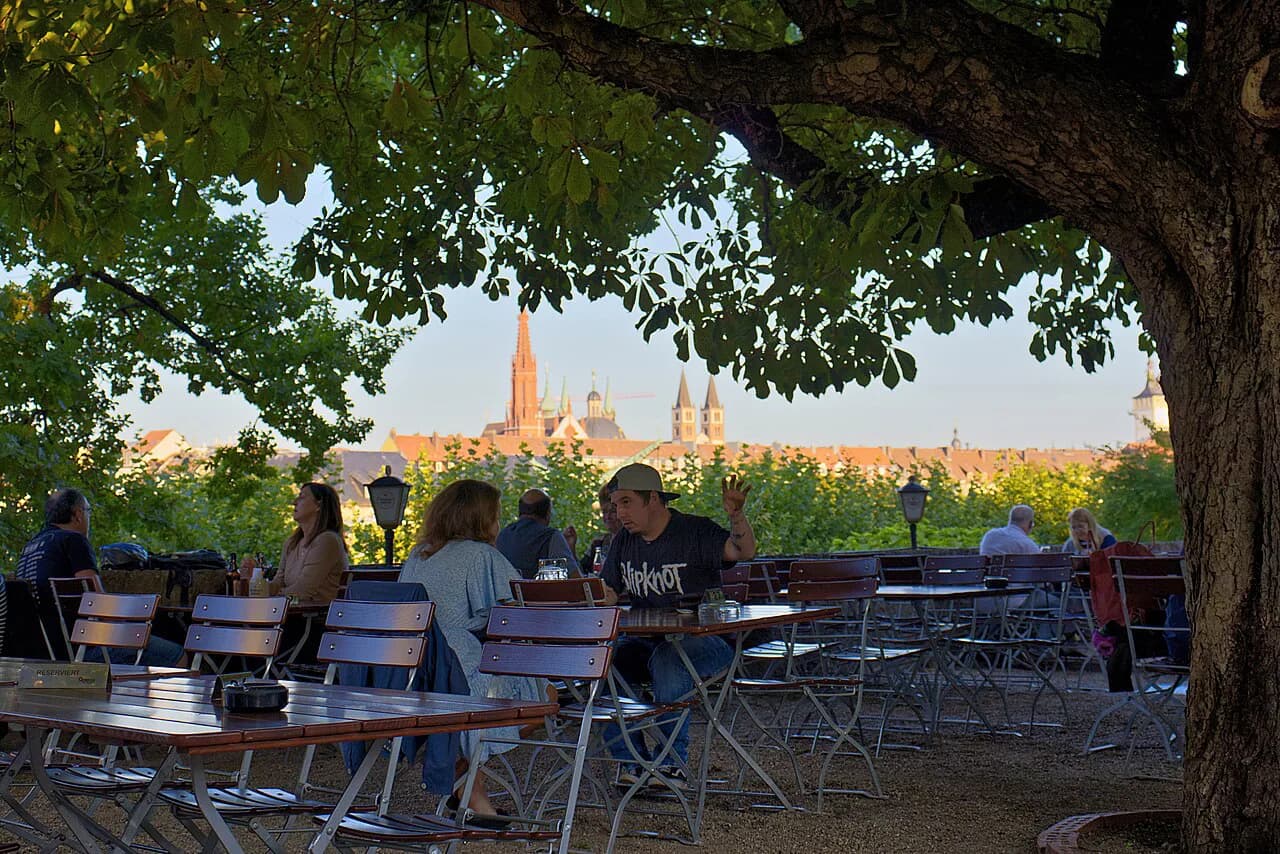
The Hofbräukeller is the brewery's own house: rustic dining rooms with long tables plus a garden shaded by chestnut trees and looking out over the city. It pours the full Hofbräu range, which makes it the single best place to taste the lineup side by side instead of guessing from a list.
The kitchen is Franconian and regional, and the house specialty is the Sudhausbraten, a roast named for the brewhouse. The menu also lists Tafelspitz, Schweinshaxe and Franconian Sauerbraten with potato dumplings, so the table can split a roast and a boiled beef and still stay in local territory.
Because it is both a restaurant and a garden, it works for a sit-down dinner in poor weather and for a bare beer in the open air on a warm evening. Reserve the restaurant side if you want the roasts; the garden is the easier walk-in when you only want a glass and a view.
Brauerei-Gasthof Alter Kranen: Hofbräu on tap with a view of the fortress and Old Main Bridge
The Brauerei-Gasthof Alter Kranen takes its name from the baroque harbor crane from the 18th century that stands beside it, and its garden delivers an unobstructed look at the fortress, the Alte Mainbrücke and the crane itself. This is the address to pick when the view matters as much as the beer.
The menu mixes typical Franconian dishes with burgers, and the Würzburger Hofbräu comes from the tap alongside other draft beers. It is a good compromise stop for a group where one person wants a schnitzel-style plate and another wants something less traditional.
The address is Kranenkai 1 on the riverfront, which puts it naturally on a walk between the Old Main Bridge and the crane. Sit here early in the evening for the light on the fortress, then move on if you want a quieter garden away from the riverside crowds.

Biergarten am Zollhaus: Franconian plates with vegetarian options
The Biergarten am Zollhaus has been running since 1993 and serves typical Franconian meat dishes alongside a real selection for vegetarians and vegans. That combination makes it the least awkward Würzburg garden for a mixed group, and the playground keeps families at the table longer.
Schnitzel variations and pizzas are the popular orders, with salads and potato dishes better suited to a hot summer day. Friday brings Steckerlfisch, fish grilled on a stick over beechwood, and weekends bring grilled chicken, so the day you visit shapes the plate you should order.
It sits at Mergentheimer Straße 19 in Würzburg, and the garden shows major football matches on screen and hosts a regular puppet theater. If you want a calm conversation over a beer, check what is scheduled before you commit to an evening here.
Franconian food to eat with a beer: Bratwurst, Sauerbraten and the house roast
Franconian cooking is built for beer: roast pork and Sauerbraten, a vinegar-marinated beef pot roast, come with heavy dumplings, and Schweinshaxe is the crisp-skinned pork knuckle that rewards a long evening. Order one of these and a Pilsener, and you have the standard Würzburg pairing without needing a menu translation.
Bratwurst is the lighter route: grilled sausages with bread or potato salad leave room for a second beer and suit a garden lunch better than a roast. If you want the broader picture of local plates beyond the gardens, our German restaurant Würzburg roundup covers the sit-down Gasthaus side of the city.
For a table that wants variety, split a roast and a plate of sausages, add a salad or potato dish, and let the Sternla do the work of a lighter pour. It is also worth reading our German Restaurants in Würzburg guide if you would rather book a Gasthaus table than gamble on a garden seat.
How a Würzburg beer garden works: seating, ordering and paying
In a Würzburg garden, the usual rhythm is to find a free table yourself, then order drinks and food from the server who covers your section. Menus are usually in German, and the beers carry the brewery name, so asking for a Hofbräu Pils or a Sternla is enough to get you a glass.
You pay at the table at the end of the meal, and splitting the bill across a group is normal; say getrennt, meaning separately, before the server brings the bill. Cash is still common in Franconian gardens, so carrying some is sensible even if a venue takes cards.
For a wider choice of gardens across the city, including ones beyond the Main riverside, see our Biergarten Würzburg guide. It helps to decide between a riverside view and a quieter neighborhood garden before you set out in the evening.
Würzburg beer garden season and the Kiliani festival beer
Würzburg gardens fill in summer, when locals treat them as an extension of the living room around the fortress and the Main. The gardens are a warm-weather pleasure, so a spring or early autumn visit gives you the same views as a July evening.
Kiliani is the July anchor of the city's drinking year: the Würzburger Hofbräu runs a large festival tent with a Wirtsfamilie at the Talavera grounds and brews a Festbier sold only during the two festival weeks. If your trip lands in that window, the tent is the one place to try it.
Outside July, plan around the gardens rather than the festival: an early evening at the Hofbräukeller or Alter Kranen gives you the brewery's standard range with the fortress in view. Keep the pace moderate, order food alongside the beer, and the evening lasts longer than the glass count suggests.
Which Würzburg beer stop fits your evening?
If you want the brewery's full range and a Franconian roast, the Hofbräukeller is the pick; if you want the postcard view, take the Alter Kranen garden on the Kranenkai; if your group includes vegetarians or children, the Zollhaus is the easiest fit. The Sternla is the beer to order when you want a lighter session, and the Pilsener is the benchmark glass.
Pair the evening with a proper dinner from our German Restaurants in Würzburg picks, or scan the best restaurants in the city first if you want one table that covers both food and beer. Either way, the brewery founded in 1643 is the constant on the table.
Frequently Asked Questions
Is Würzburger Hofbräu the only brewery in Würzburg?
Würzburger Hofbräu is described as the city's only brewery, founded in 1643 and still trading as Würzburg's oldest company. That is why the local beer on most taps carries the same name, and why the Hofbräukeller is the best place to compare the full range in one sitting.
What is the difference between Pilsener and Sternla?
Both are pale lagers from Würzburger Hofbräu. The Pilsener is the crisp flagship found across the city, while Sternla is a full-bodied everyday beer at 4.9 percent alcohol. Order the Pilsener first if you want the benchmark taste of Würzburg.
When can I drink the Kiliani Festbier?
Only during the two-week Kiliani fair in July, when the brewery runs a festival tent at the Talavera grounds and pours a Festbier brewed for that period alone. The beer is not part of the regular range, so a summer visit that misses the fair will not find it.
Do Würzburg beer gardens take cards?
Cash is still common in Franconian gardens, so carrying some is sensible even when a venue accepts cards. You pay at the table at the end of the meal, and asking for getrennt lets a group settle separately without awkward math.
Sources
Notes for your next German food trip
Optional updates to our guides.
You might also like

Continue reading
More guides you'll find useful