What to Eat in Würzburg: Local Dishes and Where to Try Them
Würzburg food means Franconian cooking and Silvaner wine. Here are the dishes to order, the Weinstuben that serve them, and where to shop in the old town.
On this page
Würzburg food is Franconian home cooking served in a wine town, so the plate in front of you and the glass beside it come from the same region. Expect hearty pork and dumpling dishes, sausage, and Silvaner, the dry white that defines the local vineyards. This guide covers the dishes worth ordering first, the wine estates and Weinstuben that serve them, and where to buy bread, pastries and international groceries.
The city sits in the center of Frankenwein, the Franconian wine country, and its restaurant scene reflects that. Wine is central to how the city eats and drinks, and the three large traditional estates — Staatlicher Hofkeller Würzburg, Juliusspital and Bürgerspital zum Heiligen Geist — can all be visited. Small family wineries welcome guests too, and the names of the big estates also appear on Weinstuben in the old town.
What Würzburg food is known for
The short answer: Würzburg is known less for a single signature dish than for the pairing of Franconian cooking with Franconian wine. The city is the center of the Frankenwein region, and local Weinstuben serve regional food with regional wine as a matter of course. If you order one thing with local identity, make it a glass of Silvaner beside whatever comes off the daily menu.
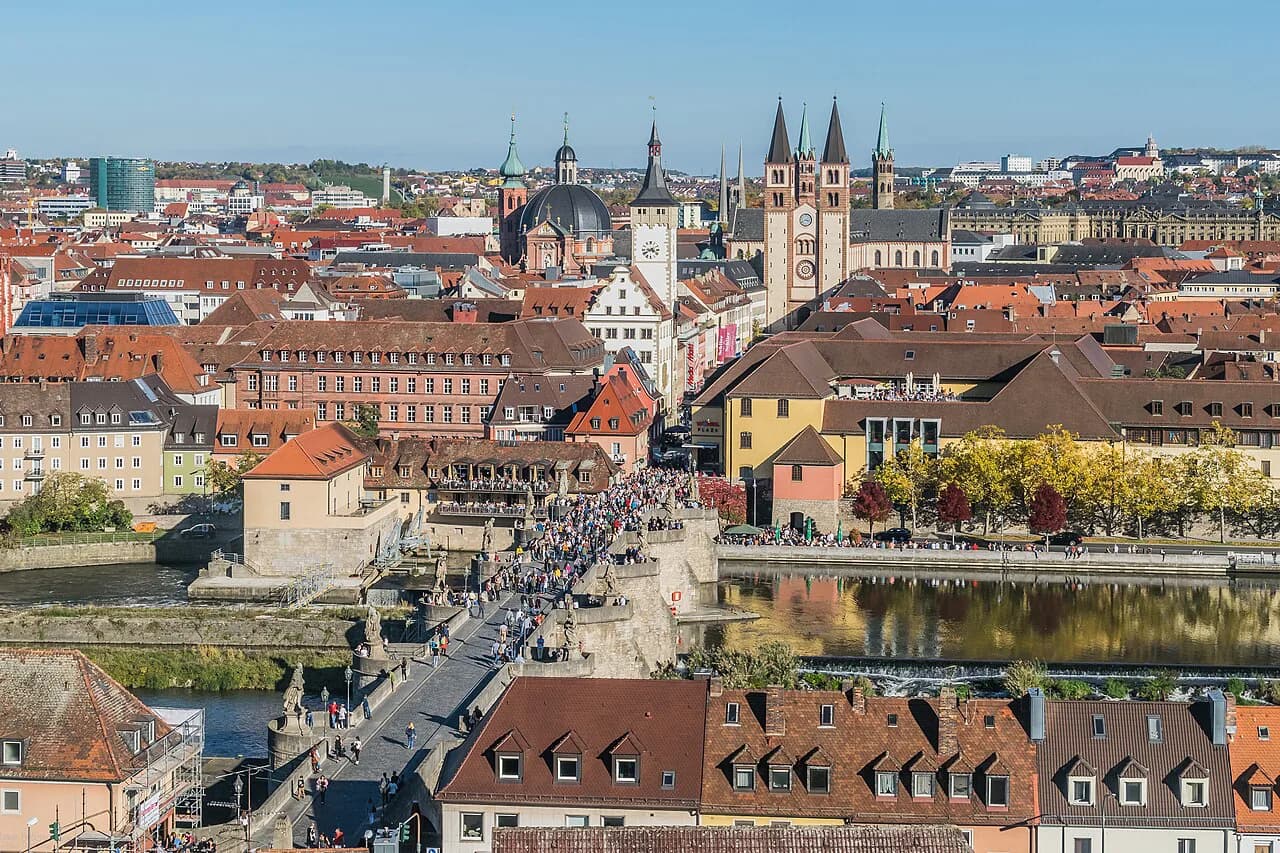
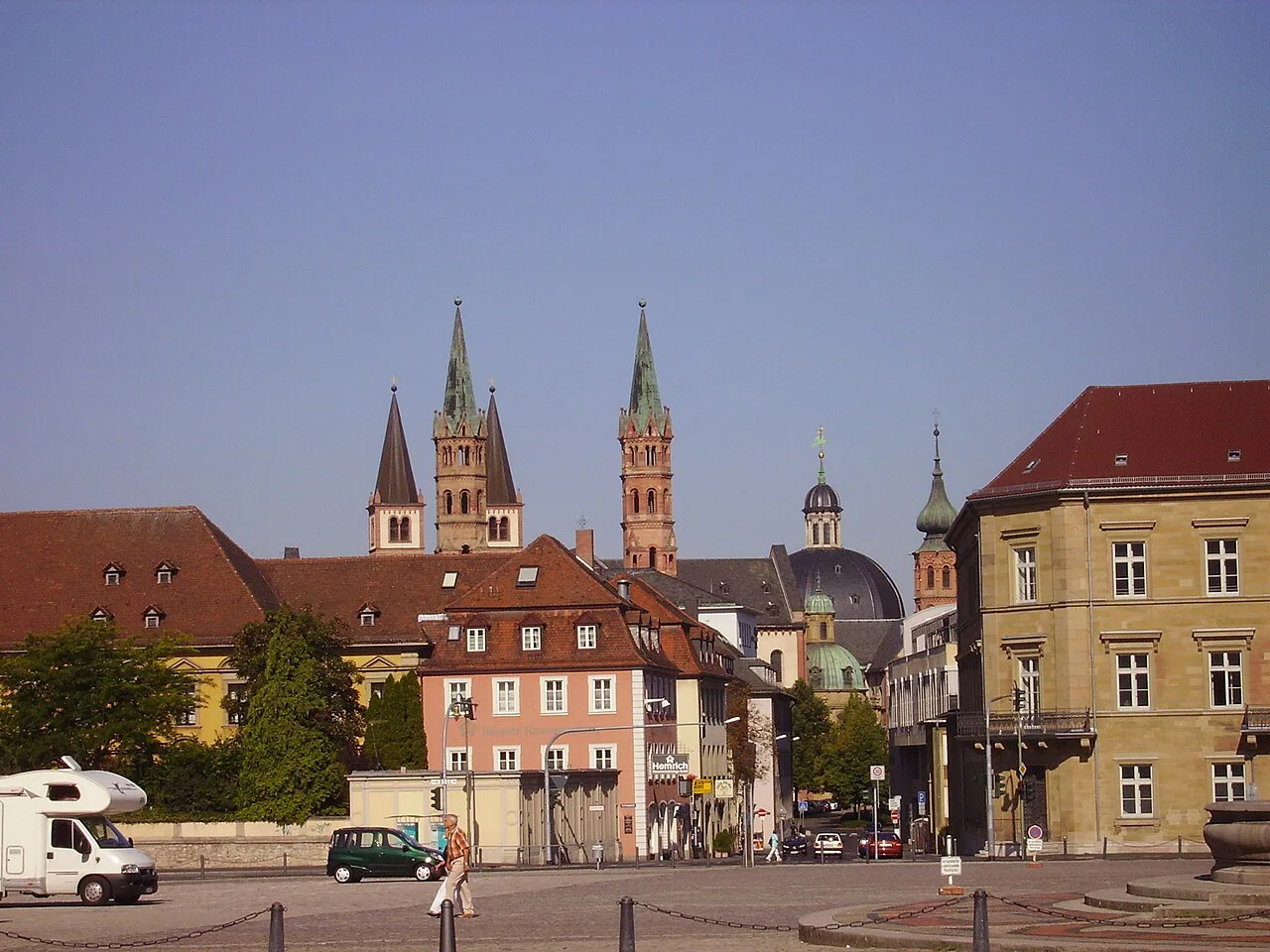
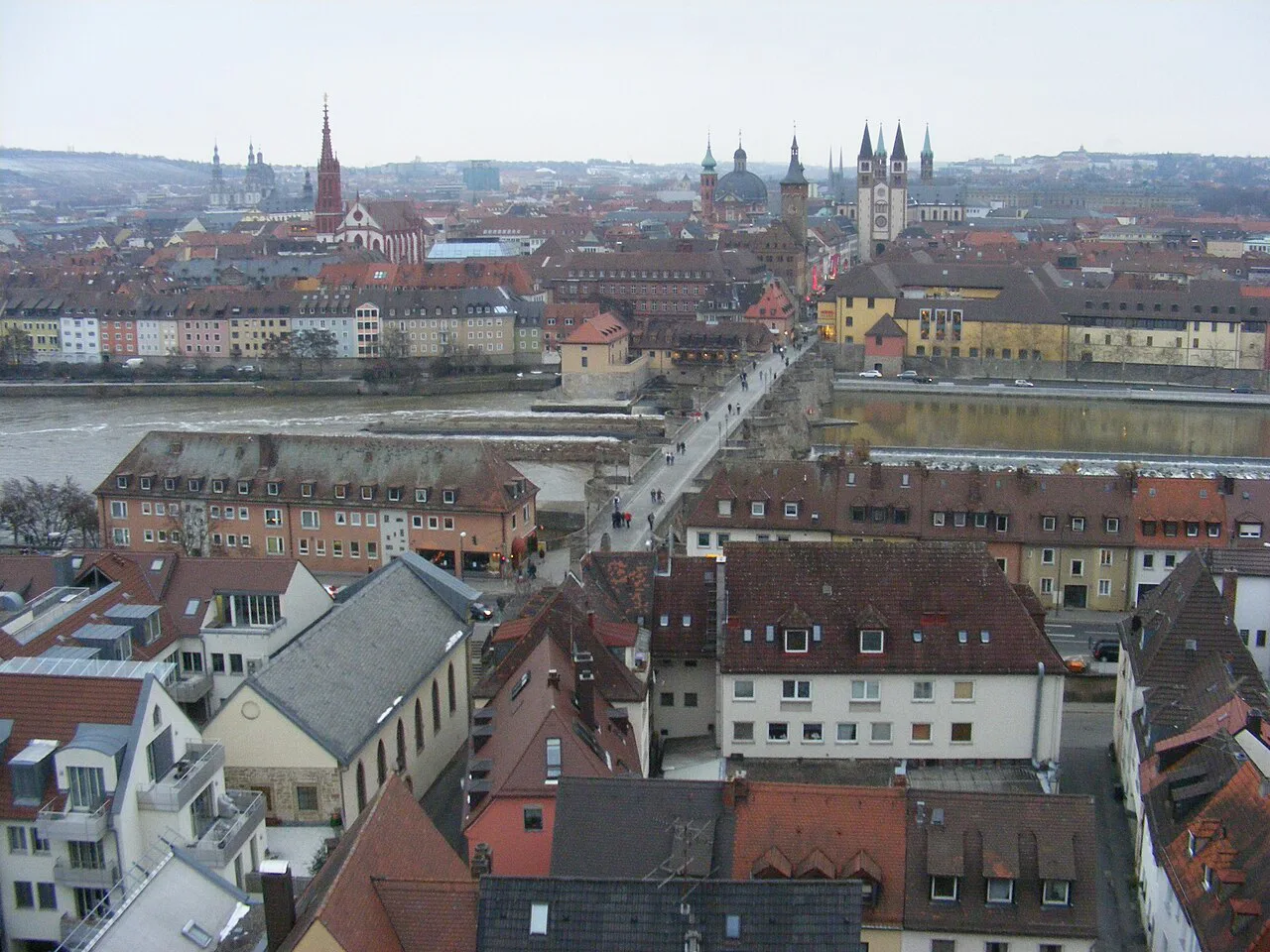
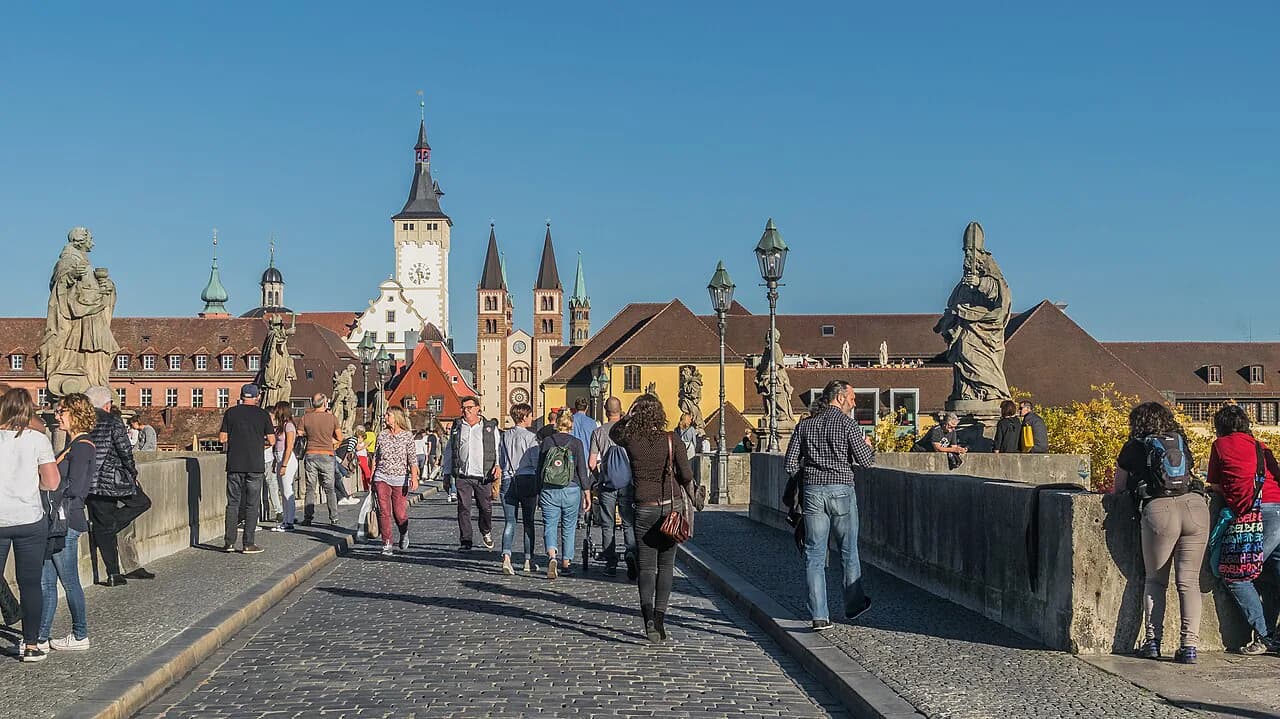
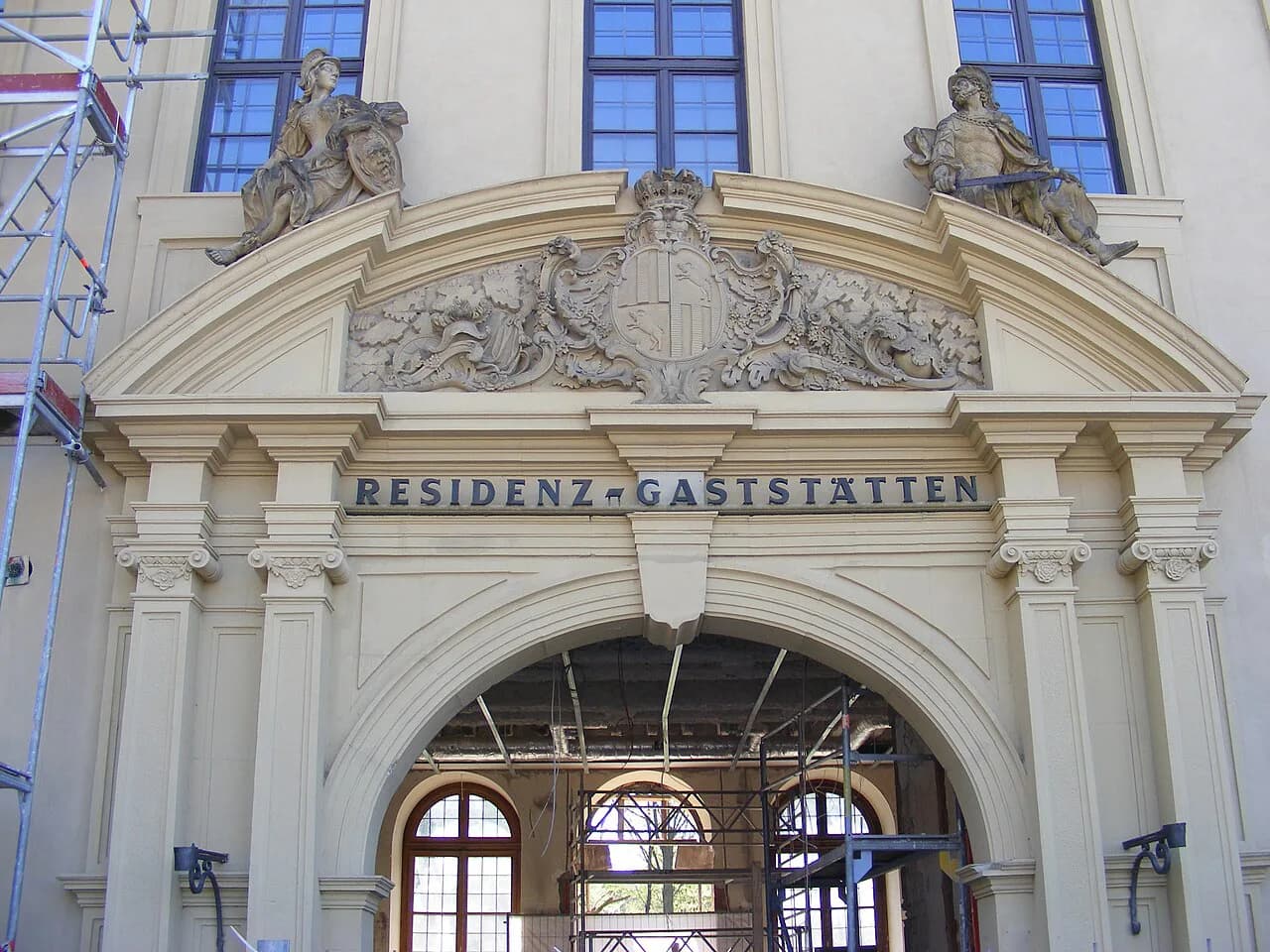
Würzburg itself is a working university city, not a museum piece, and the Residenz Würzburg, the Festung Marienberg and the Kiliansdom set the skyline around an old town that fills with students and shoppers at lunchtime. For a food-focused visitor, that means a city where the everyday cooking is worth your time and the grand sights are the backdrop, not the main event.
The dishes to order first in Würzburg
Start with Bratwurst, pork sausage grilled or simmered and usually served with mustard and bread rather than a pile of sides. Franconian versions tend to be coarse and seasoned plainly, so the sausage itself, not the garnish, carries the meal. Order it at a Weinstube or a simple lunch counter and treat it as a light plate between bigger meals.
Sauerbraten, beef marinated before braising, is a classic German dish to order when you want a substantial dinner. It arrives dark, sour and tender, typically with red cabbage and dumplings or boiled potatoes. Portions are generous, so it works well as a single main course for a hungry traveler.
Käsespätzle, soft egg noodles layered with melted cheese and topped with fried onions, is a hearty German classic and an easy meat-free choice when you find it on a menu. It often comes with a green salad on the side to cut the richness. Order it when you want something warm and filling after a day of walking the old town.
Beyond those three, look for Franconian plates built from pork, dumplings and seasonal vegetables, and for the autumn and spring specials that follow what the region grows. Because menus change with the season, the most reliable approach is to read the day's board at the door rather than decide in advance from a website.
Silvaner and the wine estates that pour it
Silvaner is the white grape most associated with Franconia, and in Würzburg it is usually made dry rather than sweet. You will see it labeled simply as Silvaner or as Frankenwein, and it is a natural partner to Franconian plates. A glass rather than a full bottle keeps a lunch or a tasting plate easy to pace.
The three large traditional estates, Staatlicher Hofkeller Würzburg, Juliusspital and Bürgerspital zum Heiligen Geist, can all be visited, and smaller family wineries also welcome guests. Their names carry over onto Weinstuben in town, which is a useful signal when you are choosing where to eat: the wine list and the kitchen come from the same tradition.
Where to eat regional Franconian food
Weinstuben are the heart of it: informal wine taverns that serve cold and warm regional plates alongside the local wines. They suit a long lunch, a plate of sausage and cheese with a glass of Silvaner, or a full dinner. Our guide to the best restaurants in Würzburg sorts the city's options by what they are actually good for, from a quick plate to a proper sit-down meal.
If you want traditional German cooking, the guide to German restaurants in Würzburg points you to rooms where Sauerbraten, Käsespätzle and dumplings are the point of the menu rather than a nod to tourists. Look for a short menu, daily specials on a chalkboard and a wine list that leans Franconian. Those signals usually beat a long translated menu with photos.
The Bürgerspital Weinstuben, the Weinstuben Juliusspital and the Weinhaus zum Stachel were named in a 2012 Michelin Guide entry. Treat that as history rather than a current rating; the reliable way to judge a Weinstube today is the room at dinner, the daily board and whether locals are eating there.
Sweets, bread and pastries in the old town
For a sweet stop in the Altstadt, Jasmin on Semmelstraße 26 is an Arabic confectionery known for baklava and similar honey-soaked pastries. It is a good counterpoint to a Franconian lunch, and a box travels well if you want something for later. Bäckerei Emma, a Balkan bakery on Kaiserstraße 23-25, covers the bread-and-pastry side of the same street circuit.
La Tosca, a Konditorei on Theaterstraße 10, is the stop for Italian-style cakes and pastries in the same neighborhood. For a baker's loaf or a simple roll to carry, the Balkan bakery and the old-town bakeries do the job without ceremony.
Markets and specialty food shops
Würzburg's international grocery scene is dense enough to stock a self-catering kitchen for a week. Go Asia Supermarkt at Kaiserstraße 14 carries Japanese, Vietnamese and other East Asian ingredients, including sushi supplies and noodles, while Asia Markt Bambus on Semmelstraße 36 is a smaller old-town alternative.
For Turkish and Middle Eastern staples such as lentils, flatbread and spices, Ahsa at Nürnberger Straße 14 is a full supermarket that also supplies restaurant kitchens, and Supermarkt Hayat on Bohnesmühlgasse 17 sits in the old town. Mix Markt at Heisenbergstraße 4a in Lengfeld covers Russian, Polish and other Eastern European products. Outside the center, the city's specialty shops spread from Grombühl to Zellerau and Heuchelhof.
An Italian deli stop is worth building into a shopping morning: La Bottega Italiana on Sterngasse 7, Ölbaum on Eichhornstraße 13½ and Casa del Gusto on Herzogenstraße 9 all sell cheese, cured meat, pasta and oil. For Spanish ham, olives and wine, Spanish Wine Connection on Textorstraße 16/18 and Bodega Nikola on Semmelstraße 63 cover the tapas-at-home case. Buy cheese and cured meat last if you plan to keep walking.
How eating out works in Würzburg
Lunch is the main cooked meal for many locals, and German restaurants fill at midday; dinner usually starts later and runs long. If you want a table on a busy evening, especially for a group, call ahead. Weekday lunches are generally easier to walk into — but individual restaurants keep their own schedules and Ruhetage.
Payment habits vary by venue: some traditional rooms and smaller shops still prefer cash, while larger restaurants take cards. Carry a few euros in notes so a quick sausage and a glass of Silvaner never becomes a problem. A service charge is typically built into German menus, and rounding up is a courtesy rather than an obligation.
Menus are seasonal in a way that matters here: spring and early summer bring fresh asparagus (Spargel), and autumn turns to hearty pork and game dishes. Order what the board emphasizes; it is what the kitchen wants to cook.
Wine-town trade-offs: touristy squares versus local rooms
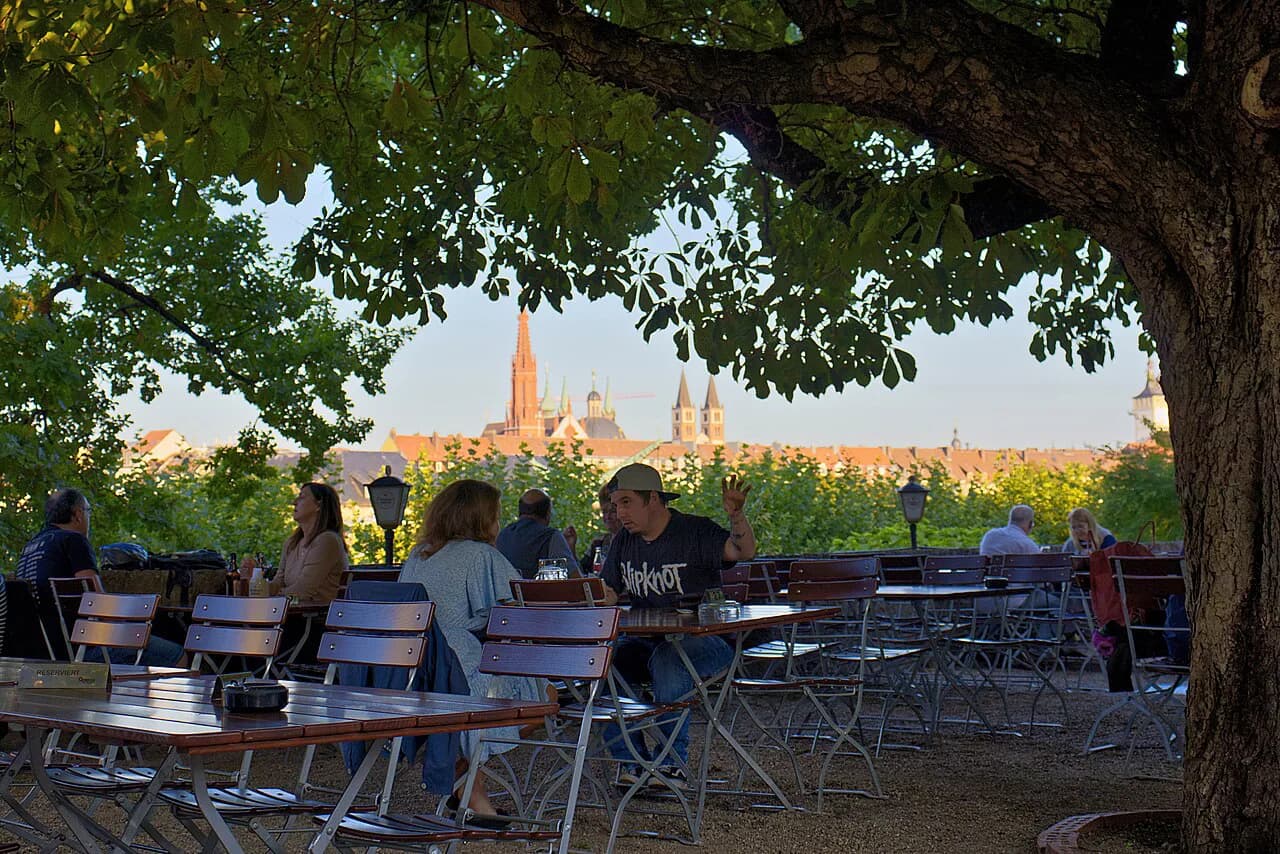
The addresses closest to the Residenz and the riverfront catch the tour groups, and the back-street competition can be a better bet. That is not a reason to avoid the central squares entirely, but a table one or two streets inland often gets you better cooking for the same money. Look for German-language menus and a short wine list.
For beer rather than wine, Würzburg also has breweries and warm-weather beer gardens. If you want to compare, our Würzburg breweries guide covers the local breweries.
What to Order on Your First Night
Order Sauerbraten or Käsespätzle, add a Bratwurst plate to share, and drink Silvaner by the glass. That combination tells you what Würzburg food is in a single sitting. Book a Weinstube for dinner and keep lunch loose, following whatever is chalked on the board.
If you are self-catering, spend one morning on the specialty shops around Kaiserstraße and Semmelstraße and build a picnic from bread, cheese and cured meat. For the full sit-down picture, start with the best restaurants in Würzburg and work outward from there.
Explore more Würzburg guides
Frequently Asked Questions
What food is Würzburg known for?
Würzburg is known for Franconian cooking paired with Franconian wine. Expect Bratwurst, Sauerbraten with dumplings, Käsespätzle and seasonal plates, served in Weinstuben alongside Silvaner from the region's traditional estates.
Is Würzburg a wine town or a beer town?
Wine defines the table. The city sits at the center of the Frankenwein region, and Silvaner is the local white to order with food. Beer is widely available too, and the city has its own breweries and beer gardens.
Do I need to reserve a table for dinner in Würzburg?
For a busy evening, especially in a popular Weinstube or for a group, it is wise to call ahead. Weekday lunches are generally easier to walk into. Individual restaurants keep their own hours, so it pays to check before you go.
Where can I buy local food to take home?
Bread and pastries from old-town bakeries travel well, and the international grocers around Kaiserstraße and Semmelstraße cover pantry items. For wine, buy directly from the estates or their Weinstuben.
Sources
Notes for your next German food trip
Optional updates to our guides.
You might also like
Continue reading
More guides you'll find useful