Altbier: What It Is and How to Drink It in Düsseldorf
Altbier is Düsseldorf's dark, hop-forward top-fermented beer, poured small and refilled without asking. Here's what to order and where to drink it.
On this page
Altbier is Düsseldorf's signature beer: a dark brown, top-fermented ale, hop-bitter with caramel and a trace of roast, usually around 4.8 percent alcohol. Order it in the Altstadt and it arrives in a small straight glass that the Köbes, the brewhouse waiter, replaces unasked until you signal stop. This guide covers what the style is, why it is called Alt, how the five house brews in the Altstadt differ, and what to eat with it.
What Altbier Is
Alt is a top-fermented Vollbier, meaning the yeast works warm and the beer is brewed to ordinary strength rather than as a specialty. The Deutscher Brauer-Bund describes it as hop-bitter and fruity-fresh on one side, with caramel aromas and light roast on the other, at roughly 4.8 percent alcohol and a serving temperature of 8 to 10 °C.
The color comes from the malt, not from long storage. Munich malt kilned at around 100 °C plus a share of darker roasted malt gives the beer its dark brown to near-black body with an amber glint, and the bitterness lands in the 25 to 40 IBU range while a caramel note sits behind the hops. Each house decides how bitter to push it, so the spread between a mild Alt and a sharply herbal one is wider than visitors expect.
Why It Is Called Altbier
The name has nothing to do with age. When cold-fermented lager arrived from southern Germany and Bohemia, Rhineland pubs suddenly poured two kinds of beer side by side, the new one and the old one, and the label stuck to the older brewing method around 1800. The popular story that Alt comes from the Latin altus, for the yeast rising during fermentation, makes a good anecdote and is wrong.
Alt vs. Kölsch
The rivalry is louder than the difference. Both are top-fermented, both sit near 4.8 percent alcohol, and both come in slim, small glasses, though the Kölner Stange holds 0.2 liters while the Düsseldorf Becher runs 0.2 to 0.25. Alt is dark because of its malt and is not always filtered; Kölsch is pale and filtered, and it has a legal rule that Alt lacks, since the Kölsch Convention of 1986 reserves the name for beer brewed in and around Cologne. Alt can be brewed anywhere, and the biggest Alt brand does not even sit in Düsseldorf.
The Glass and the Pour
Alt is served at about 7 °C in a straight, cylindrical glass holding 0.2 to 0.25 liters. The small pour is deliberate: the beer stays cold, keeps its carbonation, and gives the Köbes a reason to come back to the table. Ordering a half liter in a brewhouse marks you as a visitor, so take the small glass and let it be refilled.
The Köbes and the Beer Coaster
The waiter in a Düsseldorf brewhouse is called a Köbes, a nickname from Jakob that became a job title in the 18th and 19th centuries. He carries a leather pouch for cash and wears a blue linen apron. When your glass is empty he sets down a full one without asking, and the tally goes on the coaster. If you have had enough, put the coaster on top of the glass; that single gesture ends the refills.
The Five Brewhouses of the Altstadt
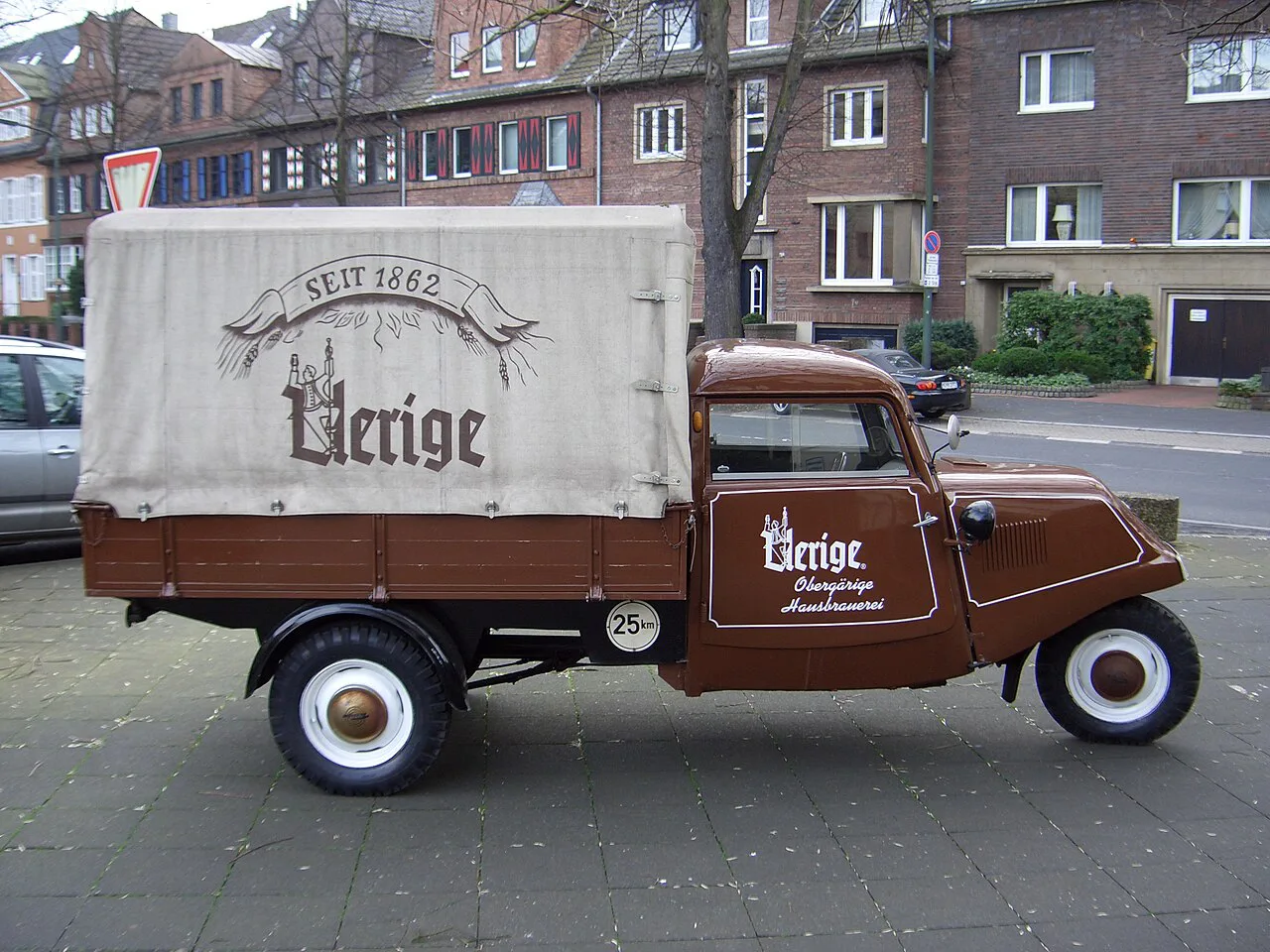
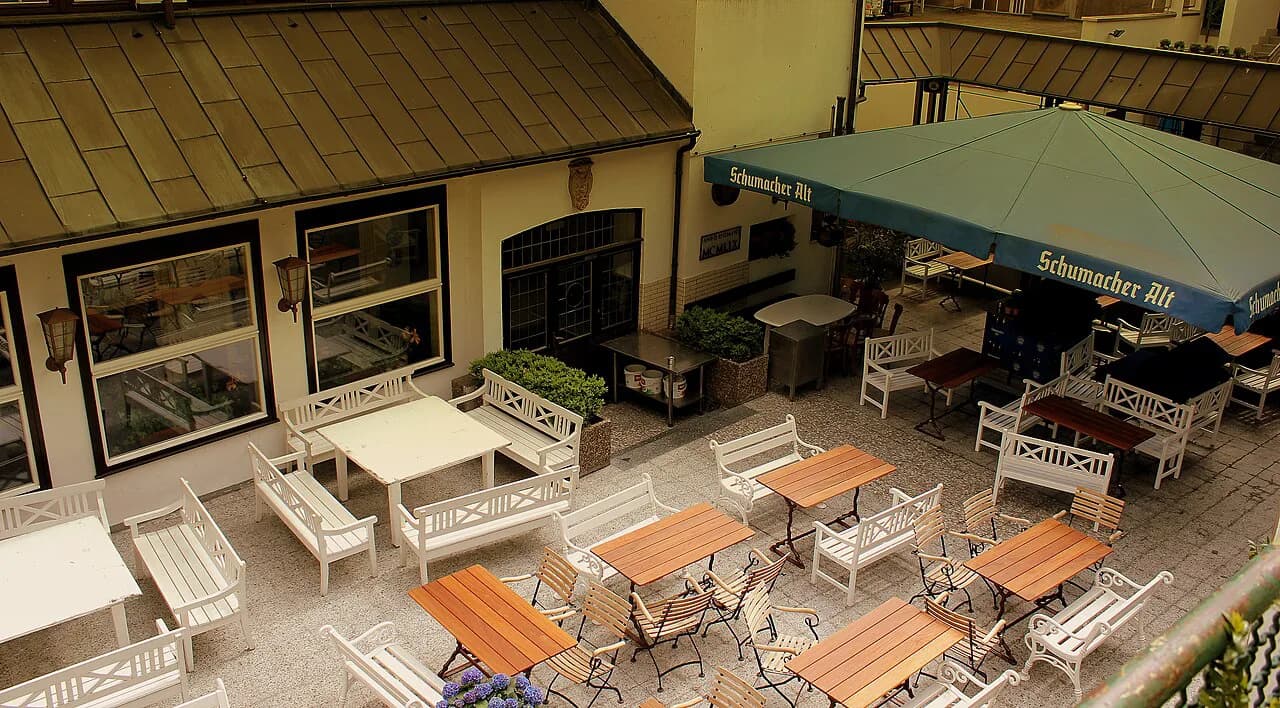
Five houses brew their own Alt inside the Altstadt, and each tastes different. Uerige on Berger Straße has carried the name since 1862 and pours the most bitter of them. Füchschen on Ratinger Straße has brewed under that name since 1848, named for a carved fox that once did the work of a house number, and has been in the König family since 1908. Schumacher traces to a brewery on Citadellstraße taken over in 1838 and now pours at the Oststraße and Bolkerstraße addresses, while Zum Schlüssel on Bolkerstraße, brewing since 1850, is the smallest of the old houses and has belonged to the Gatzweiler family since 1936. Kürzer on Kurze Straße is the youngest, brewing there since 2010, with its Alt drawn from a glass tank behind the counter.
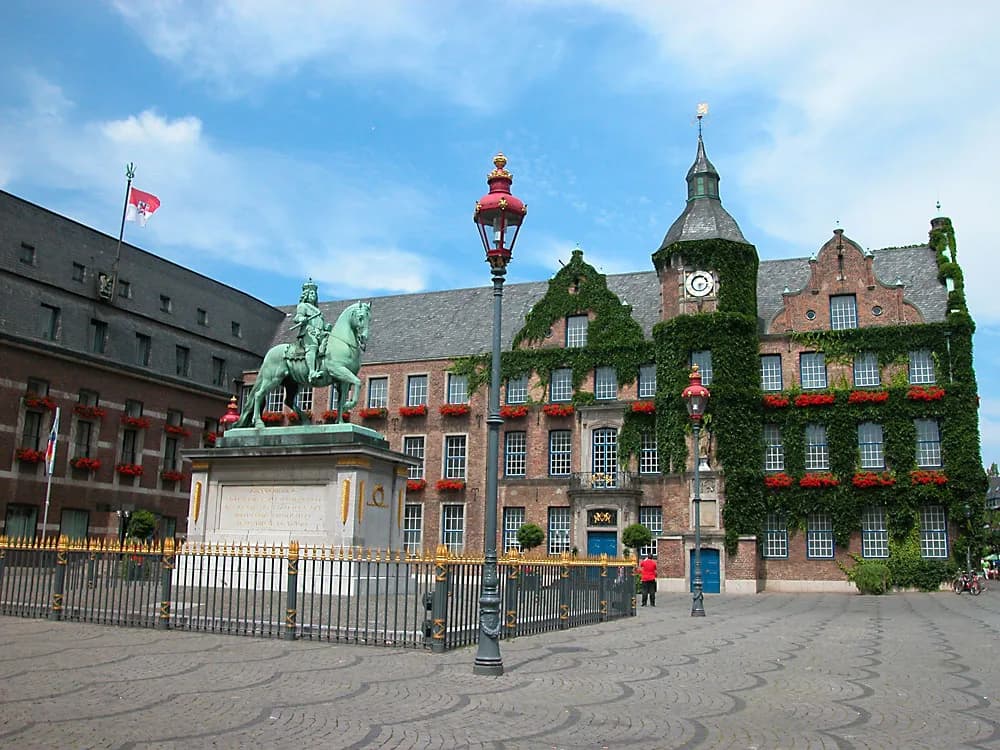
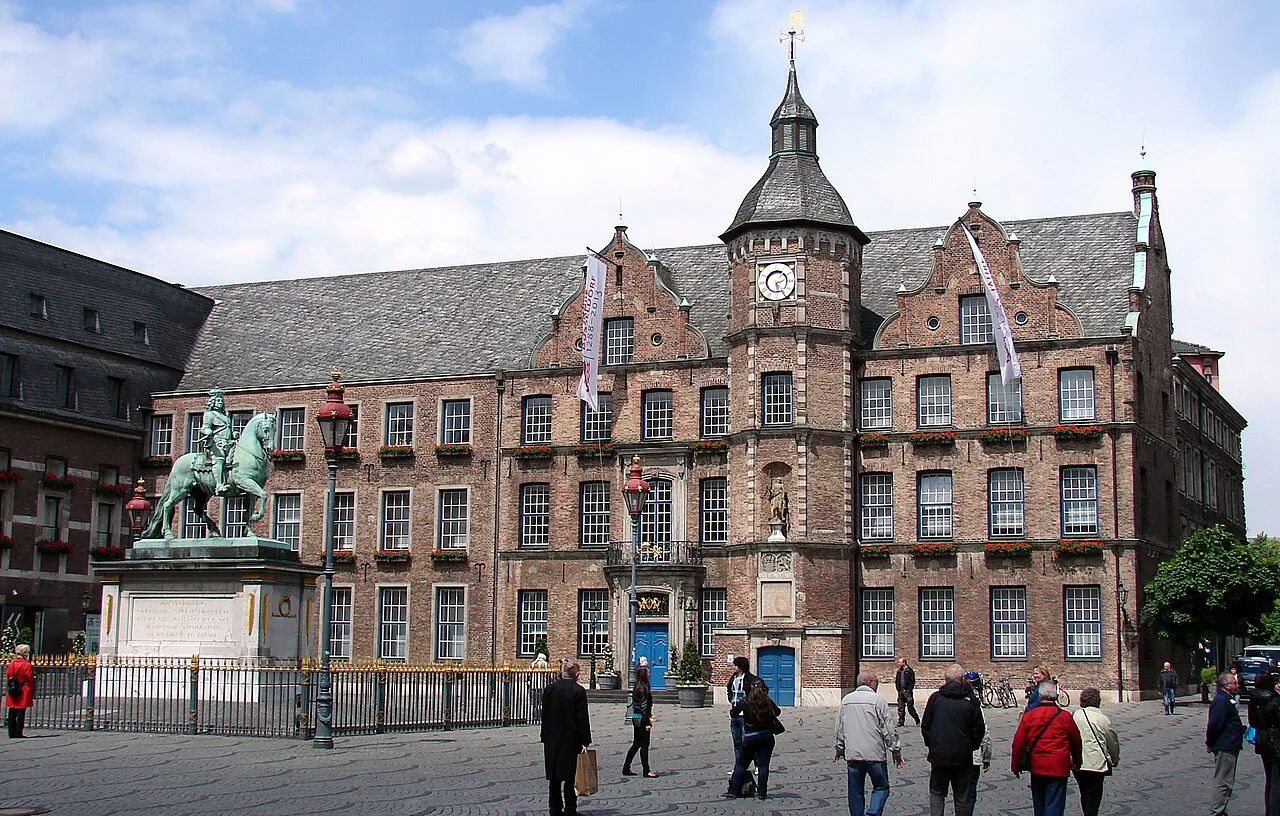
Practically, the first four sit a few steps from the Marktplatz with its equestrian statue of Jan Wellem, so you can compare two or three in an evening without planning transport. Outside the Altstadt, smaller addresses such as Johann Albrecht in Niederkassel and the Alte Bahnhof in Oberkassel pour their own versions, the latter with a Gulasch-Alt. For a broader map of who brews where in the city, our guide to breweries in Düsseldorf pairs well with a short crawl.
Sticke and Latzenbier
Beyond the everyday house pour, Düsseldorf brewhouses have special versions of their own Alt. Sticke and Latzenbier are the names to know, and they are the kind of thing regulars ask for rather than something printed on every menu. Ask at the bar whether the house has one on, because these are occasional brews rather than a standing tap.
Alt from the Bottle
Bottled Alt is a different experience and worth trying for comparison, because most of the familiar brand names are brewed outside Düsseldorf. Diebels comes from Issum on the lower Rhine, has been made since 1878, and has at times held more than half the market. Bolten in Korschenbroich cites a brewing right from 1266, Frankenheim is an old Düsseldorf brand now part of a large brewing group, and Schlösser has a long Düsseldorf history but belongs to a group too. Tasting a Uerige beside a Diebels is enough to feel the difference between a house pour and a national brand.
Alcohol-Free Alt
Alcohol-free Alt is rare in Düsseldorf, and only Füchschen and Uerige currently make one. Füchschen has offered its alcohol-free Alt for nearly eight years and sells it in six-packs as well as bottles, but not from the tap, since keeping it stable on draft is difficult; Uerige has produced an alcohol-free version for several years. Buy either in drinks stores or at local Rewe and Edeka branches rather than expecting them at every brewhouse bar.
What to Eat with Altbier
Alt has a wide enough flavor profile to carry most of the menu. The classic partner is a Mettwurstbrötchen, a small roll with smoked sausage, but the beer also works with spicy salads, smoked trout, Schweinebraten, and hearty stews, and it can finish a meal alongside aged Gouda or a chocolate and nut dessert. That range means you do not need to hunt for a specialized menu, since almost any German restaurant will have a dish to match.
If you want a full sit-down meal after a glass, the Altstadt and its surroundings have plenty of traditional kitchens, and our pick of German Restaurants in Düsseldorf covers the ones worth reserving. For a lighter stop, cheap restaurants in Düsseldorf handle the quick lunch or snack side of the day well. When you want to weigh the whole dining picture, from brewhouse plates to the top end of the city's kitchens, the best restaurants in Düsseldorf set the full range beside each other.
How to Spend an Altbier Evening
Start with one house in the Altstadt, order in the small glass, and let the coaster do the talking when you are done. Compare a second brewhouse only if you still have room, and try a bottled brand another day to see how much the Düsseldorf pour differs from a supermarket Alt. Fewer glasses, tasted side by side, teach you more than a long crawl.
Explore more Düsseldorf guides
Sources
Notes for your next German food trip
Optional updates to our guides.
You might also like
Continue reading
More guides you'll find useful