Black Forest Ham: What It Is and How to Eat It in Germany
Black Forest ham is a smoked, dry-cured German ham sliced paper-thin and eaten cold with bread. Here is what makes it different and how to order it.
On this page
Black Forest ham is a smoked, air-dried raw ham from the Black Forest region of southwest Germany, served in translucent slices on a cold plate rather than as a hot main. In Freiburg you meet it most often as part of a Vesper, the cold snack plate of ham, bread and pickles that anchors a late afternoon in a Gasthaus or on a market stall. This guide covers how the ham is cured and smoked, how it is sliced and served, and how to buy it to carry home.
The practical takeaway: order it cold, expect a salty-smoky profile rather than a sweet one, and treat a thick slice like a condiment for bread, not a steak. Freiburg's official tourism portal builds its food suggestions around exactly this kind of small, local pleasure, from a Lange Rote sausage on the Münstermarkt to regional specialties in the Altstadt, so ham fits naturally into a grazing day.
What Black Forest ham actually is
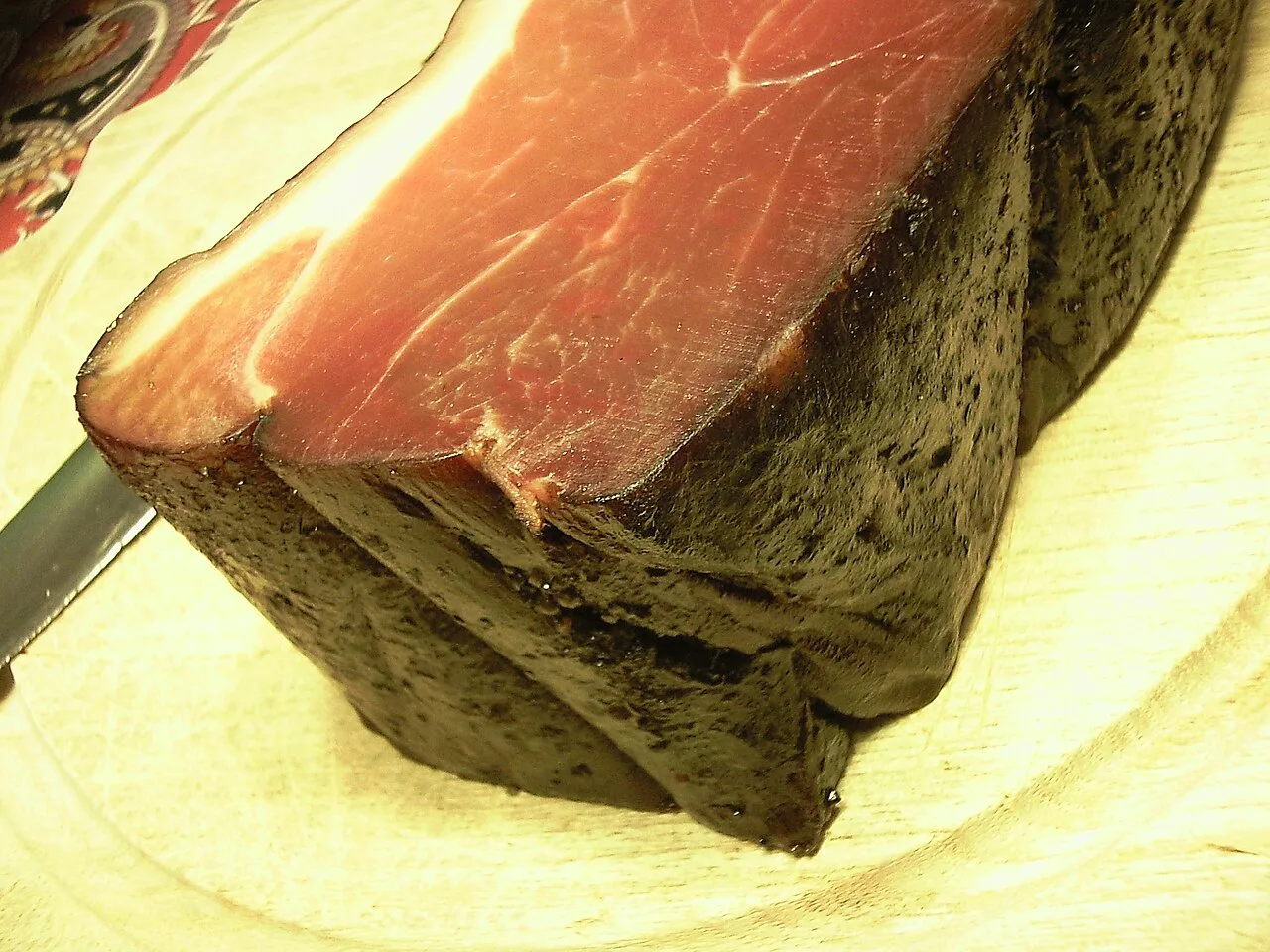
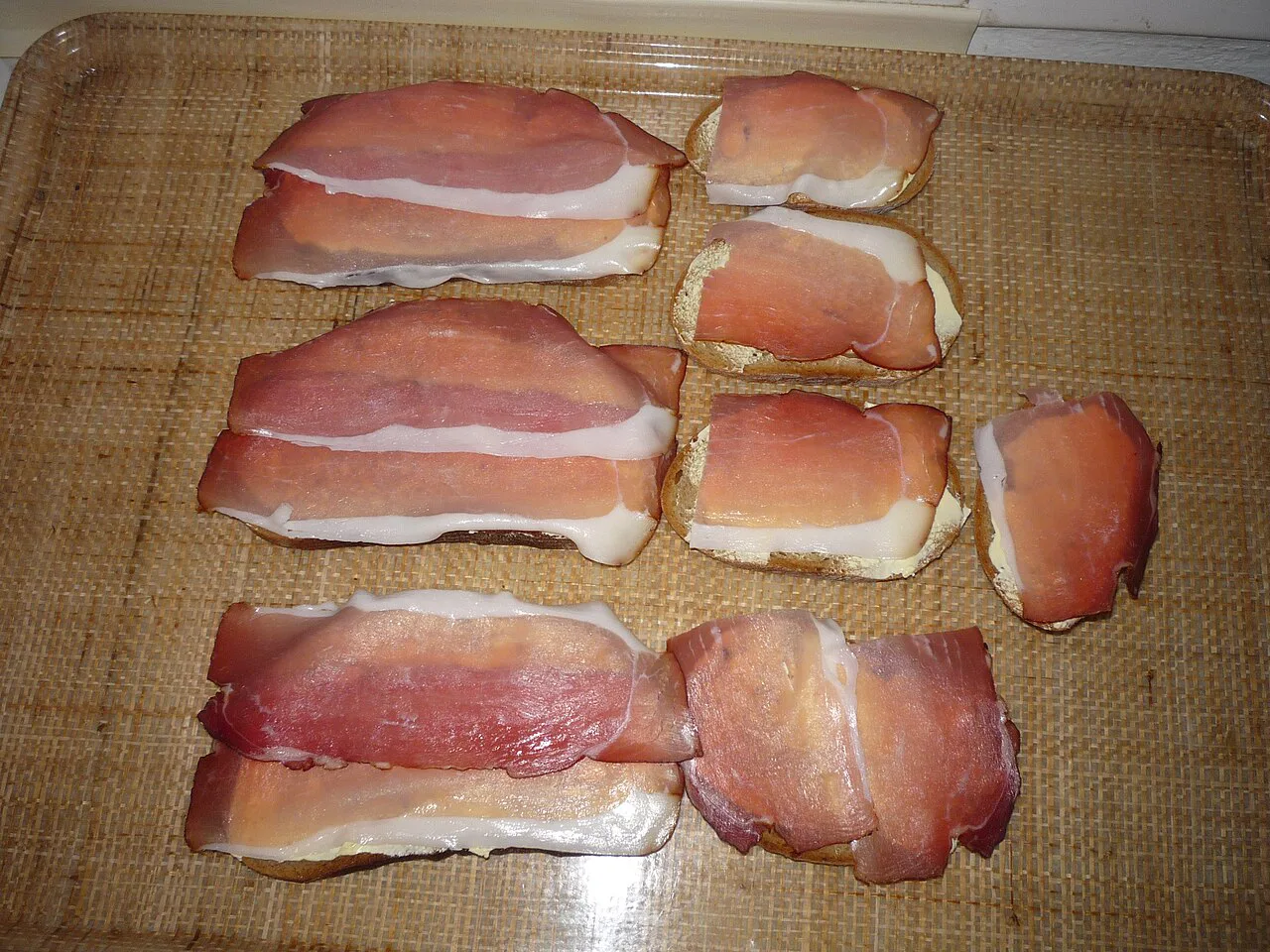
Schwarzwälder Schinken is pork that is dry-cured with salt and spices, then smoked to give the meat its dark mahogany color and firm texture, which is why thin slices hold together instead of falling apart like wet-brined deli ham. It is eaten cold and sliced thin, not cooked as a hot main.
The Black Forest itself is the wooded mountain range east of Freiburg, and the region's tourism board treats the ham as part of the area's culinary identity alongside the landscape and the Baden kitchen. That regional tie matters when you shop: the name on the label should point back to the Schwarzwald, not just to a smoke flavoring.
Why it tastes different from ordinary ham
Most supermarket ham is brined and cooked, which leaves it pink, moist and mild. Black Forest ham takes a drier route: curing draws moisture out and concentrates the pork flavor, while smoking adds woody notes. The result is saltier, drier and more savory than a standard cooked ham.
The smoke is what gives the ham its forest aroma, so it reads as woodsmoke rather than as a sweet glaze. If you have only had the sweet, glazed ham sold for holiday tables, expect a different animal: no honey lacquer, no clove-studded crust, just cured pork and smoke.
How it is sliced and served
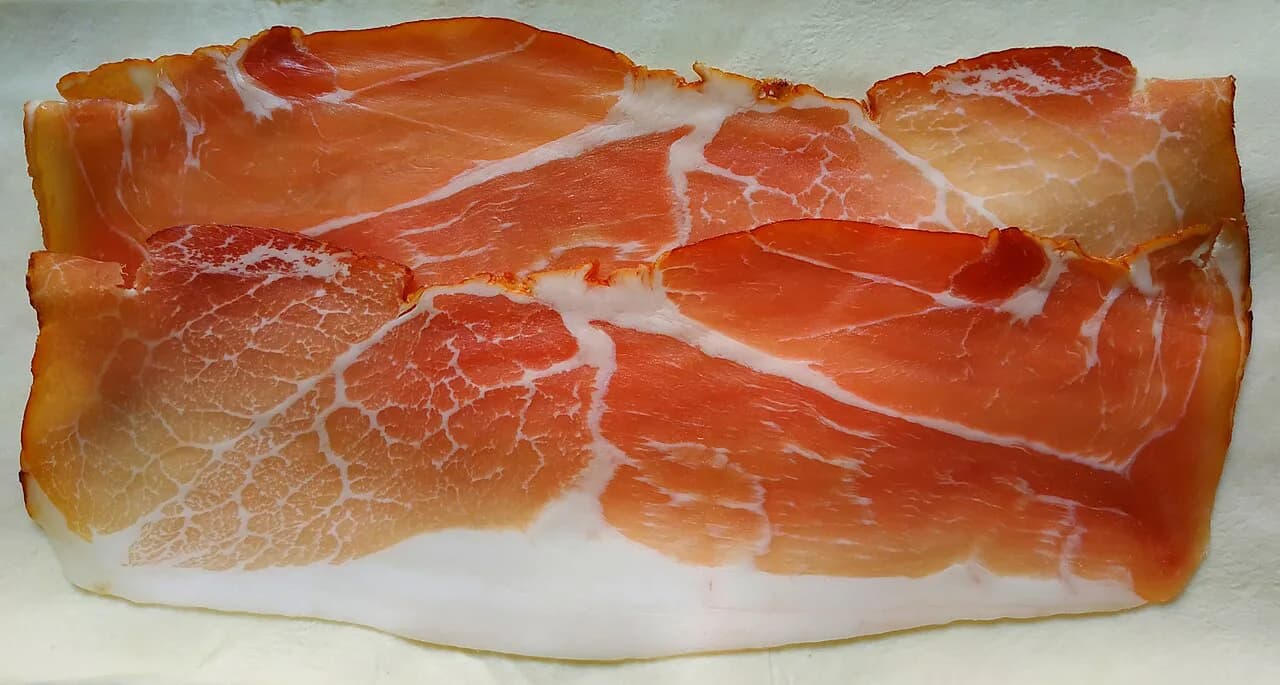
The classic cut is paper-thin, so thin you can see the plate through it, fanned across a cold board or plate. It comes with dark bread or crusty rolls, butter, and gherkins or pickled onions, and often a wedge of cheese and a few radishes. The ham is the centerpiece, but it is built for bread: fold a slice over a buttered piece of rye and add a pickle.
In Freiburg, the Vesper plate is the natural home for this. The city's tourism office frames eating here around regional specialties and small local producers, and a cold ham-and-bread plate in an Altstadt Gasthaus is exactly that kind of stop. Ask for Schwarzwälder Schinken mit Brot if you want the ham on its own with bread rather than as part of a larger mixed plate.
Where it fits in a Freiburg day
Treat Black Forest ham as a late-morning or late-afternoon food, not a dinner main. A market stop around the Münstermarkt, a cold plate in a Gasthaus after a walk through the Altstadt, or a ham roll packed for the train all work better than trying to find it as a hot dish. The Münstermarkt on the cathedral square is a convenient place to pair a ham-and-bread snack with the city's market food.
If you want a structured route through the city's food stops rather than piecing it together yourself, a Freiburg food tour covers the market and Altstadt in a few hours and shows you the portion sizes and ordering rhythm. Otherwise, use the market as your anchor and add one sit-down Vesper.
Black Forest ham versus cooked ham and honey ham
Against standard cooked deli ham, Black Forest ham is drier, saltier and more heavily smoked, and it is sold in thin slices rather than thick-cut for sandwiches. Against honey-glazed ham, the difference is sweet versus savory: honey ham is a cooked, sweetened product, while Black Forest ham has no sweet glaze and relies on cure and smoke. Neither is a substitute for the other in a recipe or on a plate.
The confusion usually comes from the American supermarket habit of labeling any smoked deli meat as Black Forest ham. In Germany the term points to a specific regional product with a specific method, so read the label and the origin rather than the flavor name.
How to buy it to take home
Vacuum-packed sliced ham is the easiest option for a traveler: it survives a flight, needs no slicing, and is sold in small portions at butcher shops and market stalls. Whole pieces, usually with the dark rind still on, keep longer once opened and let you slice to your own thickness, but they need a sharp knife and airtight wrapping.
Buy sliced ham from a counter where it is cut to order if you plan to eat it within a few days, and choose vacuum-packed for the trip home. Once a pack is opened, the slices dry out quickly, so wrap them tightly and use them within a short window rather than leaving them loose in the fridge. Check the label for the smoking method and the regional origin before you pay.
Eating it around the Münstermarkt and Altstadt
The Münstermarkt on the cathedral square is the most convenient place to build a ham snack: bread, pickles and cold cuts from different stalls, eaten standing up. The Altstadt streets around it hold the Gasthäuser where a Vesper plate arrives with the ham fanned out and the bread alongside. Both settings are casual, and neither expects you to turn the ham into a full meal.
Look for Schwarzwälder Schinken named on the menu rather than a generic cold-cut platter, and check that the label or menu points back to the Black Forest region.
Common mistakes to avoid
The biggest error is expecting the ham hot. It is a cold-cut product, and asking for it grilled or fried misses the point of the cure and the smoke. The second is treating it as a breakfast-only item: in Germany it belongs on the Vesper plate and in the evening bread meal as much as on a morning roll.
The third is buying pre-sliced ham in bulk and letting it sit open. Slices dry out and lose their aroma fast, so buy small packs, keep them sealed until you eat them, and slice a whole piece only as you need it. If you are unsure how much to buy, start with a small vacuum pack and add a whole piece only if you have room and a sharp knife.
Is Black Forest ham worth seeking out in Freiburg?
Yes, if you want a taste of the region that travels well and fits into a market morning or a casual evening. Order it cold and thin-sliced with bread and pickles, expect smoke and salt rather than sweetness, and buy a small vacuum pack for home instead of a bulky whole piece.
Explore more Freiburg guides
Frequently Asked Questions
Can you eat Black Forest ham without cooking it?
Yes. Black Forest ham is cured and smoked, and it is eaten as-is in thin slices. You will usually see it served cold with bread, butter and pickles rather than cooked into a hot dish.
Is Black Forest ham the same as honey ham?
No. Honey ham is a cooked, sweetened product with a glaze, while Black Forest ham takes its flavor from curing and smoke with no sweet coating. The flavor runs salty and smoky rather than sweet, which is why the two are not interchangeable on a plate.
How should I store Black Forest ham after opening it?
Keep the slices tightly wrapped and refrigerated, and eat them within a short window because thin slices dry out quickly. A whole piece with the rind on keeps longer, and you slice only what you need each time.
Sources
Notes for your next German food trip
Optional updates to our guides.
You might also like

Continue reading
More guides you'll find useful