Street Food in Trier: Sausages, Döner and Market Stalls
Street food in Trier means Imbiss counters, Döner shops, riverfront snacks and market stalls. Here is what to order and how the counter works.
On this page
Street food in Trier means four everyday formats: the Imbiss counter for sausage and fries, the Döner shop, snack stands near the river, and weekly market stalls selling by weight or by the piece. The one big event was the Street Food Festival Trier, which a Trier event listing dated to May 8-10, 2026 at Zurlaubener Ufer, with free entry and a 17:00 start on the Friday. This guide explains each format, what to order and how the counter transaction works.
Trier is compact, so you can move between a market stall, a Döner counter and a riverfront snack without planning transport. The trade-off is that the most convenient stand near the Porta Nigra is rarely the one locals use for a weekday lunch. Read the sections below as a way to sort the formats before you pick a specific counter.
What counts as street food in Trier
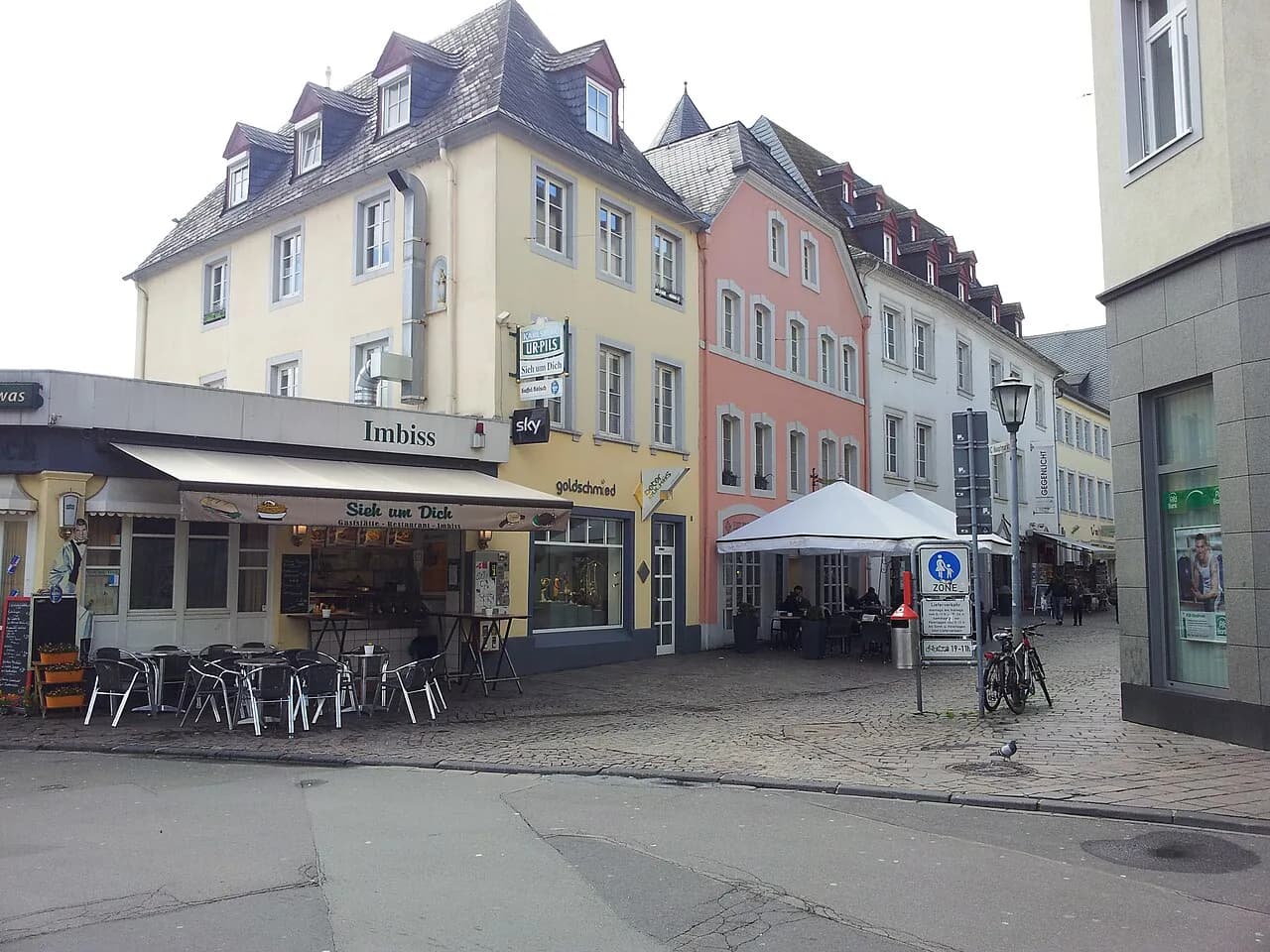
The default street-food format in a German city is the Imbiss, a small counter shop selling hot snacks to eat standing or walking. Trier's version covers sausage, fries, schnitzel in a roll and similar quick plates, and it fills the gap between a bakery stop and a full Gasthaus meal. A Döner shop is the second pillar: spitted meat or a vegetarian filling, salad and sauce in flatbread, assembled in front of you.
Market stalls are the third format, and they behave differently from a counter. You buy by weight or by the piece, you often point rather than order from a menu, and the rhythm is morning rather than evening. Snack stands around the Zurlaubener Ufer riverfront are the fourth, aimed at people walking the Moselle bank rather than sitting down for a meal. If you want a proper table and a menu, that is a restaurant question, so use the best restaurants in Trier guide when you want a sit-down meal instead of a counter.
Bratwurst and Currywurst: the classic Imbiss order
Two sausages cover most Imbiss orders. Bratwurst is a coarse pork sausage grilled and usually served in a bread roll with mustard, and it is the simpler, more savory of the two. Currywurst is a sliced or whole sausage under a curry-spiced tomato sauce, often with fries on the side; it is sweeter and heavier, and it is the better pick if you want sauce with every bite.
Order by saying the name and adding what you want alongside: “eine Bratwurst” with “mit Senf” for mustard, or “eine Currywurst mit Pommes” for fries. Both come fast, so the Imbiss is a working lunch rather than an occasion. If your group includes a vegetarian, sausage counters are the wrong stop and you should plan around a different format; the Vegan and Vegetarian Food in Trier guide covers where plant-based eating fits.
Döner kebab: what goes into one and how to order
A Döner kebab is flatbread filled with shaved meat from a vertical spit, plus salad, onion and a sauce you choose at the counter. The sauce is the decision that shapes the sandwich: yogurt-garlic is mild and cooling, herb sauce is fresher, and hot sauce is exactly what it sounds like. You can usually ask for the bread pressed and toasted, which keeps a wet filling from turning the bread to mush before you finish it.
Say “mit alles” if you want the full salad and sauce set, or name what you want left out; “ohne Zwiebeln” means no onions. A Döner is the fastest substantial street meal in Trier and the easiest option if you are eating on the move. Vegetarian versions built on cheese or grilled vegetables are common in German Döner shops, but confirm what a specific counter offers before you commit.
Fish rolls and quick bites along the Zurlaubener Ufer
Zurlaubener Ufer is the riverfront stretch on the Moselle side of Trier, in the Zurlauben district, and it is where the street food festival set up in May 2026. As a riverfront address it is also the natural place to look for a quick snack while walking, rather than a full restaurant meal. A fish roll, Fischbrötchen, is the northern German classic for this setting: a soft roll with pickled or fried fish, onion and sometimes remoulade, eaten cold and standing up.
Availability of a fish roll on a given stretch of riverfront varies by stand and season, so treat it as something to look for rather than a guaranteed item. The useful rule is to follow the foot traffic at lunchtime: a stand with a queue of people in work clothes is doing volume, which usually means fresher stock. Keep the river walk itself short and incidental; the point of the stop is the food.
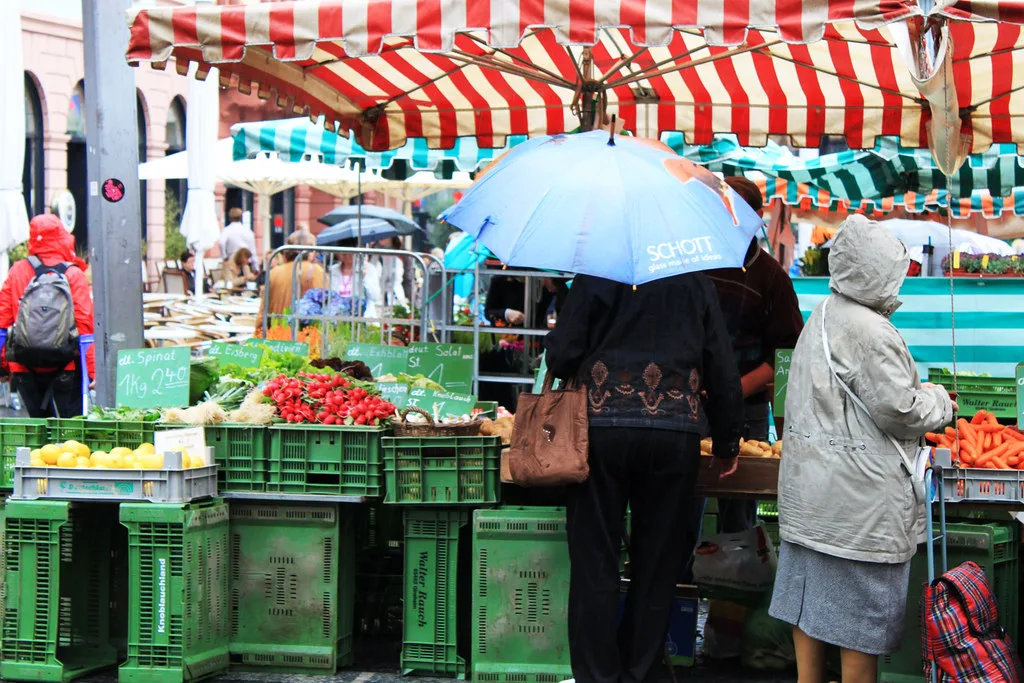
How a Trier market stall works
At a German weekly market you mostly buy by weight, and the scale is the transaction: you point at what you want, the vendor weighs it, and you pay for that amount. Some stalls sell by the piece instead, which is how you buy a roll, a pastry or a portion of cheese. Either way, the price is set at the stall and you should expect to read it on the sign rather than assume a standard rate.
Market stalls run on their own weekly rhythm, and German market days are specific to each square rather than a citywide schedule. Confirm the current market days with the city's own market office before you build a morning around one. Buy only what you will eat that day, since most stall food is meant to be consumed fresh rather than carried around.
If you want a seated breakfast before a market wander, that is a different kind of stop and the Breakfast in Trier guide covers it. For the market itself, cash is the safe assumption at small stalls in Germany, and having coins ready speeds up the weighing and paying.
The Street Food Festival Trier: dates, location and entry
The 8th Street Food Festival Trier ran May 8-10, 2026 at Zurlaubener Ufer in the Zurlauben district, with free entry and a 17:00 opening on the Friday. The listing framed it as a culinary trip around the world, which tells you the format was international stands rather than a single regional kitchen. Treat those dates as that edition's record rather than a schedule you can assume for later years.
A festival stand and a weekday market stall are not the same experience, even when both sell food outdoors. At the festival you were buying a portion to eat on the spot, usually for cash, with the crowd dictating how long you waited. Free entry meant the spending sat entirely in what you bought.
The festival sat on the riverfront, which made it a natural pairing with an evening walk along the Moselle rather than a detour across town. The 17:00 Friday start concentrated the first wave of visitors, so arriving early shortened the queue. Beyond the general international framing, the listing named no specific stands or cuisines, so a visit was best planned around the setting rather than a particular dish.
Ordering and paying at a Trier counter
German counter service is short and functional, and a few phrases carry most of the interaction. “Mit” means with and “ohne” means without, which handles mustard, onions and sauce in two words. “Zum Mitnehmen” means to take away and “hier” means you are eating here; say which one before the food is wrapped.
Cash is the practical default at Imbiss counters, market stalls and festival stands, and card acceptance varies by shop rather than by city. Carry coins and small notes so a queue behind you does not wait on a card terminal. Tipping is not expected at a counter; rounding up to the next euro is the normal gesture when you do it.
Most Imbiss counters have a standing shelf or a couple of high tables rather than full seating, so plan to eat on your feet or carry the food a short distance. That is the trade-off against a café: less comfort and faster turnaround for a snack-sized spend. If you want to sit with a coffee afterward, the cafes in Trier guide is the better starting point.
Choosing a stand: busy, convenient or a working lunch counter
A queue is the most reliable signal you have. A stand with steady local traffic at midday is turning over stock, while an empty counter next to a major sight is often selling location rather than food. That does not make the convenient stand bad; it means you are paying in money or time for the position rather than the cooking.
Separate the working lunch counter from the tourist stop by its menu board and its hours. A short menu of sausage, fries and one or two daily plates points to a counter that serves the same neighborhood every day. A long multilingual menu with photographs is aimed at visitors, which is fine when you are tired and want speed.
If the day's plan is a proper meal with a beer rather than a snack, shift to a brewery tap or a beer garden instead of a counter; the Trier beer guide and the Beer Gardens in Trier guide cover those settings. Street food is the fast layer of the city, and it works best when you use it as a lunch stop rather than the main event.
Counter, market or festival: which stop fits your day
Pick the format before the venue. For a fast weekday lunch, an Imbiss counter or a Döner shop gets you fed standing up with no reservation and no waiting for a table. For a morning, a market stall gives you the by-weight, by-the-piece experience that the festival cannot replicate.
The Street Food Festival Trier ran at Zurlaubener Ufer on May 8-10, 2026, and that edition is the fixed record to work from. Outside that festival window, treat the riverfront as a walk with a possible snack rather than a guaranteed food destination. If a full table and a menu matter more than speed, the sit-down side of the city is a separate plan.
Explore more Trier guides
Frequently Asked Questions
Is street food in Trier cash only?
Plan on cash for Imbiss counters, market stalls and festival stands, as card acceptance varies from shop to shop and small stalls often take coins and notes only. Carry small notes so you are not caught out at a busy counter.
What time did the 2026 Street Food Festival Trier open?
The 8th edition opened at 17:00 on Friday, May 8, 2026, and ran May 8-10 at Zurlaubener Ufer. Entry was free, and the Friday evening start drew the first crowd, so earlier arrival meant shorter queues.
Sources
Notes for your next German food trip
Optional updates to our guides.
You might also like
Continue reading
More guides you'll find useful