Trier Food Tours: What to Choose and What Each Includes
Trier's guided walks are history-first, not food tours. Here is what the English City Walking Tour covers, what it costs, and how to build your own tasting route.
On this page
Book the City Walking Tour only if you want Roman and medieval Trier explained, then eat on your own afterward. The English walk from the Tourist-Information at the Porta Nigra covers the main sights in about 90 minutes and costs 13 EUR for adults, 11 EUR reduced, 6 EUR for children 6 to 14 and 30 EUR for a family ticket.
That matters because a guided walk built around tastings in the city center is not on offer from Hennich & Hanschel GbR or Trier Tourismus und Marketing GmbH. Instead, this guide separates what the history walks actually deliver from the eating you arrange yourself, so you don't book the Hennich & Hanschel tour expecting plates and get a Roman lecture instead. For food-focused walks, options like EAT THE WORLD's culinary city tours exist in other cities but not in Trier.
What a Trier food tour actually looks like
There is no tasting-led walk among the city's guided tours that can be booked with confidence. The English City Walking Tour runs without interior visits and concentrates on the Porta Nigra, the cathedral, the Liebfrauenkirche, the Basilika and the Kurfürstliches Palais.
Treat any guided walk here as a history tour with a food-friendly finish. You get orientation, street names and the stories behind the squares, which is exactly what you need to pick a lunch stop with confidence instead of drifting toward the first menu board you see.
The English City Walking Tour from the Porta Nigra
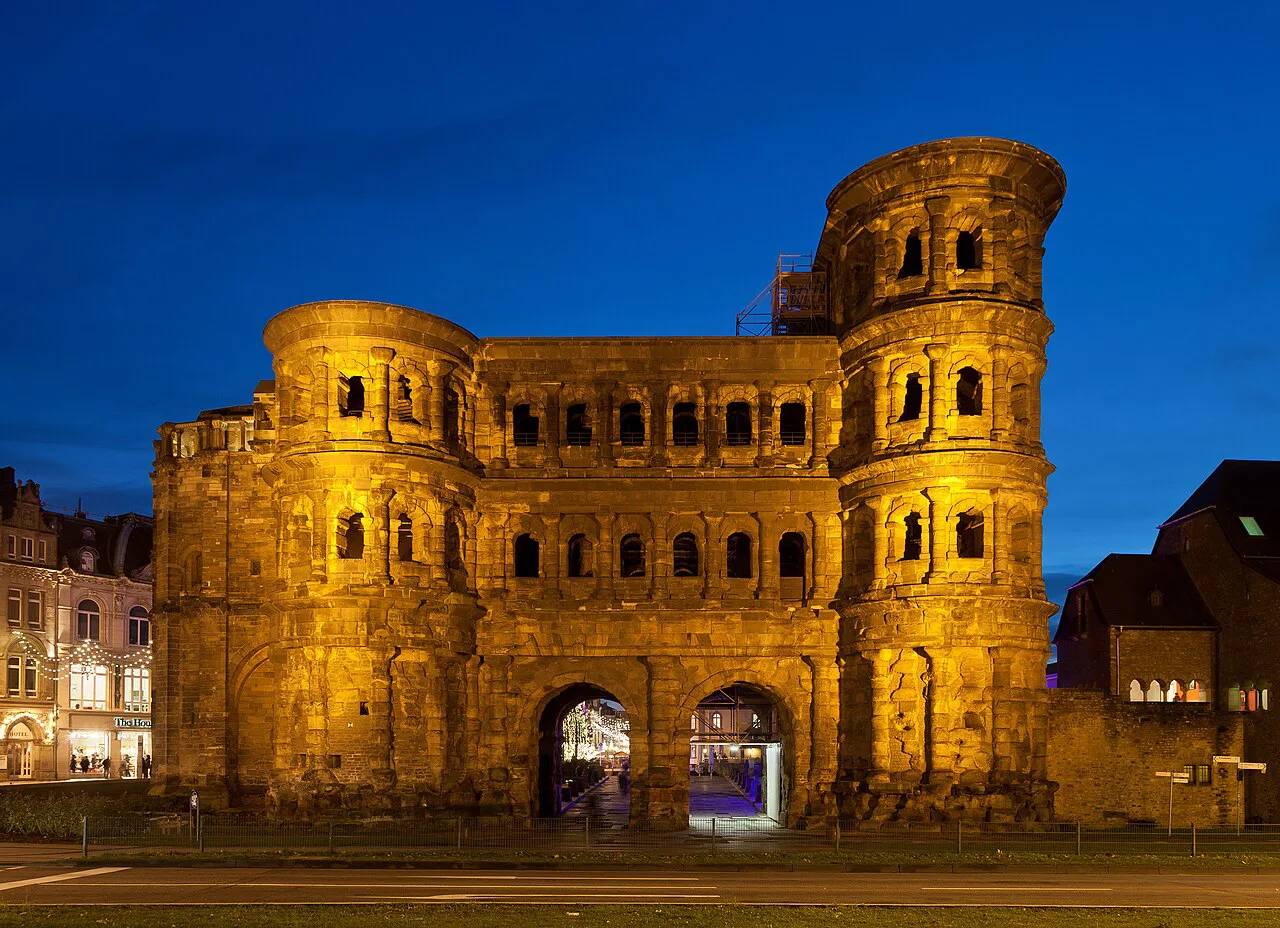
The walk starts at the Tourist-Information at the Porta Nigra and lasts about 90 minutes, capped at 25 people. The published seasonal schedule is Saturdays at 13:00 from April through October, with additional Wednesday and Friday departures at 13:00 from May through October.
Reduced tickets cover pupils, students, those doing military or civilian service and people with a severe disability rating of 80 percent or more, and holders of the Trier-Card or the solidarity card get a further discount at the Tourist-Information counter. Buy at the office rather than assuming online pricing matches.
What the route passes, and why it shapes where you eat
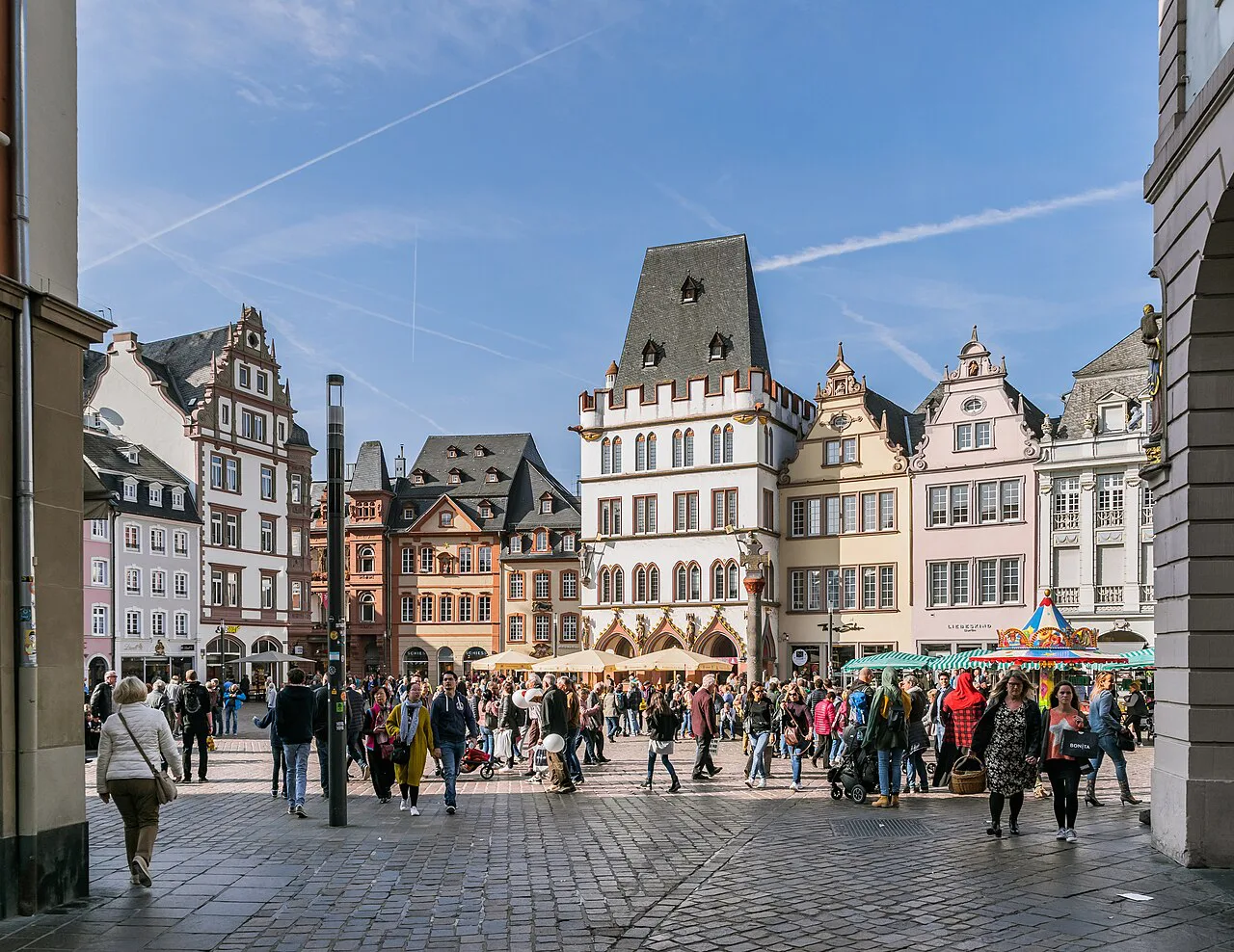
The route runs from the Porta Nigra and Simeonstift past the Dreikönigenhaus to the Hauptmarkt, then on to the cathedral, the Basilika and the Kurfürstliches Palais, passing four UNESCO World Heritage buildings along the way. Walking it once tells you how compact the center really is.
That compactness is the practical point: the Hauptmarkt sits in the middle of the loop, so any eating plan that starts there works whether you are coming from the Roman gate or the palace gardens. Finish the walk, then walk back to the market square and start eating.
Private history walks: group size, price and language surcharge
A private historical walk runs 120 minutes for up to 25 people at 150 EUR, meeting at the Porta Nigra by default or wherever you agree. The route passes the Karl-Marx-Statue, Dreikönigenhaus, Hauptmarkt, Dom St. Peter, Liebfrauenkirche, Konstantinbasilika and the Kurfürstliches Palais.
English or French guiding carries a 10 EUR surcharge. For a group that wants Roman Trier decoded in its own language, that is decent value once you divide it across the group; for a solo traveler it is a poor trade against the 13 EUR public walk, so take the public option instead.
Why the Hauptmarkt is your pivot point
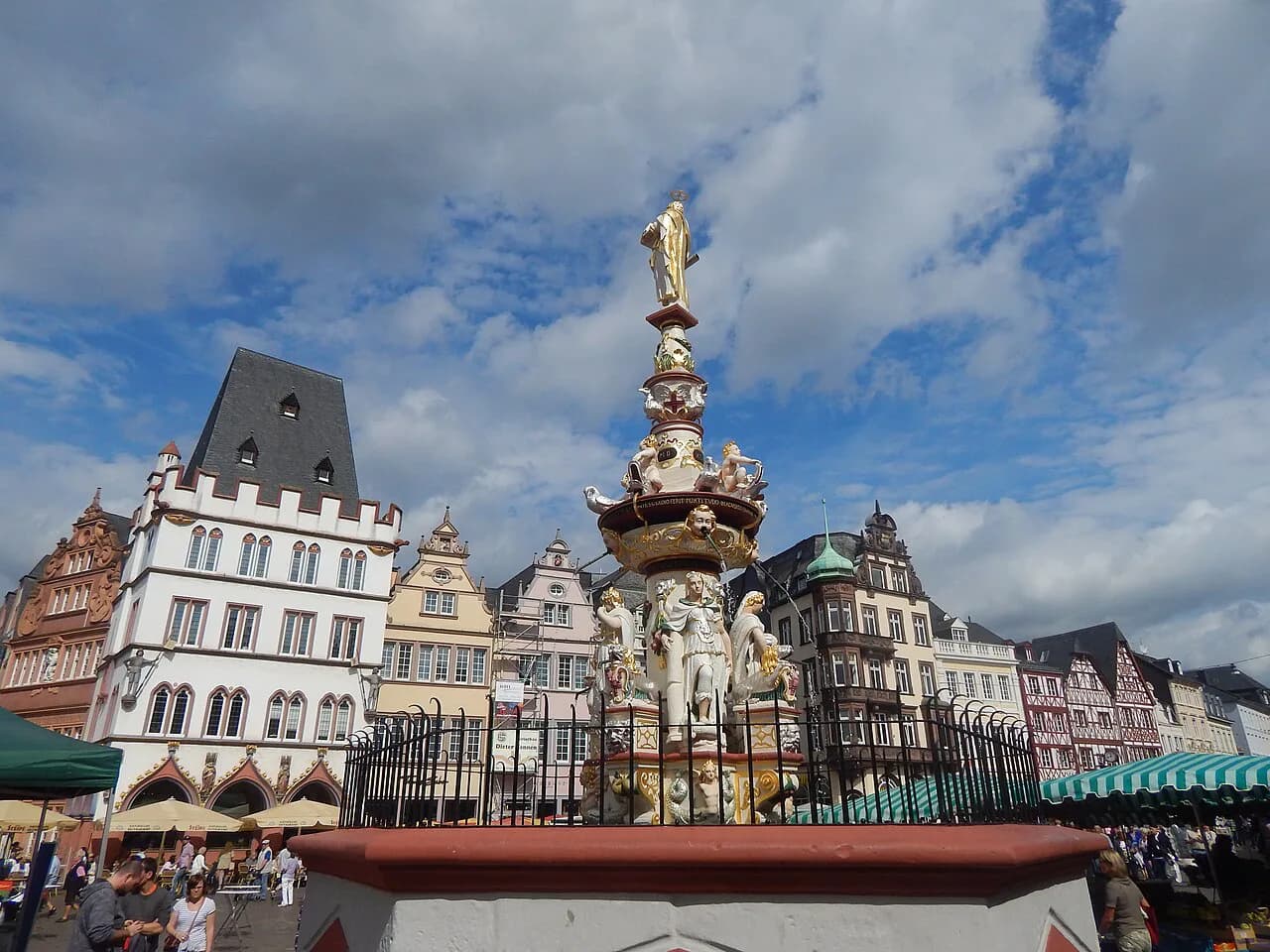
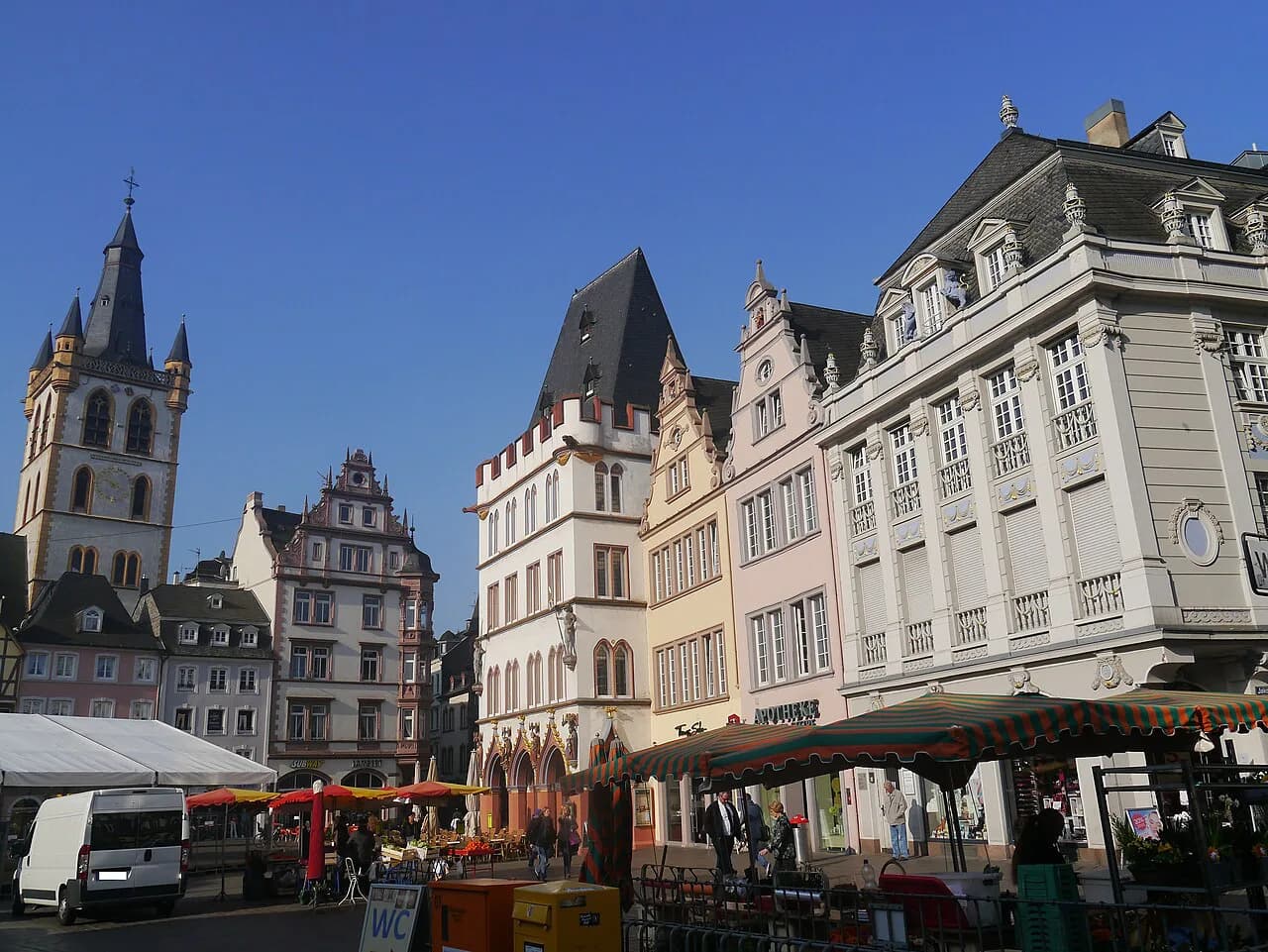
The Hauptmarkt is where the medieval city did its business, and it remains the natural center for a self-guided eating day. The walk passes it between the Dreikönigenhaus and the cathedral, which puts it roughly halfway through the loop.
Use it as a base: eat a proper lunch in the market square area, then walk off the meal toward the cathedral and palace gardens before looping back for coffee or cake. That rhythm beats a scattered route where you crisscross the center without ever learning the streets.
Building your own tasting route from the square
Start at the Hauptmarkt with something savory, then head toward the cathedral quarter for a sit-down break, and finish near the palace gardens where the streets are quieter. If you want the local dishes named and explained before you order, work through what to eat in Trier first.
Travelers who skip meat should plan the route around that from the start, because a market square full of pork-heavy plates rewards a little homework. For meat-free addresses, see Vegan and Vegetarian Food in Trier.
For a faster midday option between sights, build in a stall or counter rather than a full Gasthaus lunch.
If cake and coffee matter more to you than a long lunch, save the Hauptmarkt for coffee and eat your main meal later.
What to look for on the plate
Trier sits on the Mosel, so Riesling appears on wine lists all over the center; order it by the glass alongside a meal rather than as a separate occasion. The city's plates run to hearty, potato-based and pork-heavy cooking, and the local dialect name Kappes Teerdich belongs on your radar if you want something plainly regional.
Beyond wine, the regional pour to try is Viez, a tart apple drink that locals treat as an everyday accompaniment.
If beer is more your register than wine, the city's breweries and taps give you a solid alternative to a wine-heavy lunch.
Bakeries across the center handle the morning end of the day, before any walk departs at 13:00.
Ordering and paying at Trier counters and Gasthäuser
At a Gasthaus, wait to be seated, take the menu the staff hand you, and expect to order drinks first. Menus in the center are commonly bilingual, but the lunch specials chalked on a board often are not, so ask what the Tagesempfehlung is before committing.
Card acceptance has widened in Germany, yet small counters, bakeries and market stalls still often run cash-first, so carry some euros. At the end of a meal, you signal for the bill and the server brings a small tray to the table; tipping rounds up rather than following US percentages, and paying at the counter on the way out is normal in bakeries and cafés.
When to walk and eat in Trier
The English walk runs Saturdays from April through October, with Wednesday and Friday additions from May through October, so late spring through early autumn is the window when you can pair it with lunch. On dates outside that window, plan a self-guided route from the Hauptmarkt instead.
Saturday is the busiest option and the market square will be full at lunch, so book the walk and then eat slightly off-peak. A midweek walk in summer leaves you a calmer square for a sit-down meal.
In warm months, an evening in a beer garden rounds off the day better than another indoor meal.
Where to slot the walk into a one-day visit
Take the 13:00 walk, then eat a late lunch on or near the Hauptmarkt, and leave the cathedral and palace gardens for a post-meal stroll in the opposite direction. That order uses the walk as orientation and the meal as the reward, which suits a single day far better than trying to do both at once.
If your day is short and your main interest is food, skip the guided walk entirely and spend the time eating. Best Restaurants in Trier is the place to start for a fuller meal; for a splurge, compare Michelin restaurants in Trier before deciding whether the walk is worth the 90 minutes.
An afternoon coffee stop is the natural breather between the market and the cathedral quarter, and the city's cafés are easy to fit into that gap.
In warm weather, end the walk with a cool stop before the museum quarter.
Book the Walk or Just Eat?
Book the English City Walking Tour if you want Trier's Roman and medieval layers explained and you are happy to eat afterward on your own; at 13 EUR for adults it is a cheap way to learn the layout of the center. Skip it if your day is short and food is the priority, and head straight for the Hauptmarkt.
Whichever you choose, anchor the day on the market square, carry some cash, and leave room for a plate of something regional rather than treating the walk itself as the meal.
Explore more Trier guides
Sources
Notes for your next German food trip
Optional updates to our guides.
You might also like
Continue reading
More guides you'll find useful