What to Eat in Aachen: Local Dishes and Where to Try Them
What to eat in Aachen: hearty Rhineland cooking, Öcher specialties, Kölsch poured from the barrel, and the Wirtshäuser and restaurants where locals eat.
On this page
What you eat in Aachen is hearty Rhineland cooking: pork, potatoes, root vegetables and sauces built for cold evenings, served in wood-paneled Gasthäuser rather than on a tourist menu. The city's own dishes are grouped locally as Öcher specialties, and the beer that comes with them is Kölsch, poured here from a wooden barrel even though Cologne is 75 kilometers away. This guide covers what those dishes are, which Aachen restaurants and Wirtshäuser serve them, and how a meal runs from ordering to the bill.
Two things shape a night out. The old town around the Aachener Dom and the Hühnermarkt puts most traditional kitchens within a short walk of each other, and the local style of service is unhurried, so a table is somewhere to sit for the evening, not just for one course. If you want a wider list beyond the places below, our guide to the best restaurants in Aachen sorts them by neighborhood and occasion.
What Aachen food actually is
Aachen sits in the far west of the Rhineland, close to the Belgian and Dutch borders, and its cooking belongs to that region rather than to Bavaria or the coast. Expect substantial mains with pork or beef, potatoes in several forms, and sauces that lean savory rather than creamy-sweet. This is not the beer-hall menu you find in Cologne or Düsseldorf, and the portions are sized for people who have been outside in October.
German menus divide into categories that matter for ordering: Vorspeisen are starters, Hauptgerichte are mains, and Beilagen are the sides, usually potatoes, dumplings or vegetables, that may be listed separately and cost extra. A Wirtshaus typically also offers a Tageskarte, the day's short list, alongside the standing menu. Ask what is on it before you settle on the printed card.
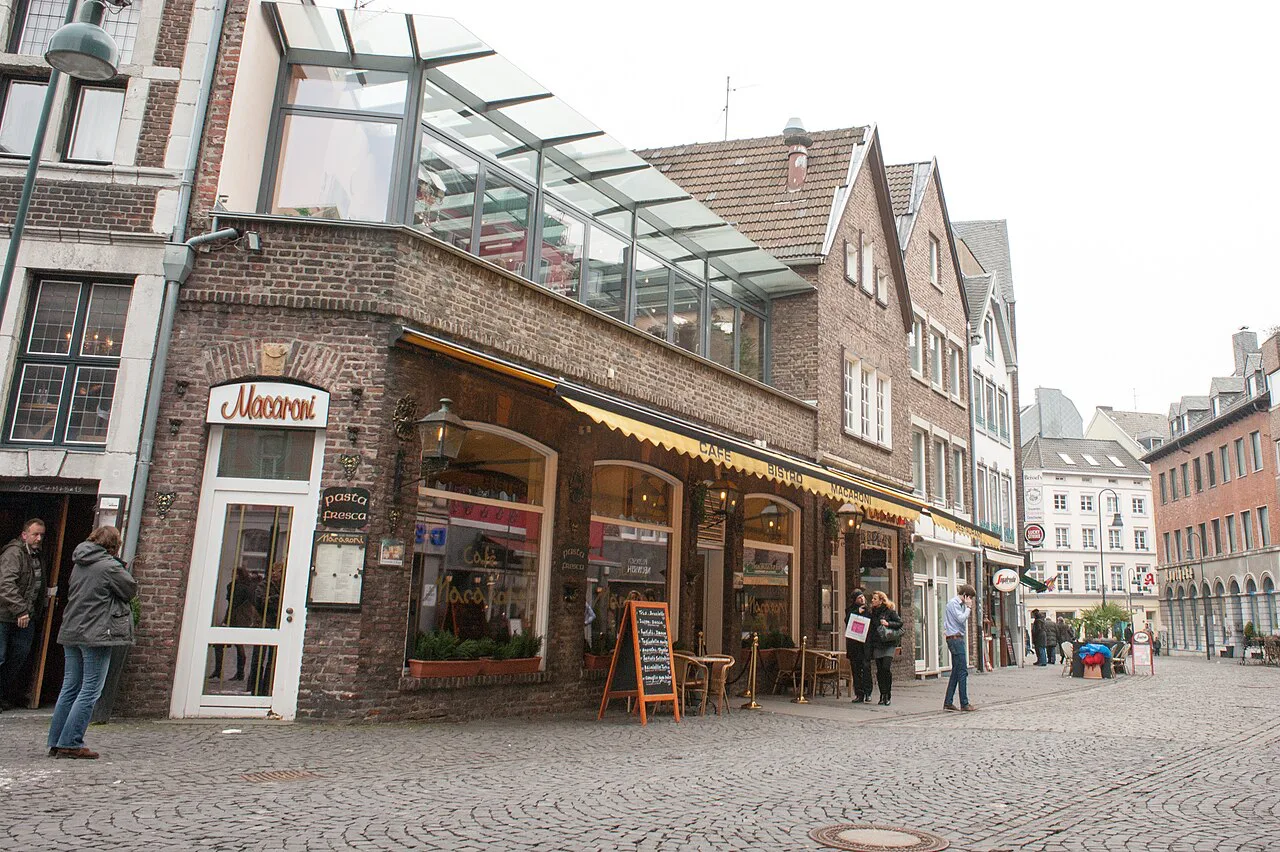
Öcher specialties: what Aachen's own dishes are
Aacheners call themselves Öcher in the local dialect, and the dishes the city claims as its own carry that name. They are rustic plates built on pork and potatoes, the kind of food designed to fill a table after a cold day rather than to photograph. They appear on the menus of the traditional houses below — the Postwagen Zum Ratskeller, for instance, is listed with Öcher specialties — so ordering one of them is the simplest way to eat what Aachen itself considers local.
Menus are written in German, and English versions are not guaranteed, so a few words carry you a long way. Schwein means pork, Rind beef, Kartoffeln potatoes, and Soße sauce; Braten is a roast and Eintopf a thick one-pot stew. If a dish is described as hausgemacht, the kitchen is saying it made it in-house, which is usually a good sign for sauces and dumplings.
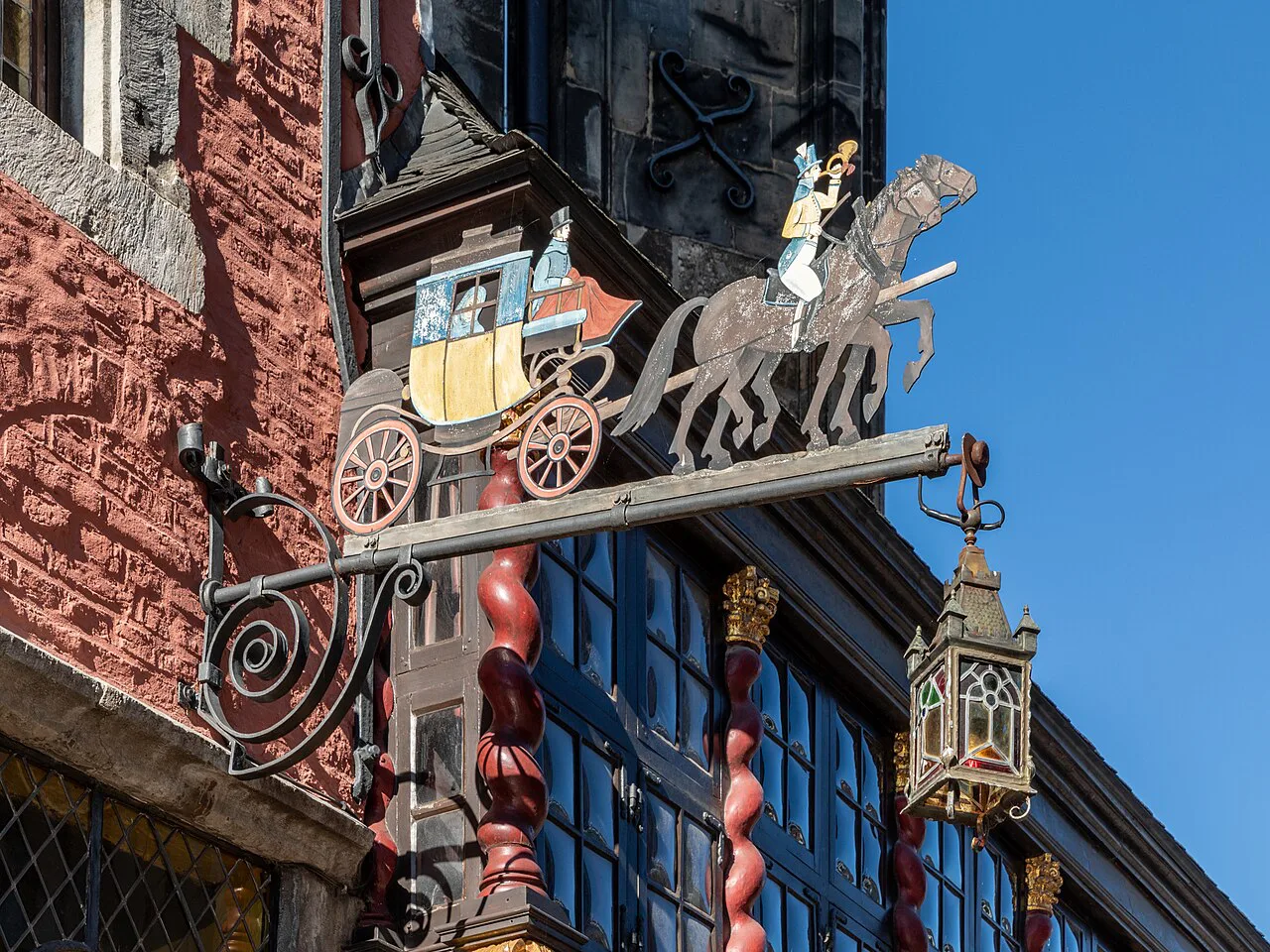
Kölsch in Aachen: why the local pour comes from Cologne
Kölsch is a pale, top-fermented beer from Cologne, served in small narrow glasses called Stangen, and in Aachen it is the standard Wirtshaus pour rather than an imported curiosity. The Gaffel Wirtshaus am Hühnerdieb argues that Kölsch belongs to the whole Rhineland and points out that Aachen historically brewed top-fermented beer, so reviving the habit is a return rather than an import. That house serves Gaffel Kölsch straight from the Stichfass, the wooden barrel tapped behind the bar.
Order it by asking for a Kölsch, and expect the glass to be small enough that you finish it before it warms, which is how the evening is paced. The style is light and easy to drink with pork and potatoes, which is exactly why it works here.
Where to eat traditional Aachen dishes
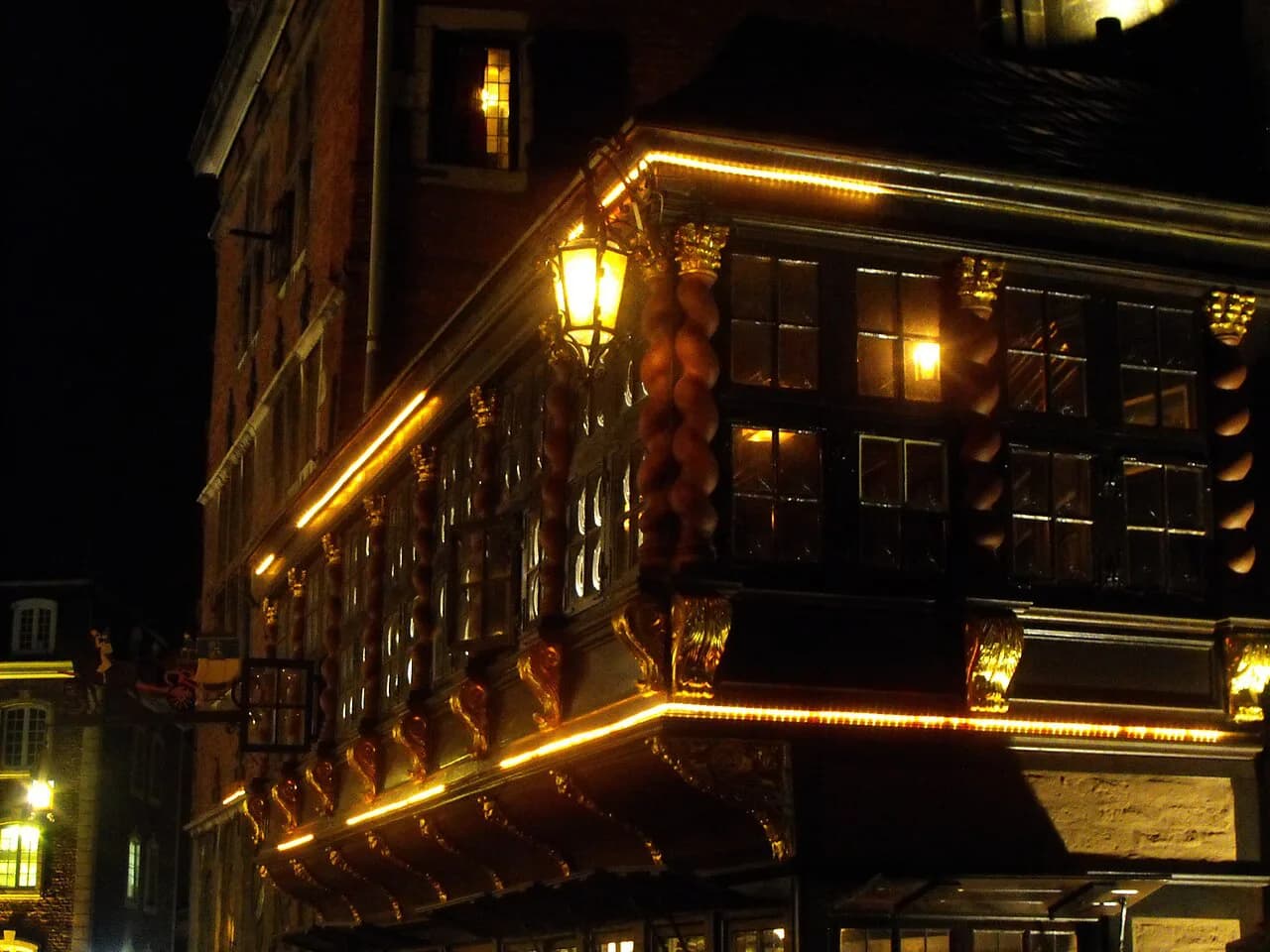
Postwagen Zum Ratskeller is the old-school pick: a rustic wooden house dating from 1675, directly by the Rathaus, with a historic pub on the lower level and Öcher specialties on the menu. Am Knipp, decorated with antiques, is listed as the oldest inn in Aachen, and its kitchen turns out the plain, solid dishes that definition implies; it is the place to go when you want the meal you came to Germany for and nothing deconstructed.
Treat both as an evening out and confirm your table directly with the house before you go. For more places serving pork roasts, Sauerbraten and similar plates, our guide to German Restaurants in Aachen covers the traditional side of the city; the wider Best Restaurants in Aachen list sets these two against the modern options across the city.
The Gaffel Wirtshaus am Hühnerdieb: modern Wirtshaus culture
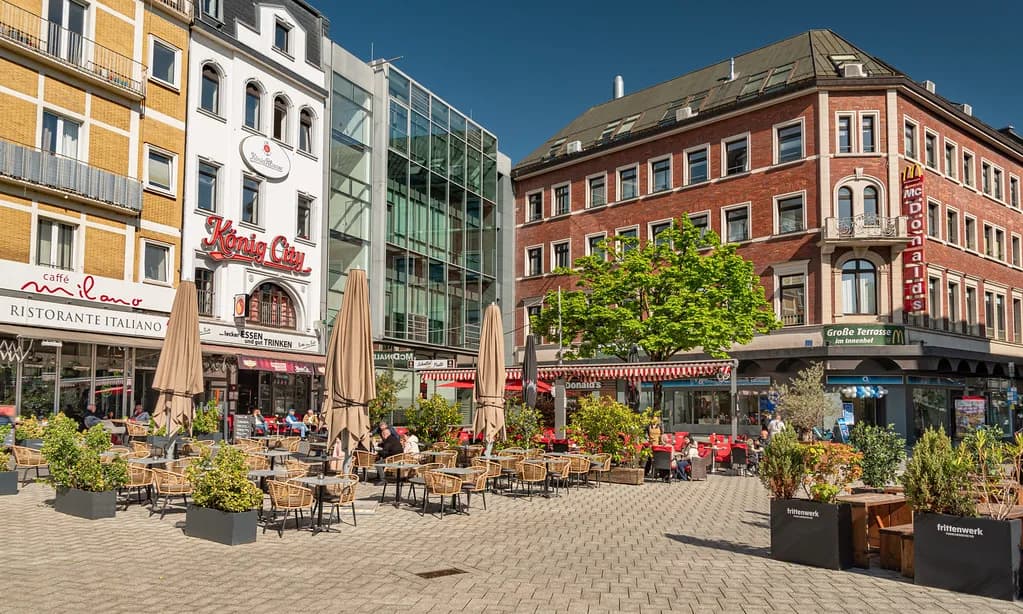
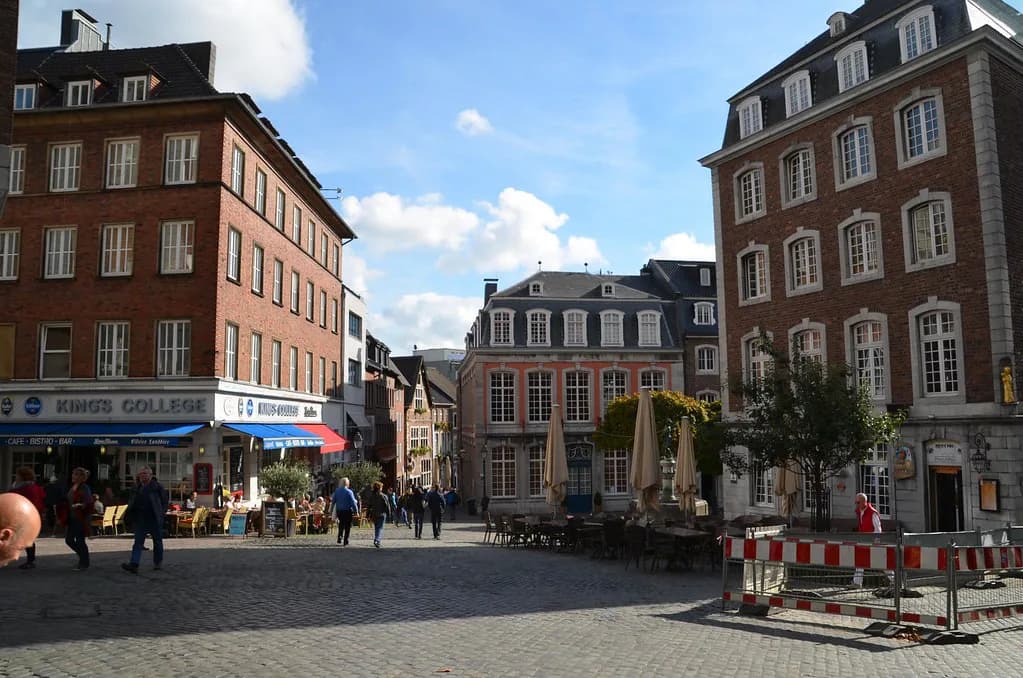
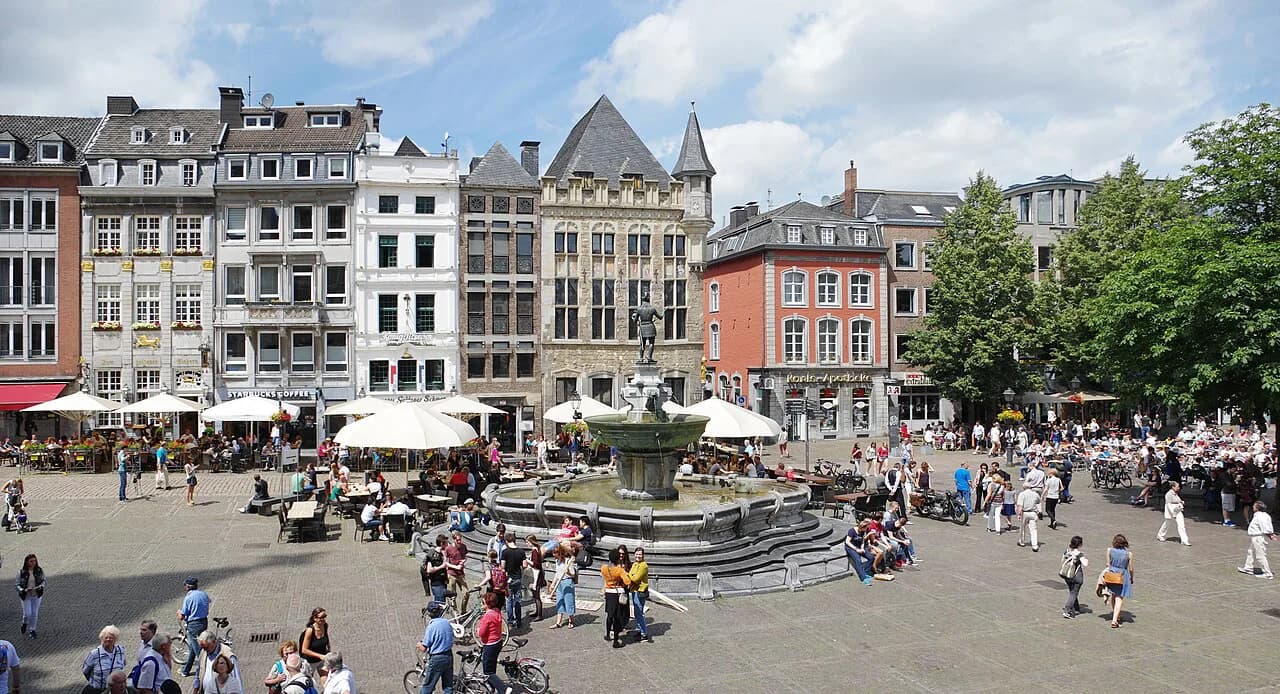
The Gaffel Wirtshaus am Hühnerdieb sits at Rethelstraße 2 on the Hühnermarkt, one of the oldest squares in the old town and, in the Middle Ages, an actual poultry market. The house bills itself as Aachen's first and only Gaffel Wirtshaus, and it takes the modern route: a bright room with a flexible table-and-board layout that suits a quick after-work beer or a long table of friends, plus a heated terrace that the house places among the nicest spots in the old town. The chicken thief after which it is named is a local legend rather than documented history.
Order a Kölsch from the barrel first, then look at the day's list rather than a fixed idea of what a Wirtshaus serves — the house describes its beer as traditional brewery pouring in a contemporary setting. The room is built for groups and flexible seating, so it suits larger or mixed parties. The trade-off is atmosphere: you get space and light instead of dark wood and history.
Bigger appetites and groups: steakhouse or cellar
Abacco's Steakhouse Aachen is the group-friendly option, a large steak restaurant in the city center that fills up on weekends. Ratskeller Aachen goes the other way: a modern room inside historic vaulted cellars with snug seating niches, offering a wider Mediterranean-leaning menu alongside drinks.
Choose Abacco's when the table includes people who do not want German food every night, and the Ratskeller when you want the vaulted-cellar setting without committing to a full traditional menu. For a weekend group, confirm a table ahead. For a broader sweep of options by style and price level, see the best restaurants in Aachen guide, which covers the rest of the field.
A notch up: set menus at lokal and Pippin
lokal Restaurant is a small room with a short card and high ambitions: a menu of three to six courses, vegetarian on request, with dishes such as onion tarte tatin or guinea fowl available à la carte. Pippin - die kleine Gastronomie runs a changing menu under chef Torger Jan Schlennstedt, sometimes Alpine, sometimes French, always built on regional ingredients.
Decide before you sit down whether you want the set menu or à la carte, because at this level the set menu is often the point and the kitchen paces the evening around it. These are small dining rooms, so confirming a table ahead is safer than a walk-in.
How a Wirtshaus meal works: ordering, portions and the bill
In a traditional house, you order drinks first and the kitchen expects you to keep them coming; water is not automatically placed on the table, so ask for stilles Wasser or a glass of Leitungswasser if that is what you want. Sides often arrive separately, and a salad may be a course rather than a garnish. If you want to share a starter, say so when ordering.
When you want the bill, ask for die Rechnung or say zusammen, bitte if you are paying as one table. Card acceptance varies by house, so carrying some cash in euros is the practical habit in Aachen's older inns. Tipping is done by rounding up or adding a few euros and telling the server the total as you hand over the card or cash, rather than leaving coins on the table.
Ratskeller cellar or Hühnermarkt terrace?
For a first night and a classic plate, aim for Postwagen Zum Ratskeller or Am Knipp and order a Kölsch with it. If your group is mixed, wants space, or you would rather sit on a heated terrace in the old town, the Gaffel Wirtshaus am Hühnerdieb is the easier fit.
For a slower, more ambitious dinner, take the set menu at lokal or Pippin, and keep Abacco's in reserve for the night nobody wants German food. Confirm the table directly with whichever house you pick before you go.
Explore more Aachen guides
Frequently Asked Questions
What food is Aachen famous for?
Aachen's own cooking is hearty Rhineland fare, with the city's dishes grouped locally as Öcher specialties — substantial pork and potato plates served in traditional Wirtshäuser. The beer that comes with them is Kölsch, and at the Gaffel Wirtshaus am Hühnerdieb it is poured from a wooden barrel.
Do I need to speak German to order in Aachen?
No, but a few words help. Menus are usually in German, so learn Schwein (pork), Rind (beef), Kartoffeln (potatoes) and Rechnung (bill), and ask when you sit down whether there is an English menu.
Is Kölsch actually brewed in Aachen?
The Kölsch served at the Gaffel Wirtshaus am Hühnerdieb is Gaffel Kölsch, a Cologne beer, poured from the barrel in Aachen. The house argues that top-fermented beer was historically brewed and drunk in Aachen, so serving Kölsch continues a local habit rather than importing one.
Sources
Notes for your next German food trip
Optional updates to our guides.
You might also like
Continue reading
More guides you'll find useful