German Restaurants in Aachen: What to Order and Where
Aachen cooking runs on Reisfladen, Sauerbraten and Himmel und Ääd. Here are the traditional restaurants and cafés that serve them and what to order.
On this page
Aachen's own cooking is border cooking: Rhineland roots with Belgian and Dutch threads running through it, which shows up most clearly in Reisfladen, Sauerbraten and Himmel und Ääd. If you want one table that captures the city, order the Sauerbraten at a traditional house on the Jakobstraße and finish with a slice of Reisfladen in the old town. This guide walks through those dishes, the traditional restaurants and cafés that serve them, and a few newer kitchens working with the same Aachen ingredients.
What Aachen's regional cooking actually is
Aachen sits where Germany meets Belgium and the Netherlands, and the local table reflects that. City tourism describes the regional kitchen as spanning generations-old dishes and produce sourced from the surrounding borderland, including Belgian cheese and Printen. Practically, that means you are eating Rhineland comfort food with a sweet, spiced, slightly Belgian accent rather than the dumplings-and-pork register of Bavaria.
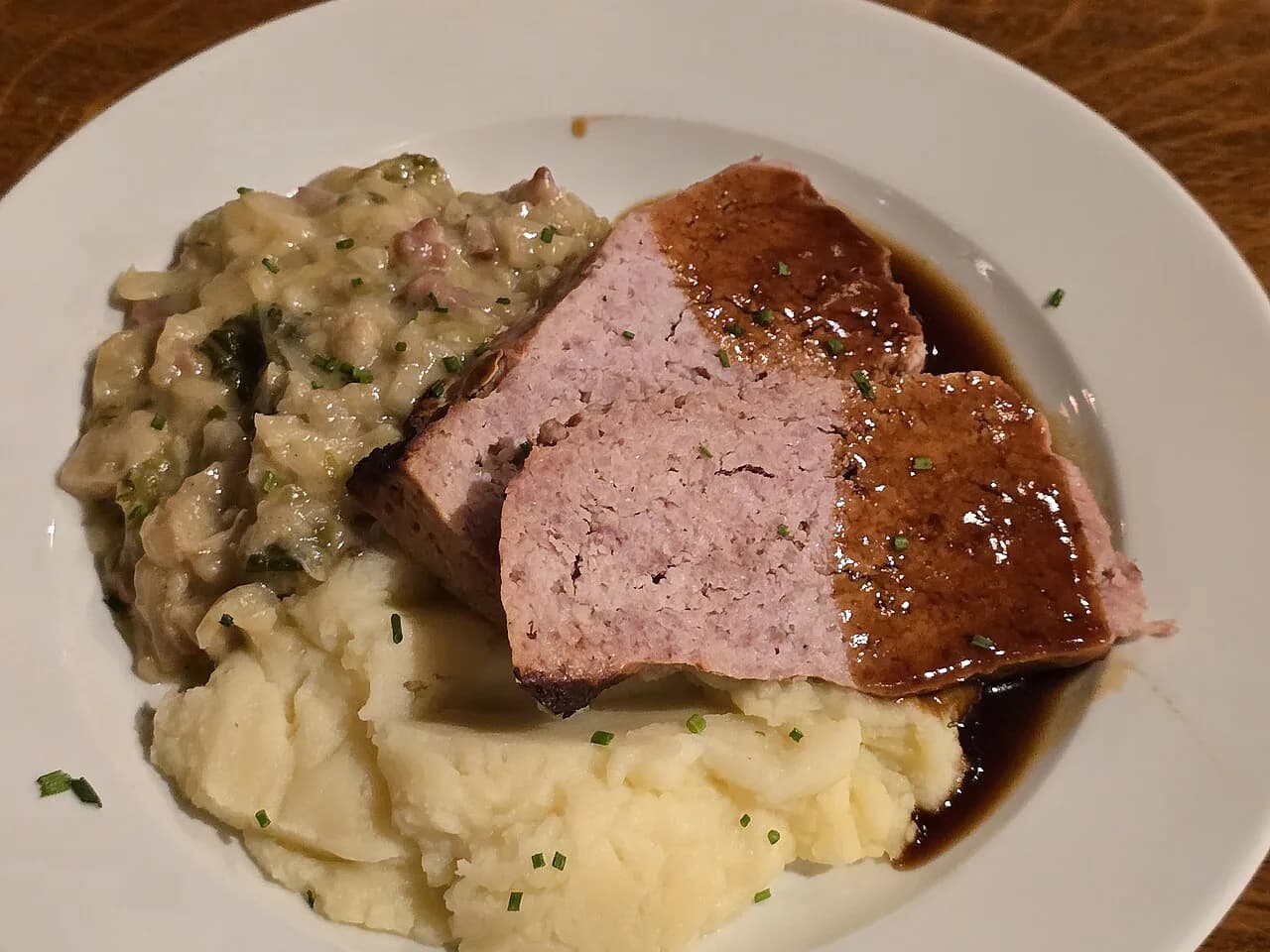
The signature ingredient to know is the Printen, Aachen's spiced hard biscuit, which turns up in places you would not expect: crumbled into Sauerbraten sauces and even paired with salmon in one sushi roll. Once you recognize that spice note, the city's food makes sense. A plate of Himmel und Ääd, meanwhile, is the plainest expression of the region: apples from the trees and potatoes from the earth, served with fried Blutwurst (blood sausage).
The dishes to order first
Reisfladen is a rice tart: milk rice and egg yolk baked on a yeast dough. Aachen serves it in two styles, and the local one, the Öcher Fladen, folds beaten egg white into the cooked rice before baking, which gives it a lighter set than the Belgian version. Order a slice with coffee and you have the city's default afternoon.
Sauerbraten here is beef marinated in vinegar, then braised, and the Aachen twist is what goes into the sauce: Kräuterprinte (herb Printen), plus beet or pear kraut or raisins. Himmel und Ääd translates as heaven and earth, apples and potatoes, and it arrives with fried Blutwurst. Both are heavy, both are the point, and neither is a dish to order if you have a long walk planned immediately after.

Am Knipp: a traditional house near the historic market
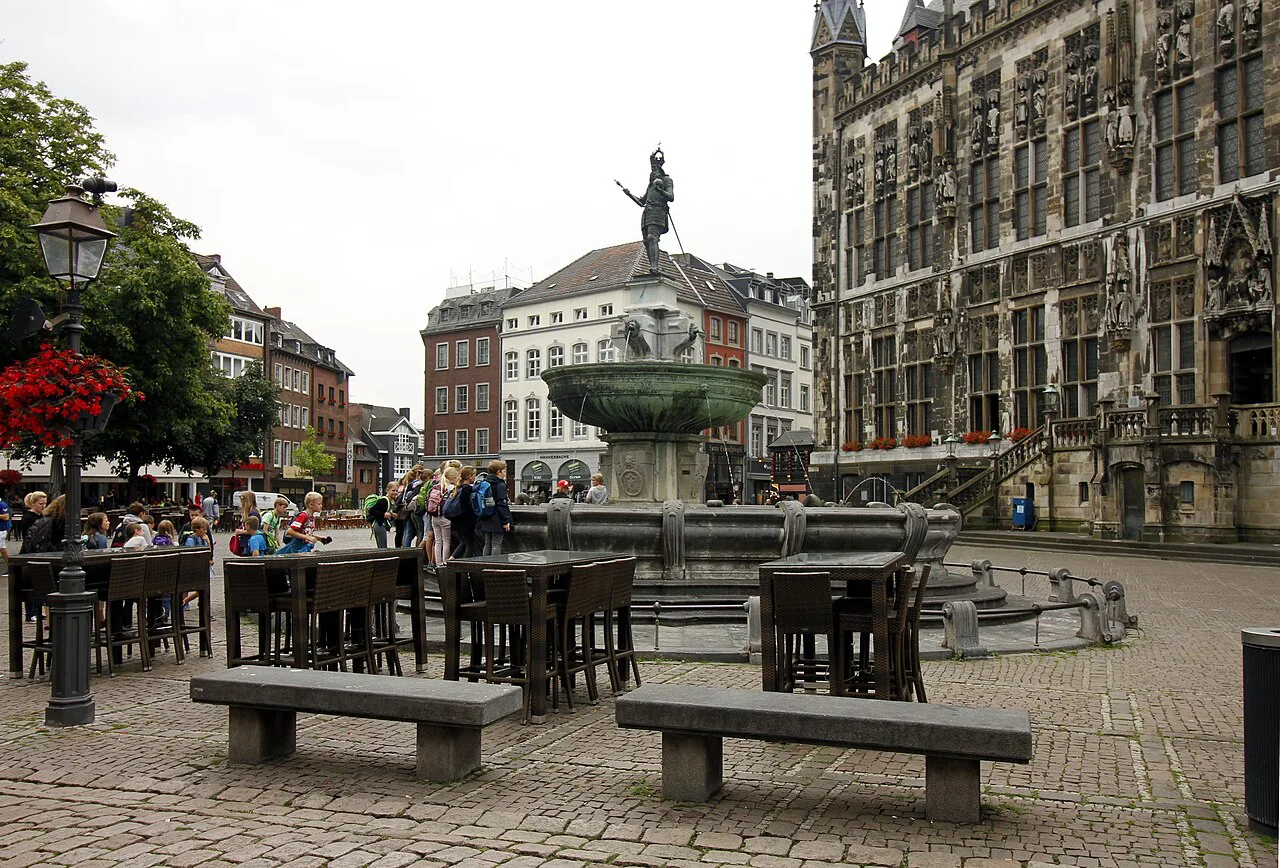
Am Knipp has been a fixture in Aachen since 1698, a few steps from the historic market, and it reads as what it is: an old Aachen pub with regional cooking and a beer garden under open tree crowns. With 220 indoor seats, it is a large house rather than an intimate one, so it works for groups and for a first night when you do not want to gamble.
Its published hours make planning simple and slightly restrictive: Wednesday through Sunday from 17:30, with the kitchen running to 21:00 and the restaurant to midnight, and Monday and Tuesday as Ruhetag (rest days). Book the evening around that window, and treat the kitchen closing time as the real deadline for ordering.
Zum Wehrhaften Schmied: Aachen Sauerbraten and a hidden courtyard
On the Jakobstraße, Zum Wehrhaften Schmied has operated as a restaurant since 1914 and cooks its Sauerbraten to family recipes, marinated in vinegar and finished with the Printen and fruit notes that mark the Aachen version. It is the most direct answer to the question of where to eat the dish the city is known for.
The detail worth knowing before you go is the small courtyard garden behind the building, which is easy to miss from the street. In warm weather that outdoor seating is the reason to choose this house over a larger, louder one.
Restaurant Elisenbrunnen: Himmel und Ääd with Blutwurst
Restaurant Elisenbrunnen serves Himmel und Ääd with fried Blutwurst and builds its menu around regional shopping: Printen, Öcher Pflaumenmus (Aachen plum jam), eggs, Belgian cheese from Bruges, cakes from the Aachen confectioner Lammerskötter, and meat and fish from named local suppliers. It is a restaurant with a broad menu rather than a single-dish specialist, which makes it a reasonable choice for a mixed group.
Café Van den Daele: Reisfladen from a family recipe
Café Van den Daele sits at the corner of the Körbergasse in the heart of the old town, in a building dating to 1655, and has operated as a café since 1890. It makes Reisfladen to its own family recipe with Belgian roots, which is exactly the border story this city tells on a plate.
Come here for the sit-down version of the city's signature sweet rather than a quick takeaway: the appeal is the room as much as the tart. Mid-afternoon is the natural slot, and it pairs well with a morning spent walking the old town center.
Newer kitchens working with Aachen ingredients
La Fabrik, in an old brick building in the Frankenberger Viertel right by the Alten Viadukt, takes the local trio of Printe, fries and Blutwurst and turns it into a composed plate: fried Blutwurst on apple and pointed cabbage salad, a fried apple slice, roast onions and a Printen-Sauerbraten sauce. The terrace opens in spring, which makes it a warm-weather option.
Café Fuchs is a daytime stop built on regional and seasonal sourcing, with breakfast, salads, cakes, bowls and breads, plus Sauerteigbrot (sourdough bread) from an Eifel bakery, honey, cheese, cold cuts and Spargel (asparagus) from Heinsberg in season. If you want one meal that shows how Aachen cooks now rather than how it cooked a century ago, this is the format.
Two sweeter addresses round out the picture: the Oecher Eis-Treff in the Frankenberger Viertel, for a vegan chocolate ice made with chocolate from Lindt, which is based in Aachen, and the Eismanufaktur Leana & Luise on the Boxgraben, where vanilla ice comes topped with streusel from the Aachen bakery Moss. Both are walk-in, low-commitment stops between meals.
How to order and what to expect from the pace of a German restaurant meal
Traditional houses here run on a fixed rhythm: the kitchen has defined hours and closes earlier than the restaurant, as at Am Knipp, so a late arrival can mean a limited order. Decide your main course when you sit down rather than lingering over the menu, and you will not be caught out.
At Am Knipp, Monday and Tuesday are Ruhetag (rest days), so it pays to plan the week around the houses that are open on your dates rather than assuming every night runs the same. When local Spargel (asparagus) is in season, it appears on menus across the city.
Where Aachen's German restaurants fit in a day of eating
A sensible shape is a café breakfast or a mid-morning slice of Reisfladen, a light lunch, then Sauerbraten or Himmel und Ääd in the evening at a traditional house. That leaves room for an ice cream in the Frankenberger Viertel in the afternoon without wrecking dinner.
If you want the wider field beyond the traditional houses, from fine dining to crossover kitchens, the city's restaurant scene extends well past regional cooking; Ratskeller Aachen, for instance, serves Mediterranean and international dishes in vaulted historic rooms with snug booths. Use the traditional addresses for the dishes above and branch out when you want a different register.
For a wider survey of the city's tables, from brewery-style rooms to modern dining, see our guide to the best restaurants in Aachen, which sorts the scene by neighborhood and occasion.
Which Aachen table should you book?
Pick by dish first: Zum Wehrhaften Schmied for Sauerbraten, Restaurant Elisenbrunnen for Himmel und Ääd, Café Van den Daele for Reisfladen, and Am Knipp for a traditional pub evening with a beer garden. Add La Fabrik or Café Fuchs if you want to see the same ingredients handled in a modern kitchen.
Two practical moves cover most of the risk: reserve dinner at the traditional houses and check the kitchen closing time when you book, since the restaurant may stay open after the food stops. Everything else, including whether a courtyard or terrace is in use, you can settle on the day.
Explore more Aachen guides
Sources
Notes for your next German food trip
Optional updates to our guides.
You might also like
Continue reading
More guides you'll find useful