
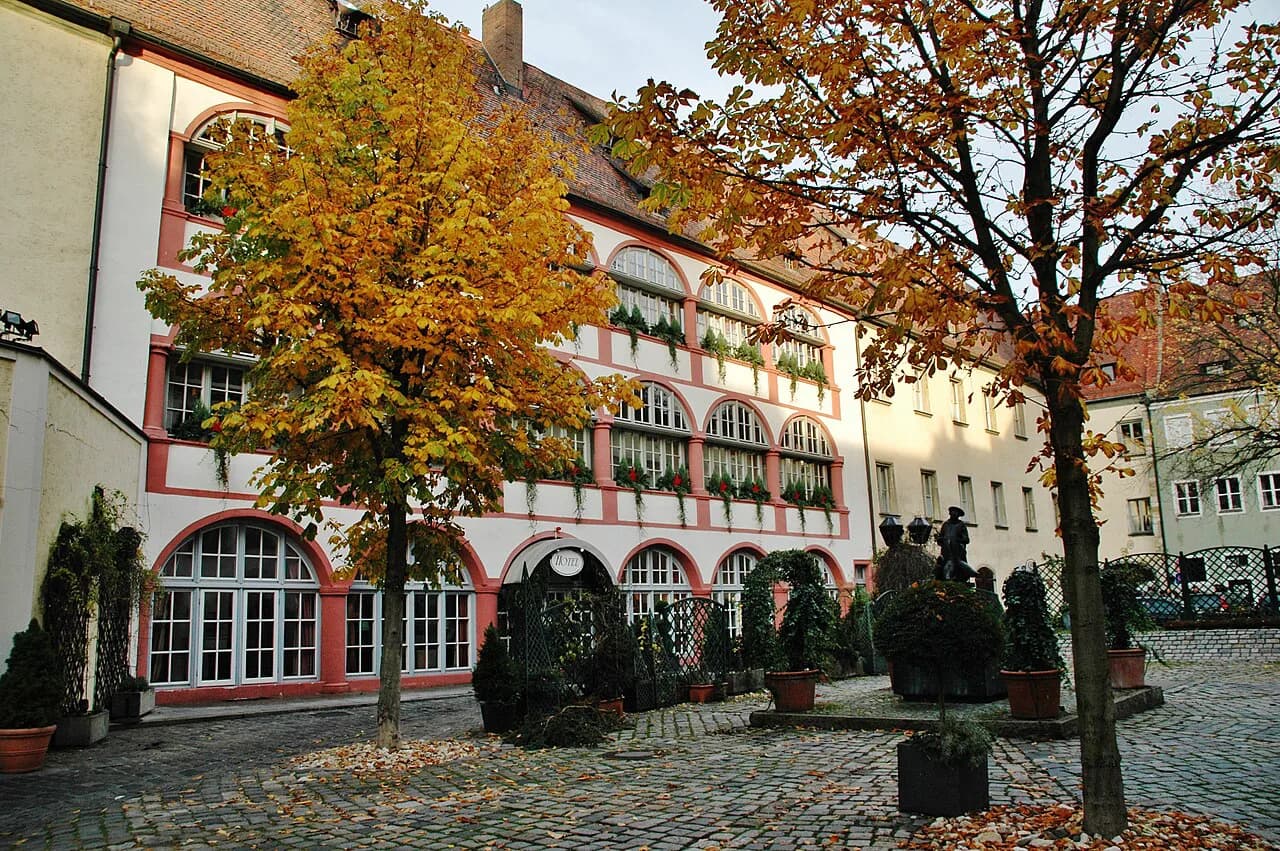
Bischofshof Brewery, Regensburg: A Visitor's Guide to the City's Historic Brewery

Bischofshof is a Regensburg brewery founded in 1649 by Bishop Franz Wilhelm von Wartenberg, and it still markets a family of Regensburg beers under its own name. The brewery is a working production site rather than a museum, so the practical reason to seek its beers out is the beer itself: the Regensburger Hell in its Euro bottle, plus Pils, Weißbier, Festbier and an alcohol-free Zwickl among its eight varieties. This guide covers where the site sits, what each beer style means, the 1469 brewing rule the brewery invokes, and the ownership change reported in January 2026.
What Bischofshof is
Bischofshof is one of Regensburg's old brewing names, established in 1649 by Bishop Franz Wilhelm von Wartenberg at a site close to the cathedral. It operates as Brauerei Bischofshof GmbH & Co. KG with its headquarters in Regensburg, and it markets itself as a Regensburg original rather than a national brand. The flagship is a pale lager sold in the squat Euro bottle that the brewery treats as its signature format.
The brewery describes its range as eight Bischofshof varieties brewed to taste of Regensburg, and it advertises 36 DLG awards for long-term product quality. Treat that as the company's own claim about consistency, not a reason to expect a particular flavor. The useful takeaway for a visitor is that Bischofshof is a mainstream lager brewery with a long local history, not a small experimental outfit.
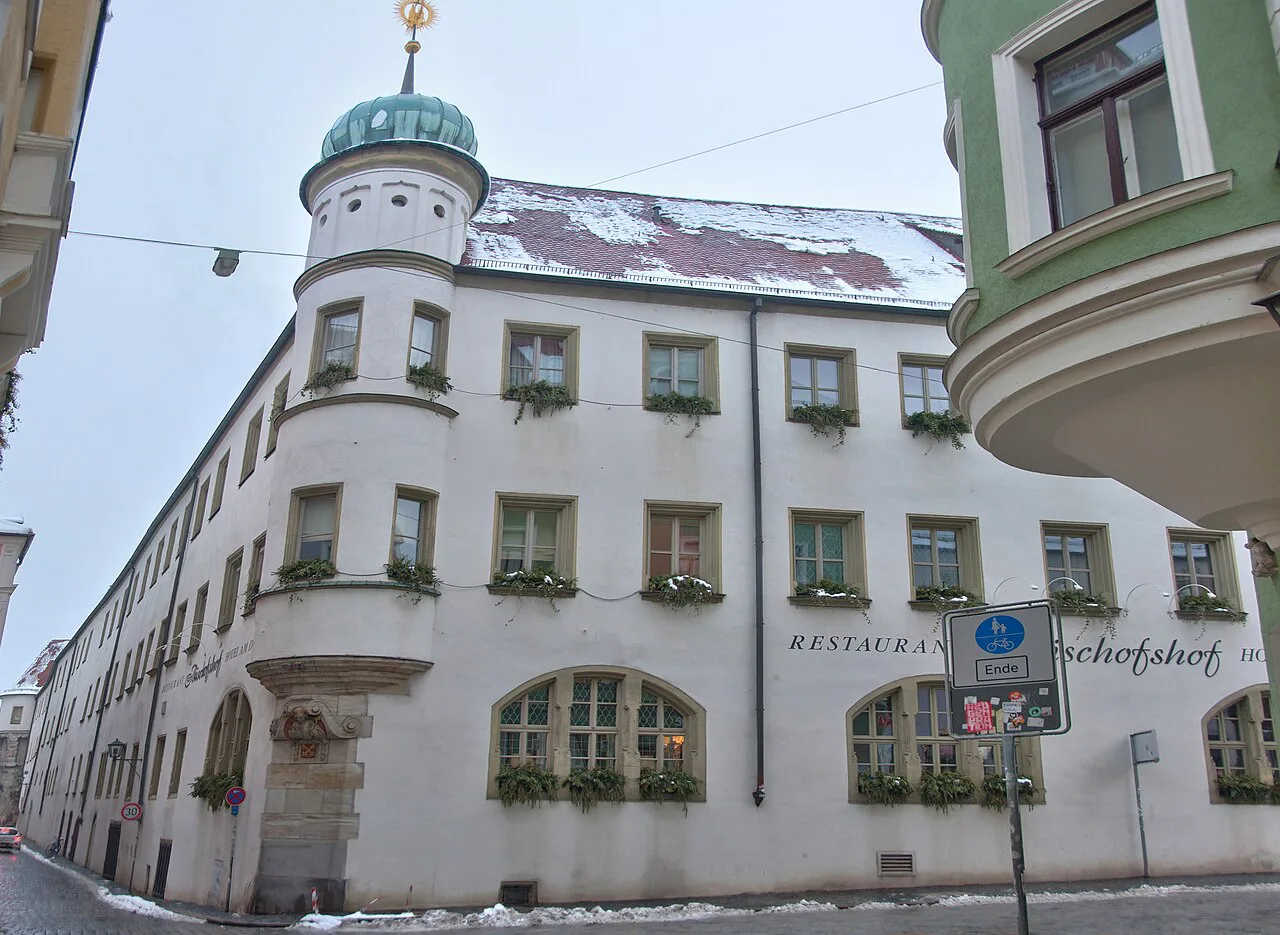

Where the brewery sits in Regensburg
The brewery's historic site lies in the central old town, which puts it within walking distance of most of the sights a first-time visitor comes for. Regensburg's compact center means you reach the area on foot from the train station or from the Danube rather than needing a dedicated trip. The city's bus network covers the wider center if you are coming from farther out.
Plan the brewery as a stop inside an old-town walk, not as a separate excursion: the Dom, the Steinerne Brücke and the riverbank all sit close together. Other Regensburg brewery landmarks, including the Spitalbrauerei, are also in or near the center, so you can compare local houses in a single afternoon.

The beers to know
Regensburger Hell is the beer to start with. Hell means pale in German brewing vocabulary, so expect a clean, golden lager rather than a dark beer, and the Euro bottle is the format the brewery treats as its signature. Pils is the crisper, more hop-forward alternative, while Weißbier is a cloudy wheat beer with a yeast-driven character.
Festbier is the stronger, maltier style brewed for the autumn festival season, and Zwickl is unfiltered lager, which the brewery sells in an alcohol-free version described as full-bodied, malty, fruity and hoppy. If you want one beer that shows what Regensburg lager brewing is about, order the Hell; if you want something yeastier, take the Weißbier. Drink them as you would any lager, with food and without rushing.
Brewing under the Regensburger Brauordnung of 1469
Bischofshof says its beer is brewed according to the Regensburger Brauordnung of 1469, a city brewing ordinance that predates the better-known Bavarian Reinheitsgebot by more than a century. The brewery uses the rule as a marker of local identity: Regensburg had its own standards for what went into beer long before a national law existed. For a drinker, the point is context rather than a taste difference you can detect in the glass.
Who owns Bischofshof now
In January 2026 the Kelheim wheat-beer brewer Schneider Weisse took over the Bischofshof and Weltenburger brands, a move reported as a sign of pressure across the German beer market. The brands and part of the workforce were to be kept, and the Bavarian brewers' association described the deal as a loss of local identity even while welcoming that the names survived. For visitors, nothing about the beer you order changes on the basis of the ownership alone.
Bischofshof had been a visible sponsor of Regensburg clubs including the SSV Jahn football team and the Eisbären ice hockey side. The clubs said they expected the partnerships to continue but did not disclose the terms, so treat any claim about future sponsorship as unconfirmed. What is settled is the brand ownership reported in January 2026.
Beer garden and brewery taps
Bischofshof runs an event calendar with partners and publishes news about its beers and events, which is the place to look for any public tasting or brewery event it announces. Public events are announced through that calendar rather than at a walk-in brewery taproom, so do not count on sitting down at the production site itself. Regensburg's beer gardens and brewery-owned restaurants are the practical settings for drinking a Bischofshof Hell with food.
Regensburg has several established houses worth comparing, and the Kneitinger brewery restaurant is the classic local counterpoint to a Bischofshof beer. If you want a Regensburg brewery with its own drinking venue, plan around those addresses rather than around the Bischofshof production site.
How much time to allow
Give the brewery site a brief look as part of an old-town walk, then put the real time into a meal or a beer somewhere in the center. A focused stop of an hour around the Dom and the brewery streets fits comfortably into a half day that also covers the riverfront. Build the day around drinking and eating, since a public brewery tour is not among the events the brewery advertises.
If you are structuring a full day, pair the brewery stop with a Würstl lunch at the Historische Wurstkuchl by the Steinerne Brücke, then walk the old town afterwards. That order keeps you near the river when the kitchen is busiest and leaves the afternoon free for the brewery streets.
Nearby: the Dom, the Danube and the old town
The Dom and the Danube sit within a few minutes of the brewery's old-town site, so the same walk covers the cathedral interior, the riverbank and the lanes around the Haidplatz. The Steinerne Brücke is the obvious crossing point if you want to see the brewery area from the water side. Other Regensburg brewing names, including Thurn und Taxis Brauerei Regensburg, sit in the wider city and make a natural second stop for a beer-focused day.
For a quieter break away from the beer trail, the café scene in the old town is close at hand, and Café Prinzess in Regensburg is an easy add after a morning of walking. Keep the brewery as the anchor of the day and let these stops fill the gaps around it.
Is Bischofshof worth building into your Regensburg day?
Yes, if you treat it as a beer to seek out in the old town rather than a factory tour to book. Drink the Regensburger Hell first, try the Weißbier if you want something yeastier, and use the brewery's nearness to the Dom and the Danube to fit it into a walking day. The January 2026 change of ownership does not change what is in the glass.
Skip a dedicated trip to the production site if you were hoping for a taproom visit, and instead build the day around Regensburg's brewery restaurants and beer gardens. Confirm any brewery event on the brewery's own event calendar before you plan around it.