Garmisch-Partenkirchen Food: Local Dishes to Try
A practical guide to Garmisch-Partenkirchen food: the regional dishes and products worth ordering, what they are, and where in town to try them.
On this page
The food to order in Garmisch-Partenkirchen comes from the Werdenfels region around it: cheese and butter from mountain dairies, dark country bread, honey, beer and increasingly chocolate, all sold under a regional quality label called Spitzenprodukt der Zugspitz Region. The label marks products made in the region from a main ingredient grown in or next to the Garmisch-Partenkirchen district and backed by an external quality certificate, so it is a sourcing signal rather than a guarantee of how a dish is cooked. Start with a cheese plate or Käsespätzle (soft egg noodles baked with mountain cheese and onions), then work through the labeled products at a shop or on a menu. This guide covers what the regional cooking is, which products carry the label, where to eat it across the town's restaurants, and how the GaPa schmeckt's dining weeks let you taste several kitchens in one trip.
What Garmisch-Partenkirchen food is
The cooking here belongs to the Werdenfels, the old Bavarian district centered on Garmisch and Partenkirchen. It is mountain food with dairy at its center, which is why cheese, butter and milk products show up in savory dishes and in desserts. The region's producers lean on what the surrounding pastures and farms supply, so the menu changes with the season rather than following a fixed national repertoire.
The Zugspitz Region tourism body runs the Spitzenprodukt label to make regional origin and regional processing visible to shoppers and diners, connecting farms, dairies and food businesses with the people eating their products. For a visitor, that means the label on a menu or shop shelf tells you the product was made in the region, from a main ingredient grown in or next to the Garmisch-Partenkirchen district, and has passed an external quality check.
Dishes and products to order first
Top of the list is mountain cheese, and a Schaukäserei (cheese dairy open to visitors) is the clearest single stop for understanding the region's dairy culture. A Schaukäserei Ettal appears among the region's labeled cheese products, and the cheese you buy there is the base for Käsespätzle and for a cold plate with bread and butter. Ordering a cheese board is the simplest way to compare a young, mild wheel with an older, sharper one, and a regional cheese plate is the natural first order.
Bread, honey, beer and chocolate all appear among the products awarded the Spitzenprodukt distinction, alongside cheese and meat. That gives you a practical shopping list: a loaf of regional bread to take home, a jar of local honey, a bottle of beer from a regional brewery, and a bar of chocolate for the train. Look for the label on the packaging wherever you buy them.
Meat has its place too, and regional sausage and charcuterie belong on the same plate as the dairy. If you want the beer side built out properly, our guide to Garmisch-Partenkirchen Breweries covers which local breweries to look for and where to drink their beer. Vegetarians need not be sidelined: the dairy tradition means cheese dishes, Spätzle and bread-based plates are common, though specifics vary by kitchen.
How the Spitzenprodukt label works
The label is awarded to products made or processed inside the Zugspitz Region whose defining or most important raw material comes from the district of Garmisch-Partenkirchen or an immediately adjacent Bavarian district. On top of that, producers must hold a recognized state or regional external quality certification. So the label combines three things: regional origin, regional production and an outside check on quality.
Use it as a shortcut. When you see the label on a bread, cheese, honey, beer or chocolate, you can skip the guesswork about whether it is genuinely local. When a menu lists a labeled product, order it: it is the kitchen's way of telling you where its ingredients come from. The label does not tell you how a dish is cooked, so treat it as a sourcing signal rather than a quality guarantee for the whole plate.
The restaurant landscape in one pass
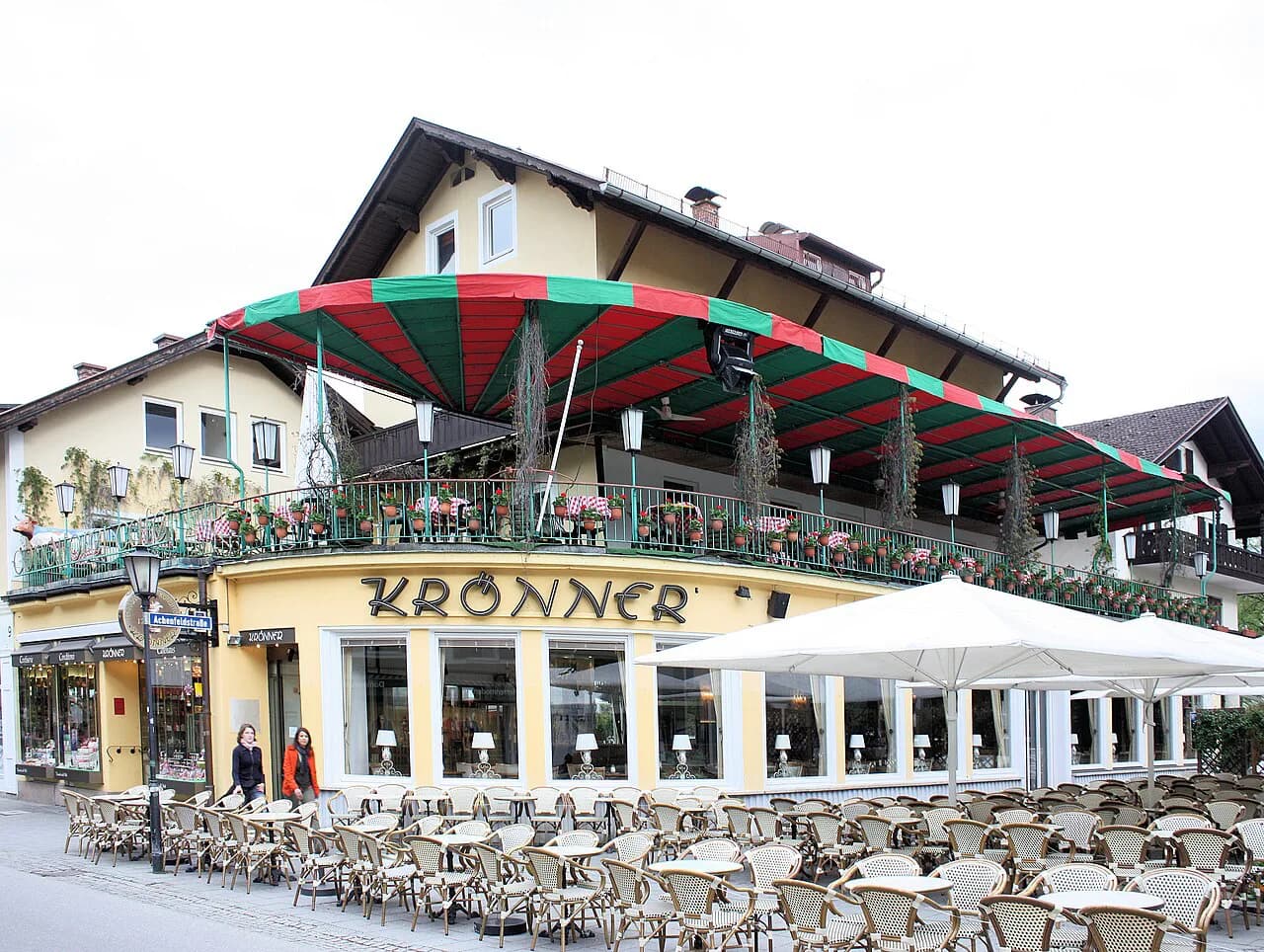
Eating out in Garmisch-Partenkirchen splits into a few types of setting rather than a fine-dining hierarchy. There are hotel dining rooms, where the hotel's restaurant serves guests and outside diners; village Gasthäuser with traditional rooms; at least one Berggasthof up the mountain, a farm-style inn reached on foot; modern Bavarian kitchens reworking local produce; plus the beer gardens and beer halls covered elsewhere. Pick by the kind of meal you want first, then by what is on the menu.
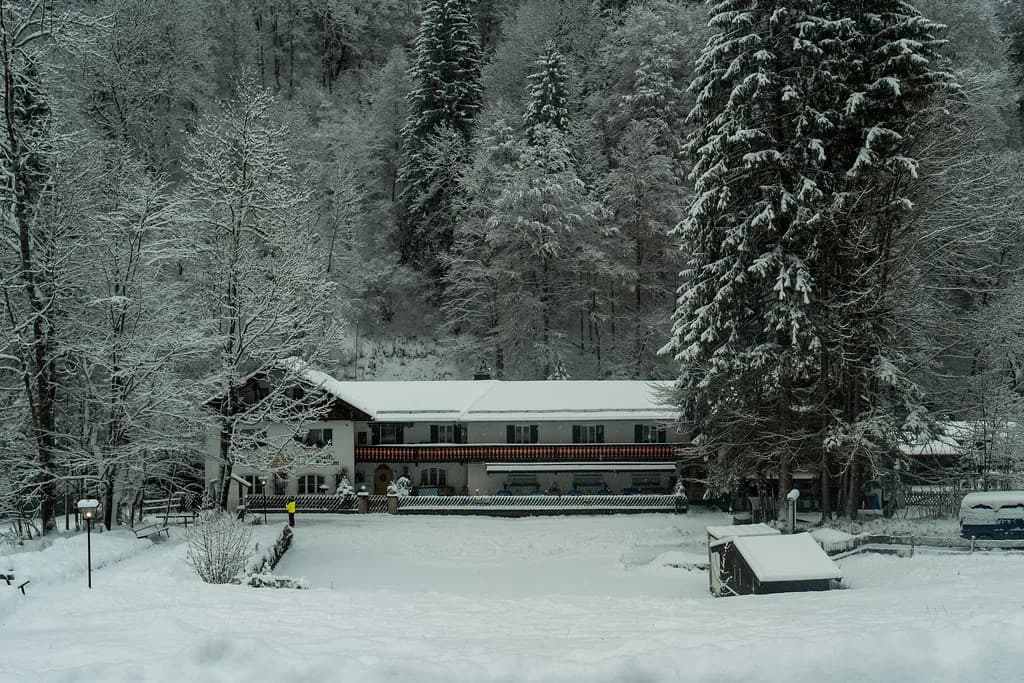
The convenience of a hotel restaurant is the fixed base and the short walk back afterward, often at the polish end of the scale. A village Gasthaus puts you in the middle of town with a shorter, more traditional menu. The mountain Berggasthof is the trade-off of effort for setting: you walk up, eat where the views are, and plan your day around it.
Where to eat: the kitchens in the GaPa schmeckt's program
Six chefs cook in the GaPa schmeckt's program under the motto "Zurück zum Ursprung des Geschmacks" (back to the origin of taste). Those chefs are Verena Merget at Restaurant Husar, Yannick Fehren at 4Eck, Christian Neuroth at Berggasthof Pflegersee, Sven Karge at Werdenfelserei, Georg Strohmeyer at Hotel Zugspitze and Thomas Albrecht at Speisemeisterei. That gives you a reliable set of names when you want a meal built on regional produce.
Choose by setting: Restaurant Husar and 4Eck sit in the village restaurant world, Berggasthof Pflegersee is the uphill inn where a walk is part of the meal, and Werdenfelserei, Hotel Zugspitze and Speisemeisterei represent the hotel and modern Bavarian end. Each writes its own menu, so check with the restaurant what that kitchen is cooking in the week you visit.
A partner for the program is Garten Eden from Ohlstadt, a market garden growing vegetables naturally using effective microorganisms and harvesting only what is in season. Vegetables are central to the season; for meat-free days and lighter plates, our guide to Vegan and Vegetarian Food in Garmisch-Partenkirchen is the place to plan.
Some of the dishes designed for these weeks show the range: a Jerusalem artichoke, cashew, hay and elderflower soup; a plate of cured trout with tempura shrimp, pointed cabbage, miso and pickled cucumber; and venison saddle with veal cheek, chestnut crust, carrot, pumpkin and hazelnut jus. Dinner could end with "Baba au Garmisch," a yeast cake soaked in beer champagne with Garten Eden apple ice cream and salted caramel brittle. These are program dishes, not standing menus.
GaPa schmeckt's: the regional dining weeks
GaPa schmeckt's runs from 21 November to 20 December and brings six chefs and a shared regional theme into one four-week program. Each chef interprets the motto in their own way, producing individual menus built on regional ingredients. The timing puts it in the cold season, which suits a run of warm, substantial courses.
The program opens the day before, on 20 November, with a tasting where the participating chefs serve samples of their creations at a flying dinner (a stand-and-move format), with warm and cold signature dishes and anecdotes from the kitchens. If you are in town for the opening, that is the fastest way to decide which of the six restaurants to book for a full meal.
Walk Around Dinner: one course per venue
The Walk Around Dinner serves each course at a different venue, so from starter to dessert you eat in several of the GaPa schmeckt's restaurants in one evening. Local guides walk the group between stops and talk about the area along the way, which folds a bit of the region into the meal. It is the easiest single booking for tasting several kitchens without choosing one.
The announced dates are 2 and 8 December in German and 16 December in English. For non-German speakers, the English-language date is the practical choice. The number of places on a guided dinner is limited, so reserve in advance for the date you want.
What to drink with it
Beer is the natural companion to this food, and regional beer carries the Spitzenprodukt label alongside cheese, bread and honey. Order a local beer with the cheese course and the venison, and the same brewery's bottles make a sensible thing to carry home. Keep the pace moderate: a half-liter with a long lunch is the local rhythm, not a challenge.
If you want a beer garden setting rather than a dining room, Beer Gardens in Garmisch-Partenkirchen covers where to sit outside with a Maß in season. For an indoor brewery tap, see our beer halls guide. A packaged beer from a regional producer is also the most practical souvenir, since it travels better than cheese.
Ordering and paying in Garmisch-Partenkirchen
Menus are in German first, with English versions common in the busier places; the words to know are Käsespätzle, Schweinebraten (roast pork) and Kaiserschmarrn (shredded pancake with fruit compote). German dining runs later than American habits, so a 7:30 or 8 p.m. table is normal rather than late. In the GaPa schmeckt's window, book ahead for the six chefs' restaurants and the Walk Around Dinner.
Carry cash as a backup: card acceptance has widened, but small Gasthäuser and mountain inns still sometimes run on cash. Tipping works by rounding up or adding a few euros and telling the server the total you want to pay. If your table wants a coffee and a slice of cake instead of a full dessert, Konditorei in Garmisch-Partenkirchen points you to the right counters.
Sights as context for a food-led day
Build the day around meals and let the Zugspitze, Partnachklamm gorge and Michael-Ende-Kurpark fill the hours between them; each is listed among the area's Attractions by the local tourism office. A morning walk, a long lunch with a labeled beer, and an afternoon coffee is a workable shape.
Which Garmisch meal do you book first?
If your dates overlap the 21 November to 20 December window, the announced English-language Walk Around Dinner on 16 December is the easiest way to shortlist one of the six chefs for a full menu later in the trip. Outside that window, pick by setting: a village Gasthaus for a traditional room, a Berggasthof if you want the walk with your lunch, and a hotel kitchen for the most polished regional cooking.
Explore more Garmisch-Partenkirchen guides
Sources
Notes for your next German food trip
Optional updates to our guides.
You might also like
Continue reading
More guides you'll find useful